
First In Math Online Program
Product by Suntex International Inc
Facts checked: Not yet checked
Our take (not a Learning Standard rating). This label applies to learning-science judgments throughout this overview.
Our take (not a Learning Standard rating)
First In Math effectively builds math fact fluency through high-volume retrieval practice and gamified repetition. However, because it relies heavily on rote drill rather than conceptual instruction, it serves better as a supplemental practice tool rather than a primary teaching resource for introducing new mathematical concepts.
Pros
- Utilizes high-frequency retrieval practice to develop automaticity in foundational math facts.
- Employs gamification elements like goals and digital stickers to sustain student engagement during repetitive tasks.
- Offers a wide progression of content from basic kindergarten addition through eighth-grade algebra.
- Incorporates the classic 24 Game mechanics to promote mental flexibility and computational thinking.
Cons
- Lacks explicit instructional scaffolds or worked examples to teach concepts before testing them.
- Relies heavily on speed and competition, which increases math anxiety for some students.
- Visual design and interface feel outdated compared to modern educational technology standards.
- Provides minimal corrective feedback beyond marking an answer wrong, missing an opportunity for formative learning.
What Do We Know About First In Math Online Program?
First In Math is effective for building your child's math fact fluency but requires outside instruction to teach new mathematical concepts. The platform functions primarily as a digital drill-and-practice environment designed to make repetitive math exercises more engaging through gamification. By leveraging principles of retrieval practice, the program forces your child to repeatedly recall math facts from memory, which learning science shows is highly effective for building automaticity. When students can recall basic arithmetic without thinking, they free up cognitive load for complex problem-solving later on. However, parents must understand that this program does not provide explicit instruction, video lessons, or step-by-step worked examples. If your child struggles with a concept, the games will not teach them how to solve it; they only test what the student already knows. The competitive nature of the platform, which tracks points and speed, motivates many students but can inadvertently trigger math anxiety in others who need more time to process numbers. You should use this app as a daily ten-minute supplement to reinforce what your child learns in school, rather than as a standalone math curriculum.
How Does First In Math Online Program Work?
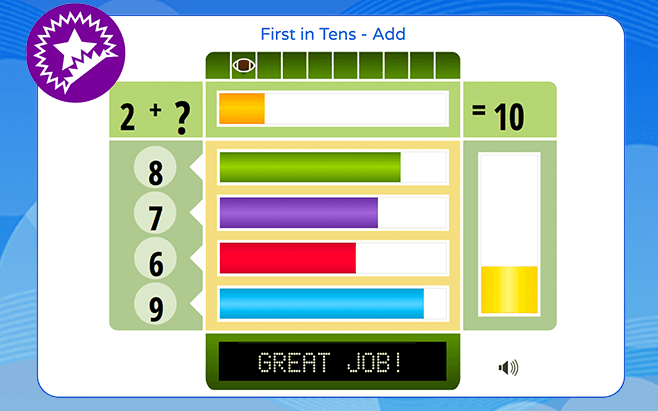
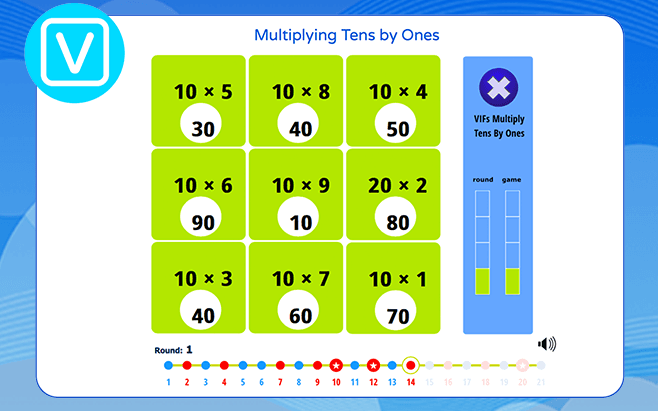
First In Math uses a gamified drill-and-practice approach to reinforce mathematical automaticity across a broad range of grade levels. Students log into a dashboard filled with various game modules, including digital adaptations of the popular 24 Game, where they solve rapid-fire math problems to earn digital stickers and climb leaderboards. The mechanics rely heavily on timed trials and high-volume repetition, forcing students to retrieve math facts quickly. This continuous retrieval practice strengthens neural pathways associated with basic computation. Progression is mostly linear but allows for self-directed pacing within specific skill modules, meaning your child can choose whether to practice fractions, decimals, or basic addition based on their current goals. The system tracks accuracy and speed, feeding this data back to teachers and parents to monitor fluency growth. Because the platform focuses strictly on practice rather than direct instruction, it acts as a digital workbook that adapts to user input but lacks the adaptive scaffolding found in intelligent tutoring systems.
Strengths and tradeoffs of First In Math Online Program
First In Math's biggest strength is its ability to automate foundational math skills through relentless retrieval practice, while its biggest weakness is the complete absence of conceptual instruction. Building Automaticity: The platform excels at transforming tedious rote memorization into a highly motivating game. By using rapid-fire repetition, the software capitalizes on the testing effect, ensuring students retrieve information from long-term memory to strengthen future recall. Motivational Mechanics: The token economy, utilizing digital stickers and school-wide leaderboards, successfully leverages extrinsic motivation to keep students engaged in high-volume practice that they would typically abandon on paper. Lack of Worked Examples: Because the program does not utilize worked examples or guided practice, students who lack prerequisite knowledge will quickly hit a wall. Learning science dictates that novices need explicit instruction before engaging in independent practice, which this platform skips entirely. Limited Corrective Feedback: When a student makes an error, the system rarely explains why the answer is wrong or provides the conceptual framework needed to correct the misconception. This makes the tool excellent for assessing and cementing known skills, but poor for remediating actual learning gaps.
Who Might Benefit From First In Math Online Program?
First In Math is best for elementary and middle school students who need structured, high-volume drill practice to master basic math facts. The platform spans kindergarten through eighth grade, but the gamified sticker economy resonates most strongly with students in grades two through six. It is ideal for classrooms or homeschool environments that already have a strong core curriculum and simply need an independent practice station to build computational speed. It is not recommended for students who experience severe math anxiety under timed conditions or those who need step-by-step conceptual remediation.
Data Transparency
Does Not Meet Data Transparency Standard
First In Math Online Program reaches Level 1 of 3 (Basic protections), below our data transparency standard. Reaching Level 2 needs the policy to document data export and self-service deletion.
22 of 35 checks passed
Evaluated September 2026
Privacy Policy →Level 1 · Basic protections
Does not sell data or target ads at students, limits sharing, and lets parents see and delete their child's data.
Level 2 · Parent control (meets the standard)
Families can get their data out, know who processes it, and know how long it is kept.
Not documented: data export, self-service deletion
Level 3 · Direct data access
Families or schools can pull their own data through an API, in a stated format.
Not documented: an API for retrieving their own data, a named export format
View all 35 checks
Parent Access7/8
Does the policy mention parents specifically?
“We encourage parents and guardians to spend time online at educational websites with their children and to participate in the interactive activities offered on the sites their children visit.”
Can parents view their child's data?
“If any information is disclosed to First In Math by a child under the age of 13, that child's parent may contact First In Math using the contact information below to ascertain the information collected and/or to request its deletion.”
Can parents modify their child's data?
The policy lets parents see or request deletion of a child's data but does not give parents a right to correct it.
Can parents delete their child's account?
“If any information is disclosed to First In Math by a child under the age of 13, that child's parent may contact First In Math using the contact information below to ascertain the information collected and/or to request its deletion.”
Is there a dedicated Children's Privacy section?
“How does First In Math protect children's privacy?”
Does it reference COPPA compliance?
“We are in full compliance with **COPPA** and **FERPA**.”
Does it reference FERPA compliance?
“We are in full compliance with **COPPA** and **FERPA**.”
Is parental consent required for child accounts?
“First In Math does not permit children under the age of 13 to create an account and does not knowingly collect personally identifying information from children under the age of 13 without the consent of a parent or educational institution.”
Data Portability2/5
Can users access their personal data?
“Because our program is a subscription service, students have access to their data for the time period their account is active. However, through the school or educational entity the data can still be accessed and reviewed for the current school year and prior school year, subject to our data retention policy.”
Can users download/export their data?
The policy does not address downloading or exporting data.
Is there a self-service data access tool?
“You may edit your account information at any time by logging into your account and update your information.”
Is a specific data format mentioned for export?
The policy does not mention any export format.
Is there an API for data access?
The policy mentions rostering services but no API for users or schools to retrieve their data.
Data Minimization3/6
Is data collection itemized?
“-Student grade, name, school identification number, and birth date -Teacher and administrator names and e-mails -Class name and grade”
Can the app be used without a real name?
The policy states it collects student names from the school's roster.
Can the app be used without an email?
The policy states it may collect and store an email address from users for password reset.
Does it state collection is limited to what is necessary?
“First In Math will not ask children under age 13 for more information, as a condition of participation, than is reasonably necessary to participate in a given activity.”
Is IP address anonymized or truncated?
The policy does not address anonymizing or truncating IP addresses.
Is location tracking explicitly excluded?
“First In Math does not collect personal data, including: Gender Ethnicity or race English learner status Eligibility for free or reduced-price lunch Health data Geolocation data”
Third-Party Protection6/7
Does it explicitly state no selling of data?
“Briefly, this site contains: No selling of data”
Are third-party providers named?
“We only share data with partners that also take the pledge, including **Clever** and **ClassLink**.”
Are providers contractually restricted?
“Our vendors and service providers are bound by confidentiality agreements, are signatories of the Student Privacy Pledge, and meet the criteria of having privacy standards that are consistent with those of First In Math.”
No-targeted-advertising commitment?
“However, First In Math will not knowingly use student information for behavioral targeting of advertisements to students.”
Is AI/ML data sharing addressed?
The policy does not address AI or machine learning.
Child-specific sharing restriction?
“Any disclosure of information collected from children under the age of 13 to third parties will be pursuant to an agreement of confidentiality and may be used for purposes of site analytics, or billing.”
Cookies/tracking limited or opt-out?
“You also have choices with respect to cookies. By modifying your browser preferences, you have the choice to accept all cookies, to be notified when a cookie is set, or to reject all cookies.”
Deletion & Retention3/5
Can users delete their account?
“Please contact technical support for further instructions about deleting or deactivating your account for any First In Math service.”
Self-service deletion mechanism?
The policy requires contacting technical support to delete an account and describes no self-service deletion.
Specific data retention timeline?
“Unless otherwise agreed to in writing, our policy is to retain student information for the current school year, and one school year prior to the current school year for historical and accessibility purposes. After this time period, all student records are purged from our system.”
Auto-deletion of inactive accounts?
The policy purges records after a fixed school-year period but does not describe deleting accounts because they are inactive.
Post-deletion handling described?
“Residual information may remain within our archive records, such as for billing and tax purposes.”
Advertising1/4
Advertising model explicitly disclosed?
The policy rules out targeted advertising but does not explicitly say whether the product carries any advertising.
Free from third-party advertisements?
The policy states there are no targeted ads or third-party marketing but does not state the product is free of third-party ads.
Children excluded from ad targeting?
“However, First In Math will not knowingly use student information for behavioral targeting of advertisements to students.”
Ad-free option available?
The policy does not explicitly state the product has no advertising or offer an ad-free option.
What This Means
The policy review did not meet our data transparency standard. The checks above show the documented findings and unknowns. A missing statement does not establish how the app handles data in practice.
About this evaluation: Based on automated analysis of Privacy Policy against 35 policy-disclosure questions, including questions adapted from the Common Sense Privacy Program's published evaluation questions. TLS is not affiliated with Common Sense Media, and this is not a Common Sense rating. Quoted text is copied from the policy; unquoted notes are our summary. Results describe what the policy documents, not the company's actual practices. Privacy policies can change: this review reflects the version we analyzed and does not determine legal compliance.
Sources and review method
TLS combines product information and editorial analysis to explain how First In Math Online Program works, its tradeoffs, and the questions to ask before choosing it. Product features, an instructional rationale and evidence of learning outcomes are different kinds of information.
Formal Learning Standard assessment: not yet completed. Data Transparency findings are reported separately and do not establish learning effectiveness. Read our methodology.
Frequently Asked Questions About First In Math Online Program
Is First In Math free?
No, First In Math is a paid subscription service primarily sold through school and district licenses. While the program offers volume discounts for schools, it requires an annual license valid from August through July. Parents interested in using the program at home should check if their school district already provides access, as individual family subscriptions are sometimes bundled or offered separately depending on the region.
Is First In Math good for kindergarteners?
Yes, but with limitations. First In Math includes modules specifically designed for early learners focusing on basic number sense, counting, and simple addition. However, kindergarteners often require concrete, physical manipulatives to understand math concepts deeply. Parents should ensure that digital drill games only make up a small fraction of a young child's math experience, prioritizing hands-on learning before moving to screen-based automaticity drills.
What does First In Math teach?
First In Math teaches computational fluency, automaticity, and mental math skills across a spectrum ranging from basic addition to eighth-grade algebra. It prominently features digital versions of the 24 Game, which develops computational thinking by requiring students to use given numbers to reach a specific target. The program focuses entirely on procedural fluency rather than introducing new mathematical theories or conceptual reasoning.
Has First In Math been evaluated by The Learning Standard?
No, First In Math is currently pending evaluation by The Learning Standard. Our team of independent educational technology experts has not yet run this program through our comprehensive rubric. Once evaluated, we will update this page with a formal rating based on our official learning science methodology, which assesses instructional design, feedback quality, and cognitive engagement.
Has The Learning Standard evaluated First In Math Online Program?
TLS has not yet completed a Learning Standard evaluation of how well First In Math Online Program teaches. Its privacy policy has been reviewed for Data Transparency and reaches Level 1, Basic protections.
Is First In Math Online Program COPPA compliant?
The reviewed privacy policy references COPPA. A policy reference alone does not establish COPPA compliance. Policy review note: The policy states it complies with COPPA.
Is First In Math Online Program FERPA compliant?
The reviewed privacy policy references FERPA. A policy reference alone does not establish FERPA compliance. Policy review note: The policy states it complies with FERPA.
Does First In Math Online Program have a children's privacy policy?
The reviewed policy includes a dedicated children's privacy section. Policy review note: The policy has a section with its own heading on children's privacy.
Does First In Math Online Program sell student data?
The reviewed policy states that the app does not sell data. This is a policy statement; actual data practices were not verified. Policy review note: The policy states there is no selling of data.
Can you delete your data from First In Math Online Program?
The reviewed privacy policy describes account deletion. We have not tested the deletion process. Policy review note: Users can delete their account by contacting support.
Follow TLS Research
Subscribe to future TLS research updates: app reviews, findings, and what the evidence shows.
Screenshots

Take Action
For First In Math Online Program
If you represent Suntex International Inc and have a correction or new evidence, send the relevant source so we can review and update this page.
Submit a correctionDetails
- Pricing
- First In Math is a student subscription model with licenses valid 8/1 through 7/31. First In Math® is a cost-effective program designed for affordability and sustainability. Volume discounts apply; call us at 800-242-4542 to find out about district pricing and other discounts. In-depth Assessment, a competition component, the Very Important Facts® [VIFs®] module and FamilyLink® are included to provide unsurpassed value.
- Platforms
- Web Browser, iOS (Apple mobile), iPadOS (Apple tablet), Android (Google mobile), Tizen (Samsung mobile), Windows (Microsoft), macOS (Apple), Chrome OS (Google)
- Grade Levels
- Kindergarten, 1st Grade, 2nd Grade, 3rd Grade, 4th Grade, 5th Grade, 6th Grade, 7th Grade, 8th Grade
- Website
- Visit site