
Da Vinci
Product by Da Vinci
Facts checked: Not yet checked
Our take (not a Learning Standard rating). This label applies to learning-science judgments throughout this overview.
Our take (not a Learning Standard rating)
Da Vinci provides an extensive educational video library that successfully builds background knowledge but relies too heavily on passive consumption. While the inclusion of post-video quizzes introduces basic retrieval practice, the platform lacks the adaptive scaffolding and active problem-solving required to drive true academic mastery in core subjects.
Pros
- Provides massive cross-curricular video libraries to build foundational background knowledge and schema.
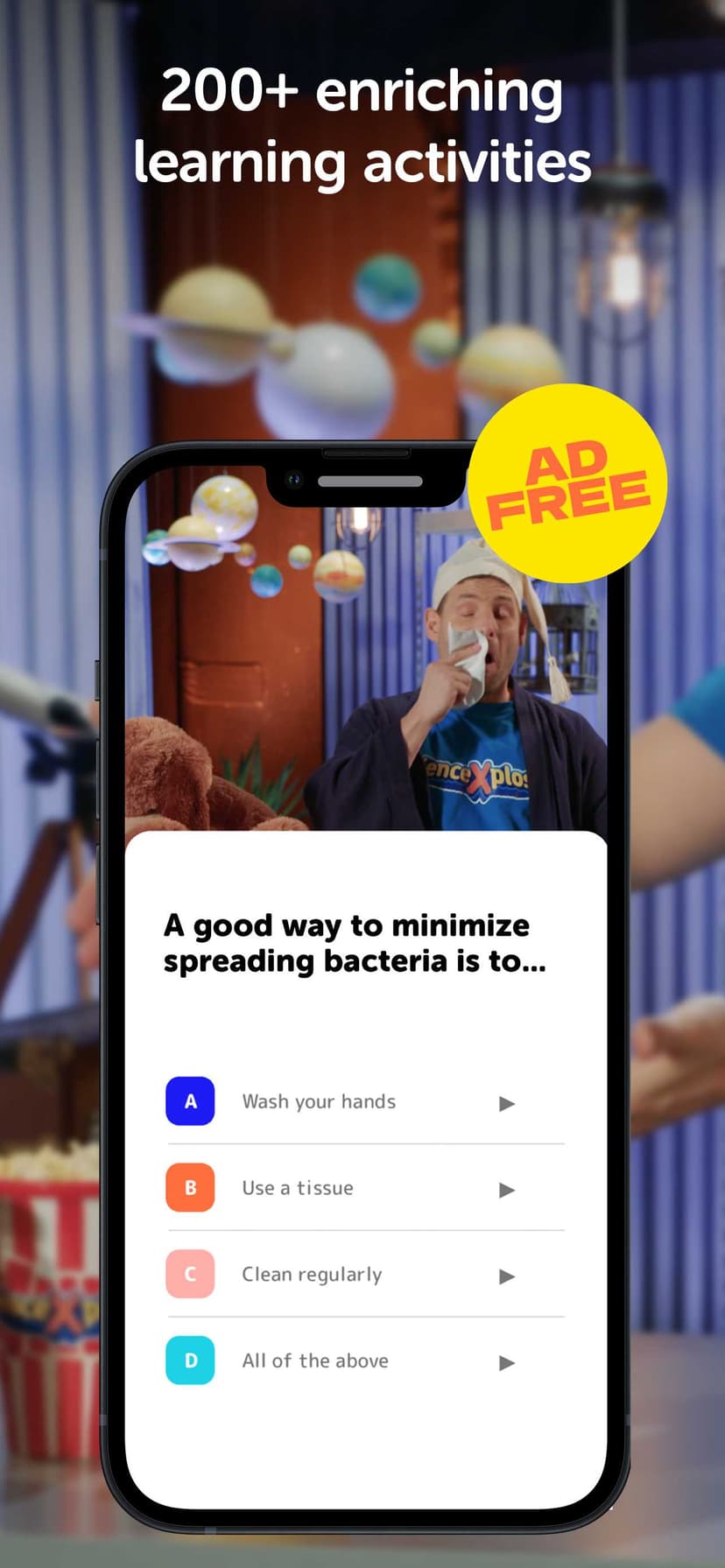
- Includes post-video quizzes that introduce basic retrieval practice to check immediate comprehension.
- Supports blended learning environments by offering a wide variety of subjects for diverse interests.
Cons
- Relies heavily on passive video consumption which limits active cognitive engagement.
- Lacks adaptive difficulty adjustments to target your child's specific learning edge.
- Does not provide detailed feedback on incorrect quiz answers to correct specific misconceptions.
What Do We Know About Da Vinci?
Da Vinci is an effective supplementary tool for building broad background knowledge, but it is not a standalone curriculum for teaching core skills. The platform relies heavily on a massive library of educational television shows and videos covering everything from history to applied science. From a learning science perspective, high-quality video content is excellent for building foundational schema and exposing your child to new concepts. However, passive consumption rarely leads to deep mastery. The app attempts to bridge this gap by including interactive lessons and quizzes after the videos. These quizzes utilize basic retrieval practice, prompting your child to recall what they just watched, which strengthens short-term memory retention. While this is a step up from purely passive streaming services, the platform lacks the rigorous, mastery-based progression found in specialized educational tools. It does not adapt to your child's specific learning edge or provide scaffolding when they struggle with a complex concept. You should view Da Vinci as a high-quality alternative to standard entertainment rather than a primary educational instructor. It works beautifully for sparking curiosity and introducing cross-curricular topics, provided your child engages in active practice and application elsewhere.
How Does Da Vinci Work?
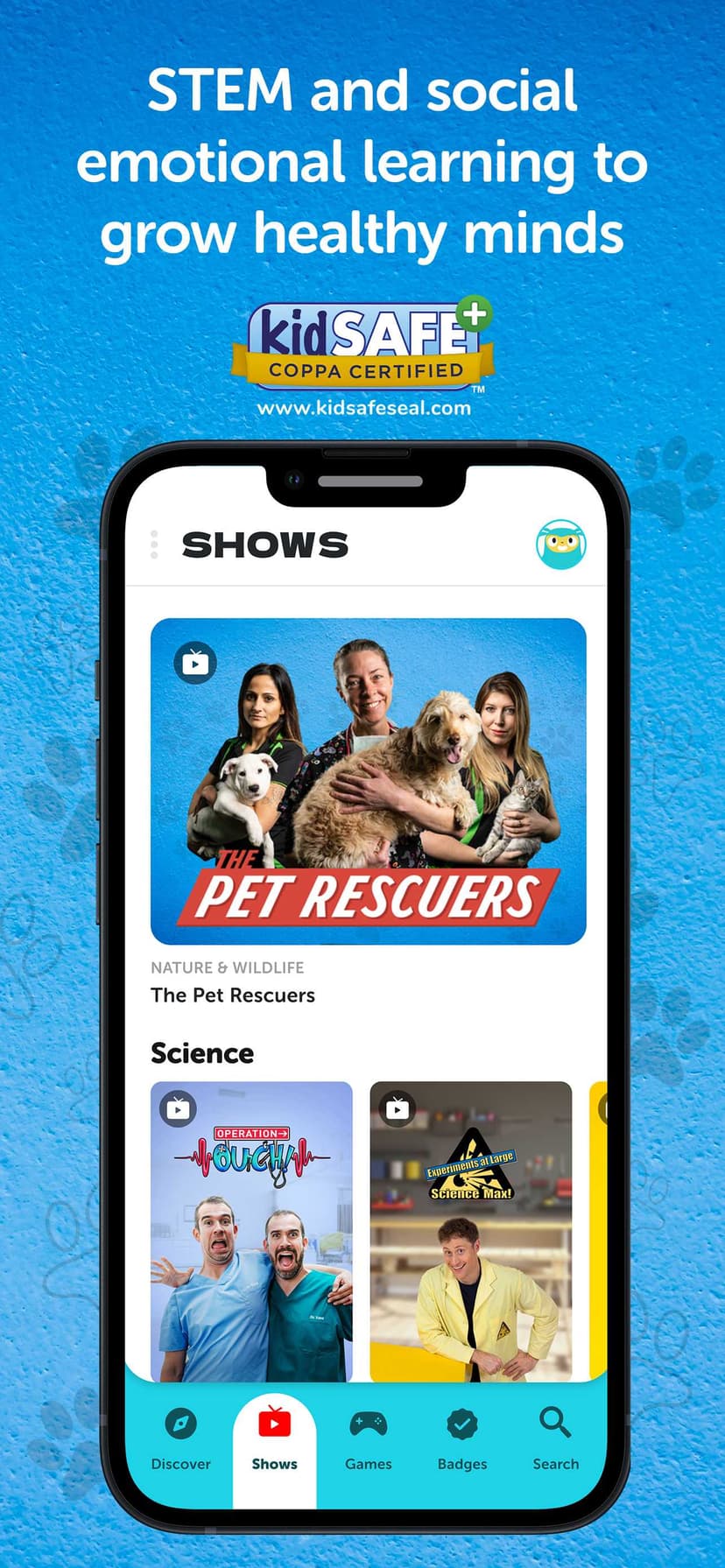
Da Vinci uses a multimedia-first, blended learning approach that pairs extensive video instruction with basic interactive assessments. Your child begins by selecting a subject area, such as humanities, math, or science. They then watch high-quality, broadcast-style educational videos designed to explain complex concepts through visual storytelling. Following the video consumption phase, the platform prompts users with interactive lessons and quizzes directly related to the viewed content. These quizzes serve as simple knowledge checks. Unlike adaptive learning platforms that change the difficulty of questions based on real-time performance, Da Vinci offers a more linear experience. The sequence focuses on immediate recall rather than spaced repetition over time. The platform categorizes content across a massive library, allowing users to jump between cross-curricular topics at will rather than locking them into a rigid learning path. This open-ended structure requires your child to independently self-direct their learning journey.
Strengths and tradeoffs of Da Vinci
Da Vinci's biggest strength is its immense library of visually engaging content that builds cross-curricular background knowledge, while its biggest weakness is an over-reliance on passive media consumption. Building schema is a critical first step in learning, and the platform's high-quality videos excel at introducing your child to new concepts in science, history, and the arts. This broad exposure helps students contextualize information later encountered in formal schooling. Retrieval practice is present through post-video quizzes, forcing learners to recall facts immediately after watching. However, the platform falls short in driving long-term retention. It lacks spaced repetition, meaning your child is rarely prompted to recall older information days or weeks later to interrupt the forgetting curve. Furthermore, without adaptive scaffolding, learners who misunderstand a video do not receive targeted interventions or worked examples to correct their misconceptions. The interactive elements test recall but do not teach active problem-solving. Ultimately, the app provides a rich environment for exploration but lacks the active, rigorous cognitive demands required for deep academic mastery.
Who Might Benefit From Da Vinci?
Best for curious learners of all ages who need a safe, educational alternative to standard video streaming platforms. Da Vinci serves highly motivated students who enjoy exploring broad, cross-curricular subjects like applied science and the humanities on their own terms. It is an excellent fit for homeschooling families seeking high-quality documentary-style videos to supplement their primary curriculum. Educators utilizing a flipped classroom or blended learning model will also find value in assigning these videos as introductory material. However, it is not recommended for students who require structured, step-by-step tutoring or intensive remedial practice in core math and reading skills.
Data Transparency
Does Not Meet Data Transparency Standard
Da Vinci does not meet our data transparency standard. Its privacy policy does not document basic protections, including a statement that it does not sell data and parents' right to delete their child's data.
20 of 35 checks passed
Evaluated September 2026
Privacy Policy →Level 1 · Basic protections
Does not sell data or target ads at students, limits sharing, and lets parents see and delete their child's data.
Not documented: a statement that it does not sell data, parents' right to delete their child's data
Level 2 · Parent control (meets the standard)
Families can get their data out, know who processes it, and know how long it is kept.
Not documented: self-service deletion
Level 3 · Direct data access
Families or schools can pull their own data through an API, in a stated format.
Not documented: an API for retrieving their own data, a named export format
View all 35 checks
Parent Access5/8
Does the policy mention parents specifically?
“If you’re under 18 years of age it’s important that you get your parent(s)/guardian(s) to read through this policy and discuss it with you.”
Can parents view their child's data?
“Parents have full access to their children’s Chat conversations at all times.”
Can parents modify their child's data?
The policy lets account holders change their own information but never says parents can modify their child's data.
Can parents delete their child's account?
The policy covers account holders deleting their own accounts but never says parents can delete their child's data or account.
Is there a dedicated Children's Privacy section?
“How do we treat children’s personal information?”
Does it reference COPPA compliance?
“This description is provided in compliance with The Children’s Online Privacy Protection Act (COPPA).”
Does it reference FERPA compliance?
The policy does not mention FERPA.
Is parental consent required for child accounts?
“If you are under the age of 18 and you wish to provide us with your information for any purposes, such as to participate in a competition, you must read this policy with your parent(s)/guardian(s) and you may not provide any information without obtaining their consent first.”
Data Portability2/5
Can users access their personal data?
“If you would like a copy of some or all of the personal information we hold in relation to you, please email help@azoomee.com for Azoomee services and support@davinci.tv for Da Vinci and Da Vinci Kids services or write to us at the address at the end of this policy.”
Can users download/export their data?
“If you would like a copy of some or all of the personal information we hold in relation to you, please email help@azoomee.com for Azoomee services and support@davinci.tv for Da Vinci and Da Vinci Kids services or write to us at the address at the end of this policy.”
Is there a self-service data access tool?
The policy says access requests are made by email or post, not through a self-service tool.
Is a specific data format mentioned for export?
The policy does not name any export format.
Is there an API for data access?
The policy does not mention an API for data access.
Data Minimization1/6
Is data collection itemized?
“You give us information about you when you sign up to use Azoomee or Da Vinci such as your name, address, e-mail address and phone number, financial information (such as payment methods), gender and date of birth.”
Can the app be used without a real name?
The policy says the vendor collects users' names at sign-up.
Can the app be used without an email?
The policy says the vendor collects email addresses at sign-up.
Does it state collection is limited to what is necessary?
The policy limits how long data is kept to what is necessary but does not limit collection to what is necessary.
Is IP address anonymized or truncated?
The policy says IP addresses are collected and does not say they are anonymized or truncated.
Is location tracking explicitly excluded?
The policy does not rule out location tracking.
Third-Party Protection5/7
Does it explicitly state no selling of data?
The policy restricts sharing but never explicitly says the vendor does not sell data.
Are third-party providers named?
“Some of our services enable you to sign-in via a third party service, such as Facebook.”
Are providers contractually restricted?
“Third parties will only process your information on our instructions and where they have agreed to treat the information confidentially and to keep it secure.”
No-targeted-advertising commitment?
“Da Vinci Kids does not use these profiles to drive any behavioural content delivery or advertising.”
Is AI/ML data sharing addressed?
The policy does not address AI or machine learning.
Child-specific sharing restriction?
“We do not disclose any personal information about children to third parties.”
Cookies/tracking limited or opt-out?
“You can learn more about the cookies we use and how you can disable cookies in our Cookies Policy.”
Deletion & Retention3/5
Can users delete their account?
“You can change or update your information or delete your account with Azoomee and/or Da Vinci at any time. You can do this by contacting us at help@azoomee.com for Azoomee services and support@davinci.tv for Da Vinci and Da Vinci Kids services.”
Self-service deletion mechanism?
The policy says deletion is done by contacting support, not through a self-service tool.
Specific data retention timeline?
“If you delete your account with us then your personal information and any user generated content is deleted immediately, and the remaining information is anonymised for analytical purposes.”
Auto-deletion of inactive accounts?
The policy does not mention automatically deleting inactive accounts.
Post-deletion handling described?
“If you delete your account with us then your personal information and any user generated content is deleted immediately, and the remaining information is anonymised for analytical purposes.”
Advertising4/4
Advertising model explicitly disclosed?
“Our Sites do not have any advertising.”
Free from third-party advertisements?
“Our Sites do not have any advertising.”
Children excluded from ad targeting?
“Da Vinci Kids does not use these profiles to drive any behavioural content delivery or advertising.”
Ad-free option available?
“Our Sites do not have any advertising.”
What This Means
The policy review did not meet our data transparency standard. The checks above show the documented findings and unknowns. A missing statement does not establish how the app handles data in practice.
About this evaluation: Based on automated analysis of Privacy Policy against 35 policy-disclosure questions, including questions adapted from the Common Sense Privacy Program's published evaluation questions. TLS is not affiliated with Common Sense Media, and this is not a Common Sense rating. Quoted text is copied from the policy; unquoted notes are our summary. Results describe what the policy documents, not the company's actual practices. Privacy policies can change: this review reflects the version we analyzed and does not determine legal compliance.
Sources and review method
TLS combines product information and editorial analysis to explain how Da Vinci works, its tradeoffs, and the questions to ask before choosing it. Product features, an instructional rationale and evidence of learning outcomes are different kinds of information.
Formal Learning Standard assessment: not yet completed. Data Transparency findings are reported separately and do not establish learning effectiveness. Read our methodology.
Frequently Asked Questions About Da Vinci
Is Da Vinci free?
No, Da Vinci requires a paid subscription to access its full library of educational content. The service costs $11.99 per month or $69.99 for an annual plan, which offers significant savings for long-term users. Institutions and schools can access specialized volume discounts. There is no fully free tier available for home users, though they occasionally offer limited promotional trials.
Is Da Vinci good for kids of all ages?
Yes, Da Vinci offers content spanning all age groups, from early childhood through high school. However, its effectiveness depends heavily on the individual child's ability to self-direct and actively engage with video-based content. Younger children will almost certainly need active parental guidance to navigate the massive platform and to help connect the abstract video concepts to tangible, real-world applications.
What does Da Vinci teach?
Da Vinci teaches a massive variety of cross-curricular subjects designed to build general knowledge. The extensive library covers humanities, social science, natural science, mathematics, applied science, and career and technical education. Rather than focusing on granular, step-by-step skill drilling like a standard math app, it focuses on broad concept introduction and cross-disciplinary exploration to spark long-term intellectual curiosity.
How does Da Vinci compare to BrainPOP?
Both platforms use video-based instruction, but BrainPOP offers more structured, heavily curriculum-aligned modules with a much stronger emphasis on active assessment and concept mapping. Da Vinci focuses far more heavily on long-form, broadcast-quality documentary shows. If your child needs quick, highly specific academic explanations for schoolwork, BrainPOP is generally superior. For deep, self-directed dives into broad topics, Da Vinci offers more content.
Has The Learning Standard evaluated Da Vinci?
TLS has not yet completed a Learning Standard evaluation of how well Da Vinci teaches. Its privacy policy has been reviewed for Data Transparency and does not yet document the basic protections (Level 1).
Is Da Vinci COPPA compliant?
The reviewed privacy policy references COPPA. A policy reference alone does not establish COPPA compliance. Policy review note: The policy says this description is provided in compliance with COPPA.
Is Da Vinci FERPA compliant?
A FERPA reference was not found in the reviewed privacy policy. This does not determine whether the app complies with FERPA. Policy review note: The policy does not mention FERPA.
Does Da Vinci have a children's privacy policy?
The reviewed policy includes a dedicated children's privacy section. Policy review note: The policy has a section with its own heading on children's personal information.
Does Da Vinci sell student data?
A statement ruling out data selling was not found in the reviewed policy. This does not establish that the app sells student data. Policy review note: The policy restricts sharing but never explicitly says the vendor does not sell data.
Can you delete your data from Da Vinci?
The reviewed privacy policy describes account deletion. We have not tested the deletion process. Policy review note: Users can have their account deleted by contacting support.
Follow TLS Research
Subscribe to future TLS research updates: app reviews, findings, and what the evidence shows.
Screenshots
Take Action
For Da Vinci
If you represent Da Vinci and have a correction or new evidence, send the relevant source so we can review and update this page.
Submit a correctionDetails
- Pricing
- Monthly Subscription: $11.99. Annual Subscription: $69.99. Volume discounts available for institutional subscriber.
- Platforms
- Web Browser, iOS (Apple mobile), iPadOS (Apple tablet), Android (Google mobile)
- Website
- Visit site