
Connections: English Language Arts
Product by Perfection Learning
Facts checked: Not yet checked
Our take (not a Learning Standard rating). This label applies to learning-science judgments throughout this overview.
Our take (not a Learning Standard rating)
Connections: English Language Arts applies scaffolded reading comprehension strategies to help middle and high school students analyze texts. The platform relies heavily on explicit instruction and guided practice to move learners from basic recall to complex literary analysis. However, its effectiveness remains pending evaluation by The Learning Standard.
Pros
- Scaffolds reading comprehension by breaking down complex literary analysis into manageable steps.
- Guides students through explicit questioning to identify the main idea, author craft, and author purpose.
- Provides high-interest, grade-level appropriate texts to maintain engagement during sustained reading practice.
Cons
- Lacks definitive efficacy data since it has not yet been evaluated by The Learning Standard.
- Requires significant teacher or parent oversight to facilitate the discussion components effectively.
- Does not offer adaptive, immediate feedback for students struggling with basic decoding skills.
What Do We Know About Connections: English Language Arts?
Connections: English Language Arts uses a structured, scaffolded approach to teach reading comprehension, but its definitive effectiveness remains pending evaluation by The Learning Standard. Your child will read grade-level texts and complete guided exercises designed to build analytical skills step by step. The program focuses heavily on close reading strategies, requiring your child to first identify basic facts and main ideas before moving on to analyze the author's craft and deeper purpose. This mirrors the gradual release of responsibility model, a proven learning science framework that reduces cognitive overload by breaking complex tasks into smaller pieces. Because the platform includes discussion and response elements, it works best when you or a teacher are actively involved to provide feedback on your child's written or spoken answers. It is not a passive, independent game. If your middle or high schooler struggles with moving beyond basic plot summaries into deeper literary analysis, this platform provides the explicit structure they need. However, because it targets higher-level comprehension, it will not help students who still need fundamental phonics or decoding intervention.
How Does Connections: English Language Arts Work?
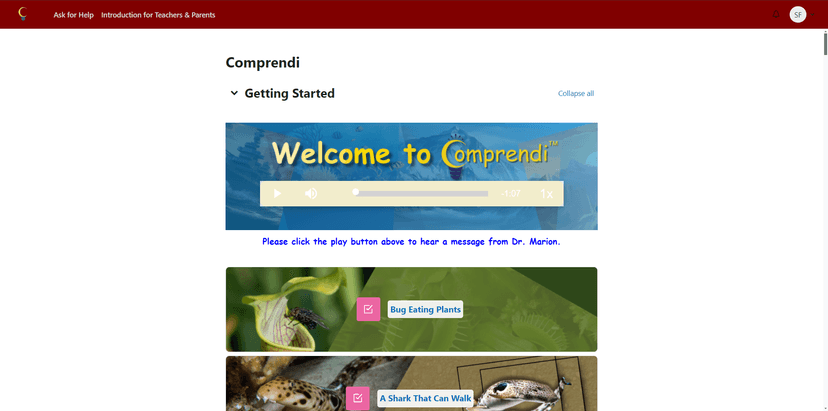
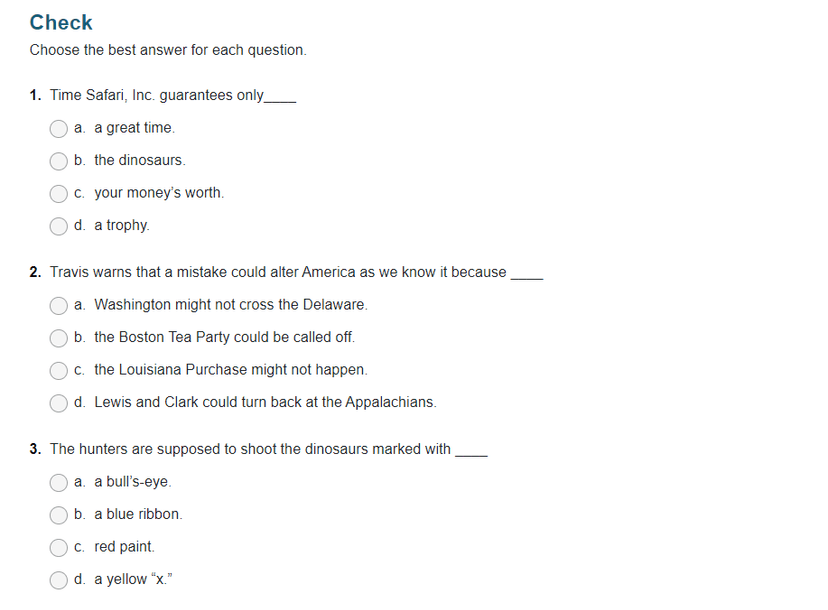
Connections: English Language Arts uses explicit instruction and scaffolded reading practice to teach middle and high school students literary analysis. Students log in and are presented with high-interest, grade-level reading selections. As they navigate the text, the platform prompts them to apply specific close reading strategies. First, learners tackle the what of the text by answering questions about main ideas and key details, which acts as a form of retrieval practice to ensure baseline comprehension. Next, they move to the how, analyzing the author's craft, tone, and structural choices. Finally, students explore the why, synthesizing their understanding to determine the author's overarching purpose. This stepped progression relies on cognitive scaffolding, ensuring students do not attempt complex synthesis before they have mastered basic recall of the text. The platform requires students to actively respond to prompts, keeping them engaged in the material rather than passively scrolling.
Strengths and tradeoffs of Connections: English Language Arts
The biggest strength of Connections: English Language Arts is its use of cognitive scaffolding to break down complex literary analysis, while its biggest weakness is the lack of automated, adaptive feedback for independent learners. Scaffolded Instruction: By guiding students from basic recall to complex synthesis, the platform effectively manages cognitive load. Students are not overwhelmed by immediate demands to analyze authorial intent; instead, they build a foundation of basic comprehension first. Guided Practice: The explicit focus on the what, how, and why of a text provides a reliable cognitive routine for students to apply to any future reading material. Need for Human Feedback: Because literary analysis is inherently subjective, the platform cannot easily provide immediate, corrective feedback on written responses the way a math app might. This means the learning loop is incomplete without a teacher or parent to review the student's work and correct misconceptions. Pending Evaluation: The Learning Standard has not yet formally rated this tool, meaning its real-world efficacy in improving standardized test scores or long-term retention remains unverified by our independent metrics.
Who Might Benefit From Connections: English Language Arts?
Connections: English Language Arts is best for middle and high school students in grades 6 through 12 who need structured guidance to transition from basic reading comprehension to advanced literary analysis. It is an ideal tool for classroom educators or dedicated homeschooling parents who want a systematic curriculum for teaching close reading strategies. Because the platform relies on discussion and written responses, it is highly suited for blended learning environments where an adult can provide personalized feedback. It is not intended for early readers, students requiring phonics interventions, or children looking for a fully autonomous learning experience.
Data Transparency
Does Not Meet Data Transparency Standard
Connections: English Language Arts does not meet our data transparency standard. Its privacy policy does not document basic protections, including parents' right to see their child's data and parents' right to delete their child's data.
16 of 35 checks passed
Evaluated September 2026
Privacy Policy for Perfection Next →Level 1 · Basic protections
Does not sell data or target ads at students, limits sharing, and lets parents see and delete their child's data.
Not documented: parents' right to see their child's data, parents' right to delete their child's data
Level 2 · Parent control (meets the standard)
Families can get their data out, know who processes it, and know how long it is kept.
Not documented: data export, a data retention timeline, self-service deletion
Level 3 · Direct data access
Families or schools can pull their own data through an API, in a stated format.
Not documented: an API for retrieving their own data, a named export format
View all 35 checks
Parent Access5/8
Does the policy mention parents specifically?
“Each School is responsible for obtaining parental consent for its students to use the Site. If a parent has any questions regarding registration, please contact the child's Teacher or School Administrator.”
Can parents view their child's data?
The policy mentions Parent Accounts but does not say parents can view or ask to see their child's data.
Can parents modify their child's data?
The policy does not say parents can change or correct their child's data.
Can parents delete their child's account?
The policy only lets parents refuse further collection or use of their child's data through the school; it does not describe parents deleting the child's data or account.
Is there a dedicated Children's Privacy section?
“We are dedicated to the privacy of children, particularly children under 13 years of age.”
Does it reference COPPA compliance?
“The Children’s Online Privacy Protection Act (“COPPA”) allows a school district or school to obtain consent for the online collection of personal information from children who are students of the school district or school.”
Does it reference FERPA compliance?
“we will maintain any and all Personal Information in education records which come into our possession in accordance with the requirements of the Family Educational Rights and Privacy Act ("FERPA")”
Is parental consent required for child accounts?
“Each School is responsible for obtaining parental consent for its students to use the Site.”
Data Portability1/5
Can users access their personal data?
“You have the right to request any or all of the following:”
Can users download/export their data?
The policy names data portability only in a section-title reference and grants no export or download right.
Is there a self-service data access tool?
Access requests are made by email or phone; the policy describes no self-service tool.
Is a specific data format mentioned for export?
The policy does not name any export format.
Is there an API for data access?
The policy does not mention an API for data access.
Data Minimization1/6
Is data collection itemized?
“When registering the Student Account, the Site may collect the following information, including Personal Information, about the student: (i) student's first, middle and last name; (ii) student's ID; (iii) student's grade level; (iv) school name; (v) username; and (vi) password.”
Can the app be used without a real name?
The policy says it collects the student's first, middle and last name when a Student Account is registered.
Can the app be used without an email?
Email is not in the Student Account list, but the policy says it may get personal information such as email address from schools or their service providers, so collection is not ruled out.
Does it state collection is limited to what is necessary?
The policy limits the purposes of technical data collection but never says collection is limited to what is necessary.
Is IP address anonymized or truncated?
The policy says it collects IP host addresses and does not mention anonymizing or truncating them.
Is location tracking explicitly excluded?
The policy does not address location tracking.
Third-Party Protection6/7
Does it explicitly state no selling of data?
“We do not use any information in connection with online behavioral advertising or building user profiles for commercial purposes. Nor do we sell any information to third parties or mass marketers.”
Are third-party providers named?
“For example, we use Google Analytics to understand how visitors interact with our Site.”
Are providers contractually restricted?
“Only we and our affiliates, our technical consultants, third party auditors and other third parties who make our Site available, enhance its functionality, or provide associated services and/or who deal with you in delivering content have access to this information, and we require them to agree that they are covered by this Privacy Policy.”
No-targeted-advertising commitment?
“This information is not used for behaviorally advertising purposes and we do not permit behavioral advertising on our Site.”
Is AI/ML data sharing addressed?
The policy does not address AI or machine learning.
Child-specific sharing restriction?
“will not disclose such information to third parties except with the consent of a parent, the School or an eligible student (as applicable), unless otherwise permitted under FERPA and its associated regulations.”
Cookies/tracking limited or opt-out?
“You may set your browser to decline cookies. If you do so, however, you may not be able to fully experience some interactive features of the Site.”
Deletion & Retention2/5
Can users delete their account?
“If you would like to remove Personal Information from our Site, please contact your Teacher or Administrator.”
Self-service deletion mechanism?
Deletion is by request through the school or support staff; the policy describes no self-service mechanism.
Specific data retention timeline?
The policy gives no data retention timeline.
Auto-deletion of inactive accounts?
The policy does not address auto-deleting inactive accounts.
Post-deletion handling described?
“we will delete (and direct our service providers to delete) your Personal Information from our records, unless an exception (e.g., under applicable law) applies. However, we may retain Personal Information that has been de-identified or aggregated.”
Advertising1/4
Advertising model explicitly disclosed?
The policy bans behavioral advertising but does not say whether the product has any other advertising.
Free from third-party advertisements?
The policy bans behavioral advertising but does not say the product is free of third-party ads.
Children excluded from ad targeting?
“This information is not used for behaviorally advertising purposes and we do not permit behavioral advertising on our Site.”
Ad-free option available?
The policy does not say the product has no ads or offers an ad-free option; it only bans behavioral advertising.
What This Means
The policy review did not meet our data transparency standard. The checks above show the documented findings and unknowns. A missing statement does not establish how the app handles data in practice.
About this evaluation: Based on automated analysis of Privacy Policy for Perfection Next against 35 policy-disclosure questions, including questions adapted from the Common Sense Privacy Program's published evaluation questions. TLS is not affiliated with Common Sense Media, and this is not a Common Sense rating. Quoted text is copied from the policy; unquoted notes are our summary. Results describe what the policy documents, not the company's actual practices. Privacy policies can change: this review reflects the version we analyzed and does not determine legal compliance.
Sources and review method
TLS combines product information and editorial analysis to explain how Connections: English Language Arts works, its tradeoffs, and the questions to ask before choosing it. Product features, an instructional rationale and evidence of learning outcomes are different kinds of information.
Formal Learning Standard assessment: not yet completed. Data Transparency findings are reported separately and do not establish learning effectiveness. Read our methodology.
Frequently Asked Questions About Connections: English Language Arts
Is Connections: English Language Arts free?
No, Connections: English Language Arts is not free. Perfection Learning offers pricing models based on annual or multiple-year institutional subscriptions. It is primarily sold to school districts and educational institutions rather than directly to individual parents for home use. You will need to contact the publisher directly for specific pricing tiers based on your student enrollment, classroom size, and the length of the contract you choose.
Is Connections: English Language Arts good for middle and high schoolers?
Yes, Connections: English Language Arts is specifically designed for students in grades 6 through 12. The texts are carefully curated to be high-interest and appropriately challenging for adolescents, ensuring the material remains engaging for older students. Furthermore, the cognitive demands of the platform involve deep literary analysis and synthesizing author intent. These complex tasks align perfectly with the developmental milestones and educational standards expected in middle and high school English classes.
What does Connections: English Language Arts teach?
Connections: English Language Arts teaches close reading, reading comprehension, and advanced literary analysis. It guides students to systematically break down literature by identifying the main ideas, examining the author's stylistic craft, and understanding the author's overarching purpose. It does not teach foundational reading skills like phonics or basic decoding. Instead, the platform focuses entirely on developing the advanced critical thinking and textual analysis skills required for higher-level academics.
Has The Learning Standard evaluated Connections: English Language Arts?
TLS has not yet completed a Learning Standard evaluation of how well Connections: English Language Arts teaches. Its privacy policy has been reviewed for Data Transparency and does not yet document the basic protections (Level 1).
Is Connections: English Language Arts COPPA compliant?
The reviewed privacy policy references COPPA. A policy reference alone does not establish COPPA compliance. Policy review note: The policy cites COPPA's school-consent rule.
Is Connections: English Language Arts FERPA compliant?
The reviewed privacy policy references FERPA. A policy reference alone does not establish FERPA compliance. Policy review note: The policy commits to handling education records as FERPA requires.
Does Connections: English Language Arts have a children's privacy policy?
The reviewed policy includes a dedicated children's privacy section. Policy review note: The policy has a section headed "Children's Online Privacy".
Does Connections: English Language Arts sell student data?
The reviewed policy states that the app does not sell data. This is a policy statement; actual data practices were not verified. Policy review note: The company says it does not sell any information.
Can you delete your data from Connections: English Language Arts?
The reviewed privacy policy describes account deletion. We have not tested the deletion process. Policy review note: Users can have their data removed through the school, and California residents can request deletion.
Follow TLS Research
Subscribe to future TLS research updates: app reviews, findings, and what the evidence shows.
Screenshots
Take Action
For Connections: English Language Arts
If you represent Perfection Learning and have a correction or new evidence, send the relevant source so we can review and update this page.
Submit a correctionDetails
- Pricing
- Pricing models are available for annual or multiple year subscriptions.
- Platforms
- Web Browser, iPadOS (Apple tablet), Windows (Microsoft), macOS (Apple)
- Grade Levels
- 6th Grade, 7th Grade, 8th Grade, 9th Grade, 10th Grade, 11th Grade, 12th Grade
- Website
- Visit site