
Cognii Virtual Learning Assistant
Product by Cognii, Inc
Facts checked: Not yet checked
Our take (not a Learning Standard rating). This label applies to learning-science judgments throughout this overview.
Our take (not a Learning Standard rating)
While The Learning Standard has not yet formally evaluated Cognii Virtual Learning Assistant, its reliance on open-response questions strongly supports retrieval practice, a proven learning science principle. However, effectiveness depends heavily on the quality of the underlying curriculum it is paired with, as it functions as an assessment tool rather than a standalone curriculum.
Pros
- Forces active recall through open-ended written responses rather than relying on simple multiple-choice selection.
- Provides immediate, targeted feedback on student answers to help correct misconceptions in real time before they take root.
- Engages higher-order thinking by requiring students to articulate complex concepts in their own words.
- Mimics Socratic tutoring by prompting students to elaborate on incomplete answers rather than just feeding them the solution.
Cons
- Relies entirely on the quality of the external curriculum it is integrated with, lacking any standalone instructional content.
- Typing constraints may cause cognitive overload and frustrate younger learners or those with developing fine motor skills.
- Automated scoring of subjective written answers can sometimes misinterpret nuanced or unconventionally phrased student responses.
- Requires a reliable internet connection and a device with a physical keyboard for the best user experience.
What Do We Know About Cognii Virtual Learning Assistant?
Cognii Virtual Learning Assistant offers a highly effective method for reinforcing knowledge through active recall, though The Learning Standard has not yet assigned it a formal rating. Your child will not learn new material directly from this app. Instead, it serves as an interactive assessment tool that pairs with existing curriculum to test comprehension. By asking open-ended questions, it forces your child to retrieve information from memory and articulate it in writing. This process, known as retrieval practice, builds much stronger neural pathways than simply recognizing a correct answer on a multiple-choice test. When your child submits an answer, the artificial intelligence analyzes the text and provides immediate feedback. If the answer is incomplete, the system prompts them to elaborate, mimicking a Socratic tutoring method. Because it requires written articulation, this tool is best suited for students who already possess basic keyboarding skills and foundational literacy. Parents should note that its success is entirely dependent on the quality of the primary instruction your child receives elsewhere.
How Does Cognii Virtual Learning Assistant Work?
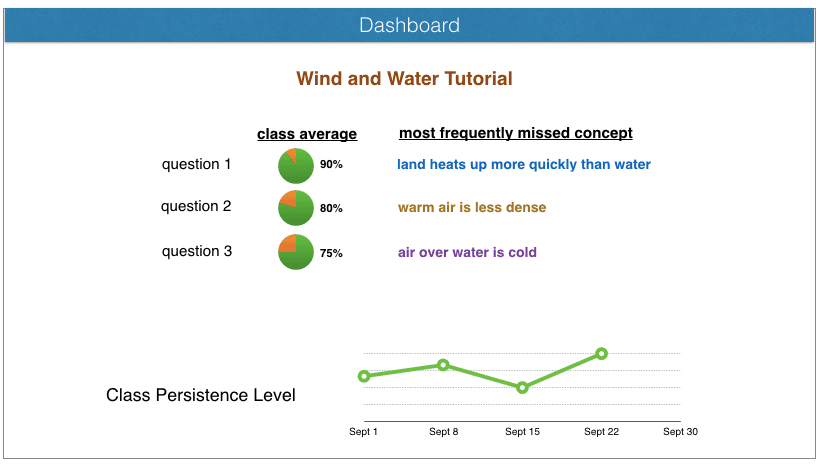
Cognii Virtual Learning Assistant uses conversational artificial intelligence to facilitate Socratic tutoring and formative assessment. After your child encounters a learning module in their standard curriculum, this tool steps in to assess their understanding. It presents an open-response prompt requiring a typed answer. Once your child submits their response, the natural language processing engine evaluates the text against a master rubric of expected concepts. It does not just look for exact keywords; it attempts to understand the semantic meaning of the sentence. If your child misses a key concept, the system generates a follow-up question or a hint to guide them toward the complete answer. This immediate feedback loop prevents the encoding of incorrect information. The platform logs these interactions, providing educators and parents with data on which specific concepts require further review or intervention.
Strengths and tradeoffs of Cognii Virtual Learning Assistant
This platform's biggest strength is its strict reliance on retrieval practice, while its biggest weakness is the inherent unreliability of artificial intelligence in perfectly grading nuanced human writing. The app excels at pushing students past surface-level memorization. Active recall is heavily utilized here; by removing the crutch of multiple-choice answers, students must genuinely construct knowledge from scratch. The system's use of immediate feedback also aligns directly with best practices in learning science, as correcting a misconception the moment it occurs prevents negative transfer. Furthermore, the conversational format encourages elaboration, asking students to expand on their thoughts and deepen their cognitive processing. On the downside, automated grading of open-ended text is notoriously difficult. Algorithmic misinterpretation can occasionally occur, potentially penalizing a student who understands the concept but phrases it unconventionally. This can cause unnecessary frustration during an assignment. Additionally, the cognitive load required to type out complex answers may distract younger learners from the actual subject matter, making it less ideal for students below third grade.
Who Might Benefit From Cognii Virtual Learning Assistant?
Best for middle and high school students who need rigorous comprehension checks to reinforce complex academic subjects. While marketed for grades three and up, the heavy typing requirement makes it most appropriate for older children with developed keyboarding skills. It is an excellent tool for students who struggle with test anxiety, as it allows them to practice articulating higher-order concepts in a low-stakes, conversational environment. Since it is subject-agnostic, it works exceptionally well for humanities, social studies, and sciences where explaining the why and how is critical to full mastery.
Data Transparency
Does Not Meet Data Transparency Standard
Cognii Virtual Learning Assistant reaches Level 1 of 3 (Basic protections), below our data transparency standard. Reaching Level 2 needs the policy to document named service providers and self-service deletion.
18 of 35 checks passed
Evaluated September 2026
Cognii →Level 1 · Basic protections
Does not sell data or target ads at students, limits sharing, and lets parents see and delete their child's data.
Level 2 · Parent control (meets the standard)
Families can get their data out, know who processes it, and know how long it is kept.
Not documented: named service providers, self-service deletion
Level 3 · Direct data access
Families or schools can pull their own data through an API, in a stated format.
Not documented: an API for retrieving their own data, a named export format
View all 35 checks
Parent Access7/8
Does the policy mention parents specifically?
“If you are a student or the parent or guardian of a student and have questions about reviewing, modifying, or deleting personal information of a student, please contact your school directly.”
Can parents view their child's data?
“If you are a student or the parent or guardian of a student and have questions about reviewing, modifying, or deleting personal information of a student, please contact your school directly.”
Can parents modify their child's data?
“If you are a student or the parent or guardian of a student and have questions about reviewing, modifying, or deleting personal information of a student, please contact your school directly.”
Can parents delete their child's account?
“If you are a student or the parent or guardian of a student and have questions about reviewing, modifying, or deleting personal information of a student, please contact your school directly.”
Is there a dedicated Children's Privacy section?
“5\. Children’s privacy”
Does it reference COPPA compliance?
The policy does not mention COPPA.
Does it reference FERPA compliance?
“Our collection and use of Student Data provided by a Teacher or School is governed by our [Terms of Service](https://www.cognii.com/terms-of-service) and by the provisions of the Family Educational Rights and Privacy Act (FERPA).”
Is parental consent required for child accounts?
“However, our Service is not intended for children or minors under the age of thirteen years without the permission of a parent or guardian.”
Data Portability2/5
Can users access their personal data?
“provide access to and/or a copy of certain information we hold about you”
Can users download/export their data?
“transfer your information to a third-party provider of services”
Is there a self-service data access tool?
The policy lets users update account information by signing in but describes no self-service tool for accessing their data.
Is a specific data format mentioned for export?
The policy does not name an export format.
Is there an API for data access?
The policy does not mention an API for data access.
Data Minimization1/6
Is data collection itemized?
“including a name, school name, school district, school email address and/or account name and password, billing information, and phone number.”
Can the app be used without a real name?
The policy says teachers provide class rosters, so student names are collected.
Can the app be used without an email?
The policy says student email addresses are collected, including from teachers.
Does it state collection is limited to what is necessary?
The policy limits use to compatible purposes and retention to what is necessary, but does not say collection is limited to what is necessary.
Is IP address anonymized or truncated?
The policy says IP addresses are collected in log files and does not describe anonymizing or truncating them.
Is location tracking explicitly excluded?
The policy does not exclude location tracking.
Third-Party Protection4/7
Does it explicitly state no selling of data?
The policy does not state that the company does not sell data.
Are third-party providers named?
The policy describes service providers only generically (e.g., accountants, mailing houses) and names no specific data recipients.
Are providers contractually restricted?
“We may share information with third party service providers who perform services on our behalf (e.g. accountants, mailing houses), but strictly for the purpose of carrying out their work for us.”
No-targeted-advertising commitment?
“We do not use personally identifiable Student Data for any purpose other than to provide the services to the School or Teacher, and we do not share personally identifiable Student Data with any third party except as authorized or required by the School, Teacher or the Student.”
Is AI/ML data sharing addressed?
The policy does not address sharing data for AI or machine learning.
Child-specific sharing restriction?
“we do not share personally identifiable Student Data with any third party except as authorized or required by the School, Teacher or the Student.”
Cookies/tracking limited or opt-out?
“Please look for instructions on how to delete or disable cookies and other tracking/recording tools on your browser’s technical settings.”
Deletion & Retention3/5
Can users delete their account?
“Data associated with a given account is retained until the account owner or an institution, on behalf of the account owner, submits a deletion request.”
Self-service deletion mechanism?
The policy describes deletion only by request, not through a self-service tool.
Specific data retention timeline?
“Upon deletion, data is retained in our backups for a period of one (1) year.”
Auto-deletion of inactive accounts?
The policy says data is kept until a deletion request and does not describe auto-deleting inactive accounts.
Post-deletion handling described?
“Upon deletion, data is retained in our backups for a period of one (1) year.”
Advertising1/4
Advertising model explicitly disclosed?
The policy bars third-party ad networks from collecting user data but does not say whether the product shows ads.
Free from third-party advertisements?
The policy does not say the product is free of third-party ads; it only bars ad networks from collecting user data.
Children excluded from ad targeting?
“We do not allow third party advertising networks to collect information about the users of our Site or Service.”
Ad-free option available?
The policy does not say the product has no ads or offer an ad-free option.
What This Means
The policy review did not meet our data transparency standard. The checks above show the documented findings and unknowns. A missing statement does not establish how the app handles data in practice.
About this evaluation: Based on automated analysis of Cognii against 35 policy-disclosure questions, including questions adapted from the Common Sense Privacy Program's published evaluation questions. TLS is not affiliated with Common Sense Media, and this is not a Common Sense rating. Quoted text is copied from the policy; unquoted notes are our summary. Results describe what the policy documents, not the company's actual practices. Privacy policies can change: this review reflects the version we analyzed and does not determine legal compliance.
Sources and review method
TLS combines product information and editorial analysis to explain how Cognii Virtual Learning Assistant works, its tradeoffs, and the questions to ask before choosing it. Product features, an instructional rationale and evidence of learning outcomes are different kinds of information.
Formal Learning Standard assessment: not yet completed. Data Transparency findings are reported separately and do not establish learning effectiveness. Read our methodology.
Frequently Asked Questions About Cognii Virtual Learning Assistant
Is Cognii Virtual Learning Assistant free?
Pricing for Cognii Virtual Learning Assistant is not publicly available and requires contacting the vendor directly. It is typically sold as an enterprise solution for school districts or textbook publishers rather than as a direct-to-consumer application for individual families. If your child's school has adopted this platform, access will be provided directly through their existing learning management system at no additional cost to you.
Is Cognii Virtual Learning Assistant good for elementary students?
It is generally better suited for older students. While the developer states it works for grade three and up, the heavy reliance on typing long-form, open-ended responses can induce cognitive overload in younger children. Students who are still mastering basic literacy and fine motor keyboarding skills may find the interface frustrating, making it much more effective for middle school and high school learners.
What does Cognii Virtual Learning Assistant teach?
Cognii Virtual Learning Assistant does not teach specific subjects independently. Instead, it acts as a universal assessment layer that can be applied to any subject area. It evaluates comprehension of material your child has already studied, focusing heavily on higher-order thinking skills. You will most commonly see it integrated into history, science, and reading comprehension courses where explaining the rationale behind an answer is just as important as the answer itself.
How does Cognii Virtual Learning Assistant compare to standard multiple-choice quizzes?
Standard quizzes rely heavily on recognition, where students simply identify the correct answer from a list of options. Cognii requires active recall and articulation, forcing your child to generate the answer entirely from scratch. Learning science shows that this generative cognitive process leads to significantly better long-term retention of information. By removing the ability to guess, it provides a much more accurate picture of a student's true subject mastery.
Has The Learning Standard evaluated Cognii Virtual Learning Assistant?
TLS has not yet completed a Learning Standard evaluation of how well Cognii Virtual Learning Assistant teaches. Its privacy policy has been reviewed for Data Transparency and reaches Level 1, Basic protections.
Is Cognii Virtual Learning Assistant COPPA compliant?
A COPPA reference was not found in the reviewed privacy policy. This does not determine whether the app complies with COPPA. Policy review note: The policy does not mention COPPA.
Is Cognii Virtual Learning Assistant FERPA compliant?
The reviewed privacy policy references FERPA. A policy reference alone does not establish FERPA compliance. Policy review note: The policy says it follows FERPA for Student Data.
Does Cognii Virtual Learning Assistant have a children's privacy policy?
The reviewed policy includes a dedicated children's privacy section. Policy review note: The policy has a dedicated Children's privacy section.
Does Cognii Virtual Learning Assistant sell student data?
A statement ruling out data selling was not found in the reviewed policy. This does not establish that the app sells student data. Policy review note: The policy does not state that the company does not sell data.
Can you delete your data from Cognii Virtual Learning Assistant?
The reviewed privacy policy describes account deletion. We have not tested the deletion process. Policy review note: Account owners or institutions can request deletion.
Follow TLS Research
Subscribe to future TLS research updates: app reviews, findings, and what the evidence shows.
Screenshots
Take Action
For Cognii Virtual Learning Assistant
If you represent Cognii, Inc and have a correction or new evidence, send the relevant source so we can review and update this page.
Submit a correctionDetails
- Pricing
- Contact vendor for pricing.
- Website
- Visit site