
Codio
Product by Codio
Facts checked: Not yet checked
Our take (not a Learning Standard rating). This label applies to learning-science judgments throughout this overview.
Our take (not a Learning Standard rating)
Codio provides a robust cloud-based computing environment that facilitates project-based learning for computer science, but its effectiveness depends heavily on instructor implementation. While it removes the friction of local software setup and allows for immediate code execution, independent learners may struggle without guided, worked examples.
Pros
- Eliminates local software configuration barriers, reducing cognitive load before learning even begins.
- Supports immediate feedback by allowing students to execute and test code in real-time within the browser.
- Enables problem-based learning through customizable, pre-configured coding environments.
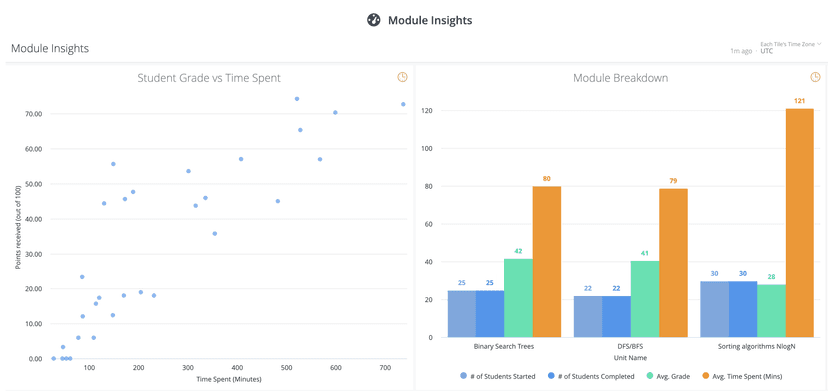
- Facilitates instructor intervention with tools that track student coding progress and error rates.
Cons
- Relies heavily on teacher-created curriculum, lacking built-in instructional scaffolds for independent learners.
- Does not inherently utilize spaced repetition or retrieval practice without specific instructor configuration.
- Interface complexity and text-heavy instructions may overwhelm younger students in upper elementary and middle school grades.
What Do We Know About Codio?
Codio is an effective tool for computer science instruction when paired with a knowledgeable teacher, but it is not a standalone self-teaching app. Rather than acting as a digital tutor, Codio functions as a sophisticated cloud-based laboratory. It removes the frustrating technical barriers of installing software environments, allowing your child to start coding immediately in a web browser. Because it supports project-based learning, students can engage in authentic programming tasks that mirror real-world computer science. However, the platform itself does not inherently provide direct instruction, worked examples, or mastery-based progression. The learning science benefits, such as immediate feedback on code execution, are strong, but the actual pedagogical structure relies entirely on how the school or instructor designs the course. Parents should view Codio as a digital textbook and lab space combined, rather than an intelligent tutoring system that adapts to their child's specific learning gaps.
How Does Codio Work?
Codio uses a problem-based learning approach by providing students with a fully functioning, cloud-hosted coding environment directly in their web browser. Instructors author or import computer science curriculum, pairing text instructions with live code editors and terminal windows side-by-side. When your child logs in, they read the assigned material, write code to solve a specific problem, and compile or run that code instantly. This setup reduces extraneous cognitive load. Instead of spending hours configuring software packages or troubleshooting operating system errors, students focus solely on learning programming logic and syntax. Instructors can set up auto-grading scripts to provide immediate feedback on student submissions, which is critical for correcting misconceptions early. Teachers also have access to playback features that show exactly how a student built their code keystroke by keystroke, allowing for highly targeted interventions when a learner gets stuck.
Strengths and tradeoffs of Codio
Codio's biggest strength is its ability to reduce technical friction through cloud-based environments, while its biggest weakness is its reliance on external instructional design to be effective. Strengths in Cognitive Load Management: By hosting the coding environment in the cloud, Codio eliminates the extraneous cognitive load associated with local software setup. Students can direct all their working memory capacity toward solving programming problems. Furthermore, the platform's support for auto-graded assessments provides the immediate feedback necessary for students to correct faulty mental models during practice. Weaknesses in Instructional Scaffolding: Because Codio is an infrastructure tool rather than a comprehensive curriculum, it lacks built-in worked examples or spaced retrieval practice unless explicitly programmed by the instructor. Without a highly skilled teacher to structure the learning sequence, novice programmers may experience cognitive overload. The platform assumes a high level of self-regulation and reading comprehension. This makes it significantly less suitable for the younger end of its advertised grade range without heavy adult supervision and highly structured lesson plans.
Who Might Benefit From Codio?
Codio is best for high school and higher education students taking formal computer science courses with instructor support. While advertised for students as young as fourth grade, the platform's text-heavy interface and complex coding environments are better suited for adolescents and adults. It is ideal for schools, universities, and coding bootcamps that want a standardized, easily accessible platform for teaching Python, Java, web development, or data science. It is not recommended for parents seeking a standalone app to teach their child to code at home.
Sources and review method
TLS combines product information and editorial analysis to explain how Codio works, its tradeoffs, and the questions to ask before choosing it. Product features, an instructional rationale and evidence of learning outcomes are different kinds of information.
Formal Learning Standard assessment: not yet completed. Data Transparency findings are reported separately and do not establish learning effectiveness. Read our methodology.
Frequently Asked Questions About Codio
Is Codio free?
No. Codio is a paid platform that requires an annual or semester-based license. Schools and universities typically purchase licenses on a per-student basis, meaning individual parents do not usually buy subscriptions directly for home use.
Is Codio good for elementary students?
Generally, no. While the developer lists support for grades four and up, the interface and text-based coding environments are better suited for high school and college students. Younger learners typically benefit more from block-based programming interfaces and highly gamified instructional scaffolds.
What does Codio teach?
Codio does not teach a specific subject out of the box; it is a platform used by teachers to deliver computer science, math, and data science curriculum. It supports almost any programming language, allowing students to learn everything from basic Python to advanced machine learning.
How does Codio compare to Replit?
Both Codio and Replit offer cloud-based coding environments, but Codio is strictly focused on formal education and course delivery. Codio includes robust auto-grading, learning management system integrations, and curriculum authoring tools, whereas Replit is widely used by independent developers and hobbyists alongside its educational tier.
Has The Learning Standard evaluated Codio?
TLS has not yet completed a Learning Standard evaluation of how well Codio teaches. TLS has not published a Data Transparency result for its privacy policy.
Follow TLS Research
Subscribe to future TLS research updates: app reviews, findings, and what the evidence shows.
Screenshots



Latest News
All Codio NewsTake Action
For Codio
If you represent Codio and have a correction or new evidence, send the relevant source so we can review and update this page.
Submit a correctionDetails
- Pricing
- Pricing is available on an annual or semester cadence with licenses available on a per-student basis.
- Platforms
- Web Browser, iOS (Apple mobile), iPadOS (Apple tablet), Android (Google mobile), Tizen (Samsung mobile), Windows (Microsoft), macOS (Apple), Chrome OS (Google)
- Grade Levels
- 4th Grade, 5th Grade, 6th Grade, 7th Grade, 8th Grade, 9th Grade, 10th Grade, 11th Grade, 12th Grade, Associate's degree, Bachelor's degree, Master's Degree, Doctoral Degree, Post-doctoral certificate, Adult Education, Professional or Technical Credential
- Website
- Visit site