Codementum
Product by Sunburst Digital
Facts checked: Not yet checked
Our take (not a Learning Standard rating). This label applies to learning-science judgments throughout this overview.
Our take (not a Learning Standard rating)
While Codementum uses proven mastery-based learning to teach JavaScript and Python, The Learning Standard has not yet formally evaluated its effectiveness. Its reliance on game-based problem solving encourages active engagement, but schools and parents should monitor if in-game success translates to writing syntax independently without scaffolding.
Pros
- Uses mastery-based progression to ensure students understand basic logic before introducing complex syntax.
- Teaches real-world programming languages like Python and JavaScript rather than relying solely on block-based coding.
- Employs active problem-solving challenges that force students to apply concepts immediately rather than just reading theory.
- Provides built-in curriculum tools that allow educators to track personalized learning metrics across a classroom.
Cons
- Lacks transparent pricing, requiring schools to contact sales for a custom quote rather than offering straightforward parent subscriptions.
- Game-based mechanics can sometimes distract from the core coding instruction if scaffolding is not gradually removed.
- Requires high reading comprehension and logic skills, which may frustrate students at the lower end of the claimed grade range.
- Evaluation by The Learning Standard is pending, meaning independent data on long-term knowledge retention is currently unavailable.
What Do We Know About Codementum?
Codementum is an effective tool for introducing your child to text-based coding, provided it is used alongside active guidance. Because it transitions students into real-world languages like Python and JavaScript, your child will learn syntax and logic rather than just dragging and dropping visual blocks. The program relies heavily on game-based challenges to maintain engagement. This approach utilizes active learning, forcing your child to write code to solve immediate problems, which improves knowledge retention far better than passive video tutorials. However, you must monitor whether your child is actually internalizing the syntax or simply using trial-and-error to pass the levels. Game-based learning sometimes masks a lack of true comprehension. The platform uses a personalized, mastery-based progression system. This means your child cannot advance to complex algorithms until they demonstrate success with basic loops and variables. While this prevents learning gaps, it can also cause frustration if your child gets stuck on a specific logic puzzle. Because Codementum is sold primarily to schools, accessing it at home typically requires a district license rather than a simple consumer subscription.
How Does Codementum Work?
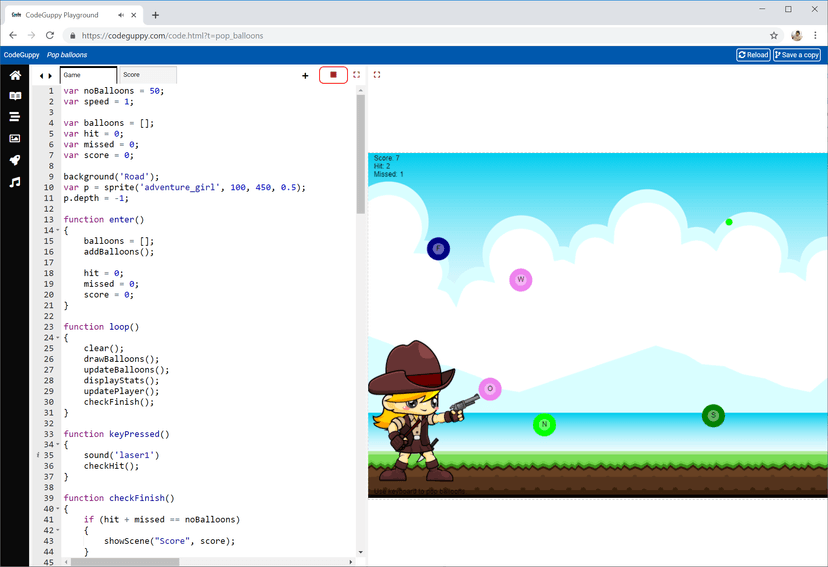
Codementum uses a mastery-based, game-driven pedagogical approach to transition students from basic computational logic to text-based programming. Students log into a central dashboard where they are presented with interactive puzzles. To move a character or achieve an objective, the student must write actual code using Python or JavaScript syntax. The system evaluates the code in real-time, executing the commands on the screen to provide immediate visual feedback. If the code fails, the student must debug the syntax or logic error and try again. This creates a tight feedback loop that encourages iterative problem-solving. As students demonstrate mastery of core concepts like sequencing, loops, and conditional statements, the platform automatically increases the difficulty of the challenges. The system also includes educator tools that track individual student progress, allowing teachers to identify where specific students are struggling and intervene with targeted support.
Strengths and tradeoffs of Codementum
Codementum's biggest strength is its use of immediate visual feedback for text-based coding, while its biggest weakness is the potential for trial-and-error behaviors that bypass genuine learning. Strength in Immediate Feedback: By forcing students to write Python or JavaScript to solve on-screen puzzles, the app provides instant knowledge of results. When a student executes their code, they see exactly where the logic fails. This aligns with the learning science principle of immediate feedback, which rapidly corrects misconceptions before they encode into long-term memory. Strength in Authentic Practice: Unlike platforms that limit students to block-based coding, Codementum requires typing actual syntax. This authentic retrieval practice builds fluency in real-world programming languages. Weakness in Game Mechanics: Because the primary goal is solving a game puzzle, students may rely on guessing rather than systematic logic to pass a level. This weakens the generation effect, as the cognitive effort is spent beating the game rather than understanding the underlying computer science principles. Weakness in Accessibility: The platform is gatekept behind institutional purchasing, making it difficult for individual parents to utilize these tools without a school district's involvement.
Who Might Benefit From Codementum?
Codementum is best for middle and high school students who are ready to transition from visual block coding into actual text-based programming languages. While the platform claims to support students as young as third grade, the cognitive demands of typing syntax in Python and JavaScript are most appropriate for grades six and up. It is an ideal solution for school districts looking for a structured, mastery-based curriculum to implement across multiple grade levels. It works best for students who thrive in gamified environments and need visual problem-solving contexts to understand abstract logic concepts.
Data Transparency
Does Not Meet Data Transparency Standard
Codementum does not meet our data transparency standard. Its privacy policy does not document basic protections, including a COPPA or FERPA commitment and parents' right to see their child's data.
18 of 35 checks passed
Evaluated September 2026
Codementum →Level 1 · Basic protections
Does not sell data or target ads at students, limits sharing, and lets parents see and delete their child's data.
Not documented: a COPPA or FERPA commitment, parents' right to see their child's data
Level 2 · Parent control (meets the standard)
Families can get their data out, know who processes it, and know how long it is kept.
Not documented: data export, a data retention timeline, named service providers
Level 3 · Direct data access
Families or schools can pull their own data through an API, in a stated format.
Not documented: an API for retrieving their own data, a named export format
View all 35 checks
Parent Access4/8
Does the policy mention parents specifically?
“If you are not of legal age to form a binding contract (in many jurisdictions, this age is 18), you may only use the Services and disclose information to us with your parent’s or legal guardian’s express consent.”
Can parents view their child's data?
The policy lets parents ask to have their child's information updated or deleted, but it never says parents can view that information.
Can parents modify their child's data?
“If you would like to request that Children’s Personal Information regarding your child be updated or deleted (or, if you are a teacher, a child that is in your class) by the Services, or if you wish to request that we discontinue the further collection nor use of Children’s Personal Information, please contact us at info@codementum.com.”
Can parents delete their child's account?
“If you would like to request that Children’s Personal Information regarding your child be updated or deleted (or, if you are a teacher, a child that is in your class) by the Services, or if you wish to request that we discontinue the further collection nor use of Children’s Personal Information, please contact us at info@codementum.com.”
Is there a dedicated Children's Privacy section?
The policy handles children's information inside its general sections and has no section headed for children's privacy or COPPA.
Does it reference COPPA compliance?
The policy describes parental consent for children under 13 but never mentions COPPA.
Does it reference FERPA compliance?
The policy does not mention FERPA.
Is parental consent required for child accounts?
“We only collect Personal Information through the Services from a child under 13 where that student’s school, district, and/or teacher has agreed (via the terms described in the Terms of Use) to obtain parental consent for that child to use the Services and disclose Personal Information to us”
Data Portability2/5
Can users access their personal data?
“Through your account settings, you may access, and, in some cases, edit or delete the following information you’ve provided to us:”
Can users download/export their data?
The policy does not offer a way to download or export data.
Is there a self-service data access tool?
“Through your account settings, you may access, and, in some cases, edit or delete the following information you’ve provided to us:”
Is a specific data format mentioned for export?
The policy names no export format.
Is there an API for data access?
The policy does not mention an API for data access.
Data Minimization2/6
Is data collection itemized?
“For example, we collect Personal Information and Children’s Personal Information, such as your name, email address, school affiliation and a picture (if provided).”
Can the app be used without a real name?
The policy says it collects users' names.
Can the app be used without an email?
The policy says it collects email addresses, including parents' emails for student sign-ups.
Does it state collection is limited to what is necessary?
“A minor student’s participation in our Services, and the ability of a minor student to access the Services, will not be conditioned on that student providing more Children’s Personal Information than is reasonably necessary for that participation or access.”
Is IP address anonymized or truncated?
The policy says IP addresses are recorded but does not say they are anonymized or truncated.
Is location tracking explicitly excluded?
The policy does not rule out location tracking and says a user's location may be shown on their profile.
Third-Party Protection5/7
Does it explicitly state no selling of data?
“We neither rent nor sell your Personal Information or Children’s Personal Information in personally identifiable form to anyone.”
Are third-party providers named?
The policy refers to agents, partners and analytics vendors without naming any.
Are providers contractually restricted?
“Unless we tell you differently, our agents do not have any right to use the Personal Information or Children’s Personal Information we share with them beyond what is necessary to assist us. We also take steps to ensure that they agree to protect the Personal Information or Children’s Personal Information shared with them.”
No-targeted-advertising commitment?
“For children or student users of our Services or the sections of our Services for such users, these ads will not contain any behaviorally-targeted advertising or track users for such purposes.”
Is AI/ML data sharing addressed?
The policy does not address sharing data for AI or machine learning.
Child-specific sharing restriction?
“If you are a student/child user, we will not share your Children’s Personal Information in connection with any commercial third party transaction or service.”
Cookies/tracking limited or opt-out?
“You may be able to change the preferences on your browser or mobile device to prevent or limit your computer or device’s acceptance of cookies, but this may prevent you from taking advantage of some of our features.”
Deletion & Retention3/5
Can users delete their account?
“[You may request deletion of your account by sending an email with instructions.]”
Self-service deletion mechanism?
“You may modify or remove your Personal Information or Children’s Personal Information identified below at any time by logging into your account and accessing features to edit your profile and/or account information.”
Specific data retention timeline?
The policy gives no specific retention period.
Auto-deletion of inactive accounts?
The policy does not mention automatically deleting inactive accounts.
Post-deletion handling described?
“Please note that some information may remain in our records after your deletion of such information from your account. We may use any aggregated data derived from or incorporating your Personal Information and Children’s Personal Information after you update or delete it, but not in a manner that would identify you personally.”
Advertising2/4
Advertising model explicitly disclosed?
“Our analytics vendors and advertising partners may also transmit cookies to your computer or device, when you click on pages or ads that appear on the Services.”
Free from third-party advertisements?
The policy says ads from advertising partners may appear on the Services.
Children excluded from ad targeting?
“For children or student users of our Services or the sections of our Services for such users, these ads will not contain any behaviorally-targeted advertising or track users for such purposes.”
Ad-free option available?
The policy says ads appear on the Services and does not offer an ad-free option.
What This Means
The policy review did not meet our data transparency standard. The checks above show the documented findings and unknowns. A missing statement does not establish how the app handles data in practice.
About this evaluation: Based on automated analysis of Codementum against 35 policy-disclosure questions, including questions adapted from the Common Sense Privacy Program's published evaluation questions. TLS is not affiliated with Common Sense Media, and this is not a Common Sense rating. Quoted text is copied from the policy; unquoted notes are our summary. Results describe what the policy documents, not the company's actual practices. Privacy policies can change: this review reflects the version we analyzed and does not determine legal compliance.
Sources and review method
TLS combines product information and editorial analysis to explain how Codementum works, its tradeoffs, and the questions to ask before choosing it. Product features, an instructional rationale and evidence of learning outcomes are different kinds of information.
Formal Learning Standard assessment: not yet completed. Data Transparency findings are reported separately and do not establish learning effectiveness. Read our methodology.
Frequently Asked Questions About Codementum
Is Codementum free?
No, Codementum is not free. It is a premium educational platform that requires a paid yearly subscription to access its full curriculum and coding challenges. Pricing is not publicly listed and requires schools or districts to contact the company directly for a custom quote based on the specific number of student licenses needed. This enterprise model means it is rarely purchased directly by individual parents for home use.
Is Codementum good for elementary students?
Codementum claims to support students starting in the third grade, but it is generally better suited for older children in middle and high school. Teaching actual text-based languages like Python and JavaScript requires strong typing skills, high reading comprehension, and the ability to grasp abstract logic. Most younger elementary students have not yet developed these cognitive skills, making block-based coding alternatives much more appropriate for that early age group.
What does Codementum teach?
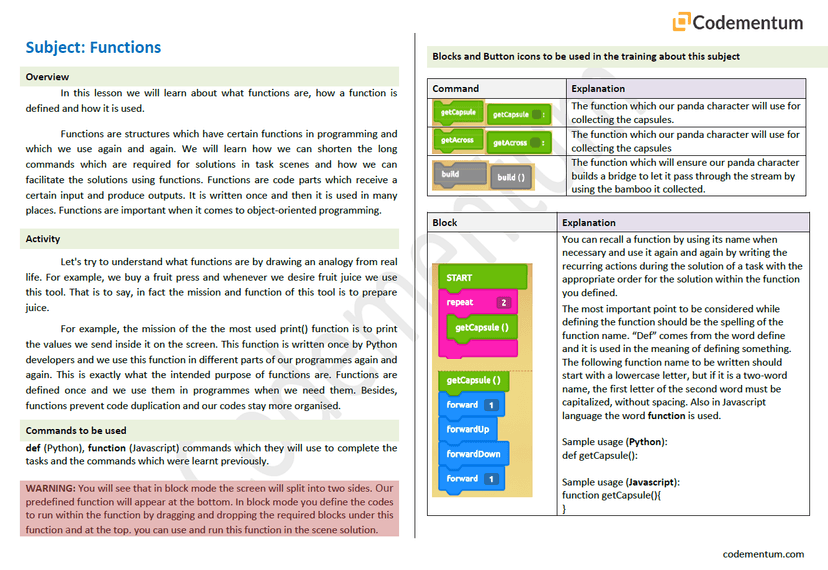
Codementum teaches computer science concepts and the specific syntax of real-world programming languages like Python and JavaScript. Students learn core programming logic, including sequencing, loops, variables, functions, and conditional statements. Instead of just reading about these concepts, students actively apply them by writing actual code to solve gamified puzzles and complete interactive challenges, building both computational thinking and practical typing skills.
Has The Learning Standard evaluated Codementum?
TLS has not yet completed a Learning Standard evaluation of how well Codementum teaches. Its privacy policy has been reviewed for Data Transparency and does not yet document the basic protections (Level 1).
Is Codementum COPPA compliant?
A COPPA reference was not found in the reviewed privacy policy. This does not determine whether the app complies with COPPA. Policy review note: The policy describes parental consent for children under 13 but never mentions COPPA.
Is Codementum FERPA compliant?
A FERPA reference was not found in the reviewed privacy policy. This does not determine whether the app complies with FERPA. Policy review note: The policy does not mention FERPA.
Does Codementum have a children's privacy policy?
No dedicated children's privacy section was found in the reviewed policy. Policy review note: The policy handles children's information inside its general sections and has no section headed for children's privacy or COPPA.
Does Codementum sell student data?
The reviewed policy states that the app does not sell data. This is a policy statement; actual data practices were not verified. Policy review note: Codementum says it does not sell personal information.
Can you delete your data from Codementum?
The reviewed privacy policy describes account deletion. We have not tested the deletion process. Policy review note: Users can ask by email to have their account deleted.
Follow TLS Research
Subscribe to future TLS research updates: app reviews, findings, and what the evidence shows.
Screenshots

Take Action
For Codementum
If you represent Sunburst Digital and have a correction or new evidence, send the relevant source so we can review and update this page.
Submit a correctionDetails
- Pricing
- Subscription packages for a year. Depending on the number of licenses. Please contact us for a personalized quote for your school. Sales@sunburst.com - (800) 321-7511
- Platforms
- Web Browser, Windows (Microsoft), macOS (Apple), Chrome OS (Google)
- Grade Levels
- 3rd Grade, 4th Grade, 5th Grade, 6th Grade, 7th Grade, 8th Grade, 9th Grade, 10th Grade, 11th Grade, 12th Grade
- Website
- Visit site