
CasperPractice
Product by CasperPractice
Facts checked: Not yet checked
Our take (not a Learning Standard rating). This label applies to learning-science judgments throughout this overview.
Our take (not a Learning Standard rating)
CasperPractice provides targeted problem-based learning for the Casper situational judgment test, but it is pending evaluation by The Learning Standard. It offers realistic scenario practice that aligns with active retrieval principles, though its reliance on self-assessment without expert feedback limits deep ethical reasoning development for your student.
Pros
- Uses problem-based learning scenarios to simulate actual test conditions and leverage context-dependent memory.
- Engages users in active retrieval practice rather than passive reading to strengthen recall.
- Provides personalized learning paths based on the user's historical performance on specific dilemma types.
- Offers multiple pricing tiers including a free entry point for initial baseline assessment.
Cons
- Lacks formal evaluation data from independent educational authorities to verify score-raising claims.
- Requires significant self-monitoring to determine if generated answers meet professional ethical standards.
- Focuses on tactical exam preparation rather than developing fundamental humanistic empathy.
- Relies heavily on rubrics without providing nuanced, expert human feedback on complex moral reasoning.
What Do We Know About CasperPractice?
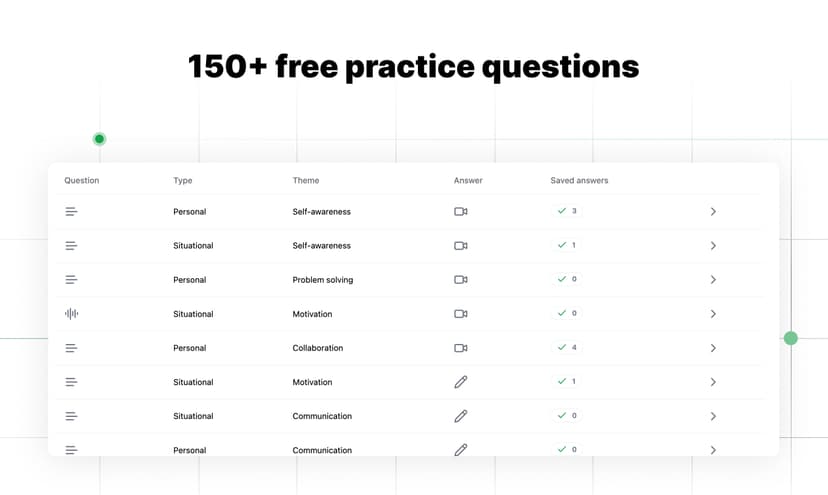
CasperPractice effectively simulates the Casper test environment but requires strong self-regulation from your child to be truly effective. This platform focuses entirely on the situational judgment test required by many medical and health science graduate programs. It uses problem-based learning to present complex ethical dilemmas, asking your student to type or record video responses under strict time limits. Because the app has not yet been evaluated by The Learning Standard, we cannot definitively confirm its score-raising efficacy. However, the use of timed retrieval practice is a well-supported learning science technique that reduces cognitive overload during the actual exam. Your child will benefit from the exposure to realistic scenarios, but they must be able to critically analyze their own responses. Without a human tutor to provide nuanced feedback on ethical reasoning, the personalized learning algorithms can only guide pacing and topic selection. Treat this app as a high-fidelity practice environment rather than a standalone ethics curriculum.
How Does CasperPractice Work?
CasperPractice uses problem-based learning combined with timed retrieval practice to prepare students for situational judgment tests. The platform presents your child with text-based or video-based ethical scenarios similar to those found in health grad school admissions. Following the prompt, your student must immediately generate a response within a strict time limit, simulating the actual Casper test conditions. This forces active recall and rapid synthesis of ethical frameworks. The personalized learning engine tracks which types of scenarios your child struggles with, such as conflict resolution or professional boundaries, and adjusts the upcoming practice sets accordingly. By repeatedly exposing learners to varied dilemmas and enforcing strict time constraints, the app builds fluency and reduces test anxiety through exposure therapy principles. Users review their completed answers against provided rubrics or example responses, requiring them to self-identify gaps in their reasoning and empathy articulation.
Strengths and tradeoffs of CasperPractice
The biggest strength of CasperPractice is its high-fidelity simulation of test conditions, while its biggest weakness is the absence of nuanced, expert human feedback. Simulation and Context-Dependent Memory: By mirroring the exact format of the Casper exam, the app leverages context-dependent memory, ensuring your child is comfortable with the interface and time pressures on test day. Active Retrieval: The app forces users to actively generate answers rather than passively reading ethical guidelines, which strongly reinforces learning and recall. Self-Assessment Limitations: However, ethical reasoning is highly subjective and complex. Because the app relies heavily on rubrics and worked examples for self-grading, it assumes your student can accurately judge their own empathy and professionalism. Worked Examples: While providing worked examples of high-scoring answers is a proven instructional scaffolding technique, novice learners often struggle to bridge the gap between their flawed response and the expert model without direct intervention. Overall, it serves as an excellent drill-and-practice tool but cannot replace the deep discussion required to fundamentally shift moral reasoning.
Who Might Benefit From CasperPractice?
CasperPractice is best for highly motivated undergraduate or post-baccalaureate students actively applying to health profession programs that require the Casper test. Because the platform demands rigorous self-assessment and independent study, it is ideal for mature learners who already possess a baseline understanding of professional ethics. It serves your child well if they suffer from test anxiety and need repeated, timed exposure to format-specific constraints. It is not suitable for younger students or those seeking a foundational introduction to humanities and moral philosophy, as the focus is strictly on tactical exam preparation rather than broad academic exploration.
Data Transparency
Does Not Meet Data Transparency Standard
CasperPractice does not meet our data transparency standard. Its privacy policy does not document basic protections, including a statement that it does not sell data, a commitment against targeted advertising and limits on sharing children's data.
7 of 35 checks passed
Evaluated September 2026
Free CASPer Practice Questions, Practice Tests & AI Prep →Level 1 · Basic protections
Does not sell data or target ads at students, limits sharing, and lets parents see and delete their child's data.
Not documented: a statement that it does not sell data, a commitment against targeted advertising, limits on sharing children's data, contractual limits on service providers, a COPPA or FERPA commitment, parents' right to see their child's data, parents' right to delete their child's data
Level 2 · Parent control (meets the standard)
Families can get their data out, know who processes it, and know how long it is kept.
Not documented: users' right to access their data, data export, a data retention timeline, self-service deletion
Level 3 · Direct data access
Families or schools can pull their own data through an API, in a stated format.
Not documented: an API for retrieving their own data, a named export format
View all 35 checks
Parent Access1/8
Does the policy mention parents specifically?
The policy does not mention parents.
Can parents view their child's data?
The policy does not give parents any right to view a child's data.
Can parents modify their child's data?
The policy does not give parents any right to modify a child's data.
Can parents delete their child's account?
The policy does not give parents any right to delete a child's account or data.
Is there a dedicated Children's Privacy section?
“Our services are intended for adults preparing for admissions tests. We do not knowingly collect data from children under 16.”
Does it reference COPPA compliance?
The policy does not reference COPPA.
Does it reference FERPA compliance?
The policy does not reference FERPA.
Is parental consent required for child accounts?
The policy does not require parental consent; it says the service is for adults and it does not knowingly collect data from children under 16.
Data Portability0/5
Can users access their personal data?
The policy does not explicitly state that users can access their personal data.
Can users download/export their data?
The policy does not offer data download or export.
Is there a self-service data access tool?
The policy mentions changing grading-profile settings but describes no self-service data access tool.
Is a specific data format mentioned for export?
The policy does not mention any export format.
Is there an API for data access?
The policy does not mention an API for data access.
Data Minimization1/6
Is data collection itemized?
“Account information: your email address and, if you buy a paid plan, your name, billing address and payment details.”
Can the app be used without a real name?
The policy states it collects the user's name when a paid plan is purchased.
Can the app be used without an email?
The policy states it collects the user's email address as account information.
Does it state collection is limited to what is necessary?
The policy does not state that collection is limited to what is necessary.
Is IP address anonymized or truncated?
The policy says usage data can include IP address and does not say it is anonymized or truncated.
Is location tracking explicitly excluded?
The policy does not explicitly exclude location tracking.
Third-Party Protection3/7
Does it explicitly state no selling of data?
The policy does not state that the vendor does not sell data.
Are third-party providers named?
“Supabase (database, authentication and file storage), Anthropic and OpenAI (AI grading, coaching and transcription), Stripe (payments), Vercel (hosting), PostHog (product analytics), Tidio (support chat), Resend (email delivery) and Tolt (affiliate tracking).”
Are providers contractually restricted?
The policy says providers access data only as needed but does not say they are contractually restricted.
No-targeted-advertising commitment?
The policy makes no commitment against targeted advertising and uses advertising pixels on its marketing pages.
Is AI/ML data sharing addressed?
“We do not opt in to letting any provider train its models on your content, so your answers, videos and transcripts are not used to train their models.”
Child-specific sharing restriction?
The policy has no child-specific sharing restriction.
Cookies/tracking limited or opt-out?
“You can block or delete cookies in your browser; blocking the sign-in cookie will stop the platform working.”
Deletion & Retention2/5
Can users delete their account?
“You can ask us to delete your account at any time by emailing hello@casperpractice.org from the address on your account.”
Self-service deletion mechanism?
The policy provides deletion only by emailing a request, not through a self-service tool.
Specific data retention timeline?
The policy keeps data as long as the account exists and gives no specific timeline.
Auto-deletion of inactive accounts?
The policy does not describe auto-deletion of inactive accounts.
Post-deletion handling described?
“Anonymous grading metadata, such as scores and the Casper test type they belong to, is retained only for the purpose of grading and ranking other users. It contains nothing that identifies you and cannot be linked back to you after deletion.”
Advertising0/4
Advertising model explicitly disclosed?
The policy mentions ad measurement pixels on marketing pages but does not state whether the product shows advertising.
Free from third-party advertisements?
The policy does not state that the product is free from third-party advertisements.
Children excluded from ad targeting?
The policy does not address excluding children from ad targeting.
Ad-free option available?
The policy does not describe an ad-free option or state that the product has no advertising.
What This Means
The policy review did not meet our data transparency standard. The checks above show the documented findings and unknowns. A missing statement does not establish how the app handles data in practice.
About this evaluation: Based on automated analysis of Free CASPer Practice Questions, Practice Tests & AI Prep against 35 policy-disclosure questions, including questions adapted from the Common Sense Privacy Program's published evaluation questions. TLS is not affiliated with Common Sense Media, and this is not a Common Sense rating. Quoted text is copied from the policy; unquoted notes are our summary. Results describe what the policy documents, not the company's actual practices. Privacy policies can change: this review reflects the version we analyzed and does not determine legal compliance.
Sources and review method
TLS combines product information and editorial analysis to explain how CasperPractice works, its tradeoffs, and the questions to ask before choosing it. Product features, an instructional rationale and evidence of learning outcomes are different kinds of information.
Formal Learning Standard assessment: not yet completed. Data Transparency findings are reported separately and do not establish learning effectiveness. Read our methodology.
Frequently Asked Questions About CasperPractice
Is CasperPractice free?
CasperPractice offers a free tier that allows your child to sample basic features and experience a limited number of practice scenarios. However, for full access to the advanced personalized learning paths and the complete library of problem-based prompts, users must subscribe to one of three paid pricing tiers. This tiered structure lets you evaluate the interface before committing financially.
Is CasperPractice good for undergraduate students?
Yes, it is explicitly designed for undergraduate and post-baccalaureate students who are preparing for graduate-level health program admissions. The ethical scenarios and problem-based learning modules match the cognitive maturity and professional expectations of young adults entering medical, nursing, or other healthcare fields. Your child will face realistic dilemmas that require mature judgment and a solid understanding of professional boundaries.
What does CasperPractice teach?
CasperPractice teaches situational judgment, professional ethics, and conflict resolution tailored specifically to the Casper admissions test. It trains your child to rapidly analyze complex interpersonal dilemmas, formulate empathetic responses, and articulate their moral reasoning under strict time constraints. The platform relies heavily on active retrieval practice to build test-taking fluency rather than teaching foundational philosophical theories. By repeatedly exposing your student to these scenarios, it aims to reduce cognitive overload on test day.
How does CasperPractice compare to a general ethics course?
CasperPractice focuses exclusively on tactical test preparation through timed, problem-based learning drills. Unlike a traditional university ethics course that builds foundational philosophical knowledge through extensive readings and peer debate, this application trains your child to quickly demonstrate empathy and professionalism in a standardized testing format. It uses worked examples to guide self-assessment rather than providing nuanced human grading. This makes it highly practical for admissions but narrow in academic scope.
Has The Learning Standard evaluated CasperPractice?
TLS has not yet completed a Learning Standard evaluation of how well CasperPractice teaches. Its privacy policy has been reviewed for Data Transparency and does not yet document the basic protections (Level 1).
Is CasperPractice COPPA compliant?
A COPPA reference was not found in the reviewed privacy policy. This does not determine whether the app complies with COPPA. Policy review note: The policy does not reference COPPA.
Is CasperPractice FERPA compliant?
A FERPA reference was not found in the reviewed privacy policy. This does not determine whether the app complies with FERPA. Policy review note: The policy does not reference FERPA.
Does CasperPractice have a children's privacy policy?
The reviewed policy includes a dedicated children's privacy section. Policy review note: A dedicated "Children" section addresses children's data.
Does CasperPractice sell student data?
A statement ruling out data selling was not found in the reviewed policy. This does not establish that the app sells student data. Policy review note: The policy does not state that the vendor does not sell data.
Can you delete your data from CasperPractice?
The reviewed privacy policy describes account deletion. We have not tested the deletion process. Policy review note: Users can request account deletion by email.
Follow TLS Research
Subscribe to future TLS research updates: app reviews, findings, and what the evidence shows.
Screenshots


Take Action
For CasperPractice
If you represent CasperPractice and have a correction or new evidence, send the relevant source so we can review and update this page.
Submit a correctionDetails
- Pricing
- There are 3 pricing tiers that charge the student directly. In addition, there is a free tier.
- Platforms
- Web Browser, iOS (Apple mobile), iPadOS (Apple tablet), Android (Google mobile), Tizen (Samsung mobile), Windows (Microsoft), macOS (Apple), Chrome OS (Google)
- Grade Levels
- Bachelor's degree, Post-baccalaureate certificate, Master's Degree, Post-master's certificate, Doctoral Degree, Post-doctoral certificate
- Website
- Visit site