
Caduceus
Product by Caduceus International Publishing
Facts checked: Not yet checked
Our take (not a Learning Standard rating). This label applies to learning-science judgments throughout this overview.
Our take (not a Learning Standard rating)
Caduceus provides structured health science coursework with integrated assessments, though The Learning Standard has not yet formally evaluated its instructional effectiveness. The platform heavily emphasizes LMS compatibility and secure proctoring to maintain academic integrity, but its specific reliance on evidence-based cognitive strategies remains unverified.
Pros
- Integrates directly with major learning management systems like Canvas and Moodle to streamline course delivery.
- Includes built-in online proctoring to secure high-stakes assessments and validate student knowledge retrieval.
- Provides specialized, structured health science curricula that align with traditional academic sequencing.
Cons
- Relies heavily on standard content delivery rather than demonstrated use of adaptive learning or spaced repetition.
- Lacks transparent data on how the platform scaffolds complex medical terminology for novice learners.
- Has not yet undergone a comprehensive efficacy evaluation by The Learning Standard.
What Do We Know About Caduceus?
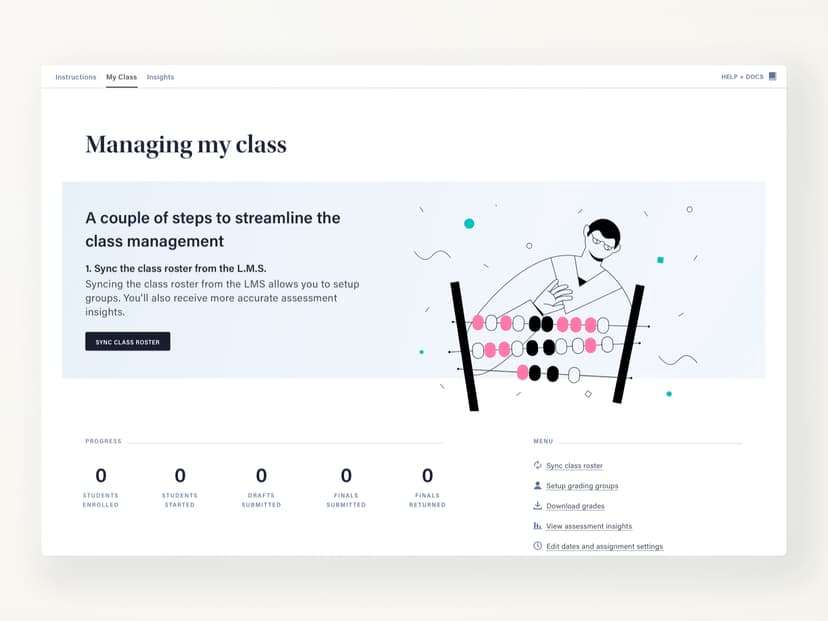
Caduceus is a functional delivery system for health science education, but its true effectiveness for your child’s learning remains pending evaluation. This platform operates primarily as an interactive digital textbook and testing environment designed for institutional use. It connects directly into school platforms like Canvas or Blackboard. Your child will navigate through specific health science modules, reading content and completing assessments. Because it includes built-in online proctoring, it places a heavy emphasis on test security and formal evaluation rather than playful or adaptive exploration. While this ensures that the assessments accurately measure your child's unaided recall, it does not necessarily mean the curriculum uses active learning techniques to teach the material in the first place. Parents should view Caduceus as a digital extension of a traditional classroom rather than an independent tutoring tool. If your child is taking a course powered by Caduceus, they will still need to apply their own study habits, like self-quizzing and spacing out their practice, to master the dense medical terminology presented.
How Does Caduceus Work?
Caduceus uses a traditional, linear curriculum model delivered through institutional learning management systems, capped by proctored assessments. Students log into their school's existing portal, such as Blackboard or Canvas, to access the interactive health science modules. The platform organizes content sequentially. Learners progress through digital texts, diagrams, and interactive elements designed to explain health science concepts. After reviewing the material, students must demonstrate their understanding through embedded quizzes and exams. A defining feature of this workflow is the built-in online proctoring system. When students take high-stakes assessments, the software monitors their environment to ensure academic integrity. This forces learners to rely on genuine memory retrieval rather than looking up answers. However, the platform's primary mechanics focus more on secure content delivery and testing than on dynamically adjusting difficulty based on a student's real-time performance.
Strengths and tradeoffs of Caduceus
The biggest strength of Caduceus is its seamless integration with school infrastructure and secure testing, while its biggest weakness is the lack of clear, evidence-based cognitive scaffolding. On the positive side, the platform excels at institutional alignment. By embedding directly into systems like Canvas and Moodle, it reduces the friction of logging into multiple third-party educational apps. Furthermore, the inclusion of built-in proctoring guarantees that assessments require genuine retrieval practice. Students cannot easily search for answers, which forces them to actually recall the health science information they have studied, strengthening their long-term memory of the material. Conversely, Caduceus operates more as a secure delivery vessel than an intelligent tutor. The curriculum lacks transparent evidence of adaptive learning or spaced repetition algorithms that automatically resurface difficult concepts before a student forgets them. Without these features, the burden of effective studying falls entirely on the student. Learners must independently employ cognitive strategies, like creating their own flashcards or spacing out their reading, because the platform itself primarily focuses on presenting the information and testing it, rather than actively guiding the encoding process.
Who Might Benefit From Caduceus?
Caduceus is best for highly motivated students taking formal health science courses through a school or university that requires secure, proctored testing. While technically available for all ages, the dense subject matter and rigorous assessment environment are most appropriate for high school and college-level learners. It serves as an effective tool for structured, institution-led education where the teacher provides additional context and pacing. It is not designed for casual, independent exploration by younger learners who need adaptive feedback or gamified motivation to stay engaged with science topics.
Data Transparency
Does Not Meet Data Transparency Standard
Caduceus does not meet our data transparency standard. Its privacy policy does not document basic protections, including a statement that it does not sell data, a commitment against targeted advertising and limits on sharing children's data.
9 of 35 checks passed
Evaluated September 2026
Privacy Policy →Level 1 · Basic protections
Does not sell data or target ads at students, limits sharing, and lets parents see and delete their child's data.
Not documented: a statement that it does not sell data, a commitment against targeted advertising, limits on sharing children's data, contractual limits on service providers, a COPPA or FERPA commitment, parents' right to see their child's data, parents' right to delete their child's data
Level 2 · Parent control (meets the standard)
Families can get their data out, know who processes it, and know how long it is kept.
Not documented: data export, self-service deletion
Level 3 · Direct data access
Families or schools can pull their own data through an API, in a stated format.
Not documented: an API for retrieving their own data, a named export format
View all 35 checks
Parent Access1/8
Does the policy mention parents specifically?
“**Rights of Parents and/or students**: Your Educational Agency uses Caduceus International Publishing, Inc. courses’ services to assist with the administration of school-related activities”
Can parents view their child's data?
The policy's parents section only sends parents to their educational institution with questions and does not give parents a right to view their child's data.
Can parents modify their child's data?
The policy does not give parents a right to modify their child's data.
Can parents delete their child's account?
The policy does not give parents a right to delete their child's data or account.
Is there a dedicated Children's Privacy section?
The policy has no dedicated children's privacy or COPPA section.
Does it reference COPPA compliance?
The policy does not reference COPPA.
Does it reference FERPA compliance?
The policy does not reference FERPA.
Is parental consent required for child accounts?
The policy does not address parental consent for child accounts.
Data Portability1/5
Can users access their personal data?
“Based on the laws of some countries, you may have the right to request access to the personal information we collect from you, change that information, or delete it in some circumstances.”
Can users download/export their data?
The policy does not address downloading or exporting data.
Is there a self-service data access tool?
The policy directs access requests to contacting the company and describes no self-service tool.
Is a specific data format mentioned for export?
The policy does not mention any export format.
Is there an API for data access?
The policy does not mention an API for data access.
Data Minimization1/6
Is data collection itemized?
“**Publicly Available Personal Information.** We collect first name, maiden name, last name, and nickname; phone numbers; email addresses; and other similar data.”
Can the app be used without a real name?
The policy states that it collects first and last names.
Can the app be used without an email?
The policy states that it collects email addresses.
Does it state collection is limited to what is necessary?
The policy limits how long data is kept but does not state that collection is limited to what is necessary.
Is IP address anonymized or truncated?
The policy states that it collects IP addresses and does not say they are anonymized or truncated.
Is location tracking explicitly excluded?
The policy states that automatically collected information may include country and location.
Third-Party Protection2/7
Does it explicitly state no selling of data?
The policy only says that, unless described in the policy, it does not sell information to third parties for their promotional purposes, which is not a flat no-selling statement.
Are third-party providers named?
“All payment data is stored by CyberSource.”
Are providers contractually restricted?
The policy describes sharing with service providers but states no contractual limits on them, and requires only affiliates to use data consistently with the policy.
No-targeted-advertising commitment?
The policy makes no commitment against targeted advertising.
Is AI/ML data sharing addressed?
The policy does not address AI or machine learning.
Child-specific sharing restriction?
The policy has no sharing restriction specific to children.
Cookies/tracking limited or opt-out?
“**Cookies and similar technologies:** Most web browsers are set to accept cookies by default. If you prefer, you can usually choose to set your browser to remove cookies and to reject cookies.”
Deletion & Retention4/5
Can users delete their account?
“Upon your request to terminate your account, we will deactivate or delete your account and information from our active databases.”
Self-service deletion mechanism?
The policy handles deletion only through requests to the company and describes no self-service mechanism.
Specific data retention timeline?
“No purpose in this policy will require us to keep your personal information for longer than 2 years past the start of idle period of the user’s account.”
Auto-deletion of inactive accounts?
“We will only keep your personal information for as long as it is necessary for the purposes set out in this privacy policy, unless a longer retention period is required or permitted by law (such as tax, accounting or other legal requirements). No purpose in this policy will require us to keep your personal information for longer than 2 years past the start of idle period of the user’s account.”
Post-deletion handling described?
“When we have no ongoing legitimate business need to process your personal information, we will either delete or anonymize it, or, if this is not possible (for example, because your personal information has been stored in backup archives), then we will securely store your personal information and isolate it from any further processing until deletion is possible.”
Advertising0/4
Advertising model explicitly disclosed?
The policy does not describe any advertising model or state that the product has no ads.
Free from third-party advertisements?
The policy does not say whether the product is free of third-party ads.
Children excluded from ad targeting?
The policy does not address excluding children from ad targeting.
Ad-free option available?
The policy does not mention an ad-free option or state that the product has no ads.
What This Means
The policy review did not meet our data transparency standard. The checks above show the documented findings and unknowns. A missing statement does not establish how the app handles data in practice.
About this evaluation: Based on automated analysis of Privacy Policy against 35 policy-disclosure questions, including questions adapted from the Common Sense Privacy Program's published evaluation questions. TLS is not affiliated with Common Sense Media, and this is not a Common Sense rating. Quoted text is copied from the policy; unquoted notes are our summary. Results describe what the policy documents, not the company's actual practices. Privacy policies can change: this review reflects the version we analyzed and does not determine legal compliance.
Sources and review method
TLS combines product information and editorial analysis to explain how Caduceus works, its tradeoffs, and the questions to ask before choosing it. Product features, an instructional rationale and evidence of learning outcomes are different kinds of information.
Formal Learning Standard assessment: not yet completed. Data Transparency findings are reported separately and do not establish learning effectiveness. Read our methodology.
Frequently Asked Questions About Caduceus
Is Caduceus free?
No, Caduceus is not entirely free, but it does offer a free 30-day trial for new users. After this initial trial period expires, students or their educational institutions must purchase a full license to continue accessing the interactive health science curriculum and the integrated proctoring features. Pricing typically depends on the specific courses required and the overarching institutional licensing agreements established by the school.
Is Caduceus good for all ages?
While the developer lists the application for all ages, Caduceus is practically suited for older students, specifically high school and higher education learners. The curriculum covers specialized health science topics and utilizes formal online proctoring, which demands a high level of maturity and independent study skills typically found in older adolescents and adults. Younger children would likely struggle with the dense medical terminology and strict testing environment.
What does Caduceus teach?
Caduceus teaches comprehensive health science curricula designed for academic integration. It provides interactive, digital coursework covering specialized medical, biological, and health-related topics built to prepare students for careers or further education in the healthcare and medical fields. The content is structured similarly to a traditional syllabus, moving students systematically through foundational terminology, clinical concepts, and advanced biological processes necessary for professional certifications.
How does Caduceus compare to standard digital textbooks?
Unlike standard digital textbooks that only provide static reading material, Caduceus features interactive modules and heavily relies on its built-in online proctoring solution. This ensures that the quizzes and exams taken within the platform accurately reflect the student's unaided knowledge retrieval, making it a much more secure assessment tool than a standard e-book. However, both formats still require the student to practice self-regulation and independent study strategies to succeed.
Has The Learning Standard evaluated Caduceus?
TLS has not yet completed a Learning Standard evaluation of how well Caduceus teaches. Its privacy policy has been reviewed for Data Transparency and does not yet document the basic protections (Level 1).
Is Caduceus COPPA compliant?
A COPPA reference was not found in the reviewed privacy policy. This does not determine whether the app complies with COPPA. Policy review note: The policy does not reference COPPA.
Is Caduceus FERPA compliant?
A FERPA reference was not found in the reviewed privacy policy. This does not determine whether the app complies with FERPA. Policy review note: The policy does not reference FERPA.
Does Caduceus have a children's privacy policy?
No dedicated children's privacy section was found in the reviewed policy. Policy review note: The policy has no dedicated children's privacy or COPPA section.
Does Caduceus sell student data?
A statement ruling out data selling was not found in the reviewed policy. This does not establish that the app sells student data. Policy review note: The policy only says that, unless described in the policy, it does not sell information to third parties for their promotional purposes, which is not a flat no-selling statement.
Can you delete your data from Caduceus?
The reviewed privacy policy describes account deletion. We have not tested the deletion process. Policy review note: Users can ask to have their account deleted.
Follow TLS Research
Subscribe to future TLS research updates: app reviews, findings, and what the evidence shows.
Screenshots
Take Action
For Caduceus
If you represent Caduceus International Publishing and have a correction or new evidence, send the relevant source so we can review and update this page.
Submit a correction