BrainPOP Science
Product by BrainPOP
Facts checked: Not yet checked
Our take (not a Learning Standard rating). This label applies to learning-science judgments throughout this overview.
Our take (not a Learning Standard rating)
BrainPOP Science offers a robust framework for inquiry-based middle school science, but its effectiveness relies heavily on classroom implementation. It excels at engaging students through multimodal investigations and real-world phenomena, though independent retrieval practice opportunities may require supplementation to ensure long-term retention of core concepts. The Learning Standard has not yet formally evaluated this tool.
Pros
- Uses multimodal worked examples to reduce cognitive load when introducing complex phenomena.
- Scaffolds inquiry-based investigations to build critical thinking and data analysis skills.
- Aligns content explicitly with middle school assessment standards to ensure relevant learning trajectories.
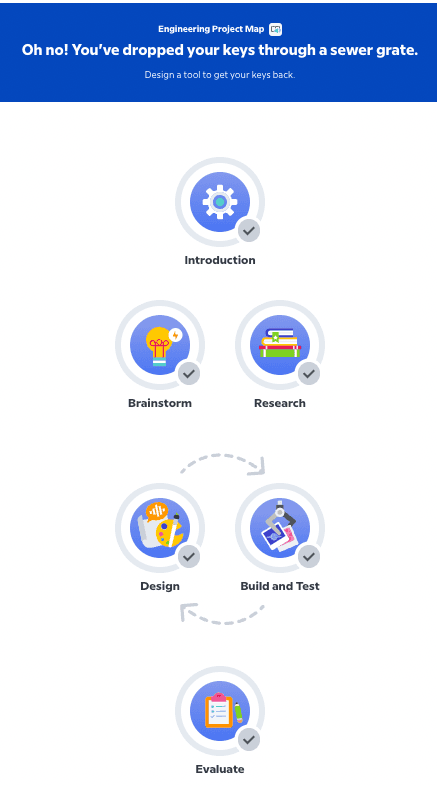
- Integrates engineering projects that encourage active application of theoretical concepts.
Cons
- Relies heavily on school-based implementation, limiting standalone utility for individual home use.
- Lacks built-in spaced repetition mechanics for long-term vocabulary retention.
- Does not provide granular, immediate corrective feedback on open-ended investigation questions.
What Do We Know About BrainPOP Science?
BrainPOP Science is an effective supplemental tool for classroom learning but is not designed as a standalone homeschool curriculum. Because it focuses on inquiry-based learning and real-world phenomena, your child will engage deeply with scientific concepts rather than simply memorizing facts. The platform shifts away from traditional rote learning, instead requiring students to analyze data, complete engineering projects, and solve problems based on multidimensional science standards. While this builds excellent critical thinking skills, parents should know that the software is primarily sold to schools and relies on a teacher to guide the broader lesson arc. Without a teacher's facilitation, your child may struggle to connect individual investigations into a cohesive understanding of foundational science. Furthermore, because The Learning Standard has not yet formally evaluated BrainPOP Science, specific data on its independent efficacy remains pending. If your child's school uses this platform, it serves as a highly engaging, visually rich environment that successfully lowers the cognitive load of complex topics through effective multimedia presentations and scaffolded explorations.
How Does BrainPOP Science Work?
BrainPOP Science uses inquiry-based learning with scaffolded multimodal instruction to teach middle school science. Students begin by observing a real-world scientific phenomenon or engineering challenge, which activates prior knowledge and sets a concrete context for abstract concepts. They then move through a series of dynamic investigations, collecting data and manipulating variables in simulated environments. This active participation forces learners to test hypotheses in real time. The platform breaks down complex systems using interactive 3D models and short, targeted instructional videos that function as worked examples. As your child progresses, the software gradually removes instructional scaffolding, requiring them to apply their newly acquired knowledge to synthesize conclusions or design solutions. Assessments are embedded throughout these investigations to check for understanding, aligning directly with multidimensional science standards designed for eighth-grade readiness.
Strengths and tradeoffs of BrainPOP Science
The biggest strength of BrainPOP Science is its use of rich, multimodal phenomena to drive inquiry, while its biggest weakness is the lack of systematic spaced repetition for foundational vocabulary. By grounding every lesson in observable real-world problems, the platform effectively leverages situated learning, making abstract scientific concepts highly relevant and easier to encode into long-term memory. The use of interactive simulations serves as excellent worked examples, systematically lowering the intrinsic cognitive load of complex topics like physics or earth science. However, inquiry-based learning requires a strong base of factual knowledge to be effective. BrainPOP Science does not currently utilize strong retrieval practice or spacing algorithms to ensure students retain the dense scientific terminology introduced in these units. If a student forgets the underlying vocabulary, their ability to engage with the higher-order engineering projects is compromised. Because The Learning Standard has not yet rated this app, educators and parents should be prepared to supplement these modules with targeted flashcards or traditional retrieval drills to ensure a complete mastery of the subject matter.
Who Might Benefit From BrainPOP Science?
BrainPOP Science is best for middle school students in grades six through eight who are learning in a structured classroom or blended learning environment. Because the platform relies heavily on teacher facilitation and district-wide integration, it is ideal for educators looking to transition their curriculum toward multidimensional, inquiry-based science standards. It serves students who benefit from visual learning, interactive simulations, and real-world engineering applications rather than traditional textbook reading. It is less suited for independent home learners or parents seeking a standalone, self-paced science curriculum.
Data Transparency
Meets Data Transparency Standard
BrainPOP Science meets our data transparency standard at Level 2 of 3 (Parent control). Level 3 needs the policy to document an API for retrieving their own data.
29 of 35 checks passed
Level 1 · Basic protections
Does not sell data or target ads at students, limits sharing, and lets parents see and delete their child's data.
Level 2 · Parent control (meets the standard)
Families can get their data out, know who processes it, and know how long it is kept.
Level 3 · Direct data access
Families or schools can pull their own data through an API, in a stated format.
Not documented: an API for retrieving their own data
View all 35 checks
Parent Access8/8
Does the policy mention parents specifically?
“This policy is written for parents, guardians, and school administrators.”
Can parents view their child's data?
“Review the Personal Information we have collected from your child”
Can parents modify their child's data?
“Request changes to inaccurate information”
Can parents delete their child's account?
“You may also delete your child’s account and data through the parent dashboard at any time.”
Is there a dedicated Children's Privacy section?
“Children Under Age 13 (COPPA Compliance)”
Does it reference COPPA compliance?
“BrainPOP complies with the Children’s Online Privacy Protection Act (COPPA), including the updated COPPA Rule (effective June 23, 2025).”
Does it reference FERPA compliance?
“BrainPOP operates as a “school official” as that term is used in the Family Educational Rights and Privacy Act (FERPA) and operates under the direct control of our school and district customers with respect to Student Records.”
Is parental consent required for child accounts?
“We do not knowingly collect Personal Information from children under 13 without verifiable parental consent or, where applicable, the authorization of a school acting as the parent’s agent under COPPA.”
Data Portability4/5
Can users access their personal data?
“Right to Access: You may request to know what Personal Information we have collected about you or your child.”
Can users download/export their data?
“Right to Portability: You may request a copy of Personal Information in a structured, commonly used, and machine-readable format.”
Is there a self-service data access tool?
“View all student accounts and data through the Administrator dashboard”
Is a specific data format mentioned for export?
“Districts and schools may request copies of their student Personal Information (including a CSV file of names, classes, and quiz scores).”
Is there an API for data access?
The policy does not mention an API for data access.
Data Minimization3/6
Is data collection itemized?
“We collect the following categories of Personal Information from children under 13 through our Services:”
Can the app be used without a real name?
The policy states that students' full names are collected.
Can the app be used without an email?
The policy states that student school email addresses are collected for single sign-on integrations.
Does it state collection is limited to what is necessary?
“We limit the data collected from students or children to that which is reasonably necessary to provide the educational services.”
Is IP address anonymized or truncated?
The policy says IP addresses are collected and does not say they are anonymized or truncated.
Is location tracking explicitly excluded?
“We do not collect the following from children: - Biometric identifiers (other than voice recordings as described above) - Government-issued identification numbers - Health or medical information - Precise geolocation data”
Third-Party Protection7/7
Does it explicitly state no selling of data?
“We do not sell children’s or students’ data.”
Are third-party providers named?
“The AI Grading Tool operates using Google Vertex AI, a third party AI service, operating under a data processing agreement with BrainPOP.”
Are providers contractually restricted?
“These providers are contractually required to use Personal Information solely as necessary to provide their services and to maintain commercially reasonable security measures.”
No-targeted-advertising commitment?
“We do not use student or children’s Personal Information for advertising purposes, including targeted advertising.”
Is AI/ML data sharing addressed?
“We do not share students’ Personal Information with third-party AI providers. We do not use Student Records to train third-party AI models.”
Child-specific sharing restriction?
“We do not disclose children’s Personal Information to third parties except to service providers who are contractually required to use the information solely to provide services to BrainPOP and to maintain appropriate security.”
Cookies/tracking limited or opt-out?
“You can prevent Google Analytics from collecting information about you and recognizing you on return visits to our Services by disabling cookies on your browser or by installing the Google Analytics opt-out plug in.”
Deletion & Retention5/5
Can users delete their account?
“Right to Deletion: You may request that we delete Personal Information, subject to certain legal exceptions.”
Self-service deletion mechanism?
“Districts, schools, and homeschools can delete student Personal Information at any time through the Administrator dashboard.”
Specific data retention timeline?
“Subscription Expiration: If student Personal Information is not deleted by the school or district before the subscription expires, we retain it for a maximum of six (6) months after expiration, after which it is deleted.”
Auto-deletion of inactive accounts?
“Inactivity: Student classroom accounts and the Personal Information within them are automatically deleted after two (2) years of inactivity.”
Post-deletion handling described?
“When deleted, data is removed from our production servers immediately and purged from backup servers within fourteen (14) days. After that point, the data cannot be restored.”
Advertising2/4
Advertising model explicitly disclosed?
“In addition, we and our third party partners may use tracking technologies to deliver targeted advertisements and marketing messages to adult users on our or unaffiliated websites and online services.”
Free from third-party advertisements?
The policy does not say the product is free of ads and says it may serve advertising to adult users.
Children excluded from ad targeting?
“We don’t advertise to kids. We do not use student or children’s data for advertising of any kind, including targeted advertising.”
Ad-free option available?
The policy does not describe an ad-free option or say the product has no advertising; it describes advertising to adult users.
Meets Data Transparency Standard
The reviewed policy met our data transparency standard. This result describes the policy disclosures we assessed. Actual practices and legal compliance were not verified.
About this evaluation: Based on automated analysis of Privacy Policy, Product Privacy Policy and Children & Student Privacy Policy against 35 policy-disclosure questions, including questions adapted from the Common Sense Privacy Program's published evaluation questions. TLS is not affiliated with Common Sense Media, and this is not a Common Sense rating. Quoted text is copied from the policy; unquoted notes are our summary. Results describe what the policy documents, not the company's actual practices. Privacy policies can change: this review reflects the version we analyzed and does not determine legal compliance.
Sources and review method
TLS combines product information and editorial analysis to explain how BrainPOP Science works, its tradeoffs, and the questions to ask before choosing it. Product features, an instructional rationale and evidence of learning outcomes are different kinds of information.
Formal Learning Standard assessment: not yet completed. Data Transparency findings are reported separately and do not establish learning effectiveness. Read our methodology.
Frequently Asked Questions About BrainPOP Science
Is BrainPOP Science free?
BrainPOP Science is not free and is typically sold as a school or district-wide subscription. It is designed for institutional purchase rather than individual consumer subscriptions, meaning parents cannot simply download it from an app store for personal home use. However, some schools and districts may provide home access credentials to their enrolled students. If your child's school has purchased a license, they can usually log in from home using their school-issued credentials to complete assignments or explore investigations.
Is BrainPOP Science good for elementary students?
No, BrainPOP Science is explicitly designed for middle school students in the sixth, seventh, and eighth grades. The cognitive demands of the inquiry-based investigations and engineering projects are specifically tailored to the developmental stages of early adolescents. The vocabulary, reading levels, and data analysis tasks would overwhelm the working memory of younger children. Parents and educators looking for science materials for elementary students should explore the standard BrainPOP or BrainPOP Jr. platforms, which offer age-appropriate scaffolding and content.
What does BrainPOP Science teach?
BrainPOP Science teaches multidimensional science concepts across physical, life, and earth sciences using an inquiry-based model. Instead of relying on the rote memorization of scientific facts, it focuses heavily on the scientific method, data analysis, critical thinking, and practical engineering practices. Your child will learn how to observe natural phenomena, manipulate variables within interactive simulations, and draw evidence-based conclusions. The curriculum is directly mapped to modern eighth-grade readiness assessments, ensuring that students develop both theoretical knowledge and practical laboratory skills.
How does BrainPOP Science compare to traditional textbooks?
BrainPOP Science replaces the passive reading of traditional textbooks with active, inquiry-based learning mechanics. While a traditional textbook typically provides scientific information upfront for students to memorize, this platform requires students to engage with interactive simulations and real-time data to discover those scientific principles themselves. This active learning approach is highly effective for building critical thinking skills and reducing cognitive load through multimedia. However, it lacks the comprehensive, easily scannable index of factual knowledge that a traditional textbook provides for quick reference.
Has The Learning Standard evaluated BrainPOP Science?
TLS has not yet completed a Learning Standard evaluation of how well BrainPOP Science teaches. Its privacy policy has been reviewed for Data Transparency and reaches Level 2, Parent control.
Is BrainPOP Science COPPA compliant?
The reviewed privacy policy references COPPA. A policy reference alone does not establish COPPA compliance. Policy review note: The policy states that BrainPOP complies with COPPA.
Is BrainPOP Science FERPA compliant?
The reviewed privacy policy references FERPA. A policy reference alone does not establish FERPA compliance. Policy review note: The policy states that BrainPOP operates as a school official under FERPA.
Does BrainPOP Science have a children's privacy policy?
The reviewed policy includes a dedicated children's privacy section. Policy review note: There is a section with its own heading on children under 13 and COPPA.
Does BrainPOP Science sell student data?
The reviewed policy states that the app does not sell data. This is a policy statement; actual data practices were not verified. Policy review note: The policy states that BrainPOP does not sell children's or students' data.
Can you delete your data from BrainPOP Science?
The reviewed privacy policy describes account deletion. We have not tested the deletion process. Policy review note: Users may request deletion of their personal information.
Follow TLS Research
Subscribe to future TLS research updates: app reviews, findings, and what the evidence shows.
Screenshots

Take Action
For BrainPOP Science
If you represent BrainPOP and have a correction or new evidence, send the relevant source so we can review and update this page.
Submit a correctionDetails
- Pricing
- BrainPOP Science is sold as school or district-wide access for all middle school science students and teachers. BrainPOP Science is also sold as a part of our middle school bundles for schools and districts. Learn more here: https://www.brainpop.com/discover/plans
- Platforms
- Web Browser, iOS (Apple mobile), iPadOS (Apple tablet), Android (Google mobile), macOS (Apple), Chrome OS (Google)
- Grade Levels
- 6th Grade, 7th Grade, 8th Grade
- Website
- Visit site