BrainCert
Product by BrainCert, Inc
Facts checked: Not yet checked
Our take (not a Learning Standard rating). This label applies to learning-science judgments throughout this overview.
Our take (not a Learning Standard rating)
BrainCert provides a robust infrastructure for delivering assessments and live classes to advanced learners, but it is a delivery mechanism, not an active teacher. Its effectiveness relies entirely on the quality of the courses educators build. The inclusion of learning paths and varied assessment types supports structured curriculum design, pending our full evaluation.
Pros
- Supports varied assessment formats that enable retrieval practice and frequent low-stakes testing.
- Includes integrated virtual classrooms with whiteboards to facilitate synchronous peer collaboration and instructor modeling.
- Allows educators to structure explicit learning paths that sequence content from foundational concepts to complex tasks.
- Provides robust analytics to help instructors identify knowledge gaps and adjust their teaching interventions.
Cons
- Requires significant instructional design expertise from the user to create effective learning materials.
- Gamification features like badges rely heavily on extrinsic motivation rather than fostering intrinsic engagement with the subject matter.
- Does not provide built-in educational content or adaptive learning algorithms to personalize instruction dynamically.
- The high cost of advanced tiers makes it inaccessible for individual tutors or small-scale educators.
What Do We Know About BrainCert?
BrainCert is effective for learning only if the educator using it already possesses strong instructional design skills to build rigorous courses. This platform operates as an empty vessel for higher education and enterprise training, rather than a pre-packaged curriculum. You will not find ready-made lessons for your advanced learner here. Instead, educators use this software to host live virtual classes, design learning paths, and administer proctored exams. The platform includes tools that support evidence-based teaching strategies. For example, educators can build frequent quizzes to leverage retrieval practice, or use the interactive whiteboards during live sessions to provide worked examples in real time. However, the system relies heavily on badges and certificates for motivation. Learning science indicates that these extrinsic rewards often fail to sustain long-term student engagement compared to meaningful, challenging content. Because The Learning Standard has not yet evaluated BrainCert, we cannot verify the user experience or the seamlessness of its assessment tools. If you are an educator or administrator looking to host complex, secure assessments for university or corporate students, this platform provides the necessary architecture. Just remember that the pedagogical heavy lifting remains entirely in your hands.
How Does BrainCert Work?
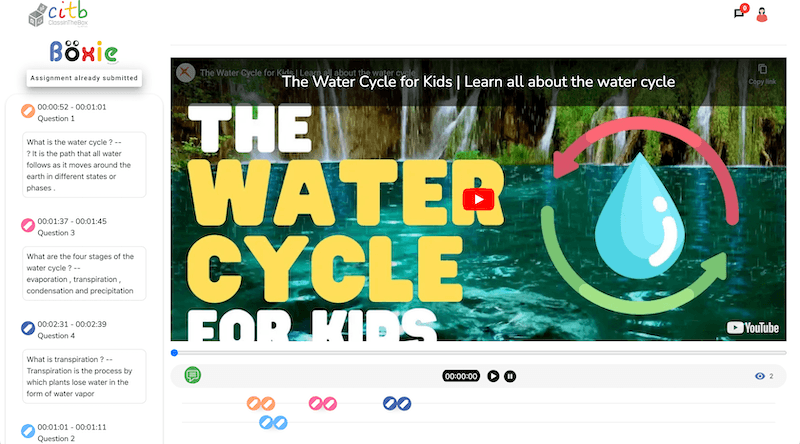
BrainCert uses a modular, instructor-led delivery approach that combines synchronous live instruction with asynchronous course management. Educators build their own curriculum from scratch by uploading videos, designing quizzes, and structuring learning paths. The platform facilitates direct instruction through a virtual classroom equipped with interactive whiteboards, allowing teachers to model problem-solving steps live. For independent study, instructors can sequence assignments and reading materials to ensure students master foundational concepts before moving on to advanced modules. Assessment is a core function. The software supports multiple test formats, enabling educators to implement frequent, low-stakes testing which strengthens long-term retention. Instructors can also set up automated grading and detailed reporting to track mastery across different cohorts. Gamification elements, such as leaderboards and digital certificates, are triggered when students complete specific milestones. While BrainCert provides the structural tools for active learning, the actual pedagogical approach depends completely on how the instructor chooses to sequence the content and assess their students.
Strengths and tradeoffs of BrainCert
BrainCert's biggest strength is its comprehensive assessment engine, while its biggest weakness is its complete reliance on the user to generate pedagogically sound content. Robust testing tools allow educators to implement strong retrieval practice through varied question types and timed exams. The platform also excels in synchronous learning. The integrated virtual classroom features high-quality video and whiteboard tools that support live instructor modeling and immediate corrective feedback, both of which are critical for mastering complex subjects at the university or enterprise level. Structured learning paths help instructors organize content logically, preventing cognitive overload by pacing the delivery of new information. On the downside, the platform's gamification features lean heavily on badges and certificates. Extrinsic motivators like these rarely improve deep conceptual understanding. Additionally, lack of automated scaffolding means the platform does not dynamically adjust difficulty based on student performance. If a learner struggles, the system will not automatically provide prerequisite practice unless the instructor has manually built those remedial branches. Because BrainCert is currently pending evaluation by The Learning Standard, we cannot definitively rate how intuitively these tools function in practice.
Who Might Benefit From BrainCert?
BrainCert is best for university instructors, corporate trainers, and enterprise educators who need a secure environment to host live classes and deliver proctored exams. It targets advanced learners at the bachelor's, master's, and post-doctoral levels, making it entirely unsuitable for K-12 students or casual self-study. Administrators looking to consolidate their virtual classrooms, compliance training, and academic testing into a single platform will find the toolset highly useful. It is ideal for organizations that possess dedicated instructional designers.
Data Transparency
Does Not Meet Data Transparency Standard
BrainCert does not meet our data transparency standard. Its privacy policy does not document basic protections, including a commitment against targeted advertising, limits on sharing children's data and contractual limits on service providers.
10 of 35 checks passed
Evaluated September 2026
BrainCert Privacy Policy →Level 1 · Basic protections
Does not sell data or target ads at students, limits sharing, and lets parents see and delete their child's data.
Not documented: a commitment against targeted advertising, limits on sharing children's data, contractual limits on service providers, a COPPA or FERPA commitment, parents' right to see their child's data, parents' right to delete their child's data
Level 2 · Parent control (meets the standard)
Families can get their data out, know who processes it, and know how long it is kept.
Not documented: a data retention timeline
Level 3 · Direct data access
Families or schools can pull their own data through an API, in a stated format.
Not documented: an API for retrieving their own data, a named export format
View all 35 checks
Parent Access0/8
Does the policy mention parents specifically?
The policy does not mention parents.
Can parents view their child's data?
The policy does not address parents viewing their child's data.
Can parents modify their child's data?
The policy does not address parents modifying their child's data.
Can parents delete their child's account?
The policy does not address parents deleting their child's account or data.
Is there a dedicated Children's Privacy section?
The policy has no dedicated children's privacy section.
Does it reference COPPA compliance?
The policy does not reference COPPA.
Does it reference FERPA compliance?
The policy does not reference FERPA.
Is parental consent required for child accounts?
The policy does not address parental consent for child accounts.
Data Portability2/5
Can users access their personal data?
“We will respond to any such request, and any appropriate request to access, correct, update or delete your personal information within the time period specified by law (if applicable) or without excessive delay.”
Can users download/export their data?
“Request that your personal data be provided to you or another organization in a structured, commonly used and machine-readable format, in certain limited circumstances.”
Is there a self-service data access tool?
The policy describes an account settings page for modifying information and email requests for access, but no self-service data access tool.
Is a specific data format mentioned for export?
The policy only says data can be provided in a structured, commonly used and machine-readable format, without naming a specific format.
Is there an API for data access?
The policy does not describe an API for users to retrieve their own data.
Data Minimization1/6
Is data collection itemized?
“The types of information we may collect include: (1) identifiers, such as your full name, phone number, email address, postal mail address, unique personal identifier, online identifier, internet protocol address, (2) commercial information, such as records of personal property, products or services purchased, obtained, or considered, or other purchasing or consuming histories or tendencies,”
Can the app be used without a real name?
The policy states it collects users' names, including full name.
Can the app be used without an email?
The policy states it collects email addresses.
Does it state collection is limited to what is necessary?
The policy does not state that collection is limited to what is necessary.
Is IP address anonymized or truncated?
The policy states it collects IP addresses and does not mention anonymizing or truncating them.
Is location tracking explicitly excluded?
The policy states it logs users' general location and transaction location.
Third-Party Protection3/7
Does it explicitly state no selling of data?
“We do not sell, trade, or rent Users personal identification information to others.”
Are third-party providers named?
“Rather, all such information is provided directly to our third party processor, Stripe, whose use of your personal information is governed by their privacy policy”
Are providers contractually restricted?
The policy does not state that providers are contractually restricted in how they use data.
No-targeted-advertising commitment?
The policy states it uses advertising cookies to deliver targeted advertising based on user activity.
Is AI/ML data sharing addressed?
The policy does not address AI/ML data sharing.
Child-specific sharing restriction?
The policy has no child-specific sharing restrictions.
Cookies/tracking limited or opt-out?
“You can configure your browser to refuse some or all cookies, or to alert you when websites set or access cookies.”
Deletion & Retention3/5
Can users delete their account?
“If you need assistance accessing or modifying your personal data or wish to delete your personal data, please email us at”
Self-service deletion mechanism?
“You may cancel your account and you may opt out of receiving any emails from BrainCert at any time by changing the settings in your account settings page.”
Specific data retention timeline?
The policy only says data is kept as long as necessary or legally required, with no specific timeline.
Auto-deletion of inactive accounts?
The policy does not address automatic deletion of inactive accounts.
Post-deletion handling described?
“We will promptly fulfill requests to delete personal data unless the request is not technically feasible or such data is required to be retained by law (in which case we will block access to such data, if required by law).”
Advertising1/4
Advertising model explicitly disclosed?
“Advertising Cookies:** We use these cookies to deliver targeted advertising based on user activity and preferences. They help in optimizing marketing campaigns.”
Free from third-party advertisements?
The policy states users may find advertising on the site and that advertising cookies are used.
Children excluded from ad targeting?
The policy does not exclude children from ad targeting.
Ad-free option available?
The policy does not mention an ad-free option and describes advertising on the site.
What This Means
The policy review did not meet our data transparency standard. The checks above show the documented findings and unknowns. A missing statement does not establish how the app handles data in practice.
About this evaluation: Based on automated analysis of BrainCert Privacy Policy against 35 policy-disclosure questions, including questions adapted from the Common Sense Privacy Program's published evaluation questions. TLS is not affiliated with Common Sense Media, and this is not a Common Sense rating. Quoted text is copied from the policy; unquoted notes are our summary. Results describe what the policy documents, not the company's actual practices. Privacy policies can change: this review reflects the version we analyzed and does not determine legal compliance.
Sources and review method
TLS combines product information and editorial analysis to explain how BrainCert works, its tradeoffs, and the questions to ask before choosing it. Product features, an instructional rationale and evidence of learning outcomes are different kinds of information.
Formal Learning Standard assessment: not yet completed. Data Transparency findings are reported separately and do not establish learning effectiveness. Read our methodology.
Frequently Asked Questions About BrainCert
Is BrainCert free?
BrainCert offers a permanent free tier with basic features, but it is highly limited. To access advanced assessment tools, whiteboards, and higher participant limits, educators must upgrade to paid plans ranging from $36.00 to $499.00 per month.
Is BrainCert good for bachelor's and master's students?
Yes, the platform is specifically designed for higher education and enterprise training. Its tools support complex assessments, proctored exams, and live seminars that fit the academic rigor required for university and post-doctoral students.
What does BrainCert teach?
BrainCert does not teach any specific subjects on its own. It is a Learning Management System (LMS) and virtual classroom platform. Educators use it to build and deliver their own curriculum across any subject matter.
How does BrainCert compare to standard LMS platforms?
Unlike traditional LMS platforms that require separate video conferencing software, BrainCert integrates a native virtual classroom directly into the system. This allows for tighter tracking of student participation and synchronous learning metrics, though it remains pending evaluation by The Learning Standard.
Does BrainCert use adaptive learning algorithms?
No. The platform does not automatically adjust course difficulty based on individual student performance. Instructors must manually design learning paths and interventions to address different skill levels.
Has The Learning Standard evaluated BrainCert?
TLS has not yet completed a Learning Standard evaluation of how well BrainCert teaches. Its privacy policy has been reviewed for Data Transparency and does not yet document the basic protections (Level 1).
Is BrainCert COPPA compliant?
A COPPA reference was not found in the reviewed privacy policy. This does not determine whether the app complies with COPPA. Policy review note: The policy does not reference COPPA.
Is BrainCert FERPA compliant?
A FERPA reference was not found in the reviewed privacy policy. This does not determine whether the app complies with FERPA. Policy review note: The policy does not reference FERPA.
Does BrainCert have a children's privacy policy?
No dedicated children's privacy section was found in the reviewed policy. Policy review note: The policy has no dedicated children's privacy section.
Does BrainCert sell student data?
The reviewed policy states that the app does not sell data. This is a policy statement; actual data practices were not verified. Policy review note: The policy states BrainCert does not sell personal information.
Can you delete your data from BrainCert?
The reviewed privacy policy describes account deletion. We have not tested the deletion process. Policy review note: Users can request deletion of their personal data.
Follow TLS Research
Subscribe to future TLS research updates: app reviews, findings, and what the evidence shows.
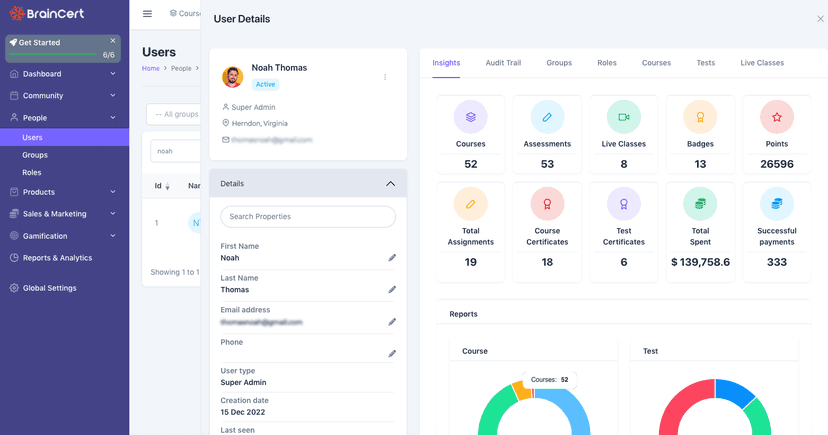
Screenshots
Take Action
For BrainCert
If you represent BrainCert, Inc and have a correction or new evidence, send the relevant source so we can review and update this page.
Submit a correctionDetails
- Pricing
- Free $0/mo (forever free plan), Basic $36.00/mo (billed annually - save $156), Pro $74.00/mo (billed annually - save $300), Elite $139.00/mo (billed annually - save $720), Business+ $499.00/mo (billed annually - save $1,800).
- Platforms
- Web Browser, iOS (Apple mobile), Windows (Microsoft), Chrome OS (Google)
- Grade Levels
- Bachelor's degree, Master's Degree, Post-doctoral certificate
- Website
- Visit site