
Boom Cards by Boom
Product by Boom Learning
Facts checked: Not yet checked
Our take (not a Learning Standard rating). This label applies to learning-science judgments throughout this overview.
Our take (not a Learning Standard rating)
Boom Cards provides excellent opportunities for retrieval practice through gamified digital flashcards, but instructional quality varies wildly. Because individual educators create the content, many decks rely on rote memorization without adequate explanatory feedback. It works effectively as a practice supplement but fails as a primary instructional tool.
Pros
- Gamified elements and immediate right-wrong feedback leverage behavioral reinforcement to keep students engaged during repetitive practice.
- The extensive library of teacher-created decks allows for highly targeted retrieval practice aligned with specific IEP goals or curriculum standards.
- Self-grading mechanics provide students with immediate error correction, preventing them from encoding incorrect information into long-term memory.
Cons
- Quality control is non-existent across the platform, meaning many decks lack pedagogical rigor and rely entirely on shallow rote memorization.
- Corrective feedback is usually limited to a simple right or wrong indicator without worked examples explaining the underlying concepts.
- The platform functions entirely as an assessment and drill tool, offering no structured progression or initial instruction for new material.
What Do We Know About Boom Cards by Boom?
Boom Cards is effective for reinforcing skills your child has already learned, but it will not teach them new concepts from scratch. The platform operates essentially as digital, interactive flashcards with gamified elements like sounds and immediate self-grading. Because any educator can create and sell a deck of cards, the pedagogical quality is highly inconsistent. Some decks utilize excellent scaffolding and visual aids to support learners, particularly those with special needs, while others are little more than digital worksheets. Your child will benefit most from this app if their teacher curates specific decks to match current classroom lessons. The immediate feedback loop relies heavily on behavioral conditioning to maintain attention, rewarding correct answers with satisfying sounds. However, parents should know that if a child is struggling with a concept, Boom Cards rarely provides the detailed explanations or worked examples necessary to correct underlying misconceptions. It is a drill-and-practice tool, highly effective for building fluency in math facts, sight words, or vocabulary, but inadequate as a standalone teaching curriculum.
How Does Boom Cards by Boom Work?
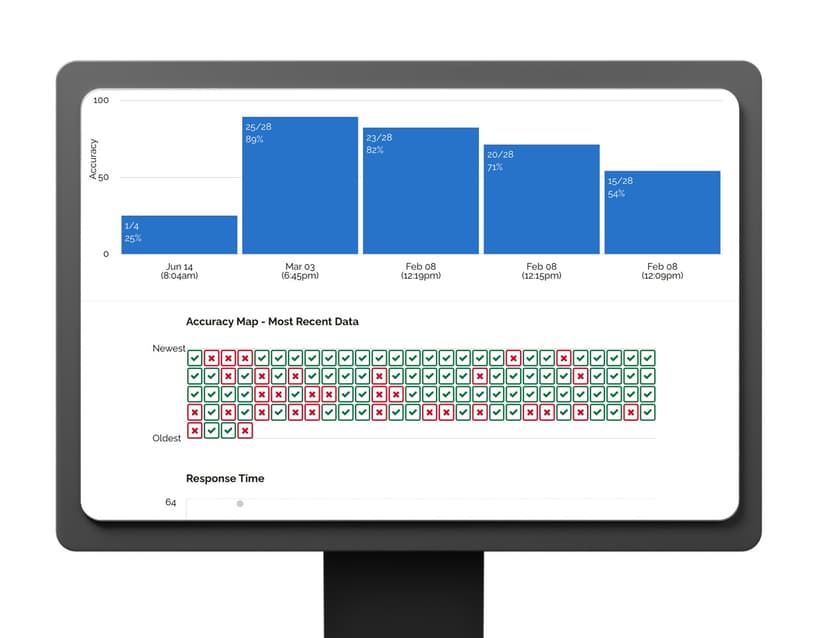
Boom Cards uses a gamified drill-and-practice approach to deliver targeted formative assessment and retrieval practice. The platform hosts hundreds of thousands of independent decks created by various educators. When your child opens a deck, they are presented with a series of interactive tasks that require them to drag and drop items, fill in blanks, or select multiple-choice answers. The core mechanic relies on immediate, automated feedback. If a student selects the correct answer, they hear a positive chime and advance to the next card. If they answer incorrectly, the system marks the error and requires them to try again until they achieve mastery on that specific card. Teachers and parents can assign specific decks to target discrete skills, such as phonics blending or fraction addition. The platform tracks student performance data in real-time, allowing educators to monitor accuracy and time spent on tasks. This data collection supports competency-based progression, ensuring students practice a skill repeatedly until they demonstrate fluency.
Strengths and tradeoffs of Boom Cards by Boom
The biggest strength of Boom Cards is its capacity for highly customizable retrieval practice, while its biggest weakness is the complete lack of standardized instructional quality. From a learning science perspective, the app excels at providing immediate corrective feedback. This immediate feedback loop prevents students from encoding incorrect information into long-term memory. The interactive nature of dragging, dropping, and clicking also requires active cognitive engagement, which is far superior to passive video consumption. However, because the content is crowdsourced from thousands of independent creators, the pedagogical rigor varies drastically. Many decks fail to incorporate scaffolding or worked examples. If a student does not know the answer, they are often forced to guess repeatedly until they stumble upon the correct choice, which does not build actual conceptual understanding. The platform is highly effective for building automaticity in foundational skills like basic arithmetic or sight word recognition through repeated exposure. Yet, it falls entirely short when students need deep explanations of complex topics.
Who Might Benefit From Boom Cards by Boom?
Boom Cards is best for PreK through middle school students who need targeted, repetitive practice to achieve fluency in discrete skills. It is particularly valuable for students with special needs, including English Language Learners and students with IEPs, because teachers can assign highly specific decks tailored to individual learning deficits. Parents looking to reinforce classroom instruction in foundational reading, math facts, or vocabulary will find it highly useful. However, older students seeking self-guided instruction in advanced subjects will find the format limiting.
Data Transparency
Does Not Meet Data Transparency Standard
Boom Cards by Boom does not meet our data transparency standard. Its privacy policy does not document basic protections, including contractual limits on service providers and parents' right to delete their child's data.
18 of 35 checks passed
Evaluated October 2026
Boom App General Privacy Notice →Level 1 · Basic protections
Does not sell data or target ads at students, limits sharing, and lets parents see and delete their child's data.
Not documented: contractual limits on service providers, parents' right to delete their child's data
Level 2 · Parent control (meets the standard)
Families can get their data out, know who processes it, and know how long it is kept.
Not documented: named service providers
Level 3 · Direct data access
Families or schools can pull their own data through an API, in a stated format.
Not documented: an API for retrieving their own data, a named export format
View all 35 checks
Parent Access6/8
Does the policy mention parents specifically?
“Educators must ensure they have permission from parents or guardians to create student accounts.”
Can parents view their child's data?
“Parents and students can view Student Data through the student dashboard or by asking the Educator.”
Can parents modify their child's data?
The policy gives parents a right to view student data but does not say they can change it.
Can parents delete their child's account?
The policy makes Educators responsible for deleting Student Data and does not give parents a deletion right.
Is there a dedicated Children's Privacy section?
“" **COPPA**" is the Children's Online Privacy Protection Act.”
Does it reference COPPA compliance?
“If FERPA does not apply to you, you must obtain consent from the student's parent or guardian before asking us to process Student Data for you.”
Does it reference FERPA compliance?
“The Boom App as provided to U.S. schools is governed by the Family Educational Rights and Privacy Act (“ **FERPA**”).”
Is parental consent required for child accounts?
“Educators must ensure they have permission from parents or guardians to create student accounts.”
Data Portability3/5
Can users access their personal data?
“Adults can ask what personal information we have about them.”
Can users download/export their data?
“To preserve Student Data for your internal records, please use our [export tools](https://helpcenter.boomlearning.com/how-to-export-and-print-boom-reports).”
Is there a self-service data access tool?
“Educators can manage Boom App User Data for themselves and their students using the tools we provide.”
Is a specific data format mentioned for export?
The policy mentions export tools but names no file format.
Is there an API for data access?
The policy does not describe an API for users, parents or schools to retrieve their data.
Data Minimization0/6
Is data collection itemized?
The policy points to a separate Data Elements disclosure and does not list the collected data itself.
Can the app be used without a real name?
The policy does not say whether students' real names are collected.
Can the app be used without an email?
The policy does not say whether students' email addresses are collected.
Does it state collection is limited to what is necessary?
The policy limits how Student Data is used but does not say collection is limited to what is necessary.
Is IP address anonymized or truncated?
The policy says security logs keep IP addresses and does not mention anonymizing them.
Is location tracking explicitly excluded?
The policy does not address location tracking.
Third-Party Protection3/7
Does it explicitly state no selling of data?
“We do not sell Student Data or Adult Data.”
Are third-party providers named?
The policy links to a subprocessor disclosure but does not name any providers itself.
Are providers contractually restricted?
The policy does not say subprocessors are contractually restricted.
No-targeted-advertising commitment?
“We do not intentionally advertise or market to students.”
Is AI/ML data sharing addressed?
The policy does not address AI or machine learning.
Child-specific sharing restriction?
“We are not permitted to release information to a person other than an Educator or their employer unless you can provide us with proof of a direct legal right of access.”
Cookies/tracking limited or opt-out?
The policy mentions cookie pop-ups but describes no limits on tracking or way to opt out.
Deletion & Retention4/5
Can users delete their account?
“You have the right to have your personal data deleted from the Boom App when you are no longer using it.”
Self-service deletion mechanism?
“We provide self-help tools for deletion.”
Specific data retention timeline?
“In any event, no later than 3 years after a student lasts logs in, the Student Data will be deleted, even if the Educator or District account is still active.”
Auto-deletion of inactive accounts?
“If an Educator or District fails to delete data, certain events will trigger automated deletion. In any event, no later than 3 years after a student lasts logs in, the Student Data will be deleted”
Post-deletion handling described?
The policy refers to the Data Privacy and Security Plan for deletion details and does not describe what happens after deletion.
Advertising2/4
Advertising model explicitly disclosed?
“We do not intentionally advertise or market to students.”
Free from third-party advertisements?
The policy does not say the product is free of third-party advertisements.
Children excluded from ad targeting?
“We do not intentionally advertise or market to students.”
Ad-free option available?
The policy does not say the product has no advertising or offer an ad-free option.
What This Means
The policy review did not meet our data transparency standard. The checks above show the documented findings and unknowns. A missing statement does not establish how the app handles data in practice.
About this evaluation: Based on automated analysis of Boom App General Privacy Notice against 35 policy-disclosure questions, including questions adapted from the Common Sense Privacy Program's published evaluation questions. TLS is not affiliated with Common Sense Media, and this is not a Common Sense rating. Quoted text is copied from the policy; unquoted notes are our summary. Results describe what the policy documents, not the company's actual practices. Privacy policies can change: this review reflects the version we analyzed and does not determine legal compliance.
Sources and review method
TLS combines product information and editorial analysis to explain how Boom Cards by Boom works, its tradeoffs, and the questions to ask before choosing it. Product features, an instructional rationale and evidence of learning outcomes are different kinds of information.
Formal Learning Standard assessment: not yet completed. Data Transparency findings are reported separately and do not establish learning effectiveness. Read our methodology.
Frequently Asked Questions About Boom Cards by Boom
Is Boom Cards by Boom free?
Boom Cards offers a free basic tier, but full functionality requires a paid membership. The free version allows educators and parents to assign basic decks, but premium memberships are required to track detailed student performance data and access advanced features. Furthermore, while some decks are free, many premium individual decks must also be purchased separately using an in-app point system.
Is Boom Cards by Boom good for elementary students?
Yes, the platform is highly effective for elementary students who need to build automaticity in foundational skills. The gamified interface, utilizing sounds and interactive elements, holds the attention of younger learners well. It serves as an excellent tool for drilling multiplication tables, phonics, and basic grammar rules through active retrieval practice.
What does Boom Cards by Boom teach?
Boom Cards covers almost every academic subject, from early childhood phonics to high school biology, though it excels most in math and language arts. Because the content is crowdsourced from thousands of educators, the platform acts as an open marketplace rather than a fixed curriculum. It teaches discrete skills rather than comprehensive academic courses.
How does Boom Cards by Boom compare to Quizlet?
Both platforms focus heavily on retrieval practice, but Boom Cards is better suited for younger students and special education due to its highly interactive, gamified drag-and-drop interface. Quizlet relies heavily on traditional text-based flashcards and complex spaced repetition algorithms, making it vastly superior for high school and college students who are memorizing complex vocabulary or historical dates.
Has The Learning Standard evaluated Boom Cards by Boom?
TLS has not yet completed a Learning Standard evaluation of how well Boom Cards by Boom teaches. Its privacy policy has been reviewed for Data Transparency and does not yet document the basic protections (Level 1).
Is Boom Cards by Boom COPPA compliant?
The reviewed privacy policy references COPPA. A policy reference alone does not establish COPPA compliance. Policy review note: The COPPA section sets out the parental consent requirement.
Is Boom Cards by Boom FERPA compliant?
The reviewed privacy policy references FERPA. A policy reference alone does not establish FERPA compliance. Policy review note: The policy states that FERPA governs the product for U.S. schools.
Does Boom Cards by Boom have a children's privacy policy?
The reviewed policy includes a dedicated children's privacy section. Policy review note: The policy has a dedicated section headed COPPA.
Does Boom Cards by Boom sell student data?
The reviewed policy states that the app does not sell data. This is a policy statement; actual data practices were not verified. Policy review note: The policy explicitly states that Boom does not sell data.
Can you delete your data from Boom Cards by Boom?
The reviewed privacy policy describes account deletion. We have not tested the deletion process. Policy review note: Users have a right to have their data deleted.
Follow TLS Research
Subscribe to future TLS research updates: app reviews, findings, and what the evidence shows.
Screenshots

Take Action
For Boom Cards by Boom
If you represent Boom Learning and have a correction or new evidence, send the relevant source so we can review and update this page.
Submit a correctionDetails
- Pricing
- Membership prices vary based on features. Individual and bulk pricing are both available. Free trial options are available; see website for membership details and pricing or to request a quote for group pricing.
- Platforms
- Web Browser, iOS (Apple mobile), iPadOS (Apple tablet), Android (Google mobile), Windows (Microsoft), macOS (Apple), Chrome OS (Google)
- Grade Levels
- Preschool, Prekindergarten, Transitional Kindergarten, Kindergarten, 1st Grade, 2nd Grade, 3rd Grade, 4th Grade, 5th Grade, 6th Grade, 7th Grade, 8th Grade, 9th Grade, 10th Grade, 11th Grade, 12th Grade, Adult Education
- Website
- Visit site