ASSISTments
Product by ASSISTments
Facts checked: Not yet checked
Our take (not a Learning Standard rating). This label applies to learning-science judgments throughout this overview.
Our take (not a Learning Standard rating)
ASSISTments serves as a highly effective formative assessment tool that reinforces classroom math instruction. By providing immediate corrective feedback, it leverages retrieval practice to correct student misconceptions in real-time. While not a standalone curriculum, it excels at identifying knowledge gaps and supplying educators with actionable data to drive targeted interventions.
Pros
- Delivers immediate corrective feedback during problem sets to prevent the consolidation of incorrect mathematical procedures.
- Promotes retrieval practice by prompting students to actively recall and apply concepts from their core curriculum.
- Integrates directly with existing learning management systems to reduce friction during classroom deployment.
- Generates granular data for teachers to identify specific student misconceptions and guide targeted classroom instruction.
Cons
- Relies entirely on external core curricula for initial instruction rather than teaching new concepts directly.
- Lacks gamification or intrinsic motivational features to sustain student interest over extended independent practice sessions.
- Features a utilitarian interface design that lacks visual engagement for younger elementary students.
What Do We Know About ASSISTments?
ASSISTments is an effective supplement for mathematics learning when paired with a strong classroom curriculum. It does not replace teacher-led instruction; rather, it functions as a digital practice space that assigns core math problems and provides immediate feedback. For your child, this means homework or independent practice is no longer done in a vacuum. Instead of completing a worksheet and waiting days for a grade, your child receives instant notification of errors. This mechanism relies on the learning science principle of immediate feedback, which prevents the encoding of incorrect mathematical procedures into long-term memory. Parents should note that ASSISTments is primarily a school-based tool designed to give teachers actionable data. You will typically see your child using this if their school has adopted it, integrating directly into platforms like Google Classroom or Canvas. Because it pulls from established curricula, you can trust that the problems align with educational standards. However, if your child is struggling to understand a foundational concept, ASSISTments will only highlight that deficit rather than reteach the lesson from scratch. It is best viewed as a diagnostic and reinforcement tool rather than a comprehensive digital tutor.
How Does ASSISTments Work?
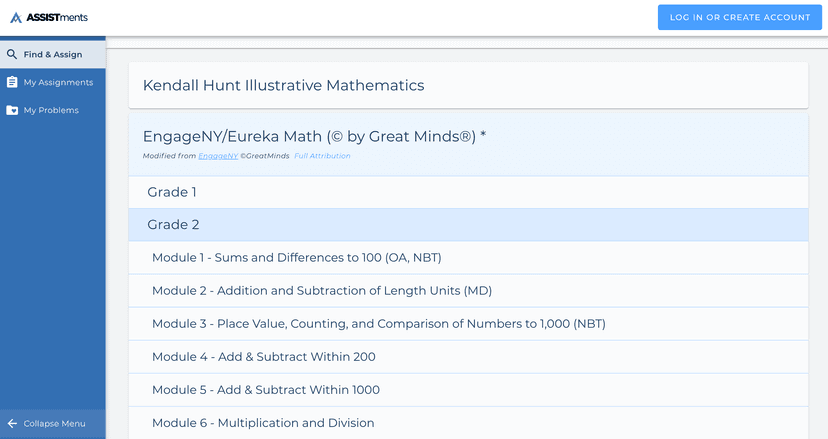
ASSISTments uses a blended learning and formative assessment approach to bridge the gap between classroom instruction and independent practice. Teachers select problem sets from an extensive library of open educational math curricula and assign them directly through their school's learning management system. As your child works through these problems, the platform requires them to input their answers digitally before moving forward. If a student answers incorrectly, the system provides immediate feedback and often requires them to try again or offers hints to scaffold their understanding. This active retrieval practice forces students to engage with the material rather than passively clicking through or guessing. On the backend, the platform aggregates this performance data into detailed reports for the teacher. The teacher can then see exactly which problems caused the most difficulty and which students require personalized intervention. This creates a mastery-based feedback loop where daily classroom instruction constantly adapts to real-time student comprehension.
Strengths and tradeoffs of ASSISTments
The biggest strength of ASSISTments is its consistent deployment of immediate feedback to correct misconceptions, while its biggest weakness is the complete lack of primary instructional content for students who need a concept retaught. Immediate corrective feedback is widely supported by learning science as a critical component of skill acquisition. When a student makes an error in ASSISTments, they are instantly aware of it, preventing the common issue of practicing the wrong procedure repeatedly on traditional paper worksheets. The platform excels at retrieval practice, forcing learners to actively recall information, which strengthens memory traces over time. Furthermore, the actionable data reporting allows educators to employ targeted, personalized interventions rather than generalized review. However, because ASSISTments functions strictly as a formative assessment wrapper for existing curricula, it offers no direct instruction. If a student fails to grasp the underlying concept during class, the platform's standard hints may not be sufficient to bridge the gap without teacher intervention. Additionally, the utilitarian interface lacks the varied modalities, such as interactive manipulatives or engaging narratives, that often help maintain focus in younger learners.
Who Might Benefit From ASSISTments?
ASSISTments is best for middle and high school math students whose teachers need a reliable digital platform for formative assessment and homework tracking. While it supports kindergarten through twelfth grade, its text-heavy, utilitarian design is most appropriate for older students who possess basic digital literacy. It is an ideal solution for educators utilizing open educational resources who want to transition from static worksheets to dynamic, data-rich assignments. Parents will find it highly beneficial for keeping their child accountable during independent practice, as the immediate feedback prevents students from reinforcing bad mathematical habits at home.
Data Transparency
Does Not Meet Data Transparency Standard
ASSISTments does not meet our data transparency standard. Its privacy policy does not document basic protections, including a statement that it does not sell data, a commitment against targeted advertising and parents' right to delete their child's data.
13 of 35 checks passed
Evaluated September 2026
Privacy Policy →Level 1 · Basic protections
Does not sell data or target ads at students, limits sharing, and lets parents see and delete their child's data.
Not documented: a statement that it does not sell data, a commitment against targeted advertising, parents' right to delete their child's data
Level 2 · Parent control (meets the standard)
Families can get their data out, know who processes it, and know how long it is kept.
Not documented: a data retention timeline, self-service deletion
Level 3 · Direct data access
Families or schools can pull their own data through an API, in a stated format.
Not documented: an API for retrieving their own data, a named export format
View all 35 checks
Parent Access4/8
Does the policy mention parents specifically?
“If you are a parent or guardian and would like to review, correct, or update your child’s data stored in our Platform, contact your school.”
Can parents view their child's data?
“If you are a parent or guardian and would like to review, correct, or update your child’s data stored in our Platform, contact your school. We will work with your school to enable your access to and, if applicable, correction of your child’s education records.”
Can parents modify their child's data?
“If you are a parent or guardian and would like to review, correct, or update your child’s data stored in our Platform, contact your school. We will work with your school to enable your access to and, if applicable, correction of your child’s education records.”
Can parents delete their child's account?
The policy lets parents review and correct their child's data but does not say parents can have it deleted.
Is there a dedicated Children's Privacy section?
The policy has no section with its own heading about children's privacy or COPPA.
Does it reference COPPA compliance?
The policy names iKeepSafe Safe Harbor membership and a COPPAPrivacy email address but never explicitly states COPPA compliance.
Does it reference FERPA compliance?
“FERPA requires schools to provide parents with access to their children’s education records, and parents may request that the school correct records that they believe to be inaccurate or misleading.”
Is parental consent required for child accounts?
The policy says a parent, school, or district may authorize collection when registering a child under 13, so parental consent is not required.
Data Portability2/5
Can users access their personal data?
“By law, you can ask us what information we hold about you, and you can ask us to correct it if it is inaccurate.”
Can users download/export their data?
“If we are processing your personal data for reasons of consent or to fulfil a contract, you can ask us to give you a copy of the information in a machine-readable format so that you can transfer it to another provider.”
Is there a self-service data access tool?
The policy describes only access requests by email, post, or phone, not a self-service tool.
Is a specific data format mentioned for export?
The policy says only "machine-readable format" and names no specific format.
Is there an API for data access?
The policy does not mention an API for accessing data.
Data Minimization1/6
Is data collection itemized?
“We may collect certain information automatically when you visit the Platform, such as the browser you are using, the Internet address from which you linked to the Platform, the operating system of your computer, the unique IP address of the computer you used to access the Platform and usage and browsing habits within the Platform.”
Can the app be used without a real name?
The policy requires registration information such as a user name and does not say real names are never collected.
Can the app be used without an email?
The policy lists email address as information users provide when registering.
Does it state collection is limited to what is necessary?
The policy does not say collection is limited to what is necessary; it only ties retention to the necessary period.
Is IP address anonymized or truncated?
The policy says it collects IP addresses and does not mention anonymizing or truncating them.
Is location tracking explicitly excluded?
The policy does not explicitly rule out location tracking.
Third-Party Protection4/7
Does it explicitly state no selling of data?
The policy says PII is never used for commercial purposes but never explicitly says it does not sell data.
Are third-party providers named?
“Examples include Google Analytics, Amazon Web Services, Cloudfare (to prevent denial of service attacks), HubSpot for communicating with non-student stakeholders, Userflow for support, and Mixpanel for usage analytics.”
Are providers contractually restricted?
“We require all such third parties to be bound by terms - whether through a written agreement, data process addendum, or terms of service - that protect Personally Identifiable Information in accordance with our privacy and security policies and applicable law.”
No-targeted-advertising commitment?
The policy says partner sharing is never for advertising, but it makes no general commitment against targeted advertising.
Is AI/ML data sharing addressed?
The policy does not address sharing data for AI or machine learning.
Child-specific sharing restriction?
“These obligations include limiting use of Student PII to providing contracted services, maintaining appropriate safeguards, and deleting or returning Student PII upon termination of services.”
Cookies/tracking limited or opt-out?
“You can instruct your browser not to accept cookies. However, if you disable this function, you will not be able to use some of the features on the Platform.”
Deletion & Retention2/5
Can users delete their account?
“If we are processing your personal data for reasons of consent or legitimate interest, you can request that your data be erased.”
Self-service deletion mechanism?
The policy describes deletion only by request, not a self-service tool.
Specific data retention timeline?
The policy keeps Student PII for the period necessary and gives no specific timeline.
Auto-deletion of inactive accounts?
The policy does not address automatic deletion of inactive accounts.
Post-deletion handling described?
“ASSISTments will destroy Student PII via de-identification in accordance with the guidelines of NIST SP 800-122, such that the relevant data can no longer be reasonably used to identify an individual. De-identified information will be retained only for educational research and product improvement purposes, and ASSISTments will never attempt to re-identify it.”
Advertising0/4
Advertising model explicitly disclosed?
The policy does not explicitly describe an advertising model or state that the product has no ads.
Free from third-party advertisements?
The policy does not explicitly state that the product has no third-party advertisements.
Children excluded from ad targeting?
The policy does not explicitly exclude children from ad targeting.
Ad-free option available?
The policy does not state that the product is ad-free or offer an ad-free option.
What This Means
The policy review did not meet our data transparency standard. The checks above show the documented findings and unknowns. A missing statement does not establish how the app handles data in practice.
About this evaluation: Based on automated analysis of Privacy Policy against 35 policy-disclosure questions, including questions adapted from the Common Sense Privacy Program's published evaluation questions. TLS is not affiliated with Common Sense Media, and this is not a Common Sense rating. Quoted text is copied from the policy; unquoted notes are our summary. Results describe what the policy documents, not the company's actual practices. Privacy policies can change: this review reflects the version we analyzed and does not determine legal compliance.
Sources and review method
TLS combines product information and editorial analysis to explain how ASSISTments works, its tradeoffs, and the questions to ask before choosing it. Product features, an instructional rationale and evidence of learning outcomes are different kinds of information.
Formal Learning Standard assessment: not yet completed. Data Transparency findings are reported separately and do not establish learning effectiveness. Read our methodology.
Frequently Asked Questions About ASSISTments
Is ASSISTments free?
Yes, the core platform is forever free for individual teachers to use with their students. However, the developer charges fees for premium services, including school-wide or district-wide data integrations and extensive professional development modules for instructional teams.
Is ASSISTments good for elementary students?
While ASSISTments supports math curricula down to kindergarten, its interface is primarily text-based and highly utilitarian. Younger elementary students may struggle with the lack of engaging visuals, interactive manipulatives, and gamification commonly found in other early childhood educational apps.
What does ASSISTments teach?
ASSISTments does not directly teach new concepts; instead, it reinforces K-12 mathematics. It imports problem sets from popular core curricula and provides a digital space for students to practice those exact problems while receiving immediate feedback on their accuracy.
How does ASSISTments compare to Khan Academy?
ASSISTments is primarily a formative assessment tool that pairs with a teacher's existing curriculum to test comprehension. Khan Academy provides primary instruction through video lessons and mastery-based practice tracks. ASSISTments relies on the classroom teacher for initial instruction, whereas Khan Academy can function as an independent digital tutor.
Has The Learning Standard evaluated ASSISTments?
TLS has not yet completed a Learning Standard evaluation of how well ASSISTments teaches. Its privacy policy has been reviewed for Data Transparency and does not yet document the basic protections (Level 1).
Is ASSISTments COPPA compliant?
A COPPA reference was not found in the reviewed privacy policy. This does not determine whether the app complies with COPPA. Policy review note: The policy names iKeepSafe Safe Harbor membership and a COPPAPrivacy email address but never explicitly states COPPA compliance.
Is ASSISTments FERPA compliant?
The reviewed privacy policy references FERPA. A policy reference alone does not establish FERPA compliance. Policy review note: The policy cites FERPA and explains how it supports schools' FERPA duties to parents.
Does ASSISTments have a children's privacy policy?
No dedicated children's privacy section was found in the reviewed policy. Policy review note: The policy has no section with its own heading about children's privacy or COPPA.
Does ASSISTments sell student data?
A statement ruling out data selling was not found in the reviewed policy. This does not establish that the app sells student data. Policy review note: The policy says PII is never used for commercial purposes but never explicitly says it does not sell data.
Can you delete your data from ASSISTments?
The reviewed privacy policy describes account deletion. We have not tested the deletion process. Policy review note: Users can ask for their data to be erased.
Follow TLS Research
Subscribe to future TLS research updates: app reviews, findings, and what the evidence shows.
Screenshots

Latest News
All ASSISTments NewsDemanding AI Transparency: Why Schools Need an AI Bill of Materials
Learn how school districts are using AI Bills of Materials (AIBOMs) to audit classroom software, protect student data privacy, and fight algorithmic bias.
Why School Districts Are Taking Control of Anthropic’s Claude AI
Anthropic now offers free, district-managed Claude for Teachers accounts. Learn how this shift addresses student privacy and reduces educator burnout.
Anthropic's New Claude Beta Highlights Critical School Privacy Limits
Anthropic's new self-hosted Claude Code beta highlights critical data privacy and FERPA compliance questions for school districts deploying classroom AI.
Take Action
For ASSISTments
If you represent ASSISTments and have a correction or new evidence, send the relevant source so we can review and update this page.
Submit a correctionDetails
- Pricing
- Forever-free core product and professional learning for teachers. Paid services for schools, districts and states.
- Platforms
- Web Browser
- Grade Levels
- Kindergarten, 1st Grade, 2nd Grade, 3rd Grade, 4th Grade, 5th Grade, 6th Grade, 7th Grade, 8th Grade, 9th Grade, 10th Grade, 11th Grade, 12th Grade
- Website
- Visit site