
Anatomage Tablet
Product by Anatomage Inc.
Facts checked: Not yet checked
Our take (not a Learning Standard rating). This label applies to learning-science judgments throughout this overview.
Our take (not a Learning Standard rating)
While The Learning Standard has not yet formally evaluated the Anatomage Tablet, its reliance on highly detailed 3D spatial visualization strongly supports cognitive mapping of complex anatomical structures. However, as an observational tool, it requires integration into a structured curriculum with active retrieval practice to move beyond passive viewing and ensure long-term retention.
Pros
- Provides high-fidelity 3D spatial visualization to reduce cognitive load when learning complex anatomical relationships.
- Allows users to manipulate virtual models to build accurate mental representations of human physiology.
- Serves as a strong supplementary reference tool alongside structured anatomy coursework.
Cons
- Lacks built-in spaced repetition or retrieval practice mechanics required for long-term memory encoding.
- Requires heavy external instructional scaffolding to prevent passive browsing without active learning.
- Pricing and institutional focus make it inaccessible for casual home learning environments.
What Do We Know About Anatomage Tablet?
The Anatomage Tablet is an effective supplementary visualization tool for advanced anatomy students, but it requires structured guidance to ensure actual learning occurs. If your child is studying high school biology or college-level anatomy, this tool provides unparalleled access to 3D physiological models. However, viewing detailed models does not automatically translate to knowledge retention. Learning science tells us that students need active recall and retrieval practice to master complex vocabulary and biological systems. Because this tablet functions primarily as a digital dissection table and reference library, you or your child's teacher must provide the necessary learning frameworks. Your child will need to self-test, draw connections, and actively quiz themselves after interacting with the 3D models. The Learning Standard has not yet formally rated this device, but our preliminary analysis indicates it is best used as a high-fidelity reference rather than a standalone teaching program. It will not drill your child on anatomical terms or adaptively test their knowledge. Instead, it offers a deeply interactive spatial experience that replaces traditional textbook diagrams and physical models.
How Does Anatomage Tablet Work?
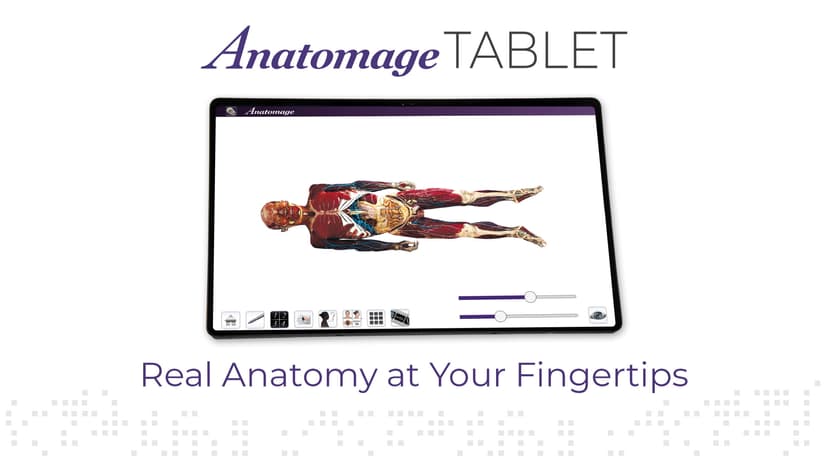
The Anatomage Tablet utilizes exploratory, high-fidelity spatial visualization to help students map structural anatomy. Users interact with a touch-screen interface to rotate, dissect, and isolate complex 3D models of human physiology. This approach directly supports spatial learning by allowing students to see how biological systems overlap and interact in three dimensions. Rather than progressing through a linear curriculum or mastery-based modules, the tablet acts as a sandbox. Students or educators dictate the learning path. A user might isolate the cardiovascular system to examine blood flow or strip away muscular layers to view skeletal structures. This non-linear design means the device relies heavily on the user's intrinsic motivation and external coursework to guide exploration. Without built-in assessments or adaptive feedback loops, the tablet functions primarily as an interactive textbook rather than an automated tutor.
Strengths and tradeoffs of Anatomage Tablet
The biggest strength of the Anatomage Tablet is its reduction of extraneous cognitive load through highly accurate 3D modeling, while its biggest weakness is the absence of built-in retrieval practice. Traditional anatomy education often forces students to mentally translate 2D textbook images into 3D concepts. The Anatomage Tablet eliminates this barrier by providing manipulatable, high-fidelity spatial visualizations. This allows students to immediately grasp the physical relationships between muscles, nerves, and organs. However, cognitive science clearly demonstrates that passive observation is insufficient for durable learning. The tablet provides the visual input, but it lacks the active recall mechanisms necessary to cement that information in long-term memory. There are no built-in self-testing features, spaced repetition flashcards, or adaptive quizzes. To overcome this weakness, students must actively self-test after using the device. Educators must also design specific, goal-oriented tasks rather than allowing students to simply browse the models. While the visual fidelity is excellent for initial encoding, mastery requires external scaffolding to transition that knowledge from working memory into permanent retention.
Who Might Benefit From Anatomage Tablet?
The Anatomage Tablet is best for advanced high school or college students who are actively enrolled in accredited anatomy and physiology programs. It serves as an exceptional companion tool for learners who need to master complex spatial relationships within the human body. Because it lacks structured lessons or basic introductory material, it is not recommended for young children or casual learners seeking general science knowledge. The device is designed for institutional use, medical prep, and rigorous biological study, making it ideal for dedicated students who already possess the study skills necessary to guide their own learning.
Data Transparency
Does Not Meet Data Transparency Standard
Anatomage Tablet does not meet our data transparency standard. Its privacy policy does not document basic protections, including a commitment against targeted advertising, contractual limits on service providers and parents' right to see their child's data.
10 of 35 checks passed
Evaluated September 2026
Anatomage →Level 1 · Basic protections
Does not sell data or target ads at students, limits sharing, and lets parents see and delete their child's data.
Not documented: a commitment against targeted advertising, contractual limits on service providers, parents' right to see their child's data, parents' right to delete their child's data
Level 2 · Parent control (meets the standard)
Families can get their data out, know who processes it, and know how long it is kept.
Not documented: a data retention timeline, named service providers, self-service deletion
Level 3 · Direct data access
Families or schools can pull their own data through an API, in a stated format.
Not documented: an API for retrieving their own data, a named export format
View all 35 checks
Parent Access3/8
Does the policy mention parents specifically?
“If you are a parent or guardian and believe your child under 13 has provided us personal information, please contact us.”
Can parents view their child's data?
The policy only invites parents to contact the company if their child under 13 provided information and does not give parents a right to view their child's data.
Can parents modify their child's data?
The policy does not give parents a right to modify their child's data.
Can parents delete their child's account?
The policy asks parents to contact the company about a child under 13 but does not say parents can have the child's data or account deleted.
Is there a dedicated Children's Privacy section?
“Children Privacy Our products, services and website are directed to people who are 13 years or older.”
Does it reference COPPA compliance?
The policy does not mention COPPA.
Does it reference FERPA compliance?
“Student records as defined under FERPA include report cards, transcripts, disciplinary records, contact and family information, and class schedules. Anatomage does not collect or share Student Records, as defined by FERPA.”
Is parental consent required for child accounts?
The policy says it does not knowingly collect data from children under 13 unless the data comes from a parent, but it does not require parental consent for child accounts.
Data Portability2/5
Can users access their personal data?
“Right of Access – the right to be informed of and request access to the personal data we process about you;”
Can users download/export their data?
“Right to Data Portability – the right to request a copy of your personal data in electronic format and the right to transmit that personal data for use in another party’s service; and”
Is there a self-service data access tool?
The policy describes access only by request and names no self-service tool.
Is a specific data format mentioned for export?
The policy says only "electronic format" and names no specific format.
Is there an API for data access?
The policy does not mention an API for data access.
Data Minimization1/6
Is data collection itemized?
“a) Contact information (such as name, mailing address, email address, and phone number);”
Can the app be used without a real name?
The policy says student name and email are collected during registration.
Can the app be used without an email?
The policy says student name and email are collected during registration.
Does it state collection is limited to what is necessary?
The policy limits how long data is kept to what is necessary but does not say collection is limited to what is necessary.
Is IP address anonymized or truncated?
The policy says it collects IP addresses and does not say they are anonymized or truncated.
Is location tracking explicitly excluded?
The policy does not explicitly exclude location tracking.
Third-Party Protection3/7
Does it explicitly state no selling of data?
“We do not rent or sell Personal Information that we collect from users with third parties.”
Are third-party providers named?
The policy refers to service providers only in general terms and names none.
Are providers contractually restricted?
The policy does not say service providers are contractually restricted.
No-targeted-advertising commitment?
The policy does not address targeted advertising.
Is AI/ML data sharing addressed?
The policy does not address sharing data for AI or machine learning.
Child-specific sharing restriction?
“Student User account usage data (“Student Metrics”) is stored and only visible by an instructor linked account.”
Cookies/tracking limited or opt-out?
“You can reject cookies by changing your browser settings.”
Deletion & Retention1/5
Can users delete their account?
“You may request in writing, at any time, that Anatomage stop data collection and delete any personal information that we have collected.”
Self-service deletion mechanism?
The policy allows deletion only by written request and offers no self-service mechanism.
Specific data retention timeline?
The policy says data is kept only as long as necessary but gives no specific timeline.
Auto-deletion of inactive accounts?
The policy does not mention automatic deletion of inactive accounts.
Post-deletion handling described?
The policy says essential data may still be collected and can be deleted by request after a license expires, but it does not describe how data is handled after deletion.
Advertising0/4
Advertising model explicitly disclosed?
The policy does not disclose an advertising model.
Free from third-party advertisements?
The policy does not say whether the product shows third-party advertisements.
Children excluded from ad targeting?
The policy does not address excluding children from ad targeting.
Ad-free option available?
The policy does not say whether an ad-free option exists or whether the product is ad-free.
What This Means
The policy review did not meet our data transparency standard. The checks above show the documented findings and unknowns. A missing statement does not establish how the app handles data in practice.
About this evaluation: Based on automated analysis of Anatomage against 35 policy-disclosure questions, including questions adapted from the Common Sense Privacy Program's published evaluation questions. TLS is not affiliated with Common Sense Media, and this is not a Common Sense rating. Quoted text is copied from the policy; unquoted notes are our summary. Results describe what the policy documents, not the company's actual practices. Privacy policies can change: this review reflects the version we analyzed and does not determine legal compliance.
Sources and review method
TLS combines product information and editorial analysis to explain how Anatomage Tablet works, its tradeoffs, and the questions to ask before choosing it. Product features, an instructional rationale and evidence of learning outcomes are different kinds of information.
Formal Learning Standard assessment: not yet completed. Data Transparency findings are reported separately and do not establish learning effectiveness. Read our methodology.
Frequently Asked Questions About Anatomage Tablet
Is Anatomage Tablet free?
No, the Anatomage Tablet is a premium institutional learning device and is not available for free. Pricing is not publicly listed and requires contacting the vendor directly for a quote. It is typically purchased by schools, universities, or specialized medical programs rather than individual consumers for home use. Because of the sophisticated 3D rendering technology and medical-grade data involved, parents and educators should expect a significant investment meant for dedicated laboratory or classroom environments.
Is Anatomage Tablet good for high school students?
Yes, the Anatomage Tablet is excellent for advanced high school students taking Advanced Placement Biology or specialized anatomy courses. The high-fidelity 3D models provide an interactive alternative to physical dissection, allowing teenagers to explore biological systems safely and repeatedly. However, younger students or those in general introductory science classes may find the depth of clinical information overwhelming without significant teacher guidance. It requires a baseline understanding of biology to be truly effective.
What does Anatomage Tablet teach?
The Anatomage Tablet teaches human anatomy, physiology, and complex spatial biological relationships. It allows students to explore the cardiovascular, muscular, skeletal, and nervous systems in three complete dimensions. Rather than teaching through direct explicit instruction or video lectures, it provides an interactive reference for students to visualize and map bodily structures. Students learn by isolating specific organs, viewing cross-sections, and understanding how different physiological systems physically connect within the human body.
Has The Learning Standard evaluated Anatomage Tablet?
TLS has not yet completed a Learning Standard evaluation of how well Anatomage Tablet teaches. Its privacy policy has been reviewed for Data Transparency and does not yet document the basic protections (Level 1).
Is Anatomage Tablet COPPA compliant?
A COPPA reference was not found in the reviewed privacy policy. This does not determine whether the app complies with COPPA. Policy review note: The policy does not mention COPPA.
Is Anatomage Tablet FERPA compliant?
The reviewed privacy policy references FERPA. A policy reference alone does not establish FERPA compliance. Policy review note: The policy cites FERPA when describing how it handles student records.
Does Anatomage Tablet have a children's privacy policy?
The reviewed policy includes a dedicated children's privacy section. Policy review note: The policy has a section headed "Children Privacy".
Does Anatomage Tablet sell student data?
The reviewed policy states that the app does not sell data. This is a policy statement; actual data practices were not verified. Policy review note: The policy states the company does not sell personal information.
Can you delete your data from Anatomage Tablet?
The reviewed privacy policy describes account deletion. We have not tested the deletion process. Policy review note: Users can ask in writing for all their personal information to be deleted.
Follow TLS Research
Subscribe to future TLS research updates: app reviews, findings, and what the evidence shows.
Screenshots
Take Action
For Anatomage Tablet
If you represent Anatomage Inc. and have a correction or new evidence, send the relevant source so we can review and update this page.
Submit a correction