AIR Language
Product by AIR Language
Facts checked: Not yet checked
Our take (not a Learning Standard rating). This label applies to learning-science judgments throughout this overview.
Our take (not a Learning Standard rating)
While AIR Language correctly identifies that independent reading drives vocabulary and comprehension gains for secondary English Learners, we cannot fully verify its efficacy as it has not yet been evaluated. Its reliance on leveled texts and student conferences aligns well with established literacy frameworks, but its actual instructional execution remains unverified.
Pros
- Structures independent reading around leveled texts to ensure students encounter comprehensible input.
- Incorporates reading conferences to provide opportunities for verbal output and targeted teacher feedback.
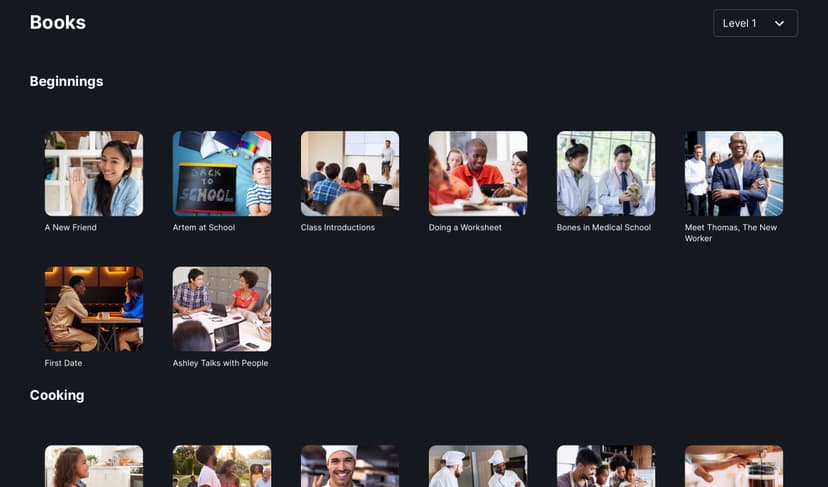
- Organizes materials by topic to help students build domain-specific background knowledge.
- Targets secondary English Learners specifically, filling a critical gap in age-appropriate literacy tools.
Cons
- Lacks explicit phonics or foundational skills instruction for older learners with major decoding gaps.
- Relies heavily on teacher implementation of reading conferences to drive actual comprehension gains.
- Requires additional school-level infrastructure and single sign-on integration that increases overall costs.
- Does not currently have an efficacy rating from The Learning Standard.
What Do We Know About AIR Language?
AIR Language is a structured reading program that may help your secondary English Learner build vocabulary, but its overall effectiveness remains pending evaluation by The Learning Standard. The system is designed specifically for students in grades 6 through 12 who are learning English as an additional language. Research consistently shows that massive amounts of independent reading at the right difficulty level, known as comprehensible input, can significantly boost language acquisition. This platform attempts to facilitate that by providing access to a library of books categorized by topic and reading level. Your child will read independently and then participate in reading conferences with their teacher. These conferences are critical because they force your child to practice verbal retrieval and allow the teacher to check for actual comprehension rather than just page-turning. However, because this is a blended learning tool, its success depends entirely on how well your child's school implements the conferencing component. If the teacher skips the conferences, your child loses the primary mechanism for feedback and language output.
How Does AIR Language Work?
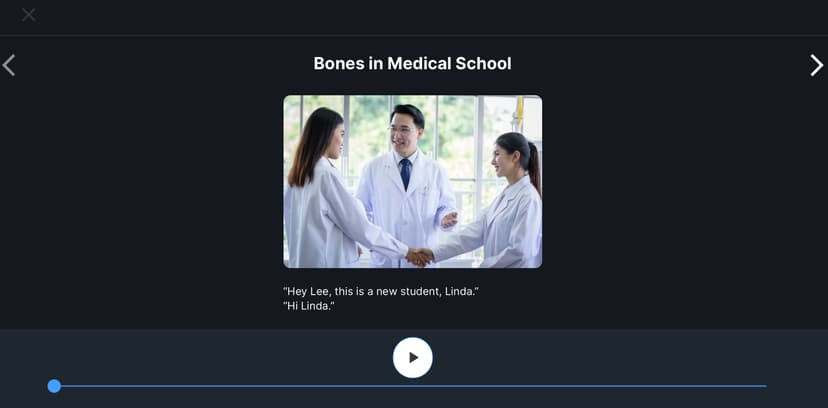
AIR Language uses a blended, personalized learning approach that combines independent text consumption with teacher-led formative assessment. The core engine of the program is a leveled digital library organized around specific humanities topics. Students select texts that match their current English proficiency level, ensuring they encounter vocabulary and sentence structures that are challenging but accessible. As students read, they build background knowledge on a topic, which learning science dictates is essential for improving overall reading comprehension. After completing a text, the student engages in a structured reading conference with their educator. This conference serves as a retrieval practice exercise, requiring the student to recall narrative details, explain concepts, and practice spoken English. The teacher uses this time to gauge comprehension, provide direct feedback, and guide the student toward their next appropriate text level.
Strengths and tradeoffs of AIR Language
The biggest strength of AIR Language is its focus on comprehensible input through topical reading, while its biggest weakness is its heavy reliance on teacher fidelity to execute the reading conferences. Comprehensible input is a foundational concept in language acquisition, and providing secondary students with age-appropriate, leveled texts ensures they are not frustrated by material that is too difficult or insulted by material meant for young children. By grouping books by topic, the app helps students build schema, or background knowledge, which significantly lowers the cognitive load required to understand subsequent texts on the same subject. However, the system's effectiveness hinges on the reading conferences. Without these regular check-ins, students are missing the critical elements of retrieval practice and corrective feedback. Simply reading without accountability rarely leads to sustained language growth in older learners. Additionally, because The Learning Standard has not yet evaluated this program, we cannot confirm if the digital texts include embedded supports like audio models or vocabulary glossaries, which our research shows are highly effective scaffolds for English Learners.
Who Might Benefit From AIR Language?
Best for middle and high school English Learners who have basic decoding skills but need massive exposure to vocabulary and text structure to improve comprehension. It serves students in grades 6 through 12 by offering age-appropriate humanities content that avoids the childish tone often found in beginner English materials. Because it relies heavily on teacher-led reading conferences, it is strictly designed for school environments rather than independent home use. Educators looking to implement a structured, blended independent reading block will find this framework highly relevant for their classrooms.
Sources and review method
TLS combines product information and editorial analysis to explain how AIR Language works, its tradeoffs, and the questions to ask before choosing it. Product features, an instructional rationale and evidence of learning outcomes are different kinds of information.
Formal Learning Standard assessment: not yet completed. Data Transparency findings are reported separately and do not establish learning effectiveness. Read our methodology.
Frequently Asked Questions About AIR Language
Is AIR Language free?
No, AIR Language is not free for individual use. It is an institutional product purchased by schools or districts, costing between $35 and $49 per student annually. Schools must also factor in the additional costs associated with integrating the platform into their single sign-on systems, such as Clever or ClassLink. Because of this pricing structure and its reliance on teacher-led conferences, it is not an app that parents can simply download and purchase for independent home practice.
Is AIR Language good for high school students?
Yes, AIR Language is specifically designed to meet the needs of secondary students in grades 6 through 12. Finding appropriate materials for older English Learners is notoriously difficult, as beginner-level texts are usually written for elementary students. This platform solves that problem by offering humanities content that is linguistically accessible but respects the cognitive maturity and interests of middle and high schoolers. This ensures older students stay engaged without feeling patronized by childish themes.
What does AIR Language teach?
AIR Language teaches English reading comprehension, vocabulary, and humanities content through structured independent reading. Instead of relying on isolated grammar drills, the platform exposes students to natural language patterns using leveled texts grouped by specific topics. This approach helps students build deep background knowledge in the humanities while simultaneously acquiring new vocabulary through repeated exposure in context. The subsequent teacher conferences then teach verbal articulation and critical thinking by requiring students to discuss what they just read.
Does AIR Language teach basic phonics?
No, AIR Language does not appear to focus on foundational phonics or early decoding skills. The program is built around independent reading practice and comprehension discussions, which assumes the student already possesses a baseline ability to decode English text. Older English Learners who struggle significantly with letter-sound correspondence or basic phonemic awareness will likely need a targeted, explicit phonics intervention program before they can independently navigate and benefit from the leveled libraries provided by this platform.
Has The Learning Standard evaluated AIR Language?
TLS has not yet completed a Learning Standard evaluation of how well AIR Language teaches. TLS has not published a Data Transparency result for its privacy policy.
Follow TLS Research
Subscribe to future TLS research updates: app reviews, findings, and what the evidence shows.
Screenshots

Take Action
For AIR Language
If you represent AIR Language and have a correction or new evidence, send the relevant source so we can review and update this page.
Submit a correctionDetails
- Pricing
- $35-49 per student, plus cost of Single sign on (clever, class link, etc.).
- Platforms
- Web Browser, Chrome OS (Google)
- Grade Levels
- 6th Grade, 7th Grade, 8th Grade, 9th Grade, 10th Grade, 11th Grade, 12th Grade
- Website
- Visit site