AI4ALL Open Learning
Product by AI4ALL
Facts checked: Not yet checked
Our take (not a Learning Standard rating). This label applies to learning-science judgments throughout this overview.
Our take (not a Learning Standard rating)
While AI4ALL Open Learning provides structured, interdisciplinary lesson plans to demystify artificial intelligence without requiring advanced math, its effectiveness depends entirely on teacher execution. Because it functions as a curriculum repository rather than an interactive student app, it lacks built-in retrieval practice or automated feedback. Note: This resource is currently pending evaluation.
Pros
- Lowers the barrier to entry by removing advanced math and coding prerequisites.
- Integrates AI concepts across multiple disciplines to build contextual understanding.
- Provides educators with structured lesson plans to standardize curriculum delivery.
Cons
- Lacks automated feedback mechanisms to correct student misconceptions in real time.
- Relies completely on teacher facilitation rather than direct-to-student instructional delivery.
- Does not include adaptive testing or spaced repetition to reinforce memory retention.
What Do We Know About AI4ALL Open Learning?
AI4ALL Open Learning is effective as a classroom supplement but does not function as a standalone teaching app for your child. Instead of a direct-to-student digital tool, this is a curriculum repository designed for teachers. If your child's school uses this program, they will receive lessons on artificial intelligence that do not require prior computer science or advanced math knowledge. The program introduces the ethical and societal impacts of AI, which helps build vital critical thinking skills. Because the materials are interdisciplinary, your child might encounter these lessons in a social studies or language arts class, rather than just a computer lab. However, since the platform lacks interactive practice modules, it cannot test your child's knowledge using learning science principles like retrieval practice or spaced repetition. The effectiveness of the curriculum relies entirely on how well the local educator delivers the material and checks for understanding. Note that The Learning Standard has not yet formally evaluated this program. If you are a parent looking for an app your child can use independently at home to learn AI or coding, this resource will not meet your needs.
How Does AI4ALL Open Learning Work?
AI4ALL Open Learning uses a teacher-facilitated curriculum model rather than direct-to-student interactive software. Educators log into a portal to download lesson plans, presentation slides, and discussion guides. Teachers then deliver this content in their physical or virtual classrooms. The pedagogy focuses on contextualizing artificial intelligence within everyday scenarios rather than teaching underlying algorithmic math. Students participate in guided discussions, analyze case studies of AI in the real world, and explore the ethical implications of technology. There is no student-facing interface where a child logs in to complete automated quizzes or coding challenges. The platform provides the instructional scaffolding for the teacher, who is responsible for integrating active learning strategies, checking for understanding, and assessing student mastery through traditional classroom assignments.
Strengths and tradeoffs of AI4ALL Open Learning
The biggest strength of AI4ALL Open Learning is its accessibility for non-technical users, while its biggest weakness is the complete absence of built-in student assessment. By stripping away complex math and programming prerequisites, the curriculum employs scaffolding that allows 9th graders to grapple with high-level concepts like algorithmic bias and machine learning ethics. This interdisciplinary approach provides meaningful context, a proven learning science strategy that helps students connect new information to existing knowledge structures. However, the platform is strictly a content repository. It lacks interactive elements that drive retention. Without built-in retrieval practice (quizzes or active recall exercises) or spaced repetition, students may struggle to retain the vocabulary and concepts long-term. Teachers must build these cognitive tools into their own instruction to ensure the material sticks. Furthermore, because there is no adaptive software responding to student inputs, there are no worked examples dynamically generated to address individual student misconceptions. The learning outcomes depend entirely on the educator's ability to facilitate deep discussion and provide corrective feedback in the classroom.
Who Might Benefit From AI4ALL Open Learning?
Best for high school educators who want to integrate artificial intelligence concepts into their existing, non-technical classes. Because the curriculum does not require a computer science background, it is an excellent resource for social studies, humanities, or general science teachers aiming to modernize their lesson plans. The target audience is primarily 9th-grade classrooms where students are mature enough to discuss the ethics and societal impacts of technology. It is not suitable for parents seeking independent, self-paced learning apps for their children, nor is it designed for students who want to learn how to write raw code.
Data Transparency
Does Not Meet Data Transparency Standard
AI4ALL Open Learning does not meet our data transparency standard. Its privacy policy does not document basic protections, including a statement that it does not sell data, a commitment against targeted advertising and limits on sharing children's data.
9 of 35 checks passed
Evaluated September 2026
Privacy Statement →Level 1 · Basic protections
Does not sell data or target ads at students, limits sharing, and lets parents see and delete their child's data.
Not documented: a statement that it does not sell data, a commitment against targeted advertising, limits on sharing children's data, a COPPA or FERPA commitment, parents' right to see their child's data, parents' right to delete their child's data
Level 2 · Parent control (meets the standard)
Families can get their data out, know who processes it, and know how long it is kept.
Not documented: a data retention timeline, self-service deletion
Level 3 · Direct data access
Families or schools can pull their own data through an API, in a stated format.
Not documented: an API for retrieving their own data, a named export format
View all 35 checks
Parent Access2/8
Does the policy mention parents specifically?
“We may also collect additional information about you such as whether you are a student, parent, educator, or tech professional.”
Can parents view their child's data?
The policy does not give parents a right to view their child's data.
Can parents modify their child's data?
The policy does not give parents a right to modify their child's data.
Can parents delete their child's account?
The policy does not give parents a right to delete their child's data or account.
Is there a dedicated Children's Privacy section?
“This website is not directed to or intended for use by children under the age of 13. If we learn that an under-13 user has volunteered personal information on the site, we will delete such information from our active databases.”
Does it reference COPPA compliance?
The policy does not mention COPPA by name; it only says the site is not meant for children under 13.
Does it reference FERPA compliance?
The policy does not mention FERPA.
Is parental consent required for child accounts?
The policy does not require parental consent; it says the site is not intended for children under 13.
Data Portability2/5
Can users access their personal data?
“To be provided with a copy of your personal information held by us:”
Can users download/export their data?
“To request that your provided personal information be moved to a third party.”
Is there a self-service data access tool?
The policy only describes access by contacting AI4ALL, not a self-service tool.
Is a specific data format mentioned for export?
The policy does not name a format for exported data.
Is there an API for data access?
The policy does not mention an API for data access.
Data Minimization1/6
Is data collection itemized?
“When you access our Open Learning Platform, we may collect information about you including your first and last name, gender, date of birth, address, city, state, zip/postal code, email address, User ID, user name, language, and academic background.”
Can the app be used without a real name?
The policy says the Open Learning Platform collects users' first and last names.
Can the app be used without an email?
The policy says the Open Learning Platform collects email addresses.
Does it state collection is limited to what is necessary?
The policy does not say collection is limited to what is necessary.
Is IP address anonymized or truncated?
The policy does not say IP addresses are anonymized or truncated.
Is location tracking explicitly excluded?
The policy does not rule out location tracking and says it collects home address details.
Third-Party Protection3/7
Does it explicitly state no selling of data?
The policy does not say AI4ALL does not sell personal information.
Are third-party providers named?
“We use Google Analytics.To opt out of being tracked by Google Analytics across all websites visit”
Are providers contractually restricted?
“We do not authorize these service providers to use or disclose your information except as necessary to perform services on our behalf or to comply with legal requirements.”
No-targeted-advertising commitment?
The policy does not promise that data won't be used for targeted advertising, and its cookie banner lists marketing cookies used for advertising profiles.
Is AI/ML data sharing addressed?
The policy does not address sharing data for AI or machine learning.
Child-specific sharing restriction?
The policy has no sharing limits specific to children; it only says under-13 information will be deleted.
Cookies/tracking limited or opt-out?
“To opt out of being tracked by Google Analytics across all websites visit [http://tools.google.com/dlpage/gaoptout](http://tools.google.com/dlpage/gaoptout).”
Deletion & Retention1/5
Can users delete their account?
“To request the rectification or erasure of your personal information held by us;”
Self-service deletion mechanism?
The policy only describes deletion by contacting AI4ALL, not a self-service tool.
Specific data retention timeline?
The policy says data is kept under internal retention policies but gives no timeline.
Auto-deletion of inactive accounts?
The policy does not mention automatically deleting inactive accounts.
Post-deletion handling described?
The policy does not describe what happens to data after deletion.
Advertising0/4
Advertising model explicitly disclosed?
The policy does not explain its advertising model.
Free from third-party advertisements?
The policy does not say the product is free of third-party ads.
Children excluded from ad targeting?
The policy does not exclude children from ad targeting.
Ad-free option available?
The policy does not mention an ad-free option or say there is no advertising.
What This Means
The policy review did not meet our data transparency standard. The checks above show the documented findings and unknowns. A missing statement does not establish how the app handles data in practice.
About this evaluation: Based on automated analysis of Privacy Statement against 35 policy-disclosure questions, including questions adapted from the Common Sense Privacy Program's published evaluation questions. TLS is not affiliated with Common Sense Media, and this is not a Common Sense rating. Quoted text is copied from the policy; unquoted notes are our summary. Results describe what the policy documents, not the company's actual practices. Privacy policies can change: this review reflects the version we analyzed and does not determine legal compliance.
Sources and review method
TLS combines product information and editorial analysis to explain how AI4ALL Open Learning works, its tradeoffs, and the questions to ask before choosing it. Product features, an instructional rationale and evidence of learning outcomes are different kinds of information.
Formal Learning Standard assessment: not yet completed. Data Transparency findings are reported separately and do not establish learning effectiveness. Read our methodology.
Frequently Asked Questions About AI4ALL Open Learning
Is AI4ALL Open Learning free?
Yes. The curriculum and all accompanying teacher resources are provided completely free of charge to educators. There are no premium tiers or hidden subscription fees for schools to access the lesson plans.
Is AI4ALL Open Learning good for 9th graders?
Yes. The curriculum is specifically designed for high school freshmen. It introduces complex artificial intelligence and ethical concepts using age-appropriate language and real-world examples, without requiring advanced math skills.
What does AI4ALL Open Learning teach?
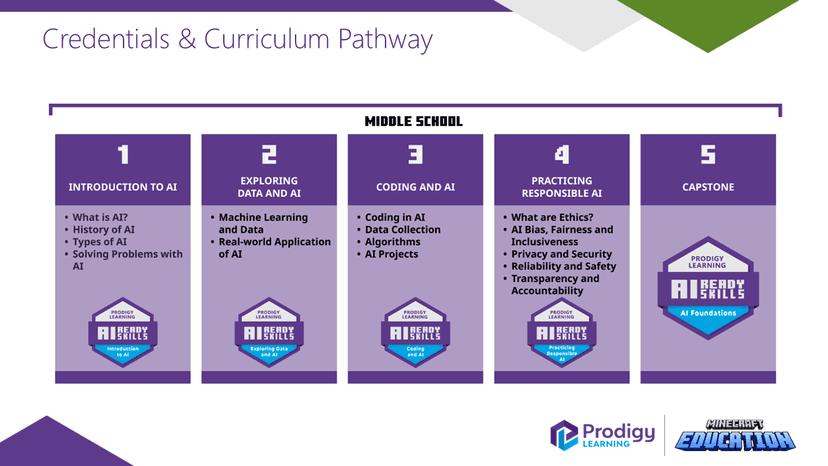
The program teaches the fundamental concepts of artificial intelligence, machine learning, and AI ethics. Rather than focusing on coding or algorithms, it emphasizes how AI impacts society, how it is used across various industries, and how to recognize algorithmic bias.
Can my child use AI4ALL Open Learning at home?
No. This is not a student-facing educational app. It is a curriculum repository designed strictly for teachers to download lesson plans and deliver them in a classroom setting.
Does AI4ALL Open Learning teach students how to code?
No. The curriculum is intentionally interdisciplinary and non-technical. It focuses on AI literacy, ethics, and societal application rather than computer programming, making it accessible to students without a computer science background.
Has The Learning Standard evaluated AI4ALL Open Learning?
TLS has not yet completed a Learning Standard evaluation of how well AI4ALL Open Learning teaches. Its privacy policy has been reviewed for Data Transparency and does not yet document the basic protections (Level 1).
Is AI4ALL Open Learning COPPA compliant?
A COPPA reference was not found in the reviewed privacy policy. This does not determine whether the app complies with COPPA. Policy review note: The policy does not mention COPPA by name; it only says the site is not meant for children under 13.
Is AI4ALL Open Learning FERPA compliant?
A FERPA reference was not found in the reviewed privacy policy. This does not determine whether the app complies with FERPA. Policy review note: The policy does not mention FERPA.
Does AI4ALL Open Learning have a children's privacy policy?
The reviewed policy includes a dedicated children's privacy section. Policy review note: The policy has a section headed "Children's Online Privacy."
Does AI4ALL Open Learning sell student data?
A statement ruling out data selling was not found in the reviewed policy. This does not establish that the app sells student data. Policy review note: The policy does not say AI4ALL does not sell personal information.
Can you delete your data from AI4ALL Open Learning?
The reviewed privacy policy describes account deletion. We have not tested the deletion process. Policy review note: EU residents can request erasure of their personal information.
Follow TLS Research
Subscribe to future TLS research updates: app reviews, findings, and what the evidence shows.
Screenshots
Take Action
For AI4ALL Open Learning
If you represent AI4ALL and have a correction or new evidence, send the relevant source so we can review and update this page.
Submit a correction