Agilix Buzz
Product by Agilix Labs, Inc.
Facts checked: Not yet checked
Our take (not a Learning Standard rating). This label applies to learning-science judgments throughout this overview.
Our take (not a Learning Standard rating)
Agilix Buzz does not teach directly; rather, it is a learning management system that delivers curriculum designed by educators. Its effectiveness depends entirely on the instructional design of the content loaded into it. However, it successfully supports mastery-based progression and allows teachers to scaffold project-based learning assignments effectively.
Pros
- Facilitates mastery-based progression by allowing educators to restrict modules until students demonstrate competency on prerequisite assessments.
- Supports varied assessment formats, which educators can use to implement regular retrieval practice.
- Offers extensive customization for schools to build distinct blended learning environments.
- Centralizes project-based learning components, allowing clear scaffolding of complex assignments.
Cons
- Lacks built-in instructional content, requiring schools or parents to provide their own curriculum.
- The highly customizable interface can present a steep learning curve for educators and students.
- Does not natively generate spaced repetition schedules without deliberate manual configuration by the teacher.
What Do We Know About Agilix Buzz?
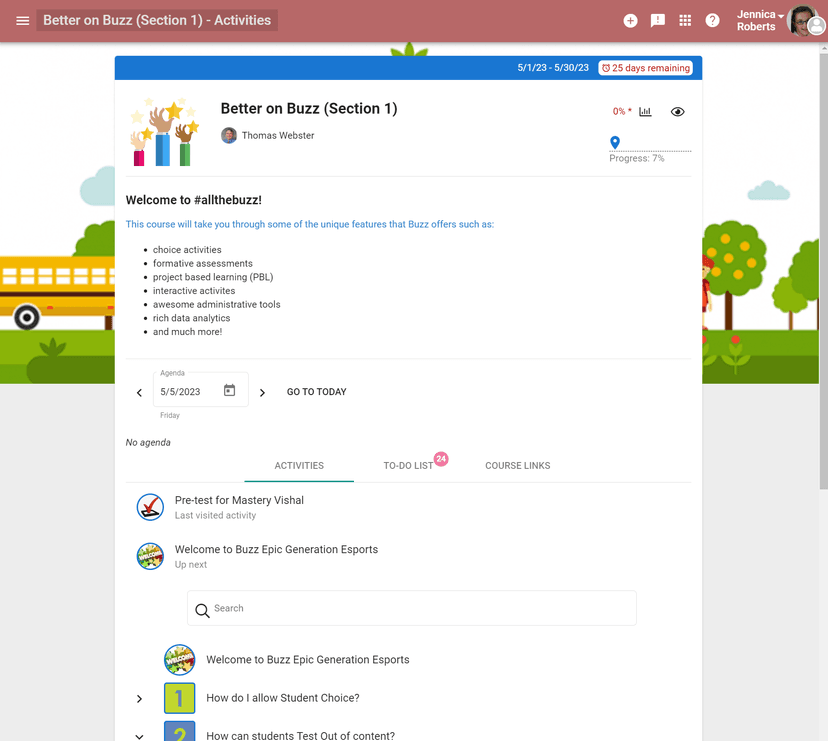
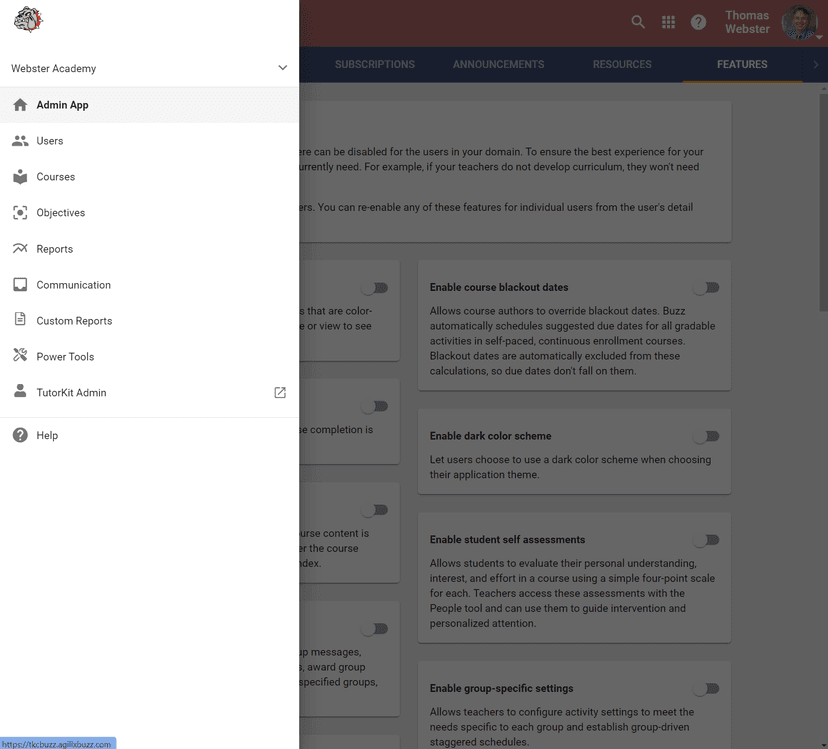
Agilix Buzz is effective for learning only if the curriculum your child's school has loaded into the platform is rooted in sound instructional design. Because it is a learning management system rather than a standalone educational app, it does not teach concepts directly. Instead, it is the digital classroom where your child accesses assignments, takes quizzes, and tracks their progress. If your child attends a virtual school or a brick-and-mortar school using a blended model, they will likely use Agilix Buzz to navigate daily coursework. The platform excels at supporting competency-based learning. This means your child may be required to score a certain percentage on a quiz before the system unlocks the next reading or video, ensuring they actually understand the material before moving forward. Parents should understand that any frustration with the material is usually an issue with the curriculum publisher, not the Buzz platform itself. However, because the software is heavily customizable, its navigation and layout will look different from school to school. You will need to rely on your specific school's onboarding materials to help your child navigate their dashboard, check grades, and submit projects.
How Does Agilix Buzz Work?
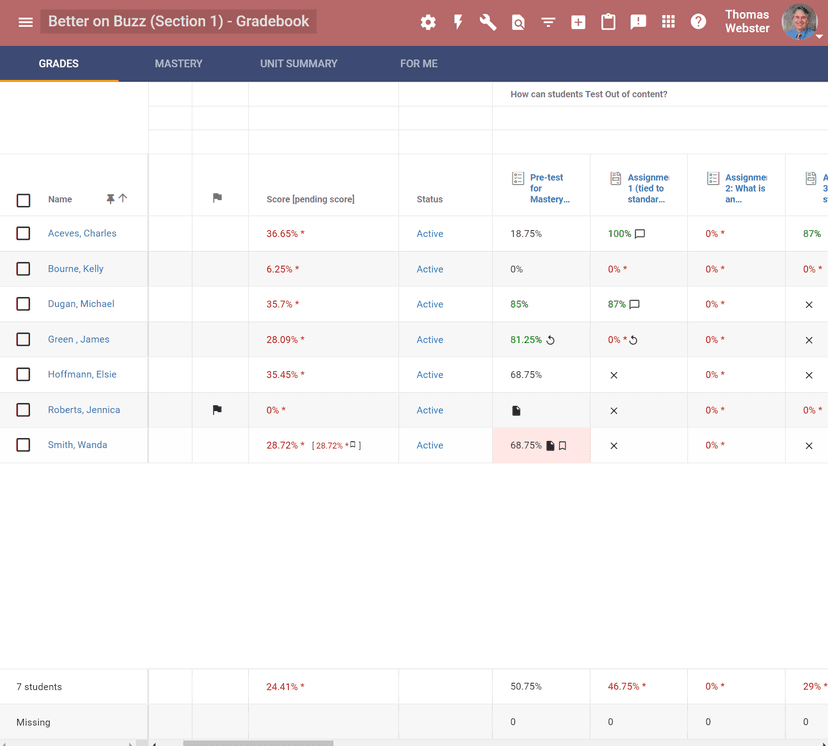
Agilix Buzz uses a learning management delivery framework designed to support blended, competency-based, and project-based learning. Educators or institutions load digital curriculum into the platform, which then serves as the primary interface for student interaction, assessment, and grading. The mechanics rely heavily on modular progression. Teachers organize material into folders or pathways. Students log in, view their to-do lists, and click through multimedia lessons, discussion boards, and digital dropboxes. Buzz includes conditional release features, meaning a teacher can program the system to withhold a unit test until the student has completed all formative practice exercises. This enforces a mastery-based approach, preventing students from passively clicking through material without engaging. Furthermore, teachers can use the platform's grading and feedback tools to provide specific, timely interventions when a student's data indicates they are struggling with a specific concept.
Strengths and tradeoffs of Agilix Buzz
The biggest strength of Agilix Buzz is its robust support for mastery-based learning progression, while its biggest weakness is its reliance on the institution's ability to provide high-quality, scientifically backed curriculum. When looking at strengths, the platform's architecture naturally lends itself to competency-based education. Educators can set up rigid pathways that require students to pass formative assessments before accessing new material. This prevents knowledge gaps from compounding over time. Additionally, the platform supports varied multimedia inputs, allowing teachers to provide worked examples via video alongside traditional text instruction. The assessment engine also allows for frequent low-stakes quizzes, a necessary component for effective retrieval practice. Regarding weaknesses, the platform is an empty vessel out of the box. If a school uploads poorly designed, text-heavy PDFs with no opportunities for interactive recall, student learning will suffer. Furthermore, the system does not automatically generate spaced repetition algorithms for reviewing old material; teachers must manually design their courses to reintroduce past concepts. Finally, the vast array of settings and configurations can lead to a cluttered interface if the school's administrators do not streamline the user experience for younger students.
Who Might Benefit From Agilix Buzz?
Agilix Buzz is best for K-12 and higher education institutions that need a highly customizable platform to deliver blended or virtual instruction. It is not an app for individual families or independent learners seeking ready-made educational content. Because it scales from early childhood through post-doctoral studies, its ideal use case is at the district or organizational level, particularly for schools transitioning to competency-based or project-based learning models. Administrators who want to white-label their online learning portal and closely track student progression data will find the platform most useful.
Data Transparency
Does Not Meet Data Transparency Standard
Agilix Buzz does not meet our data transparency standard. Its privacy policy does not document basic protections, including a commitment against targeted advertising, limits on sharing children's data and contractual limits on service providers.
11 of 35 checks passed
Evaluated September 2026
Agilix Labs →Level 1 · Basic protections
Does not sell data or target ads at students, limits sharing, and lets parents see and delete their child's data.
Not documented: a commitment against targeted advertising, limits on sharing children's data, contractual limits on service providers, parents' right to see their child's data, parents' right to delete their child's data
Level 2 · Parent control (meets the standard)
Families can get their data out, know who processes it, and know how long it is kept.
Not documented: a data retention timeline
Level 3 · Direct data access
Families or schools can pull their own data through an API, in a stated format.
Not documented: an API for retrieving their own data, a named export format
View all 35 checks
Parent Access1/8
Does the policy mention parents specifically?
The policy does not mention parents; it refers to end users, schools and institutions.
Can parents view their child's data?
The policy does not address parents viewing their child's data.
Can parents modify their child's data?
The policy does not address parents modifying their child's data.
Can parents delete their child's account?
The policy does not address parents deleting their child's data or account.
Is there a dedicated Children's Privacy section?
The policy has no dedicated children's privacy or COPPA section.
Does it reference COPPA compliance?
The policy does not reference COPPA.
Does it reference FERPA compliance?
“In addition, we protect records in compliance with the Family Educational Rights and Privacy Act (FERPA) and similar state laws.”
Is parental consent required for child accounts?
The policy does not address parental consent for child accounts.
Data Portability3/5
Can users access their personal data?
“In Agilix Dawn, users are able to download and delete their data in the app.”
Can users download/export their data?
“In Agilix Dawn, users are able to download and delete their data in the app.”
Is there a self-service data access tool?
“In Agilix Dawn, users are able to download and delete their data in the app.”
Is a specific data format mentioned for export?
The policy does not name any export file format.
Is there an API for data access?
The policy mentions application programming interfaces only as a way of enforcing access security, not as an API users can use to get their data.
Data Minimization1/6
Is data collection itemized?
“The personal information we store generally includes your: - Name - Username - One or more email addresses - Information about your password”
Can the app be used without a real name?
The policy states that the personal information it stores includes the user's name.
Can the app be used without an email?
The policy states that it stores one or more of the user's email addresses.
Does it state collection is limited to what is necessary?
The policy states it does not restrict the type of information schools gather, and it makes no data-minimization commitment.
Is IP address anonymized or truncated?
The policy does not address anonymizing or truncating IP addresses.
Is location tracking explicitly excluded?
The policy does not explicitly rule out location tracking.
Third-Party Protection3/7
Does it explicitly state no selling of data?
“Agilix will not sell the personal information of users, except as part of a sale of the business or a business unit, transfer of the services holding that information, or bankruptcy or other legal proceeding.”
Are third-party providers named?
“We use the information we get from Google Analytics only to improve our products and websites.”
Are providers contractually restricted?
The policy mentions only 'reasonable efforts' to check linked sites and describes no contractual limits on providers.
No-targeted-advertising commitment?
The policy does not address targeted advertising.
Is AI/ML data sharing addressed?
The policy does not address AI or machine learning.
Child-specific sharing restriction?
The policy has no sharing restriction specific to children.
Cookies/tracking limited or opt-out?
“Agilix does not tie the information gathered using third party analytics to your personally identifiable information.”
Deletion & Retention3/5
Can users delete their account?
“We have aligned our process with the requirements of the **Global Data Protection Regulation (EU GDPR)** which outlines the responsibility to delete all _Personally Identifiable Information (PII)_ upon end user request to comply with the user's "right to be forgotten."”
Self-service deletion mechanism?
“In Agilix Dawn, users are able to download and delete their data in the app.”
Specific data retention timeline?
The policy gives no data retention period; the only timeframe mentioned is 30 days for a DPO to respond to a request.
Auto-deletion of inactive accounts?
The policy does not address automatically deleting inactive accounts.
Post-deletion handling described?
“Some of your information may be stored temporarily or persistently in cookies or local storage on systems you use to access the websites, or on proxy or caching servers between your school or institutions systems and ours, and there may be some delay in altering or removing that data after the master copy is updated.”
Advertising0/4
Advertising model explicitly disclosed?
The policy does not address advertising.
Free from third-party advertisements?
The policy does not address third-party advertising.
Children excluded from ad targeting?
The policy does not address ad targeting of children.
Ad-free option available?
The policy does not address advertising or an ad-free option.
What This Means
The policy review did not meet our data transparency standard. The checks above show the documented findings and unknowns. A missing statement does not establish how the app handles data in practice.
About this evaluation: Based on automated analysis of Agilix Labs against 35 policy-disclosure questions, including questions adapted from the Common Sense Privacy Program's published evaluation questions. TLS is not affiliated with Common Sense Media, and this is not a Common Sense rating. Quoted text is copied from the policy; unquoted notes are our summary. Results describe what the policy documents, not the company's actual practices. Privacy policies can change: this review reflects the version we analyzed and does not determine legal compliance.
Sources and review method
TLS combines product information and editorial analysis to explain how Agilix Buzz works, its tradeoffs, and the questions to ask before choosing it. Product features, an instructional rationale and evidence of learning outcomes are different kinds of information.
Formal Learning Standard assessment: not yet completed. Data Transparency findings are reported separately and do not establish learning effectiveness. Read our methodology.
Frequently Asked Questions About Agilix Buzz
Is Agilix Buzz free?
No, Agilix Buzz is not free for individual users or institutions. It operates on a tiered, volume-based pricing model. Brick-and-mortar schools typically pay based on the number of teachers and administrators, which includes student access. Virtual schools often pay per user or per enrollment. Parents do not pay for this app directly; access is provided by the enrolled school.
Is Agilix Buzz good for early childhood and elementary students?
Agilix Buzz can be appropriate for younger learners only if the school simplifies the interface. Because the platform serves learners from PreK through doctoral programs, the default interface can be overwhelming for early readers. Schools must heavily customize the dashboard and rely on clear visual cues and multimedia to make it effective for early childhood education.
What does Agilix Buzz teach?
Agilix Buzz does not teach any subjects natively. It is a learning management system that delivers the curriculum chosen and uploaded by your child's school. Depending on the institution, it can deliver content for any subject, including math, science, humanities, and career and technical education. Its effectiveness relies entirely on the quality of that uploaded curriculum.
Agilix Buzz vs. Canvas: Which is better?
Both platforms are powerful learning management systems, but they serve slightly different niches. Canvas is an industry giant known for its widespread adoption in higher education and large K-12 districts, offering a standardized, reliable experience. Agilix Buzz is often preferred by virtual schools and niche programs that require deep customization, white-labeling, and highly specific mastery-based grading configurations.
Has The Learning Standard evaluated Agilix Buzz?
TLS has not yet completed a Learning Standard evaluation of how well Agilix Buzz teaches. Its privacy policy has been reviewed for Data Transparency and does not yet document the basic protections (Level 1).
Is Agilix Buzz COPPA compliant?
A COPPA reference was not found in the reviewed privacy policy. This does not determine whether the app complies with COPPA. Policy review note: The policy does not reference COPPA.
Is Agilix Buzz FERPA compliant?
The reviewed privacy policy references FERPA. A policy reference alone does not establish FERPA compliance. Policy review note: The policy states records are protected in compliance with FERPA.
Does Agilix Buzz have a children's privacy policy?
No dedicated children's privacy section was found in the reviewed policy. Policy review note: The policy has no dedicated children's privacy or COPPA section.
Does Agilix Buzz sell student data?
The reviewed policy states that the app does not sell data. This is a policy statement; actual data practices were not verified. Policy review note: Agilix states it will not sell users' personal information, except in business-transfer situations.
Can you delete your data from Agilix Buzz?
The reviewed privacy policy describes account deletion. We have not tested the deletion process. Policy review note: The policy says all PII is deleted when an end user requests it.
Follow TLS Research
Subscribe to future TLS research updates: app reviews, findings, and what the evidence shows.
Screenshots
Take Action
For Agilix Buzz
If you represent Agilix Labs, Inc. and have a correction or new evidence, send the relevant source so we can review and update this page.
Submit a correctionDetails
- Pricing
- Pricing is offered at a tier level, the larger the volumn the lower the price. Brick and mortor institutions are normally priced by teacher / admin count, students are included. Virtual settings are priced by user with unlimited enrollments or by the enrollment.
- Platforms
- Web Browser, iOS (Apple mobile), iPadOS (Apple tablet), Android (Google mobile), Tizen (Samsung mobile), Windows (Microsoft), macOS (Apple), Chrome OS (Google)
- Grade Levels
- Prekindergarten, Transitional Kindergarten, Kindergarten, 1st Grade, 2nd Grade, 3rd Grade, 4th Grade, 5th Grade, 6th Grade, 7th Grade, 8th Grade, 9th Grade, 10th Grade, 11th Grade, 12th Grade, Associate's degree, Bachelor's degree, Post-baccalaureate certificate, Master's Degree, Post-master's certificate, Doctoral Degree, Post-doctoral certificate, Adult Education, Professional or Technical Credential
- Website
- Visit site