
Achieve3000 Math
Product by McGraw Hill
Facts checked: Not yet checked
Our take (not a Learning Standard rating). This label applies to learning-science judgments throughout this overview.
Our take (not a Learning Standard rating)
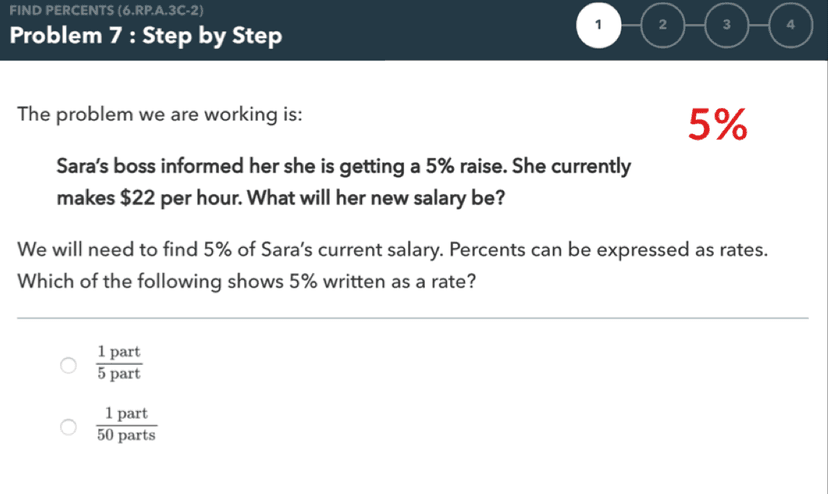
Achieve3000 Math provides a vast library of standards-aligned practice problems for grades 3 through 12, but The Learning Standard has not yet formally evaluated its effectiveness. While its step-by-step scaffolding aligns with worked-example principles, the lack of a formal evaluation means we cannot definitively verify its adaptive pacing or long-term knowledge retention claims.
Pros
- Breaks down complex math problems into step-by-step scaffolds to support working memory.
- Aligns practice sets directly with state standards to ensure targeted skill development.
- Provides immediate corrective feedback to help students correct misconceptions before they solidify.
Cons
- Lacks formal independent evaluation data to verify the effectiveness of its differentiated instruction.
- Relies heavily on digital drill-and-practice formats that cause engagement fatigue for younger learners.
- Fails to clearly utilize spaced repetition algorithms to ensure long-term retention of previously mastered skills.
What Do We Know About Achieve3000 Math?
Achieve3000 Math offers a structured environment for math practice, but we cannot yet confirm its overall effectiveness because The Learning Standard has not formally evaluated it. Your child will experience a heavily scaffolded platform that breaks down complex math concepts into smaller, manageable steps. This step-by-step approach aligns with the cognitive science principle of worked examples, which reduces the load on your child's working memory as they learn new topics. The platform provides direct alignment with school curricula for grades 3 through 12, making it a relevant tool for homework support or test preparation. However, because we have not verified the underlying algorithm, it remains unclear if the program effectively uses spaced retrieval practice to help your child retain math skills over months rather than just passing the immediate quiz. You should expect your child to spend time answering multiple-choice and short-answer questions in a digital workbook format. While this provides ample practice, the drill-based format requires self-motivation. Monitor your child's progress manually rather than relying entirely on the software's mastery indicators. Until a full evaluation is complete, treat this tool as a supplementary practice bank rather than a primary instructor.
How Does Achieve3000 Math Work?
Achieve3000 Math uses a scaffolded, standards-aligned practice model designed to deliver differentiated math instruction. The platform presents students with specific math problems mapped to their current grade level and state standards. When a student encounters a difficult problem, the software provides step-by-step hints and breaks the larger problem into sequential, smaller calculations. This mirrors the instructional strategy of faded scaffolding, aiming to build independent problem-solving skills gradually. The system tracks correct and incorrect answers to adjust the difficulty of subsequent questions, a method intended to keep students in their zone of proximal development. Teachers and parents have access to dashboards that display these progress metrics, highlighting areas of proficiency and identifying skill gaps. Because the core mechanic relies heavily on digital problem sets, the learning experience functions much like a dynamic worksheet that grades itself and offers immediate corrective feedback upon error.
Strengths and tradeoffs of Achieve3000 Math
The biggest strength of Achieve3000 Math is its systematic breakdown of complex math problems into step-by-step cognitive tasks, while its biggest weakness is the lack of verified data on its long-term retention strategies. Scaffolded Learning: By guiding students through multi-step problems one calculation at a time, the program effectively manages cognitive load. This prevents learners from feeling overwhelmed by high school algebra or complex fractions. Immediate Feedback: The platform provides instant corrections. Learning science shows that immediate feedback prevents students from practicing and encoding mistakes into their long-term memory. Questionable Spacing: Most drill-based platforms excel at initial skill acquisition but fail to cycle older topics back into the mix. Without independent evaluation, it is unknown if Achieve3000 Math uses spaced repetition to interrupt the forgetting curve. Engagement Limitations: The interface prioritizes clean, direct math practice over gamification. While this minimizes distracting extraneous load, it also places a heavy burden on intrinsic motivation. Students who already struggle with math anxiety may find the continuous testing format repetitive. Overall, the structural design aligns with established explicit instruction methods, but the efficacy of its adaptive sequencing remains pending evaluation.
Who Might Benefit From Achieve3000 Math?
Achieve3000 Math is best for upper elementary to high school students who need structured, supplementary practice aligned directly with their classroom curriculum. Because it covers grades 3 through 12, it works well for school districts or parents seeking a single, consistent platform for comprehensive standard alignment. It is particularly suited for learners who benefit from step-by-step scaffolding and immediate feedback during independent practice. However, students who require high levels of interactivity or narrative-driven learning to stay engaged may find the traditional digital worksheet format unmotivating.
Data Transparency
Does Not Meet Data Transparency Standard
Achieve3000 Math does not meet our data transparency standard. Its privacy policy does not document basic protections, including a commitment against targeted advertising, limits on sharing children's data and parents' right to see their child's data.
11 of 35 checks passed
Evaluated October 2026
Privacy Center →Level 1 · Basic protections
Does not sell data or target ads at students, limits sharing, and lets parents see and delete their child's data.
Not documented: a commitment against targeted advertising, limits on sharing children's data, parents' right to see their child's data, parents' right to delete their child's data, account deletion
Level 2 · Parent control (meets the standard)
Families can get their data out, know who processes it, and know how long it is kept.
Not documented: a data retention timeline, self-service deletion
Level 3 · Direct data access
Families or schools can pull their own data through an API, in a stated format.
Not documented: an API for retrieving their own data, a named export format
View all 35 checks
Parent Access3/8
Does the policy mention parents specifically?
“Protecting privacy and maintaining the trust of our customers, students, and their parents has always been a key priority for us.”
Can parents view their child's data?
The policy does not give parents a right to view their child's data; it sends them to the school for information about its practices.
Can parents modify their child's data?
The policy does not give parents a right to change their child's data.
Can parents delete their child's account?
The policy does not give parents a right to delete their child's data or account.
Is there a dedicated Children's Privacy section?
The policy has a section for parents but no section headed for children's privacy or COPPA.
Does it reference COPPA compliance?
“We have implemented policies and procedures to support customers in their compliance with privacy laws, including: GDPR, COPPA, and FERPA.”
Does it reference FERPA compliance?
“We have implemented policies and procedures to support customers in their compliance with privacy laws, including: GDPR, COPPA, and FERPA.”
Is parental consent required for child accounts?
The policy does not say parental consent is required for child accounts.
Data Portability2/5
Can users access their personal data?
“Access and rectification: We strive to ensure that the PII we have about you is accurate and current. You may obtain confirmation as to whether or not PII concerning you exists, regardless of whether PII has already been recorded, and be communicated such information in a readily understandable form.”
Can users download/export their data?
“Data portability: You have the right to export your PII from our systems in a readily accessible file type.”
Is there a self-service data access tool?
The policy handles access through a request form or the school, not a tool users operate themselves.
Is a specific data format mentioned for export?
The policy says only "a readily accessible file type" and names no specific format.
Is there an API for data access?
The policy does not describe an API for users to retrieve their data; it mentions Google APIs only in relation to mobile apps.
Data Minimization2/6
Is data collection itemized?
“When you register, or are registered within one of our digital learning solutions, we collect your name, school, instructor, class, and login information. Once you begin using one of our solutions, we collect your input to questions, technical specifications, and other information about how you use the solution.”
Can the app be used without a real name?
The policy says it collects the user's name at registration.
Can the app be used without an email?
The policy says it collects contact information and does not say students can use the product without an email address being collected.
Does it state collection is limited to what is necessary?
“We only collect the information required to provide, maintain and improve the digital learning solution you use, or as requested by your institution.”
Is IP address anonymized or truncated?
The policy says it collects IP addresses and does not say they are anonymized or truncated.
Is location tracking explicitly excluded?
The policy does not explicitly rule out location tracking.
Third-Party Protection4/7
Does it explicitly state no selling of data?
“We will not sell PII to other organizations, nor will we market to students using the information from their educational records”
Are third-party providers named?
“Third-party service providers we use include:”
Are providers contractually restricted?
“We contract with other companies to perform certain business-related functions on our behalf and according to our instructions.”
No-targeted-advertising commitment?
The policy only promises not to market to students using educational records; it makes no broader commitment against targeted advertising and lists ad trackers such as DoubleClick.
Is AI/ML data sharing addressed?
The policy does not address sharing data for AI or machine learning.
Child-specific sharing restriction?
The policy has no sharing restriction specific to children.
Cookies/tracking limited or opt-out?
“You may disable cookies via your browser or third-party mechanisms. However, some features of our digital learning systems may not function properly without them.”
Deletion & Retention0/5
Can users delete their account?
The policy limits erasure requests to data processed unlawfully or no longer needed; it does not offer deletion of the full account.
Self-service deletion mechanism?
The policy has no self-service deletion tool.
Specific data retention timeline?
The policy says data is kept for the minimum time necessary and gives no specific timeline.
Auto-deletion of inactive accounts?
The policy does not address automatic deletion of inactive accounts.
Post-deletion handling described?
The policy does not describe how data is handled after deletion.
Advertising0/4
Advertising model explicitly disclosed?
The policy does not disclose an advertising model for the learning product.
Free from third-party advertisements?
The policy does not state that the product is free of third-party ads.
Children excluded from ad targeting?
The policy does not explicitly exclude children from ad targeting.
Ad-free option available?
The policy does not state that the product has no ads or offers an ad-free option.
What This Means
The policy review did not meet our data transparency standard. The checks above show the documented findings and unknowns. A missing statement does not establish how the app handles data in practice.
About this evaluation: Based on automated analysis of Privacy Center against 35 policy-disclosure questions, including questions adapted from the Common Sense Privacy Program's published evaluation questions. TLS is not affiliated with Common Sense Media, and this is not a Common Sense rating. Quoted text is copied from the policy; unquoted notes are our summary. Results describe what the policy documents, not the company's actual practices. Privacy policies can change: this review reflects the version we analyzed and does not determine legal compliance.
Sources and review method
TLS combines product information and editorial analysis to explain how Achieve3000 Math works, its tradeoffs, and the questions to ask before choosing it. Product features, an instructional rationale and evidence of learning outcomes are different kinds of information.
Formal Learning Standard assessment: not yet completed. Data Transparency findings are reported separately and do not establish learning effectiveness. Read our methodology.
Frequently Asked Questions About Achieve3000 Math
Is Achieve3000 Math free?
Achieve3000 Math is typically sold as an institutional license to schools and districts rather than directly to consumers. Pricing depends on the district contract, so parents usually access it for free if their school provides an account.
Is Achieve3000 Math good for 3rd graders?
Achieve3000 Math begins its curriculum at the 3rd-grade level, offering foundational multiplication and fraction practice. However, 8-year-olds may find the digital worksheet format dry compared to highly gamified alternatives, requiring active adult supervision to maintain engagement.
What does Achieve3000 Math teach?
Achieve3000 Math covers comprehensive state-aligned mathematics for grades 3 through 12. This includes basic arithmetic fluency, middle school pre-algebra, and core high school topics like algebra, geometry, and trigonometry.
How does Achieve3000 Math compare to Khan Academy?
Both platforms offer standards-aligned math practice for grades 3 through 12. Khan Academy relies heavily on instructional videos followed by practice sets, while Achieve3000 Math focuses more on heavily scaffolded, step-by-step problem-solving directly within the assessment tool itself.
Has The Learning Standard evaluated Achieve3000 Math?
TLS has not yet completed a Learning Standard evaluation of how well Achieve3000 Math teaches. Its privacy policy has been reviewed for Data Transparency and does not yet document the basic protections (Level 1).
Is Achieve3000 Math COPPA compliant?
The reviewed privacy policy references COPPA. A policy reference alone does not establish COPPA compliance. Policy review note: The policy names COPPA among the laws it supports compliance with.
Is Achieve3000 Math FERPA compliant?
The reviewed privacy policy references FERPA. A policy reference alone does not establish FERPA compliance. Policy review note: The policy names FERPA among the laws it supports compliance with.
Does Achieve3000 Math have a children's privacy policy?
No dedicated children's privacy section was found in the reviewed policy. Policy review note: The policy has a section for parents but no section headed for children's privacy or COPPA.
Does Achieve3000 Math sell student data?
The reviewed policy states that the app does not sell data. This is a policy statement; actual data practices were not verified. Policy review note: The policy states that the vendor does not sell end-user personal data.
Can you delete your data from Achieve3000 Math?
Account deletion was not documented in the reviewed privacy policy. This does not establish whether deletion is available. Policy review note: The policy limits erasure requests to data processed unlawfully or no longer needed; it does not offer deletion of the full account.
Follow TLS Research
Subscribe to future TLS research updates: app reviews, findings, and what the evidence shows.
Screenshots
Take Action
For Achieve3000 Math
If you represent McGraw Hill and have a correction or new evidence, send the relevant source so we can review and update this page.
Submit a correctionDetails
- Grade Levels
- 3rd Grade, 4th Grade, 5th Grade, 6th Grade, 7th Grade, 8th Grade, 9th Grade, 10th Grade, 11th Grade, 12th Grade
- Website
- Visit site