826 Digital
Product by 826 National
Facts checked: Not yet checked
Our take (not a Learning Standard rating). This label applies to learning-science judgments throughout this overview.
Our take (not a Learning Standard rating)
826 Digital provides excellent, inquiry-based writing prompts and lesson plans for educators, but it does not directly teach students through an interactive interface. Grounded in project-based learning, it relies entirely on a teacher or parent to deliver the instruction and provide the necessary feedback for skill mastery.
Pros
- Utilizes project-based learning to connect writing exercises to real-world contexts, increasing student engagement.
- Offers cross-curricular lesson plans that integrate humanities writing with STEM and social studies topics.
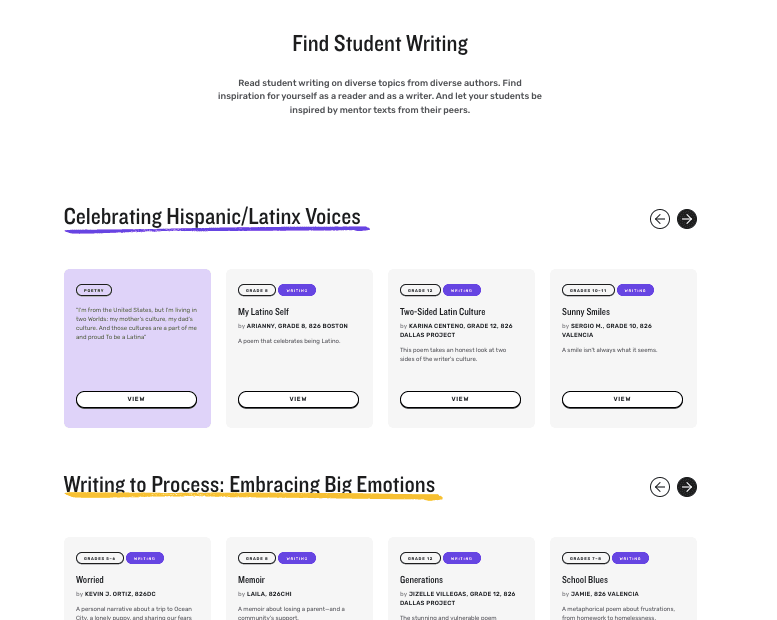
- Provides worked examples through student-authored mentor texts to guide novice writers.
- Supports differentiated instruction through adaptable writing prompts spanning grades 1 through 12.
Cons
- Lacks direct student-facing instruction or interactive practice modules.
- Provides no automated feedback loop, requiring adults to assess all student work.
- Requires significant preparation time for parents or educators to implement the lessons.
- Offers no spaced repetition mechanics to reinforce grammar or vocabulary skills.
What Do We Know About 826 Digital?
826 Digital is highly effective as a resource for guided writing instruction, but it requires your active participation because it is not a standalone teaching app. This platform serves as a lesson plan repository rather than an interactive game or self-paced course. You will find high-quality, inquiry-based writing projects designed to spark creativity in your child. The curriculum relies heavily on mentor texts, which are worked examples of successful student writing. Exposure to these examples helps your child understand the target output before they begin drafting. Because the platform targets educators, the materials assume you will facilitate the lesson, guide the brainstorming process, and provide constructive feedback on the final product. Your child will not log into this platform to complete assignments. Instead, you will download PDFs and project outlines to use offline. This approach limits screen time but places the instructional burden entirely on you. If you want a hands-off app that drills spelling or grammar, this will not work. If you want robust, creative writing frameworks to work through alongside your child, 826 Digital offers exceptional, grade-appropriate materials.
How Does 826 Digital Work?
826 Digital uses project-based and inquiry-based learning models to teach writing through structured, educator-led lesson plans. You create a free account to access a searchable database of writing projects, mentor texts, and "sparks" which are short writing prompts. The materials span grades 1 through 12 and cover various genres, including poetry, personal narratives, and expository essays. Once you select a lesson, you download the associated instructional materials. The platform organizes lessons into a distinct pedagogical sequence: analyzing a student-written mentor text, engaging in a brainstorming activity, drafting the piece, and revising based on adult feedback. This structure leverages cognitive apprenticeship, where you model the writing process and gradually release responsibility to the student. The platform does not host student accounts, track progress, or provide digital scratchpads. All actual learning and writing happen offline or in a separate word processor, driven entirely by the adult facilitator using the downloaded curriculum.
Strengths and tradeoffs of 826 Digital
The biggest strength of 826 Digital is its vast library of authentic mentor texts, while its biggest weakness is the complete lack of automated feedback or independent student practice. Worked examples are highly effective in reducing cognitive load for novice learners, and this platform excels by providing relatable, student-authored examples for every writing prompt. When students analyze these texts, they build a clearer mental model of the expected outcome. The platform also heavily utilizes project-based learning, which contextualizes writing tasks and improves motivation compared to isolated grammar drills. However, the absence of an interactive interface means the platform relies entirely on human intervention for the critical elements of learning. There are no retrieval practice exercises to test grammar rules, and the site offers no mechanisms for spaced repetition to ensure long-term retention of writing concepts. Furthermore, without immediate, targeted feedback, a cornerstone of effective skill acquisition, students may reinforce poor writing habits unless an educator or parent rigorously reviews their work. Ultimately, 826 Digital is a powerful curriculum framework, but it is a static resource rather than an active teaching tool.
Who Might Benefit From 826 Digital?
826 Digital is best for educators and homeschooling parents who need high-quality, structured writing curriculum to deliver to students in grades 1 through 12. It perfectly suits adults looking for creative, cross-curricular projects rather than automated grammar drills. Because the platform relies on adult facilitation, it is ideal for classrooms, after-school programs, or highly involved home environments where a teacher or parent can guide the inquiry process and provide detailed feedback. It is not suitable for students looking for an independent, screen-based learning experience or parents seeking a hands-off educational babysitter.
Data Transparency
Does Not Meet Data Transparency Standard
826 Digital does not meet our data transparency standard. Its privacy policy does not document basic protections, including a COPPA or FERPA commitment, parents' right to see their child's data and parents' right to delete their child's data.
17 of 35 checks passed
Evaluated September 2026
Privacy Policy →Level 1 · Basic protections
Does not sell data or target ads at students, limits sharing, and lets parents see and delete their child's data.
Not documented: a COPPA or FERPA commitment, parents' right to see their child's data, parents' right to delete their child's data
Level 2 · Parent control (meets the standard)
Families can get their data out, know who processes it, and know how long it is kept.
Not documented: data export, a data retention timeline, self-service deletion
Level 3 · Direct data access
Families or schools can pull their own data through an API, in a stated format.
Not documented: an API for retrieving their own data, a named export format
View all 35 checks
Parent Access3/8
Does the policy mention parents specifically?
“When submitting their writing, students are asked for their first and last name, school, grade level, and contact information (email address and phone number). Parents and teachers can submit on behalf of their student.”
Can parents view their child's data?
The policy does not give parents a right to view their child's data.
Can parents modify their child's data?
The policy does not give parents a right to modify their child's data.
Can parents delete their child's account?
The policy's deletion right belongs to account holders; it does not give parents a right to delete their child's data.
Is there a dedicated Children's Privacy section?
“826 National is committed to protecting the privacy of children. The only circumstance in which we collect personal information from children is when we ask for student writing submissions for publication purposes.”
Does it reference COPPA compliance?
The policy does not mention COPPA.
Does it reference FERPA compliance?
The policy does not mention FERPA.
Is parental consent required for child accounts?
“The only circumstance in which we collect personal information from children is when we ask for student writing submissions for publication purposes. In this case, any student under the age of 18 is required to have parental consent as given through the Permission to Publish Student Work.”
Data Portability2/5
Can users access their personal data?
“You can edit your personal account information that is maintained by 826 National at any time by editing your account on 826 Digital.”
Can users download/export their data?
The policy does not offer a way to download or export data.
Is there a self-service data access tool?
“You can edit your personal account information that is maintained by 826 National at any time by editing your account on 826 Digital.”
Is a specific data format mentioned for export?
The policy does not name any export format.
Is there an API for data access?
The policy does not mention an API for data access.
Data Minimization1/6
Is data collection itemized?
“When you register or make a donation we ask for your name, mailing address, email address, school or organization name, billing information, and whether you like pirates.”
Can the app be used without a real name?
The policy says students' first and last names are collected with writing submissions, and account holders give their names.
Can the app be used without an email?
The policy says students' email addresses are collected with writing submissions, and account holders give theirs.
Does it state collection is limited to what is necessary?
The policy does not say collection is limited to what is necessary.
Is IP address anonymized or truncated?
The policy does not address anonymizing or truncating IP addresses.
Is location tracking explicitly excluded?
The policy does not explicitly rule out location tracking, and it collects school location.
Third-Party Protection6/7
Does it explicitly state no selling of data?
“826 National does not rent, sell, transfer, or share personal information about you with other people or nonaffiliated companies, except to facilitate your request, when we have your permission, or under the following circumstances:”
Are third-party providers named?
“Additionally, we use Salesforce to transfer and store the information collected when users opt to create an account, donate, or register on the platform. We use Google Forms to collect the student publication submissions.”
Are providers contractually restricted?
“We provide the information to the following trusted partners who work on behalf of or with 826 National under confidentiality agreements. These companies do not have any independent right to share this information.”
No-targeted-advertising commitment?
“826 National does NOT: - Sell data - Use third-party marketing - Use targeted advertisements”
Is AI/ML data sharing addressed?
The policy does not address sharing data for AI or machine learning.
Child-specific sharing restriction?
“If a student’s writing has been selected to be published, their name, school, and grade may appear along with their writing, with their consent.”
Cookies/tracking limited or opt-out?
“To learn more about how to opt out of Google Analytics services, please visit https://tools.google.com/dlpage/gaoptout.”
Deletion & Retention1/5
Can users delete their account?
“You can delete your account information and any information submitted via 826 Digital, including discussion comments, by sending a written request by mail or email to the contact person listed below.”
Self-service deletion mechanism?
The policy requires a written request by mail or email for deletion; there is no self-service option.
Specific data retention timeline?
The policy gives no retention period and says data is not otherwise deleted.
Auto-deletion of inactive accounts?
The policy says data is not deleted except on request, so inactive accounts are not auto-deleted.
Post-deletion handling described?
The policy does not describe what happens to data after deletion.
Advertising4/4
Advertising model explicitly disclosed?
“There are no ads of any kind on 826 Digital.”
Free from third-party advertisements?
“There are no ads of any kind on 826 Digital.”
Children excluded from ad targeting?
“There are no ads of any kind on 826 Digital.”
Ad-free option available?
“There are no ads of any kind on 826 Digital.”
What This Means
The policy review did not meet our data transparency standard. The checks above show the documented findings and unknowns. A missing statement does not establish how the app handles data in practice.
About this evaluation: Based on automated analysis of Privacy Policy against 35 policy-disclosure questions, including questions adapted from the Common Sense Privacy Program's published evaluation questions. TLS is not affiliated with Common Sense Media, and this is not a Common Sense rating. Quoted text is copied from the policy; unquoted notes are our summary. Results describe what the policy documents, not the company's actual practices. Privacy policies can change: this review reflects the version we analyzed and does not determine legal compliance.
Sources and review method
TLS combines product information and editorial analysis to explain how 826 Digital works, its tradeoffs, and the questions to ask before choosing it. Product features, an instructional rationale and evidence of learning outcomes are different kinds of information.
Formal Learning Standard assessment: not yet completed. Data Transparency findings are reported separately and do not establish learning effectiveness. Read our methodology.
Frequently Asked Questions About 826 Digital
Is 826 Digital free?
Yes, 826 Digital is entirely free for educators, administrators, and parents to use. You simply need to create an account using a valid email address to unlock and download the complete library of lesson plans, writing sparks, and mentor texts. Because it operates as a non-profit initiative, there are no premium tiers, hidden subscription fees, or paywalls blocking access to the core instructional materials.
Is 826 Digital good for elementary students?
Yes, the platform offers specific, differentiated lesson plans tailored to elementary students in grades 1 through 5. These early-grade resources focus heavily on scaffolding the writing process and using highly accessible mentor texts to build foundational narrative and expository skills. Parents and teachers can filter the resource database by grade level to ensure the reading materials and writing expectations perfectly match their younger child's cognitive development.
What does 826 Digital teach?
826 Digital teaches creative, expository, and analytical writing through the lens of the humanities. The structured lessons guide students through the entire writing process, moving systematically from initial brainstorming and outlining to drafting and final revision. Many of the projects feature cross-curricular elements, integrating STEM, history, or social studies themes into the writing prompts to help students apply their communication skills across multiple academic disciplines.
How does 826 Digital compare to NoRedInk?
826 Digital focuses exclusively on the creative and structural process of writing through project-based lesson plans taught by an adult facilitator. Unlike NoRedInk, it does not offer interactive grammar exercises, spaced repetition drills, or automated grading for sentence-level mechanics. 826 Digital is designed to inspire long-form drafting and creative expression, whereas NoRedInk serves as an active practice tool for mastering specific syntax rules and grammatical conventions.
Has The Learning Standard evaluated 826 Digital?
TLS has not yet completed a Learning Standard evaluation of how well 826 Digital teaches. Its privacy policy has been reviewed for Data Transparency and does not yet document the basic protections (Level 1).
Is 826 Digital COPPA compliant?
A COPPA reference was not found in the reviewed privacy policy. This does not determine whether the app complies with COPPA. Policy review note: The policy does not mention COPPA.
Is 826 Digital FERPA compliant?
A FERPA reference was not found in the reviewed privacy policy. This does not determine whether the app complies with FERPA. Policy review note: The policy does not mention FERPA.
Does 826 Digital have a children's privacy policy?
The reviewed policy includes a dedicated children's privacy section. Policy review note: The policy has a section headed "Children:".
Does 826 Digital sell student data?
The reviewed policy states that the app does not sell data. This is a policy statement; actual data practices were not verified. Policy review note: The policy states 826 National does not sell personal information.
Can you delete your data from 826 Digital?
The reviewed privacy policy describes account deletion. We have not tested the deletion process. Policy review note: Users can have their account deleted by sending a written request.
Follow TLS Research
Subscribe to future TLS research updates: app reviews, findings, and what the evidence shows.
Screenshots
Take Action
For 826 Digital
If you represent 826 National and have a correction or new evidence, send the relevant source so we can review and update this page.
Submit a correctionDetails
- Pricing
- All resources are free for educators upon creating an account.
- Platforms
- Web Browser, iOS (Apple mobile), iPadOS (Apple tablet), Android (Google mobile), Windows (Microsoft), macOS (Apple), Chrome OS (Google)
- Grade Levels
- 1st Grade, 2nd Grade, 3rd Grade, 4th Grade, 5th Grade, 6th Grade, 7th Grade, 8th Grade, 9th Grade, 10th Grade, 11th Grade, 12th Grade
- Website
- Visit site