
10k Science
Product by Dynamoid
Facts checked: Not yet checked
Our take (not a Learning Standard rating). This label applies to learning-science judgments throughout this overview.
Our take (not a Learning Standard rating)
10k Science offers high-fidelity visual exploration of complex scientific processes like CRISPR, but its core instructional efficacy remains pending evaluation. It leverages spatial learning and visualization to support comprehension, though the depth of the AI guide's pedagogical feedback requires further validation against learning science standards.
Pros
- Uses scientifically accurate 3D visual environments to anchor abstract biological concepts.
- Incorporates an AI guide to prompt student reflection and support dual coding via audio instructions.
- Provides an educator dashboard designed to expose student reasoning and uncover conceptual misconceptions.
Cons
- Lacks independent verification of learning outcomes and overall pedagogical efficacy.
- May rely too heavily on passive exploration rather than evidence-based structured retrieval practice.
- Broad target audience spanning middle school to post-doctoral suggests content may lack specific grade-level alignment.
What Do We Know About 10k Science?
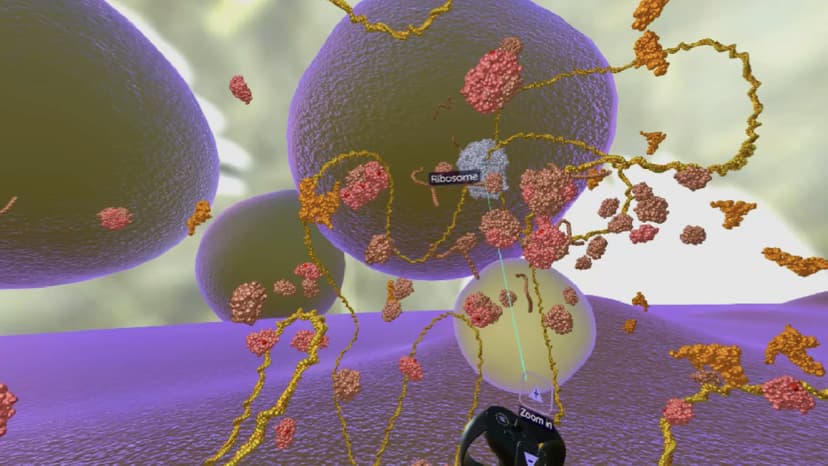
This app provides highly detailed visual models of complex biology concepts for your child, but its concrete teaching effectiveness is not yet rated. 10k Science uses data from real scientists to build 3D environments of structures like antibodies and chloroplasts. This visual immersion supports dual coding, helping your child map verbal explanations to spatial models. An AI guide talks your child through these microscopic worlds. However, because The Learning Standard has not yet evaluated the app, we cannot confirm if the AI relies on proven techniques like spaced repetition or simply lectures. The platform includes a dashboard meant to reveal how your child thinks through problems, which educators can use to correct misconceptions. Parents should know this is primarily a school-based tool licensed per student, not a typical consumer app. It targets a massive age range, from middle schoolers to doctoral candidates, meaning the vocabulary and depth may require heavy teacher guidance to match your child's specific grade level. Until we complete our full methodology, treat 10k Science as a supplemental visualization tool rather than a primary curriculum replacement.
How Does 10k Science Work?
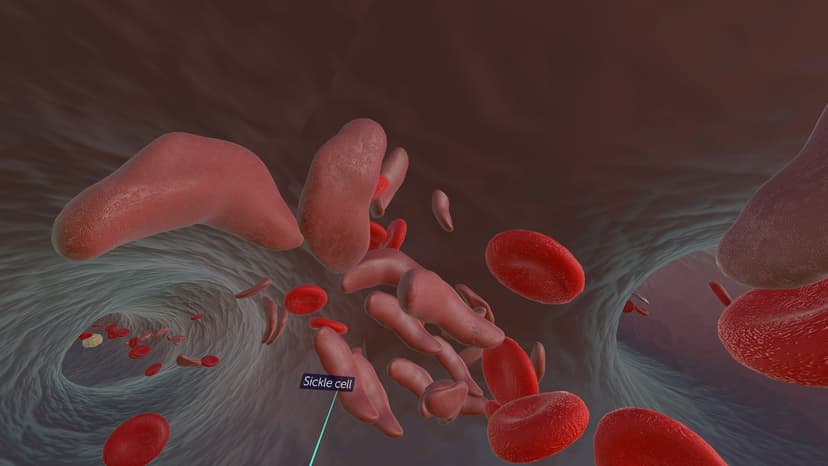
10k Science relies on immersive spatial learning and guided exploration to teach cellular and molecular biology. Students enter microscopically accurate 3D environments, such as a cellular view of CRISPR gene editing or photosynthesis, built directly from actual scientific data. An AI guide accompanies the student, providing audio-based prompts and instructions that direct their attention to key structural mechanisms. This approach utilizes the multimedia principle, combining visual exploration with auditory narration to reduce cognitive overload. As students navigate the virtual environments, the system logs their interactions and responses to the AI prompts. This data populates a dashboard for educators, aiming to make the student's internal thought process visible. Instead of rote memorization or multiple-choice drills, the platform emphasizes structural understanding and systems thinking. Because the app scales from middle school through higher education, the complexity of the AI interactions theoretically shifts to match the user, though the exact mechanics of this adaptation remain untested by our team.
Strengths and tradeoffs of 10k Science
The biggest strength of 10k Science is its data-driven visual fidelity, while its biggest weakness is the unproven pedagogical value of its AI guide. Immersive Visualization: By translating real scientific data into explorable microscopic environments, the app excels at rendering abstract concepts concrete. This supports the learning science principle of embodiment, where spatial and visual interaction strengthens memory encoding for topics like molecular biology. Formative Assessment Potential: The educator dashboard captures student interactions and reasoning, offering a window into how learners construct mental models rather than just grading right or wrong answers. Unverified Feedback Mechanisms: However, without a formal evaluation, it is unclear if the AI guide utilizes evidence-based strategies like targeted scaffolding or if it simply dispenses information. Lack of Structured Retrieval: Effective science instruction requires retrieval practice to cement knowledge, but the platform appears heavily weighted toward exploration rather than recalling facts from memory. Overly Broad Target Audience: The claim that one tool serves seventh graders and post-doctoral students raises concerns about cognitive appropriateness. Content that challenges a graduate student will likely cause cognitive overload for a middle schooler unless the adaptive scaffolding is exceptionally robust.
Who Might Benefit From 10k Science?
Best for high school and college biology students who struggle to conceptualize abstract cellular processes and need high-fidelity visual models. Because 10k Science focuses on complex microscopic systems like CRISPR and antibodies, it serves advanced science classrooms well as a supplemental visualization lab. While marketed to middle schoolers through adult learners, the specialized nature of the content is most appropriate for learners with foundational biology knowledge. It is ideal for school districts and university departments looking to integrate interactive, data-based modeling into their STEM curricula, provided teachers are prepared to heavily guide the exploration.
Data Transparency
Does Not Meet Data Transparency Standard
10k Science does not meet our data transparency standard. Its privacy policy does not document basic protections, including limits on sharing children's data, contractual limits on service providers and a COPPA or FERPA commitment.
10 of 35 checks passed
Evaluated September 2026
10k Science Privacy Policy →Level 1 · Basic protections
Does not sell data or target ads at students, limits sharing, and lets parents see and delete their child's data.
Not documented: limits on sharing children's data, contractual limits on service providers, a COPPA or FERPA commitment, parents' right to see their child's data, parents' right to delete their child's data
Level 2 · Parent control (meets the standard)
Families can get their data out, know who processes it, and know how long it is kept.
Not documented: data export, a data retention timeline, named service providers, self-service deletion
Level 3 · Direct data access
Families or schools can pull their own data through an API, in a stated format.
Not documented: an API for retrieving their own data, a named export format
View all 35 checks
Parent Access1/8
Does the policy mention parents specifically?
The policy does not mention parents.
Can parents view their child's data?
The policy does not address parents viewing their child's data.
Can parents modify their child's data?
The policy does not address parents modifying their child's data.
Can parents delete their child's account?
The policy does not address parents deleting their child's data or account.
Is there a dedicated Children's Privacy section?
“Age Restrictions 10k Science is not intended for use by children under 13 years of age. We do not knowingly collect data from users under 13.”
Does it reference COPPA compliance?
The policy does not reference COPPA.
Does it reference FERPA compliance?
The policy does not reference FERPA.
Is parental consent required for child accounts?
The policy does not address parental consent; it says the app is not intended for children under 13.
Data Portability1/5
Can users access their personal data?
“You have the right to request access to, correction, or deletion of any data we collect about you.”
Can users download/export their data?
The policy does not address downloading or exporting data.
Is there a self-service data access tool?
The policy only describes requests by email, not a self-service tool.
Is a specific data format mentioned for export?
The policy does not mention an export format.
Is there an API for data access?
The policy does not mention an API for data access.
Data Minimization4/6
Is data collection itemized?
“**Usage Data:** Information about your interactions with the app, including session length, interactions within the app, features accessed, and performance data.”
Can the app be used without a real name?
“We **do not** collect personally identifiable information (PII) such as name, email, or location data.”
Can the app be used without an email?
“We **do not** collect personally identifiable information (PII) such as name, email, or location data.”
Does it state collection is limited to what is necessary?
The policy limits how collected data is used but does not state that collection is limited to what is necessary.
Is IP address anonymized or truncated?
The policy does not address anonymizing IP addresses.
Is location tracking explicitly excluded?
“We **do not** collect personally identifiable information (PII) such as name, email, or location data.”
Third-Party Protection2/7
Does it explicitly state no selling of data?
“We **do not** share or sell your data to any third parties.”
Are third-party providers named?
The policy names no third-party service providers and says data is not shared with third parties.
Are providers contractually restricted?
The policy describes no contractual restrictions on providers and says data is not shared.
No-targeted-advertising commitment?
“We **do not** use collected data for advertising, marketing, or third-party sales.”
Is AI/ML data sharing addressed?
The policy does not address AI or machine learning.
Child-specific sharing restriction?
The policy has no sharing restriction specific to children.
Cookies/tracking limited or opt-out?
The policy does not address cookies, tracking limits, or opt-out.
Deletion & Retention1/5
Can users delete their account?
“You have the right to request access to, correction, or deletion of any data we collect about you.”
Self-service deletion mechanism?
The policy only describes deletion requests by email, not a self-service mechanism.
Specific data retention timeline?
The policy does not give a data retention timeline.
Auto-deletion of inactive accounts?
The policy does not address automatic deletion of inactive accounts.
Post-deletion handling described?
The policy does not describe what happens to data after deletion.
Advertising1/4
Advertising model explicitly disclosed?
The policy says data is not used for advertising but does not state whether the product shows ads.
Free from third-party advertisements?
The policy does not state that the product is free of third-party ads.
Children excluded from ad targeting?
“We **do not** use collected data for advertising, marketing, or third-party sales.”
Ad-free option available?
The policy does not state that the product has no ads or offers an ad-free option.
What This Means
The policy review did not meet our data transparency standard. The checks above show the documented findings and unknowns. A missing statement does not establish how the app handles data in practice.
About this evaluation: Based on automated analysis of 10k Science Privacy Policy against 35 policy-disclosure questions, including questions adapted from the Common Sense Privacy Program's published evaluation questions. TLS is not affiliated with Common Sense Media, and this is not a Common Sense rating. Quoted text is copied from the policy; unquoted notes are our summary. Results describe what the policy documents, not the company's actual practices. Privacy policies can change: this review reflects the version we analyzed and does not determine legal compliance.
Sources and review method
TLS combines product information and editorial analysis to explain how 10k Science works, its tradeoffs, and the questions to ask before choosing it. Product features, an instructional rationale and evidence of learning outcomes are different kinds of information.
Formal Learning Standard assessment: not yet completed. Data Transparency findings are reported separately and do not establish learning effectiveness. Read our methodology.
Frequently Asked Questions About 10k Science
Is 10k Science free?
No. 10k Science operates strictly on an annual per-student license model rather than a free-to-use consumer model. It is designed primarily for institutional purchase by middle schools, high schools, universities, and technical education programs instead of individual family subscriptions. Parents looking for at-home science enrichment cannot easily buy a single license off the shelf, making this an educational tool you will typically only encounter if your child's school district or college officially adopts it for their science curriculum.
Is 10k Science good for middle schoolers?
Partially. While 10k Science lists seventh grade as its starting point, the highly complex molecular topics like CRISPR and antibody interactions may cause cognitive overload for younger learners without heavy teacher scaffolding. Because it uses real scientific data rather than simplified models, it is likely better suited for high school biology students or advanced middle schoolers who already possess a strong foundational understanding of cellular structures and need a visual challenge.
What does 10k Science teach?
10k Science teaches cellular biology, molecular biology, and applied life sciences. Students explore scientifically accurate microscopic environments to understand specific biological mechanisms like photosynthesis, antibody function, and advanced gene editing through the CRISPR system. Rather than teaching broad scientific facts, the platform immerses learners in specific biological systems, using an AI guide to help them connect abstract concepts to 3D spatial models based on real-world scientific data.
How does 10k Science compare to Labster?
While Labster focuses on simulating the physical laboratory experience and experimental procedures, 10k Science focuses heavily on immersive micro-level visualization. 10k Science acts more like a virtual microscope exploring raw scientific data inside a cell, whereas Labster gamifies the scientific method, equipment handling, and lab safety protocols. Both target high school and college science students, but 10k Science is better for visualizing internal biological structures, while Labster is better for practicing physical lab techniques.
Has The Learning Standard evaluated 10k Science?
TLS has not yet completed a Learning Standard evaluation of how well 10k Science teaches. Its privacy policy has been reviewed for Data Transparency and does not yet document the basic protections (Level 1).
Is 10k Science COPPA compliant?
A COPPA reference was not found in the reviewed privacy policy. This does not determine whether the app complies with COPPA. Policy review note: The policy does not reference COPPA.
Is 10k Science FERPA compliant?
A FERPA reference was not found in the reviewed privacy policy. This does not determine whether the app complies with FERPA. Policy review note: The policy does not reference FERPA.
Does 10k Science have a children's privacy policy?
The reviewed policy includes a dedicated children's privacy section. Policy review note: The policy has a separate section about children under 13.
Does 10k Science sell student data?
The reviewed policy states that the app does not sell data. This is a policy statement; actual data practices were not verified. Policy review note: The policy states that the vendor does not sell data.
Can you delete your data from 10k Science?
The reviewed privacy policy describes account deletion. We have not tested the deletion process. Policy review note: Users can request deletion of all their data.
Follow TLS Research
Subscribe to future TLS research updates: app reviews, findings, and what the evidence shows.
Screenshots
Take Action
For 10k Science
If you represent Dynamoid and have a correction or new evidence, send the relevant source so we can review and update this page.
Submit a correctionDetails
- Pricing
- Annual license, per-student.
- Platforms
- Web Browser
- Grade Levels
- 7th Grade, 8th Grade, 9th Grade, 10th Grade, 11th Grade, 12th Grade, Associate's degree, Bachelor's degree, Post-baccalaureate certificate, Master's Degree, Post-master's certificate, Doctoral Degree, Post-doctoral certificate, Adult Education, Professional or Technical Credential
- Website
- Visit site