
WordEngine
Product by Lexxica R&D
Facts checked: Not yet checked
Our take (not a Learning Standard rating). This label applies to learning-science judgments throughout this overview.
Our take (not a Learning Standard rating)
WordEngine utilizes personalized learning and mastery-based progression to build English vocabulary for standardized tests, but The Learning Standard has not yet evaluated its specific efficacy. It relies on direct instruction and repetitive practice, building rote memorization but lacking the deep contextual application necessary for comprehensive language fluency.
Pros
- Employs mastery-based progression to ensure vocabulary retention before advancing.
- Targets specific high-stakes standardized tests like TOEFL and GRE with specialized word lists.
- Personalizes difficulty to match the individual learner's current vocabulary proficiency.
- Utilizes spaced repetition algorithms to efficiently review material right before it is forgotten.
Cons
- Lacks evaluation data from independent sources to verify its aggressive test score claims.
- Relies heavily on rote memorization rather than deep contextual application.
- Does not provide interactive speaking or writing exercises to build active language production.
- Features a repetitive interface that can quickly cause cognitive fatigue and lower student motivation.
What Do We Know About WordEngine?
WordEngine serves as an effective supplementary tool for rote vocabulary acquisition, though it is not a complete language learning solution. Your child will experience a heavily structured, drill-based environment designed specifically to boost recognition of words found on standardized tests like the SAT, GRE, and TOEFL. Because it relies on direct instruction and repetitive practice, it excels at building a broad passive vocabulary quickly. However, without opportunities for active speaking or writing, your child will not develop conversational fluency through this app alone. The program uses a personalized approach to identify which words your child already knows, focusing their study time exclusively on unknown terms. This targeted method prevents wasted effort and aligns with established principles of spaced repetition. The system actively tracks retention, ensuring your child reviews older material just as they are likely to forget it. Since The Learning Standard has not yet fully evaluated WordEngine, parents should view its ambitious test-score claims with healthy skepticism. Treat it as a digital flashcard system rather than a comprehensive language tutor. It builds the necessary foundation for reading comprehension but requires pairing with active practice to solidify true language mastery.
How Does WordEngine Work?
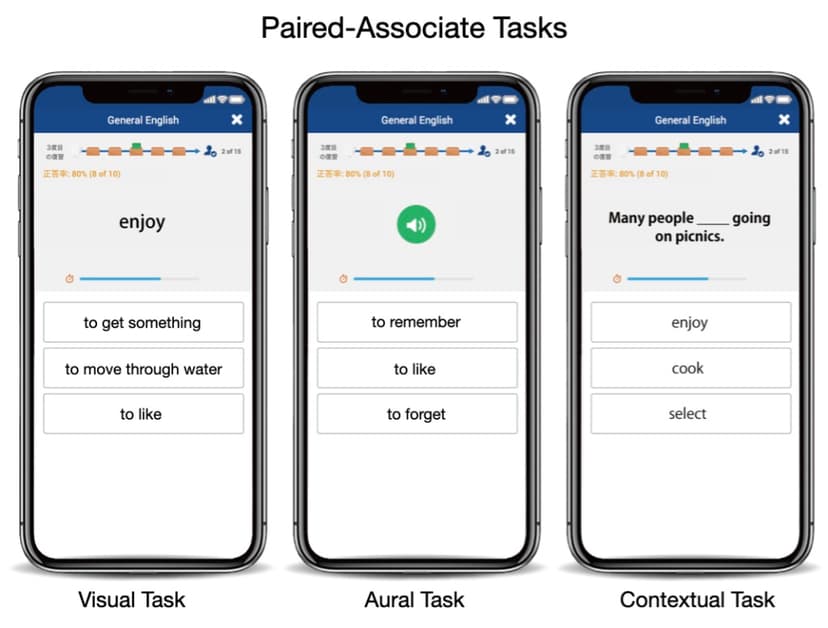
WordEngine uses mastery-based progression and direct instruction to systematically introduce and drill English vocabulary. The platform begins with a diagnostic test to map the user's existing vocabulary knowledge, establishing a personalized baseline. From there, it generates custom word lists tailored to the user's specific goals, such as preparing for the IELTS or SAT. Learners progress through digital flashcard-style exercises that require them to identify correct definitions, synonyms, or missing words in short sentences. The system tracks correct and incorrect responses, adjusting the frequency of word appearances based on spaced repetition algorithms. Words are reintroduced at optimal intervals until the learner demonstrates consistent mastery. Once a word is mastered, it is retired from the active drill pool, allowing the student to focus entirely on new or difficult vocabulary. This constant adjustment ensures that study sessions remain highly efficient and tightly focused on bridging specific knowledge gaps.
Strengths and tradeoffs of WordEngine
WordEngine's biggest strength is its personalized, algorithm-driven efficiency, while its biggest weakness is the absence of active, expressive language practice. Efficiency through personalization is where the app shines most clearly. By filtering out known words through initial diagnostics, it maximizes study time. This aligns perfectly with learning science principles of targeted practice, ensuring cognitive load is dedicated entirely to acquiring new information. Mastery-based learning guarantees that students do not move past a word until they reliably recognize it over multiple sessions. However, the heavy reliance on rote memorization and isolated drill formats means the learning remains shallow. Students build strong passive recognition, which is highly beneficial for multiple-choice reading tests, but they miss out on elaborative interrogation and context-rich application. Furthermore, the complete lack of spoken dialogue or open-ended writing prompts severely limits the development of active recall. Motivation and engagement may also suffer over extended periods, as the repetitive nature of direct instruction drills can quickly cause cognitive fatigue, particularly for younger learners who are not internally driven by an impending standardized test.
Who Might Benefit From WordEngine?
Best for high school and adult English language learners who need structured vocabulary drill alongside classroom instruction for standardized test preparation. Since the platform focuses heavily on targeted word lists for high-stakes exams like the TOEFL, TOEIC, SAT, and GRE, it is ideal for highly motivated students who already possess basic English grammar skills but lack the advanced vocabulary required for academic or professional success. It functions perfectly as an independent study tool for test-takers. It is entirely unsuitable for elementary students or beginners who require conversational practice, engaging visual narratives, and foundational phonics instruction.
Sources and review method
TLS combines product information and editorial analysis to explain how WordEngine works, its tradeoffs, and the questions to ask before choosing it. Product features, an instructional rationale and evidence of learning outcomes are different kinds of information.
Formal Learning Standard assessment: not yet completed. Data Transparency findings are reported separately and do not establish learning effectiveness. Read our methodology.
Frequently Asked Questions About WordEngine
Is WordEngine free?
No, WordEngine is a paid subscription service. It costs approximately $26 per student for an annual subscription or $15 for a half-year subscription. There are no free tiers or ad-supported versions available for long-term use. This pricing model makes it a relatively low-cost intervention compared to traditional test-prep tutoring, but parents and educators must budget for ongoing access. Schools and language academies typically purchase bulk licenses to integrate the vocabulary drills into their broader English language curriculum.
Is WordEngine good for elementary students?
No, WordEngine is not appropriate for elementary-aged learners. The platform relies heavily on repetitive, text-based drills and direct instruction without the gamification, varied multimedia, or narrative engagement that younger children require to maintain focus. Furthermore, the target vocabulary is specifically curated for high-stakes academic tests like the SAT and GRE, making the content far too advanced and abstract for early learners. Elementary students need foundational phonics and conversational context, which this app completely lacks.
What does WordEngine teach?
WordEngine strictly teaches English vocabulary comprehension and recognition. It provides highly focused drills designed to help non-native speakers quickly memorize the definitions and synonyms of words frequently found on academic standardized tests. While it excels at building a large mental dictionary of passive vocabulary, it does not teach grammar rules, syntax, active conversation, or written composition. Students learn to identify what a word means when they read it, but not necessarily how to use it fluently in real-world dialogue.
How does WordEngine compare to Duolingo?
WordEngine focuses exclusively on vocabulary acquisition and test preparation through mastery-based drilling, whereas Duolingo offers a gamified, comprehensive approach covering grammar, listening, and basic speaking skills. Duolingo is better suited for casual learners seeking conversational basics in a highly engaging, game-like environment. WordEngine, by contrast, is a serious, strictly academic tool designed for advanced students who need to rapidly increase their reading comprehension scores on specific standardized exams. It trades gamified fun for high-efficiency rote memorization.
Has The Learning Standard evaluated WordEngine?
TLS has not yet completed a Learning Standard evaluation of how well WordEngine teaches. TLS has not published a Data Transparency result for its privacy policy.
Follow TLS Research
Subscribe to future TLS research updates: app reviews, findings, and what the evidence shows.
Screenshots
Take Action
For WordEngine
If you represent Lexxica R&D and have a correction or new evidence, send the relevant source so we can review and update this page.
Submit a correctionDetails
- Pricing
- About $26 per student per year. About $15 per student per half year.
- Platforms
- Web Browser, iOS (Apple mobile), iPadOS (Apple tablet), Android (Google mobile), Windows (Microsoft), macOS (Apple), Chrome OS (Google)
- Website
- Visit site