Marty the Robot V2
Product by Robotical
Facts checked: Not yet checked
Our take (not a Learning Standard rating). This label applies to learning-science judgments throughout this overview.
Our take (not a Learning Standard rating)
Marty the Robot effectively bridges concrete and abstract programming concepts through embodied cognition, allowing students to observe the physical results of their code. However, without built-in automated feedback for coding errors, learning relies heavily on teacher intervention and trial-and-error rather than guided correction.
Pros
- Supports embodied cognition by translating digital code into immediate, observable physical movements.
- Scaffolds programming complexity from unplugged screen-free inputs to block-based coding and text-based Python.
- Encourages collaborative problem-solving through hands-on experiential learning tasks like robot soccer.
- Provides extensive educator lesson plans that map physical robotics to math and literacy standards.
Cons
- Lacks automated real-time feedback to help students identify syntax or logic errors in their code.
- Requires significant educator scaffolding to prevent unstructured play from replacing targeted learning objectives.
- Relies heavily on inefficient trial-and-error for troubleshooting rather than providing explicit instructional hints.
What Do We Know About Marty the Robot V2?
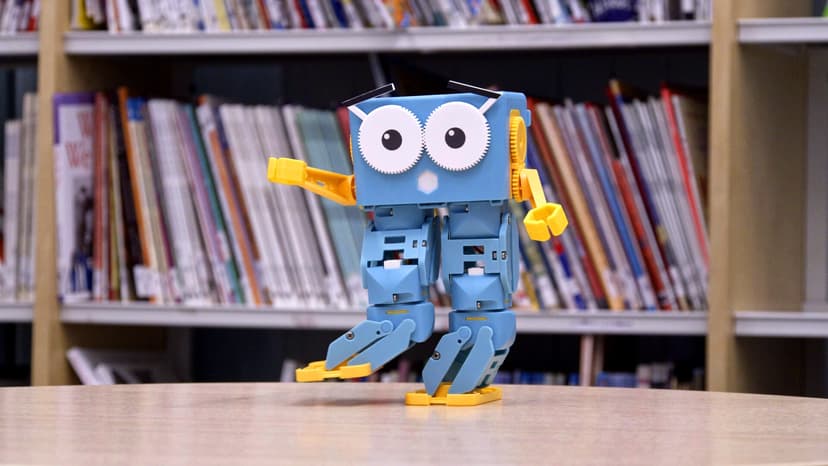
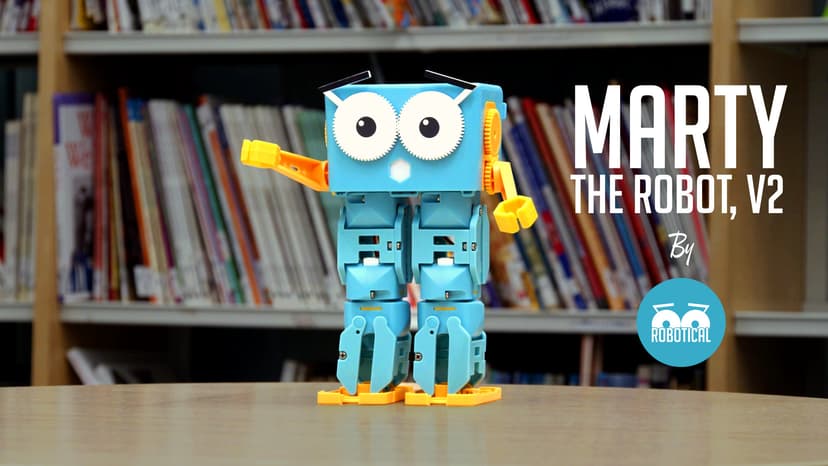
Marty the Robot is an effective tool for teaching foundational computer science, provided your child has guided instruction to connect the physical play with underlying coding logic. Because this physical robot walks, dances, and plays sports based on user commands, it leverages embodied cognition: a learning science principle where physical interaction strengthens mental models of abstract concepts. Your child starts with screen-free color cards to learn basic sequencing, moves to block-based coding on a tablet, and eventually types actual Python code. This progression effectively scaffolds learning to reduce cognitive overload at each stage. However, parents should understand that Marty is a hardware tool, not an adaptive software tutor. It does not provide automated feedback or hint systems when your child writes incorrect code. If a sequence fails, the robot simply does not perform the intended action. This means your child must rely on trial-and-error troubleshooting or adult intervention to fix mistakes. While this builds resilience, it can also cause frustration for independent learners. For the steep price tag, this robot is best suited for structured classroom environments or highly engaged parents willing to co-learn and guide the troubleshooting process.
How Does Marty the Robot V2 Work?
Marty the Robot V2 uses experiential, hands-on learning to teach computational thinking and robotics through a progressively complex programming interface. Your child begins by scanning physical color-coded cards that represent directional commands, allowing pre-readers to understand fundamental coding sequences without screen time. As students master basic logic, they transition to a block-based visual programming environment similar to Scratch, where they drag and drop command loops and conditional statements. Finally, older students interact with a Python environment to write text-based syntax. Across all levels, students program the humanoid robot to complete physical tasks like walking a maze or kicking a ball. This immediate physical manifestation of digital code acts as a real-world test environment. When a program executes, students observe the robot's behavior to verify if their logic is sound. Since the hardware includes interactive sensors for distance, tilt, and color, learners can practice writing conditional code: directing the robot to change behavior based on environmental inputs.
Strengths and tradeoffs of Marty the Robot V2
The biggest strength of Marty the Robot is its exceptional scaffolding across multiple developmental stages, while its biggest weakness is the lack of explicit instructional feedback during the coding process. Physical Embodiment of Code: By linking abstract programming syntax to concrete humanoid movements, Marty grounds abstract computer science concepts in observable reality. This physical feedback loop helps reduce cognitive load, as students can instantly see the exact moment their logic fails when the robot walks the wrong way. Scaffolded Progression: The transition from unplugged color cards to block coding and then Python aligns with the fading of instructional support. Students master the underlying logic of algorithms before they ever have to memorize the complex syntax of text-based languages. Lack of Worked Examples and Feedback: Because Marty functions as an open sandbox rather than an adaptive tutor, it lacks the built-in worked examples and targeted error-correction found in high-quality educational software. When a student writes a faulty loop, the robot fails the task, but the platform does not highlight the specific error or prompt the student with hints. Consequently, learning relies heavily on unstructured trial-and-error, which learning science shows is less efficient for novices than explicit, guided instruction.
Who Might Benefit From Marty the Robot V2?
Best for elementary and middle school classrooms that require a tangible, hands-on approach to complement theoretical computer science instruction. The hardware targets students from preschool through eighth grade, adapting from simple unplugged coding to complex Python scripting. It functions best as an experiential anchor in a structured STEM curriculum rather than a standalone independent learning tool for the home. Because it requires active adult facilitation to maximize its educational value, it is ideal for educators utilizing cooperative learning models where small groups collaborate.
Data Transparency
Does Not Meet Data Transparency Standard
Marty the Robot V2 does not meet our data transparency standard. Its privacy policy does not document basic protections, including a commitment against targeted advertising, limits on sharing children's data and contractual limits on service providers.
9 of 35 checks passed
Evaluated September 2026
App Privacy Policy →Level 1 · Basic protections
Does not sell data or target ads at students, limits sharing, and lets parents see and delete their child's data.
Not documented: a commitment against targeted advertising, limits on sharing children's data, contractual limits on service providers, a COPPA or FERPA commitment, parents' right to see their child's data, parents' right to delete their child's data
Level 2 · Parent control (meets the standard)
Families can get their data out, know who processes it, and know how long it is kept.
Not documented: a data retention timeline, self-service deletion
Level 3 · Direct data access
Families or schools can pull their own data through an API, in a stated format.
Not documented: an API for retrieving their own data, a named export format
View all 35 checks
Parent Access0/8
Does the policy mention parents specifically?
The policy does not mention parents; it only refers to someone with authority to act for a school or child.
Can parents view their child's data?
The policy does not say parents can view their child's data; access rights are described only for the user or someone acting for a school or child.
Can parents modify their child's data?
The policy does not say parents can change their child's data.
Can parents delete their child's account?
The policy does not say parents can delete their child's data or account.
Is there a dedicated Children's Privacy section?
The policy has no section dedicated to children's privacy.
Does it reference COPPA compliance?
The policy does not reference COPPA.
Does it reference FERPA compliance?
The policy does not reference FERPA.
Is parental consent required for child accounts?
The policy does not require parental consent for child accounts.
Data Portability2/5
Can users access their personal data?
“Depending on your circumstances and the legal basis, you can ask to access, correct, delete or restrict the use of your personal information, or ask for a copy in a portable form.”
Can users download/export their data?
“Depending on your circumstances and the legal basis, you can ask to access, correct, delete or restrict the use of your personal information, or ask for a copy in a portable form.”
Is there a self-service data access tool?
The policy says access requests are made by contacting the company, not through a self-service tool.
Is a specific data format mentioned for export?
The policy says only 'a portable form' and names no specific file format.
Is there an API for data access?
The policy does not mention an API for data access.
Data Minimization2/6
Is data collection itemized?
“To register a robot, we ask for an email address, school or establishment name and robot serial number.”
Can the app be used without a real name?
“Most activities can be used without registering. Warranty registration, sending feedback and saving a project to the cloud involve sending information to us.”
Can the app be used without an email?
The policy says email addresses are collected for warranty registration and optionally with feedback, so emails can be collected.
Does it state collection is limited to what is necessary?
The policy does not state that collection is limited to what is necessary; it discusses need only for sharing and retention.
Is IP address anonymized or truncated?
The policy says providers receive IP addresses but does not say they are anonymized or truncated.
Is location tracking explicitly excluded?
The policy does not explicitly rule out location tracking.
Third-Party Protection3/7
Does it explicitly state no selling of data?
“We share the information needed for each task, rather than selling app data.”
Are third-party providers named?
“These include Google Firebase for app hosting and cloud storage, Amazon Web Services for warranty email delivery, Slack for feedback notifications, Sentry for error monitoring when enabled, and Zoho for warranty support tickets.”
Are providers contractually restricted?
The policy names providers but does not say they are contractually restricted.
No-targeted-advertising commitment?
The policy makes no commitment against targeted advertising.
Is AI/ML data sharing addressed?
The policy does not address AI or machine-learning data sharing.
Child-specific sharing restriction?
The policy has no sharing restriction specific to children.
Cookies/tracking limited or opt-out?
“Our legal basis for optional usage analytics is consent. You can accept or decline when prompted and change your choice later using **Help → Data Analytics**.”
Deletion & Retention2/5
Can users delete their account?
“Depending on your circumstances and the legal basis, you can ask to access, correct, delete or restrict the use of your personal information, or ask for a copy in a portable form.”
Self-service deletion mechanism?
The policy says deletion of company-held data is requested by contacting the company; only locally stored device data can be deleted by the user.
Specific data retention timeline?
The policy says data is kept 'while needed' and gives no specific timeline.
Auto-deletion of inactive accounts?
The policy does not describe automatic deletion of inactive accounts.
Post-deletion handling described?
“To ask about a particular record or request deletion, contact us using the details below. Some records may need to be kept for legal or claims purposes.”
Advertising0/4
Advertising model explicitly disclosed?
The policy does not address advertising.
Free from third-party advertisements?
The policy does not state that the product has no third-party ads.
Children excluded from ad targeting?
The policy does not address ad targeting of children.
Ad-free option available?
The policy does not address advertising or an ad-free option.
What This Means
The policy review did not meet our data transparency standard. The checks above show the documented findings and unknowns. A missing statement does not establish how the app handles data in practice.
About this evaluation: Based on automated analysis of App Privacy Policy against 35 policy-disclosure questions, including questions adapted from the Common Sense Privacy Program's published evaluation questions. TLS is not affiliated with Common Sense Media, and this is not a Common Sense rating. Quoted text is copied from the policy; unquoted notes are our summary. Results describe what the policy documents, not the company's actual practices. Privacy policies can change: this review reflects the version we analyzed and does not determine legal compliance.
Sources and review method
TLS combines product information and editorial analysis to explain how Marty the Robot V2 works, its tradeoffs, and the questions to ask before choosing it. Product features, an instructional rationale and evidence of learning outcomes are different kinds of information.
Formal Learning Standard assessment: not yet completed. Data Transparency findings are reported separately and do not establish learning effectiveness. Read our methodology.
Frequently Asked Questions About Marty the Robot V2
Is Marty the Robot V2 free?
No. Marty the Robot V2 is a premium hardware device that costs $449 for a single unit. The companion app is free to download, but it requires the physical robot to function. Schools can purchase bulk bundles ranging from five to 15 robots, priced between $2,225 and $6,450. These bundles include extra sensors and charging cradles for better classroom management.
Is Marty the Robot V2 good for preschoolers?
Yes, with adult supervision. Marty includes an unplugged coding feature that uses physical, color-coded cards to program movements. This allows young pre-readers to learn basic sequencing and algorithmic thinking without needing a screen or reading skills. Your child can physically place cards in a sequence, and the robot uses its color sensor to read and execute the specific commands.
What does Marty the Robot V2 teach?
Marty teaches computational thinking, sequential logic, and computer programming. Students learn foundational concepts like loops, variables, and conditionals through block-based interfaces, and eventually progress to writing explicit syntax in Python. It also introduces basic applied physics and engineering principles through robotics, requiring students to consider physical constraints like balance and momentum.
Marty the Robot V2 vs. Sphero BOLT: Which is better?
It depends on your specific learning goals. Marty features a humanoid design with articulated legs, making it highly engaging for character-based programming and complex mechanical movements like dancing. Sphero BOLT is a programmable rolling sphere that moves significantly faster and is generally better suited for testing physics, speed trajectories, and geometric concepts in wide open classroom spaces.
Has The Learning Standard evaluated Marty the Robot V2?
TLS has not yet completed a Learning Standard evaluation of how well Marty the Robot V2 teaches. Its privacy policy has been reviewed for Data Transparency and does not yet document the basic protections (Level 1).
Is Marty the Robot V2 COPPA compliant?
A COPPA reference was not found in the reviewed privacy policy. This does not determine whether the app complies with COPPA. Policy review note: The policy does not reference COPPA.
Is Marty the Robot V2 FERPA compliant?
A FERPA reference was not found in the reviewed privacy policy. This does not determine whether the app complies with FERPA. Policy review note: The policy does not reference FERPA.
Does Marty the Robot V2 have a children's privacy policy?
No dedicated children's privacy section was found in the reviewed policy. Policy review note: The policy has no section dedicated to children's privacy.
Does Marty the Robot V2 sell student data?
The reviewed policy states that the app does not sell data. This is a policy statement; actual data practices were not verified. Policy review note: The policy states the company shares data rather than selling it.
Can you delete your data from Marty the Robot V2?
The reviewed privacy policy describes account deletion. We have not tested the deletion process. Policy review note: Users can ask for their personal information to be deleted.
Follow TLS Research
Subscribe to future TLS research updates: app reviews, findings, and what the evidence shows.
Screenshots
Take Action
For Marty the Robot V2
If you represent Robotical and have a correction or new evidence, send the relevant source so we can review and update this page.
Submit a correctionDetails
- Pricing
- While we sell Marty individually ($449), schools can take advantage of five bundle offers, which range from five to 15, priced $2,225 and $6,450 respectively, and offers a better value with STEM class extras included; in the pack come an additional sensor, additional batteries and a battery charging cradle for better classroom management. Our ten-robot bundle at $4,450 is the most popular package.
- Platforms
- Web Browser, iPadOS (Apple tablet), Android (Google mobile), Windows (Microsoft), macOS (Apple), Chrome OS (Google)
- Grade Levels
- Preschool, Transitional Kindergarten, Kindergarten, 1st Grade, 2nd Grade, 3rd Grade, 4th Grade, 5th Grade, 6th Grade, 7th Grade, 8th Grade
- Website
- Visit site