
WordFlight
Product by Foundations in Learning
Facts checked: Not yet checked
Our take (not a Learning Standard rating). This label applies to learning-science judgments throughout this overview.
Our take (not a Learning Standard rating)
While The Learning Standard has not yet fully evaluated WordFlight, its focus on automatic word recognition aligns strongly with the Science of Reading. By targeting the decoding bottlenecks that hinder reading fluency, it employs sound cognitive science principles, though its real-world efficacy remains pending our formal review.
Pros
- Targets automatic word recognition to reduce cognitive load during reading comprehension.
- Aligns with the Science of Reading by focusing on foundational decoding skills rather than whole-language guessing.
- Adjusts instructional difficulty dynamically based on individual student assessment data.
Cons
- Requires a school site-based subscription, making it entirely inaccessible for individual parent purchase.
- Gamification elements run the risk of distracting struggling readers from the core instructional content.
- Lacks verified efficacy data and feedback mechanism analysis pending a full evaluation by The Learning Standard.
What Do We Know About WordFlight?
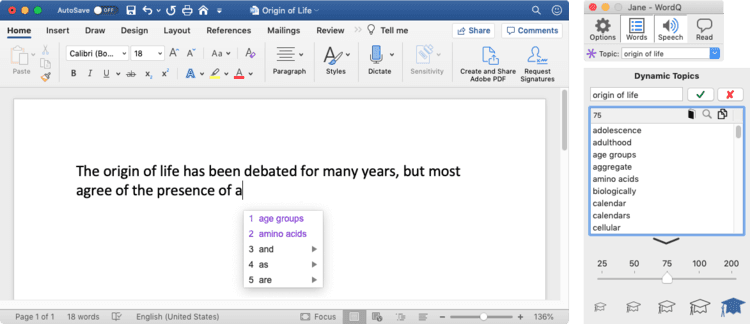
WordFlight relies on scientifically backed reading principles to help your child build fluency, though its definitive effectiveness remains pending our formal evaluation. If your child struggles with reading comprehension in the second grade or beyond, the root cause is often a failure to automatically recognize words. WordFlight targets this specific bottleneck. Instead of just giving your child more books to read, it drills the foundational decoding skills required to free up working memory. When your child does not have to consciously sound out every word, they can actually focus on the meaning of the text. Because this program uses a school-based subscription model, your child will likely encounter it in a classroom setting rather than as a standalone home app. The platform utilizes personalized learning to adapt to your child's specific deficits, alongside gamification to maintain engagement. However, you should monitor whether the game elements keep your child focused on reading or merely distract them with points and animations.
How Does WordFlight Work?
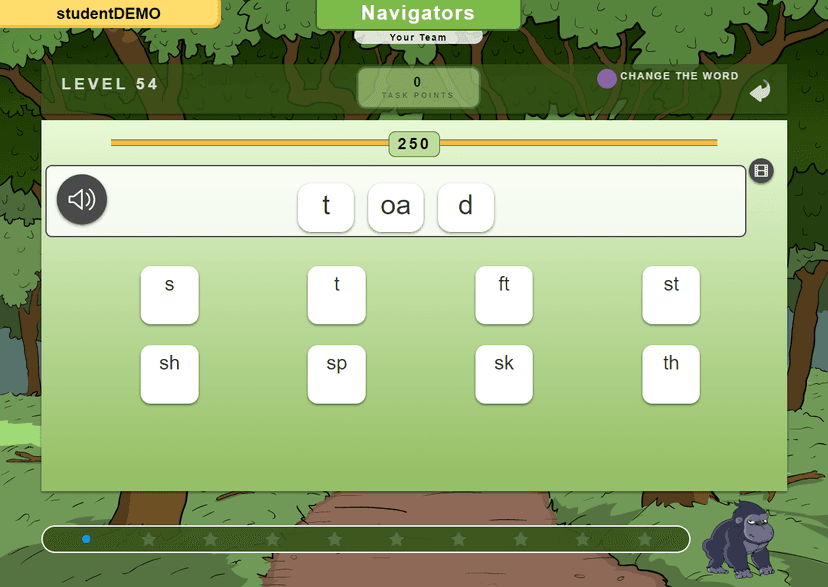
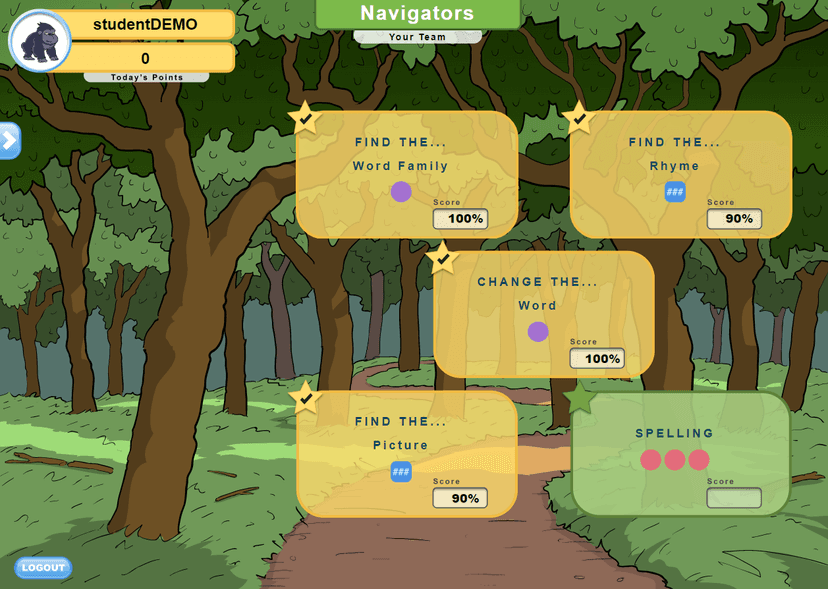
WordFlight utilizes adaptive personalized learning and targeted drill practice to build automatic word recognition. The platform begins with an assessment to identify specific deficits in a student's foundational reading skills. Based on these results, the software generates a customized pathway of gamified exercises designed to train the brain to recognize words instantly. By repeatedly exposing students to specific phonetic patterns and high-frequency words, the program leverages spaced repetition to transition word decoding from a slow, conscious effort to an automatic reflex. This reduction in cognitive load directly enables higher-order reading comprehension. As students progress, the system dynamically scales the difficulty, ensuring they remain in their zone of proximal development without becoming frustrated. The blended learning approach means these digital modules are intended to supplement direct teacher instruction rather than replace it.
Strengths and tradeoffs of WordFlight
WordFlight's biggest strength is its strict alignment with the Science of Reading, while its biggest weakness is its lack of accessibility for individual families due to school-only pricing. The program excels by targeting automatic word recognition, a critical phase in literacy development. By focusing on rapid decoding, the software helps reduce the cognitive load placed on a student's working memory, which is essential for improving overall reading comprehension. The platform's use of adaptive assessments ensures that interventions are targeted precisely at a student's individual skill gaps, applying principles of spaced repetition to cement phonetic patterns into long-term memory. However, the reliance on gamification introduces potential drawbacks. While game mechanics can increase short-term engagement, they often trigger extrinsic motivation that distracts from the actual learning task. Additionally, because The Learning Standard has not yet formally evaluated the platform, the quality of its corrective feedback remains unverified. Students learning to decode require immediate, specific corrections rather than just a red mark, and it is currently unclear how effectively WordFlight handles student errors.
Who Might Benefit From WordFlight?
WordFlight is best for students in second grade and above who struggle with reading fluency and comprehension due to poor word recognition skills. Because the program specifically targets older struggling readers spanning all the way up to twelfth grade, it avoids overly juvenile aesthetics that might alienate adolescents requiring foundational interventions. It serves as an ideal tier-two or tier-three intervention tool within a school setting, supporting educators who need to differentiate instruction for students lagging behind their peers. It is not designed for early childhood students who are just beginning to learn their letters, nor is it available for parents seeking a standalone at-home tutoring app.
Data Transparency
Does Not Meet Data Transparency Standard
WordFlight reaches Level 1 of 3 (Basic protections), below our data transparency standard. Reaching Level 2 needs the policy to document a data retention timeline, named service providers and self-service deletion.
18 of 35 checks passed
Level 1 · Basic protections
Does not sell data or target ads at students, limits sharing, and lets parents see and delete their child's data.
Level 2 · Parent control (meets the standard)
Families can get their data out, know who processes it, and know how long it is kept.
Not documented: a data retention timeline, named service providers, self-service deletion
Level 3 · Direct data access
Families or schools can pull their own data through an API, in a stated format.
Not documented: an API for retrieving their own data, a named export format
View all 35 checks
Parent Access8/8
Does the policy mention parents specifically?
“Foundations in Learning respects and is committed to the privacy of all those utilizing our programs and services, including students, teachers, administrators, and parents.”
Can parents view their child's data?
“Parents of children using WordFlight at Home may at any time and upon providing proper identification, parents/guardians may access and review their child’s personal data maintained by Foundations in Learning, request that we update or delete such personal data, and/or refuse to allow us from further collecting or using their child’s personal data.”
Can parents modify their child's data?
“Parents of children using WordFlight at Home may at any time and upon providing proper identification, parents/guardians may access and review their child’s personal data maintained by Foundations in Learning, request that we update or delete such personal data, and/or refuse to allow us from further collecting or using their child’s personal data.”
Can parents delete their child's account?
“Parents of children using WordFlight at Home may at any time and upon providing proper identification, parents/guardians may access and review their child’s personal data maintained by Foundations in Learning, request that we update or delete such personal data, and/or refuse to allow us from further collecting or using their child’s personal data.”
Is there a dedicated Children's Privacy section?
“In compliance with the Children’s Online Privacy Protection Act (COPPA), Foundations in Learning does not collect personally identifiable information from children under 13, without a parent or guardian’s consent, or that of a school if applicable.”
Does it reference COPPA compliance?
“In compliance with the Children’s Online Privacy Protection Act (COPPA), Foundations in Learning does not collect personally identifiable information from children under 13, without a parent or guardian’s consent, or that of a school if applicable.”
Does it reference FERPA compliance?
“Foundations in Learning is fully compliant with FERPA.”
Is parental consent required for child accounts?
“Since your child is under 18 years old, your parental consent is required to authorize your child’s WordFlight Independent Account.”
Data Portability2/5
Can users access their personal data?
“To exercise the access, data portability, and deletion rights described above, please submit a verifiable consumer request to us by email at customerservice@foundations-learning.com.”
Can users download/export their data?
“For data portability requests, we will select a format to provide your personal information that is readily usable and should allow you to transmit the information from one entity to another entity without hindrance.”
Is there a self-service data access tool?
The policy provides access only by email or school request and describes no self-service tool.
Is a specific data format mentioned for export?
The policy says only that the vendor will choose a "readily usable" format and names no specific one.
Is there an API for data access?
The policy does not mention an API for data access.
Data Minimization2/6
Is data collection itemized?
“Enrollment of a student involves, depending on the product, the collection of the student’s name, gender, grade level, status as an English Language Learner, language spoken in the home, educational status (whether below/on grade level and special education status) and username and password (assigned by the teacher).”
Can the app be used without a real name?
The policy says the student's name is collected at enrollment.
Can the app be used without an email?
The policy does not explicitly say that student email addresses are never collected, and its CCPA categories include email addresses as collected identifiers.
Does it state collection is limited to what is necessary?
“A child’s participation or access to an activity on WordFlight cannot be conditioned on him or her providing more personal information than is reasonably necessary for that activity.”
Is IP address anonymized or truncated?
The policy says IP addresses are collected and stored and does not mention anonymizing or truncating them.
Is location tracking explicitly excluded?
The policy lists geolocation data among the categories it has collected and disclosed.
Third-Party Protection4/7
Does it explicitly state no selling of data?
“We do not sell or rent children’s personal data.”
Are third-party providers named?
The policy names only categories of providers, such as web hosting services, and no specific companies.
Are providers contractually restricted?
“When we disclose personal information for a business purpose, we enter a contract that describes the purpose and requires the recipient to both keep that personal information confidential and not use it for any purpose except performing the contract.”
No-targeted-advertising commitment?
The policy does not address targeted advertising.
Is AI/ML data sharing addressed?
The policy does not address AI or machine learning.
Child-specific sharing restriction?
“Children cannot interact with other users. Any personal information collected from or regarding children is not shared or posted publicly.”
Cookies/tracking limited or opt-out?
“The Foundations in Learning website and WordFlight makes limited use of “cookie” technology.”
Deletion & Retention2/5
Can users delete their account?
“You have the right to request that we delete any of your personal information we collected from you and retained, subject to certain exceptions.”
Self-service deletion mechanism?
The policy allows deletion only by email or school request and describes no self-service mechanism.
Specific data retention timeline?
The policy keeps data "as long as necessary" and gives no specific timeline.
Auto-deletion of inactive accounts?
The policy does not address deleting inactive accounts automatically.
Post-deletion handling described?
“Once we receive and confirm your verifiable consumer request, we will delete (and direct our service providers to delete) your personal information from our records, unless an exception applies.”
Advertising0/4
Advertising model explicitly disclosed?
The policy does not address advertising.
Free from third-party advertisements?
The policy does not address third-party advertisements.
Children excluded from ad targeting?
The policy does not address ad targeting of children.
Ad-free option available?
The policy does not address advertising or an ad-free option.
What This Means
The policy review did not meet our data transparency standard. The checks above show the documented findings and unknowns. A missing statement does not establish how the app handles data in practice.
About this evaluation: Based on automated analysis of Data Privacy and Security and COPPA direct parent notice against 35 policy-disclosure questions, including questions adapted from the Common Sense Privacy Program's published evaluation questions. TLS is not affiliated with Common Sense Media, and this is not a Common Sense rating. Quoted text is copied from the policy; unquoted notes are our summary. Results describe what the policy documents, not the company's actual practices. Privacy policies can change: this review reflects the version we analyzed and does not determine legal compliance.
Sources and review method
TLS combines product information and editorial analysis to explain how WordFlight works, its tradeoffs, and the questions to ask before choosing it. Product features, an instructional rationale and evidence of learning outcomes are different kinds of information.
Formal Learning Standard assessment: not yet completed. Data Transparency findings are reported separately and do not establish learning effectiveness. Read our methodology.
Frequently Asked Questions About WordFlight
Is WordFlight free?
No, WordFlight is not free. The program is offered exclusively as a school site-based subscription, with pricing tiered based on the school's total enrollment. It is currently unavailable for individual families to purchase for home use.
Is WordFlight good for older students and high schoolers?
Yes, WordFlight is specifically designed to accommodate older students. It targets struggling readers from second grade all the way through twelfth grade, providing foundational reading intervention without using overly childish graphics that might alienate older learners.
What does WordFlight teach?
WordFlight teaches automatic word recognition. Instead of focusing broadly on literature or reading comprehension strategies, it drills foundational decoding and phonics skills so that students can recognize words instantly, freeing up their brain power to understand what they are reading.
How does WordFlight compare to standard independent reading practice?
WordFlight explicitly targets the mechanics of reading rather than the act of reading itself. While standard independent reading expects students to absorb skills through exposure, WordFlight isolates and drills phonetic patterns using active retrieval practice to build automaticity.
Has The Learning Standard evaluated WordFlight?
TLS has not yet completed a Learning Standard evaluation of how well WordFlight teaches. Its privacy policy has been reviewed for Data Transparency and reaches Level 1, Basic protections.
Is WordFlight COPPA compliant?
The reviewed privacy policy references COPPA. A policy reference alone does not establish COPPA compliance. Policy review note: The policy states it complies with COPPA.
Is WordFlight FERPA compliant?
The reviewed privacy policy references FERPA. A policy reference alone does not establish FERPA compliance. Policy review note: The policy states it is fully compliant with FERPA.
Does WordFlight have a children's privacy policy?
The reviewed policy includes a dedicated children's privacy section. Policy review note: The policy has its own COPPA Notice section with children's data headings.
Does WordFlight sell student data?
The reviewed policy states that the app does not sell data. This is a policy statement; actual data practices were not verified. Policy review note: The vendor states it does not sell children's personal data.
Can you delete your data from WordFlight?
The reviewed privacy policy describes account deletion. We have not tested the deletion process. Policy review note: Users can ask for their personal information to be deleted.
Follow TLS Research
Subscribe to future TLS research updates: app reviews, findings, and what the evidence shows.
Screenshots
Take Action
For WordFlight
If you represent Foundations in Learning and have a correction or new evidence, send the relevant source so we can review and update this page.
Submit a correctionDetails
- Pricing
- WordFlight is offered as a school site-based subscription. Pricing is tiered based on the school's enrollment.
- Platforms
- Web Browser, iPadOS (Apple tablet), Windows (Microsoft), macOS (Apple), Chrome OS (Google)
- Grade Levels
- 2nd Grade, 3rd Grade, 4th Grade, 5th Grade, 6th Grade, 7th Grade, 8th Grade, 9th Grade, 10th Grade, 11th Grade, 12th Grade
- Website
- Visit site