
Vocabulary.com
Product by IXL Learning
Facts checked: Not yet checked
Our take (not a Learning Standard rating). This label applies to learning-science judgments throughout this overview.
Our take (not a Learning Standard rating)
Vocabulary.com effectively builds word knowledge through adaptive retrieval practice and spaced repetition. The platform excels at exposing students to words in multiple real-world contexts, moving beyond rote memorization. While The Learning Standard has not yet formally evaluated the app, its underlying mechanics align strongly with cognitive science principles for long-term retention.
Pros
- Uses spaced repetition algorithms to reintroduce words just as your child is likely to forget them.
- Provides friendly, conversational explanations rather than dry dictionary definitions.
- Tests vocabulary in various sentence contexts to ensure deep semantic understanding.
- Features a massive library of ready-made word lists aligned to popular literature and standardized tests.
Cons
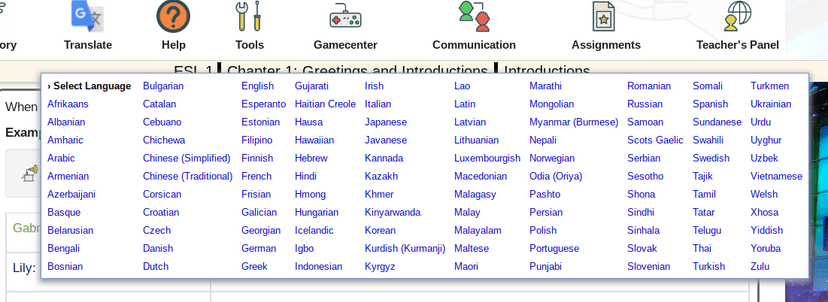
- Lacks comprehensive audio-visual supports for emerging readers or English language learners.
- Gamification elements can sometimes distract students from the core learning objectives.
- Requires a paid subscription for full educator features and student tracking capabilities.
- Does not evaluate spoken pronunciation or productive writing skills.
What Do We Know About Vocabulary.com?
Vocabulary.com is highly effective for building long-term word retention because it relies on proven cognitive science methods rather than passive reading. Your child will not just memorize definitions for a Friday quiz. Instead, the platform forces your child to retrieve word meanings from memory repeatedly over time. This approach prevents the rapid forgetting that typically follows standard flashcard drill. The app tracks which words your child struggles with and automatically adjusts the difficulty, ensuring they spend time only on what they need to learn. It uses real-world sentences drawn from journalism and literature, exposing your child to how words function in actual communication. While The Learning Standard has not yet formally rated Vocabulary.com, the pedagogical framework strongly supports vocabulary acquisition. Parents should monitor usage to ensure the competitive elements, like the leaderboard, motivate rather than frustrate their child. The conversational tone of the definitions helps demystify complex academic language. You will find it particularly useful if your child is preparing for standardized tests or tackling difficult assigned reading.
How Does Vocabulary.com Work?
Vocabulary.com uses an adaptive, mastery-based progression system combined with spaced retrieval practice. The platform begins by assessing your child's current vocabulary level through a series of diagnostic questions. Based on these results, the algorithm builds a personalized learning pathway. When your child encounters a new word, they must answer multiple-choice questions testing different facets of its meaning. If they answer incorrectly, the system provides a detailed, conversational explanation of the word's origin and usage. The algorithm then schedules that word for review in future sessions, spacing out the intervals to strengthen long-term memory. Educators and parents can also assign specific word lists tied to historical documents, scientific concepts, or classic novels. Gamified elements, including points, badges, and global leaderboards, drive engagement during these practice sessions. The Vocab Jam feature allows for real-time multiplayer competition, forcing quick recall under pressure.
Strengths and tradeoffs of Vocabulary.com
Vocabulary.com's biggest strength is its use of adaptive spaced repetition to build long-term retention, while its biggest weakness is the lack of support for productive language skills like writing and speaking. The platform leverages retrieval practice effectively by forcing students to recall word meanings across various sentence contexts. This prevents learners from merely memorizing a single dictionary definition. The adaptive algorithm constantly adjusts the challenge level, maintaining the optimal cognitive load for your child. It prevents boredom by skipping known words and prevents frustration by isolating difficult concepts. The conversational definitions act as excellent worked examples, demonstrating word usage in an accessible, memorable tone. However, the system relies almost entirely on multiple-choice questions. This limits your child's ability to practice expressive vocabulary generation. While they will recognize complex words in reading assignments, the app does not guarantee they can correctly employ those words in an essay. Additionally, emerging readers may struggle with the text-heavy interface. The competitive gamification works well for many students but may cause anxiety for learners who prefer self-paced, pressure-free environments.
Who Might Benefit From Vocabulary.com?
Best for middle school through high school students who need to build advanced academic vocabulary for reading comprehension and standardized tests. The platform requires a foundational reading level, making it less suitable for early elementary students or complete beginners. It is an excellent tool for educators seeking to pre-teach vocabulary before assigning complex literature. Parents will find it valuable as a daily enrichment activity that replaces mindless scrolling with productive cognitive effort. Self-motivated learners thrive in its gamified environment, especially those preparing for college admissions exams.
Data Transparency
Does Not Meet Data Transparency Standard
Vocabulary.com does not meet our data transparency standard. Its privacy policy does not document basic protections, including limits on sharing children's data and parents' right to see their child's data.
18 of 35 checks passed
Evaluated September 2026
Privacy Policy →Level 1 · Basic protections
Does not sell data or target ads at students, limits sharing, and lets parents see and delete their child's data.
Not documented: limits on sharing children's data, parents' right to see their child's data
Level 2 · Parent control (meets the standard)
Families can get their data out, know who processes it, and know how long it is kept.
Not documented: data export, a data retention timeline, self-service deletion
Level 3 · Direct data access
Families or schools can pull their own data through an API, in a stated format.
Not documented: an API for retrieving their own data, a named export format
View all 35 checks
Parent Access7/8
Does the policy mention parents specifically?
“Unless we receive a deletion request from you or your parent or are contractually required to delete your account due to our business relationship with your school or district”
Can parents view their child's data?
The policy lets parents ask to amend or delete their child's information but does not say parents can view or access it.
Can parents modify their child's data?
“If you are a parent, eligible customer, or school official, and Personal Information is incorrect and you’d like to have it amended, please [contact our support team](https://www.vocabulary.com/help/contactus).”
Can parents delete their child's account?
“Parents always have the option to delete their Child User’s account.”
Is there a dedicated Children's Privacy section?
“Vocabulary.com is committed to children’s privacy.”
Does it reference COPPA compliance?
“both parties agree to uphold their responsibilities under the Family Educational Rights and Privacy Act (“FERPA”), the Protection of Pupil Rights Amendment (“PPRA”), and the Children’s Online Privacy and Protection Act (“COPPA”).”
Does it reference FERPA compliance?
“We provide the Services as an outsourced institutional function under FERPA 34 CFR Part 99.31(a)(1).”
Is parental consent required for child accounts?
“The Children’s Online Privacy and Protection Act (“COPPA”) requires that online service providers obtain clear and verifiable parental consent before collecting personal information from children under 13. You represent and warrant that you have received consent from parents, or have the authority to provide consent on behalf of parents, for us to receive Personal Information related to children under 13.”
Data Portability1/5
Can users access their personal data?
“Please contact us at [support@vocabulary.com](mailto:support@vocabulary.com) in order to submit a request to exercise your applicable rights and to contact us with general privacy-related questions. We may request certain information for the purpose of verifying the identity of the individual seeking access to his or her personal information.”
Can users download/export their data?
The policy mentions taking data with you and moving a school account to a personal account, but it offers no download or export.
Is there a self-service data access tool?
The policy only describes editing and viewing public profile information on the My Account page, not a self-service tool for accessing personal data.
Is a specific data format mentioned for export?
The policy does not mention any export format.
Is there an API for data access?
The policy does not mention an API for data access.
Data Minimization2/6
Is data collection itemized?
“When you register for Vocabulary.com, you provide to us personal information (such as your full name, email address, grade level and school affiliation) that could be used to identify you.”
Can the app be used without a real name?
The policy says it collects full names at registration and from schools.
Can the app be used without an email?
The policy says it collects email addresses, including students' emails from schools or authentication providers.
Does it state collection is limited to what is necessary?
The policy says it collects "very little" personal information but does not say collection is limited to what is necessary.
Is IP address anonymized or truncated?
The policy says it collects IP addresses and does not mention anonymizing or truncating them.
Is location tracking explicitly excluded?
“We may collect and use information about your location (such as your country) to provide you with a better experience on Vocabulary.com, but we don’t collect the precise location of you or your device.”
Third-Party Protection5/7
Does it explicitly state no selling of data?
“We do not sell your personal information to third parties.”
Are third-party providers named?
“Vocabulary.com uses a variety of third-party service providers, such as Google Analytics to understand usage.”
Are providers contractually restricted?
“Vocabulary.com will, wherever feasible, contractually obligate our third-party service providers to abide by the terms of this Privacy Notice.”
No-targeted-advertising commitment?
“Vocabulary.com will **NOT** use Personal Information provided by you or by your School or District: - To engage in targeted advertising”
Is AI/ML data sharing addressed?
The policy does not address AI or machine learning.
Child-specific sharing restriction?
The policy limits children's features and asks them not to share identifying information, but it sets no child-specific limit on the vendor's own sharing.
Cookies/tracking limited or opt-out?
“If you would like to opt out of Google Analytics, follow this [link](https://tools.google.com/dlpage/gaoptout/).”
Deletion & Retention2/5
Can users delete their account?
“Unless we receive a deletion request from you or your parent or are contractually required to delete your account due to our business relationship with your school or district, we will retain your information for as long as your account is active”
Self-service deletion mechanism?
The policy only describes deletion by contacting support, not a self-service tool.
Specific data retention timeline?
The policy keeps data while the account is active or "reasonably useful" and gives no specific timeline.
Auto-deletion of inactive accounts?
The policy does not describe automatic deletion of inactive accounts.
Post-deletion handling described?
“Please note that removal of your content or information does not ensure complete or comprehensive removal, as there may be deidentified or recoverable elements of your content or information on our servers in some form.”
Advertising1/4
Advertising model explicitly disclosed?
The policy rules out targeted advertising but does not say whether the product has advertising.
Free from third-party advertisements?
The policy does not say whether the product shows third-party ads.
Children excluded from ad targeting?
“Vocabulary.com will **NOT** use Personal Information provided by you or by your School or District: - To engage in targeted advertising”
Ad-free option available?
The policy does not describe an ad-free option or say the product has no ads.
What This Means
The policy review did not meet our data transparency standard. The checks above show the documented findings and unknowns. A missing statement does not establish how the app handles data in practice.
About this evaluation: Based on automated analysis of Privacy Policy against 35 policy-disclosure questions, including questions adapted from the Common Sense Privacy Program's published evaluation questions. TLS is not affiliated with Common Sense Media, and this is not a Common Sense rating. Quoted text is copied from the policy; unquoted notes are our summary. Results describe what the policy documents, not the company's actual practices. Privacy policies can change: this review reflects the version we analyzed and does not determine legal compliance.
Sources and review method
TLS combines product information and editorial analysis to explain how Vocabulary.com works, its tradeoffs, and the questions to ask before choosing it. Product features, an instructional rationale and evidence of learning outcomes are different kinds of information.
Formal Learning Standard assessment: not yet completed. Data Transparency findings are reported separately and do not establish learning effectiveness. Read our methodology.
Frequently Asked Questions About Vocabulary.com
Is Vocabulary.com free?
Vocabulary.com offers a limited free version for independent learners to look up words and play basic practice games. However, full access to class tracking, assignment creation, and comprehensive reporting requires a paid subscription. Contact the vendor directly for specific educational pricing tiers.
Is Vocabulary.com good for high school students?
Yes, it is highly effective for high school students. The platform excels at teaching Tier 2 and Tier 3 academic vocabulary essential for complex literature and standardized tests like the SAT. The adaptive algorithm ensures advanced students are challenged appropriately.
What does Vocabulary.com teach?
Vocabulary.com teaches word meanings, nuances, and real-world usage across all academic subjects. It focuses on receptive vocabulary, helping your child understand complex words when they encounter them in reading. It covers general academic terms as well as subject-specific jargon.
Vocabulary.com vs Quizlet: Which is better?
Vocabulary.com is better for deep, long-term acquisition of English words because it uses adaptive questioning and multiple contexts. Quizlet is a blank slate flashcard tool better suited for rote memorization of user-generated facts, foreign language terms, or distinct definitions.
Has The Learning Standard evaluated Vocabulary.com?
TLS has not yet completed a Learning Standard evaluation of how well Vocabulary.com teaches. Its privacy policy has been reviewed for Data Transparency and does not yet document the basic protections (Level 1).
Is Vocabulary.com COPPA compliant?
The reviewed privacy policy references COPPA. A policy reference alone does not establish COPPA compliance. Policy review note: The policy commits to COPPA responsibilities.
Is Vocabulary.com FERPA compliant?
The reviewed privacy policy references FERPA. A policy reference alone does not establish FERPA compliance. Policy review note: The policy references FERPA compliance.
Does Vocabulary.com have a children's privacy policy?
The reviewed policy includes a dedicated children's privacy section. Policy review note: The policy has a dedicated "Children" section.
Does Vocabulary.com sell student data?
The reviewed policy states that the app does not sell data. This is a policy statement; actual data practices were not verified. Policy review note: The policy explicitly says it does not sell personal information.
Can you delete your data from Vocabulary.com?
The reviewed privacy policy describes account deletion. We have not tested the deletion process. Policy review note: Users or their parents can request deletion.
Follow TLS Research
Subscribe to future TLS research updates: app reviews, findings, and what the evidence shows.
Screenshots
Take Action
For Vocabulary.com
If you represent IXL Learning and have a correction or new evidence, send the relevant source so we can review and update this page.
Submit a correction