
Transfr VR
Product by Transfr Inc.
Facts checked: Not yet checked
Our take (not a Learning Standard rating). This label applies to learning-science judgments throughout this overview.
Our take (not a Learning Standard rating)
Transfr VR leverages experiential learning and embodied cognition to simulate real-world technical tasks, which strengthens procedural memory better than textbook instruction. However, because this application requires expensive VR hardware and its efficacy relies heavily on institutional implementation, its actual teaching effectiveness remains pending formal evaluation by The Learning Standard.
Pros
- Utilizes embodied cognition by requiring learners to physically perform technical tasks in a simulated environment.
- Provides immediate visual feedback during procedural training, correcting mistakes in real-time before they become ingrained.
- Reduces the cognitive load of complex spatial tasks by allowing 360-degree observation of machinery and tools.
- Eliminates physical safety risks during initial skill acquisition for dangerous manufacturing and trades work.
Cons
- Requires significant investment in specialized VR hardware, limiting accessibility for individual learners.
- Lacks detailed public data on the transferability of VR-acquired motor skills to actual physical tools.
- Relies on institutional partnerships for access, meaning parents cannot easily purchase or monitor it at home.
- May cause simulator sickness or cognitive fatigue during extended training sessions.
What Do We Know About Transfr VR?
Transfr VR is an effective procedural training tool for technical careers, provided your child accesses it through a participating school or training program. Unlike traditional textbook learning, this platform uses virtual reality to immerse your teen in simulated trade environments, such as manufacturing floors or automotive shops. This approach relies on experiential learning, allowing your child to practice physical movements and sequences repeatedly without the material costs or physical risks associated with real-world mistakes. If your child struggles with abstract, lecture-based instruction, this hands-on approach directly targets procedural memory, building muscle memory and spatial awareness. However, parents cannot buy this app directly from an app store for home use. You will need to check if your child's high school career and technical education (CTE) program or local community college partners with Transfr. While The Learning Standard has not yet formally rated this app's curriculum, the underlying science of VR simulation shows strong potential for bridging the gap between career exploration and day-one job readiness. Keep in mind that VR sessions should be kept relatively short to prevent visual fatigue, and the digital skills learned must eventually be mapped to actual physical tools in a real workspace.
How Does Transfr VR Work?
Transfr VR uses scenario-based experiential learning through immersive virtual reality simulations to teach physical and procedural skills. Your child puts on a VR headset and enters a 3D environment modeled after a specific workplace, such as an aviation hangar or a solar panel installation site. The system guides the learner through a sequence of required tasks, prompting them to pick up virtual tools and execute specific motions. This instructional design relies heavily on guided practice with immediate corrective feedback. If a student selects the wrong tool or performs an action out of sequence, the simulation halts and provides specific visual cues to correct the error. This prevents the encoding of incorrect procedural memory. The curriculum is broken down into two main phases: career exploration, which offers bite-sized interactions to gauge interest, and specialized training, which demands mastery of complex, multi-step procedures. Progression is mastery-based, meaning your child cannot advance to the next technical module until they successfully complete the current simulation without critical errors.
Strengths and tradeoffs of Transfr VR
The biggest strength of Transfr VR is its application of embodied cognition for procedural tasks, while its biggest weakness is the inherent barrier to entry caused by hardware requirements. Experiential Learning Environment: By forcing learners to physically look around, reach, and manipulate virtual objects, the app builds strong spatial and procedural memory. This significantly reduces the extraneous cognitive load typical of reading a manual to understand a physical task. Safe Trial and Error: Students can fail safely. Making a mistake on a virtual electrical panel carries no physical risk, allowing for repetitive practice and the natural strengthening of neural pathways without material waste. Transferability Gap: A core weakness in all current VR training is the lack of tactile feedback (haptics). While your child learns the exact sequence of a task, they do not feel the physical weight or resistance of real tools, which is a crucial component of complete motor skill acquisition. Accessibility Limitations: The program is entirely dependent on institutional adoption. Because it relies on enterprise-level contracts and specific VR headsets, it remains inaccessible for independent, self-directed learning at home.
Who Might Benefit From Transfr VR?
Transfr VR is best for high school students and young adults enrolled in career and technical education (CTE) programs who need safe, repetitive practice before handling physical machinery. It targets older teens and adults focusing on middle-skill careers in manufacturing, construction, aviation, and allied health. This platform is ideal for kinesthetic learners who disengage during traditional classroom lectures but thrive when given active, physical tasks to complete. It serves as a strong transitional tool for schools wanting to expand their vocational training options without building expensive, specialized physical laboratories.
Data Transparency
Does Not Meet Data Transparency Standard
Transfr VR reaches Level 1 of 3 (Basic protections), below our data transparency standard. Reaching Level 2 needs the policy to document a data retention timeline, named service providers and self-service deletion.
18 of 35 checks passed
Evaluated September 2026
Privacy Policy →Level 1 · Basic protections
Does not sell data or target ads at students, limits sharing, and lets parents see and delete their child's data.
Level 2 · Parent control (meets the standard)
Families can get their data out, know who processes it, and know how long it is kept.
Not documented: a data retention timeline, named service providers, self-service deletion
Level 3 · Direct data access
Families or schools can pull their own data through an API, in a stated format.
Not documented: an API for retrieving their own data, a named export format
View all 35 checks
Parent Access8/8
Does the policy mention parents specifically?
“COPPA requires us to inform parents and legal guardians (as used in this section, “ **parents**“) about our practices for collecting, using, and disclosing personal information from children under the age of 13”
Can parents view their child's data?
“At any time, you may review the child’s personal information maintained by us, require us to correct or delete the personal information, and/or refuse to permit us from further collecting or using the child’s information.”
Can parents modify their child's data?
“At any time, you may review the child’s personal information maintained by us, require us to correct or delete the personal information, and/or refuse to permit us from further collecting or using the child’s information.”
Can parents delete their child's account?
“At any time, you may review the child’s personal information maintained by us, require us to correct or delete the personal information, and/or refuse to permit us from further collecting or using the child’s information.”
Is there a dedicated Children's Privacy section?
“## Children’s Online Privacy Protection Act of 1998 (COPPA) We are committed to protecting the privacy of children who use our Services.”
Does it reference COPPA compliance?
“This section includes disclosures required under the Children’s Online Privacy Protection Act of 1998 and its rules (collectively, “ **COPPA**“).”
Does it reference FERPA compliance?
“We have prepared this Section to support our customers in the education-sector, with managing their FERPA compliance.”
Is parental consent required for child accounts?
“It also requires us to obtain verifiable consent from a child’s parent for certain collection, use, and disclosure of the child’s personal information.”
Data Portability2/5
Can users access their personal data?
“You have the right to request, free of charge, that we disclose information about our collection and use of your personal information over the past twelve (12) months, including:”
Can users download/export their data?
“Colorado, Connecticut, Virginia, and Utah each provide their state residents with rights to: - Confirm whether we process their personal information. - Access and delete certain personal information. - Data portability.”
Is there a self-service data access tool?
The policy only describes access requests by email, with no self-service tool.
Is a specific data format mentioned for export?
The policy does not name any export format.
Is there an API for data access?
The policy does not describe an API for data access.
Data Minimization2/6
Is data collection itemized?
“Identifiers. Information by which you may be personally identified, such as name, alias or username, postal address, email address, IP address, and biometric identifiers such as temporary voice recordings”
Can the app be used without a real name?
The policy says the school provides the child's first and last name.
Can the app be used without an email?
The policy lists email address among the information collected and does not say student emails are never collected.
Does it state collection is limited to what is necessary?
“We only collect as much information about a child as is reasonably necessary for the child to participate in an activity”
Is IP address anonymized or truncated?
The policy collects IP addresses and does not mention anonymizing or truncating them.
Is location tracking explicitly excluded?
The policy says it collects location and geolocation data, including approximate device location from children.
Third-Party Protection4/7
Does it explicitly state no selling of data?
“Transfr does not sell or rent children’s personal information.”
Are third-party providers named?
The policy describes categories of service providers but names none.
Are providers contractually restricted?
“To third parties we use to add enhancing features to our Services such as digital certifications or badges, and who are bound by contractual or other obligations to use the information only for such purpose and to keep the information confidential.”
No-targeted-advertising commitment?
The policy allows advertising and marketing use with consent and makes no commitment against targeted advertising.
Is AI/ML data sharing addressed?
The policy does not address sharing data with AI or machine-learning systems.
Child-specific sharing restriction?
“Transfr does not sell or rent children’s personal information. Any sharing or transfer of children’s personal information is done pursuant to a legitimate business purpose as described in this section.”
Cookies/tracking limited or opt-out?
“You may refuse to accept browser cookies by activating the appropriate setting on your browser.”
Deletion & Retention2/5
Can users delete their account?
“You have the right to request the deletion of your personal information that we collected.”
Self-service deletion mechanism?
The policy only describes deletion requests by email, with no self-service mechanism.
Specific data retention timeline?
The policy keeps data only as long as necessary and gives no specific timeline, apart from voice recordings being deleted when a simulation ends.
Auto-deletion of inactive accounts?
The policy does not address automatic deletion of inactive accounts.
Post-deletion handling described?
“We will delete or de-identify personal information not subject to an applicable exception from our records and will direct our service providers to take similar action.”
Advertising0/4
Advertising model explicitly disclosed?
The policy mentions marketing emails but does not state whether the product has advertising.
Free from third-party advertisements?
The policy does not state that the product is free of third-party advertisements.
Children excluded from ad targeting?
The policy does not explicitly exclude children from ad targeting.
Ad-free option available?
The policy does not mention an ad-free option or state that the product has no ads.
What This Means
The policy review did not meet our data transparency standard. The checks above show the documented findings and unknowns. A missing statement does not establish how the app handles data in practice.
About this evaluation: Based on automated analysis of Privacy Policy against 35 policy-disclosure questions, including questions adapted from the Common Sense Privacy Program's published evaluation questions. TLS is not affiliated with Common Sense Media, and this is not a Common Sense rating. Quoted text is copied from the policy; unquoted notes are our summary. Results describe what the policy documents, not the company's actual practices. Privacy policies can change: this review reflects the version we analyzed and does not determine legal compliance.
Sources and review method
TLS combines product information and editorial analysis to explain how Transfr VR works, its tradeoffs, and the questions to ask before choosing it. Product features, an instructional rationale and evidence of learning outcomes are different kinds of information.
Formal Learning Standard assessment: not yet completed. Data Transparency findings are reported separately and do not establish learning effectiveness. Read our methodology.
Frequently Asked Questions About Transfr VR
Is Transfr VR free?
No, Transfr VR is not free for individuals or institutions. The pricing operates on a business-to-business model, requiring schools, community colleges, or workforce development centers to purchase enterprise licenses. Parents and students cannot download or purchase individual subscriptions. You must access the software through an enrolled educational or training program that has already secured the necessary hardware and software licenses.
Is Transfr VR good for high school students?
Yes, Transfr VR is highly effective for high school students exploring vocational pathways. The career exploration modules allow students to test various trades quickly, which aids in self-directed career planning. By simulating the actual work environment, older teens can make informed decisions about their post-secondary education or direct-to-workforce plans before committing time and money to a specialized technical college.
What does Transfr VR teach?
Transfr VR teaches specific, job-ready procedural skills for high-demand industries like advanced manufacturing, automotive, aviation, and healthcare. The curriculum focuses on teaching the exact sequence of steps required to operate machinery, assemble components, or perform workplace safety protocols. It moves learners from broad career exploration down to the precise physical motions required to pass industry certification exams.
How does Transfr VR compare to traditional vocational textbooks?
Transfr VR outperforms traditional textbooks by utilizing embodied cognition and immediate visual feedback. Reading about how to operate a lathe relies on abstract mental translation, whereas VR allows the student to physically practice the sequential steps. However, as noted in The Learning Standard's methodology regarding instructional modalities, VR cannot entirely replace the tactile feedback of working with actual physical tools in a real-world shop.
Has The Learning Standard evaluated Transfr VR?
TLS has not yet completed a Learning Standard evaluation of how well Transfr VR teaches. Its privacy policy has been reviewed for Data Transparency and reaches Level 1, Basic protections.
Is Transfr VR COPPA compliant?
The reviewed privacy policy references COPPA. A policy reference alone does not establish COPPA compliance. Policy review note: The policy provides disclosures required under COPPA.
Is Transfr VR FERPA compliant?
The reviewed privacy policy references FERPA. A policy reference alone does not establish FERPA compliance. Policy review note: The policy has a FERPA section that describes steps to support FERPA compliance.
Does Transfr VR have a children's privacy policy?
The reviewed policy includes a dedicated children's privacy section. Policy review note: The policy has a dedicated COPPA section with its own heading.
Does Transfr VR sell student data?
The reviewed policy states that the app does not sell data. This is a policy statement; actual data practices were not verified. Policy review note: The policy explicitly states that it does not sell children's personal information.
Can you delete your data from Transfr VR?
The reviewed privacy policy describes account deletion. We have not tested the deletion process. Policy review note: Users can request deletion of their personal information.
Follow TLS Research
Subscribe to future TLS research updates: app reviews, findings, and what the evidence shows.
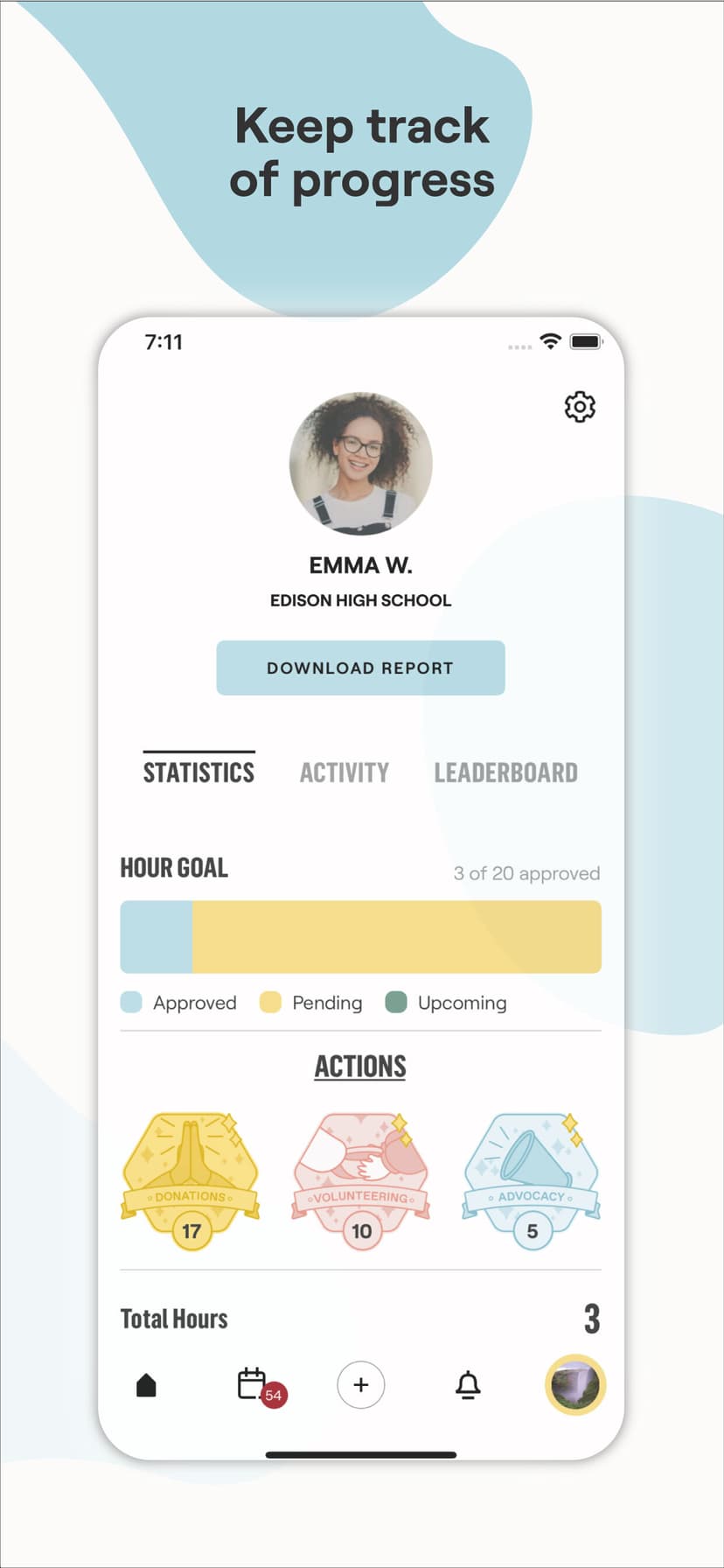
Screenshots
Take Action
For Transfr VR
If you represent Transfr Inc. and have a correction or new evidence, send the relevant source so we can review and update this page.
Submit a correction