
Spellodrome
Product by 3P Learning
Facts checked: Not yet checked
Our take (not a Learning Standard rating). This label applies to learning-science judgments throughout this overview.
Our take (not a Learning Standard rating)
Spellodrome provides structured spelling practice, but The Learning Standard has not yet evaluated its full effectiveness. The platform relies on repetitive retrieval practice to build word recognition. While drill-based methods improve short-term accuracy, we await evaluation data to confirm if it employs spaced repetition for long-term retention.
Pros
- Utilizes active retrieval practice to reinforce basic word spelling and recognition.
- Offers independent learning structures for supplemental practice outside of classroom hours.
- Gamifies spelling drills to maintain student engagement during otherwise repetitive tasks.
Cons
- The Learning Standard has not yet evaluated the platform's adaptive capabilities or long-term efficacy.
- Pricing requires contacting the vendor directly, limiting immediate accessibility for individual parents.
- Lacks explicit instruction on phonics rules or morphological awareness beyond rote memorization.
What Do We Know About Spellodrome?
Spellodrome provides capable rote spelling practice for your child, but its long-term educational effectiveness remains pending evaluation by The Learning Standard. The app focuses on independent spelling drills, requiring your child to repeatedly type and identify target words. This method leverages basic retrieval practice, which learning science confirms is highly effective for memorizing weekly spelling lists. However, rote memorization alone does not always translate to improved reading comprehension or authentic writing fluency. Your child will engage with gamified activities that make repetitive spelling tasks more palatable. Because pricing is gated behind vendor contact, the platform is primarily structured for school-wide implementation rather than individual home purchases. If your child's school provides an account, Spellodrome serves as a reliable digital substitute for traditional paper flashcards. Ensure your child balances this screen-based drill time with reading physical books and practicing writing in full sentences. Isolated spelling drills lack the rich vocabulary context needed for comprehensive literacy development. Until we complete our full evaluation, use it strictly as a supplemental practice tool.
How Does Spellodrome Work?
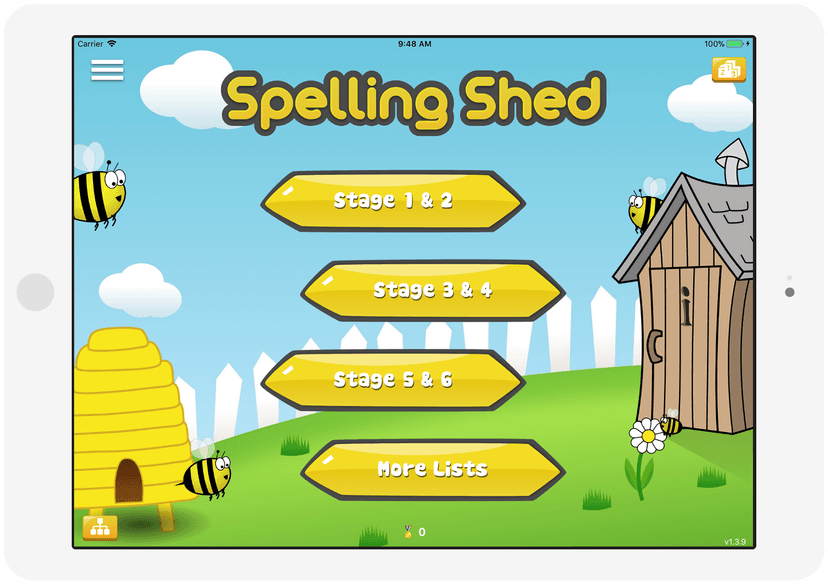
Spellodrome uses drill-based retrieval practice to build spelling accuracy and word recognition. Students log into a dashboard where they are presented with specific word lists assigned by their teacher or the program. They complete a series of gamified mini-games and typing challenges that require them to spell words correctly from audio prompts or visual cues. This active recall forces the brain to retrieve the spelling from memory, strengthening the neural pathways associated with those specific target words. The platform tracks correct and incorrect attempts, awarding points to motivate continued independent practice. Students can track their own progress through the interface. However, the system primarily focuses on accuracy rather than explaining why a word is spelled a certain way. It does not provide explicit phonics instruction or morphological breakdowns. Instead, it operates strictly as a digital practice arena rather than a primary instructional tool.
Strengths and tradeoffs of Spellodrome
Spellodrome's biggest strength is its engaging use of retrieval practice, while its biggest weakness is the lack of explicit instruction on spelling rules and morphology. Retrieval practice is a well-documented learning science principle; by forcing students to recall how a word is spelled rather than just looking at it, the app strengthens memory retention. The gamified environment successfully masks the repetitive nature of spelling drills, keeping students on task for longer periods. However, isolated drills have distinct limitations. Rote memorization often fails to help students understand the underlying phonetic rules or word origins. When a student spells a word incorrectly, the app shows the correct spelling but does not explain the phonetic rule they missed. Without elaborative feedback, students may struggle to transfer their spelling knowledge to new, unfamiliar words. Furthermore, The Learning Standard has not yet evaluated whether Spellodrome employs spaced repetition: the vital practice of reviewing older words at strategic intervals to prevent forgetting. Currently, it functions best as a digital reinforcement tool rather than a comprehensive spelling curriculum.
Who Might Benefit From Spellodrome?
Spellodrome is best for elementary and middle school students who need structured spelling drill practice alongside traditional classroom instruction. The platform suits children who struggle to stay engaged with traditional paper flashcards and benefit from a gamified, interactive environment. It serves primarily as a supplemental tool for homework and independent practice. Because it requires school or vendor coordination for pricing, it is ideal for students whose teachers have already integrated the broader 3P Learning suite into their daily curriculum. It is not recommended as a standalone intervention for students with severe dyslexia or those requiring explicit phonics instruction.
Data Transparency
Does Not Meet Data Transparency Standard
Spellodrome does not meet our data transparency standard. Its privacy policy does not document basic protections, including a commitment against targeted advertising, limits on sharing children's data and contractual limits on service providers.
9 of 35 checks passed
Evaluated September 2026
Microsoft Word →Level 1 · Basic protections
Does not sell data or target ads at students, limits sharing, and lets parents see and delete their child's data.
Not documented: a commitment against targeted advertising, limits on sharing children's data, contractual limits on service providers, a COPPA or FERPA commitment
Level 2 · Parent control (meets the standard)
Families can get their data out, know who processes it, and know how long it is kept.
Not documented: data export, a data retention timeline, named service providers, self-service deletion
Level 3 · Direct data access
Families or schools can pull their own data through an API, in a stated format.
Not documented: an API for retrieving their own data, a named export format
View all 35 checks
Parent Access4/8
Does the policy mention parents specifically?
“We appreciate that schools and parents might prefer that their students/children do not have their first name shown. Schools and parents are able to choose the setting for the public display of names as either:”
Can parents view their child's data?
“How can parents access, change or delete personally identifiable information about their child? Parents and legal guardians are welcome to contact us about any personally identifiable information about their child by emailing [help@spellodrome.com.au](mailto:help@spellodrome.com.au)”
Can parents modify their child's data?
“How can parents access, change or delete personally identifiable information about their child? Parents and legal guardians are welcome to contact us about any personally identifiable information about their child by emailing [help@spellodrome.com.au](mailto:help@spellodrome.com.au)”
Can parents delete their child's account?
“How can parents access, change or delete personally identifiable information about their child? Parents and legal guardians are welcome to contact us about any personally identifiable information about their child by emailing [help@spellodrome.com.au](mailto:help@spellodrome.com.au)”
Is there a dedicated Children's Privacy section?
The policy has no dedicated Children's Privacy or COPPA section, only a heading about parent access requests.
Does it reference COPPA compliance?
The policy does not reference COPPA; it only refers to Australian privacy law.
Does it reference FERPA compliance?
The policy does not reference FERPA.
Is parental consent required for child accounts?
The policy says parents provide details to register a home user but does not state that parental consent is required for child accounts.
Data Portability1/5
Can users access their personal data?
“How can parents access, change or delete personally identifiable information about their child? Parents and legal guardians are welcome to contact us about any personally identifiable information about their child by emailing [help@spellodrome.com.au](mailto:help@spellodrome.com.au)”
Can users download/export their data?
The policy does not address downloading or exporting data.
Is there a self-service data access tool?
The policy offers access only by emailing the company, not through a self-service tool.
Is a specific data format mentioned for export?
The policy does not mention any export format.
Is there an API for data access?
The policy does not mention an API.
Data Minimization1/6
Is data collection itemized?
“In order to register as a Home-User of Spellodrome, parents need to provide us with their e-mail address, parent‘s name, and child‘s name.”
Can the app be used without a real name?
The policy says the child's name is collected at registration.
Can the app be used without an email?
The policy lists the parent's email as collected and does not state that no student email is collected.
Does it state collection is limited to what is necessary?
The policy does not state that collection is limited to what is necessary.
Is IP address anonymized or truncated?
The policy does not address anonymizing or truncating IP addresses.
Is location tracking explicitly excluded?
The policy does not address location tracking.
Third-Party Protection2/7
Does it explicitly state no selling of data?
“Spellodrome will not sell or knowingly divulge your information to advertisers or any other third parties, unless:”
Are third-party providers named?
The policy does not name any third-party providers.
Are providers contractually restricted?
The policy does not describe contractual restrictions on providers.
No-targeted-advertising commitment?
The policy does not make an explicit commitment against targeted or behavioral advertising.
Is AI/ML data sharing addressed?
The policy does not address AI or machine learning.
Child-specific sharing restriction?
The policy's no-sharing statement covers all users and has no restriction specific to children.
Cookies/tracking limited or opt-out?
“Spellodrome uses cookies only to the limited extent of recognising the registered user and pairing that user with the account that the user created and the account preferences set by that user.”
Deletion & Retention1/5
Can users delete their account?
“How can parents access, change or delete personally identifiable information about their child? Parents and legal guardians are welcome to contact us about any personally identifiable information about their child by emailing [help@spellodrome.com.au](mailto:help@spellodrome.com.au)”
Self-service deletion mechanism?
The policy offers deletion only by emailing the company, with no self-service mechanism.
Specific data retention timeline?
The policy gives no specific retention timeline for personal data (it only says credit card details are not kept after payment).
Auto-deletion of inactive accounts?
The policy does not address automatic deletion of inactive accounts.
Post-deletion handling described?
The policy does not describe what happens to data after deletion.
Advertising0/4
Advertising model explicitly disclosed?
The policy says only that newsletter promotions come from Spellodrome and 3P Learning, not advertisers, and does not explicitly describe the product's advertising model.
Free from third-party advertisements?
The policy does not explicitly state that the product has no third-party advertisements.
Children excluded from ad targeting?
The policy does not explicitly exclude children from ad targeting.
Ad-free option available?
The policy does not state that the product is ad-free or that an ad-free option exists.
What This Means
The policy review did not meet our data transparency standard. The checks above show the documented findings and unknowns. A missing statement does not establish how the app handles data in practice.
About this evaluation: Based on automated analysis of Microsoft Word against 35 policy-disclosure questions, including questions adapted from the Common Sense Privacy Program's published evaluation questions. TLS is not affiliated with Common Sense Media, and this is not a Common Sense rating. Quoted text is copied from the policy; unquoted notes are our summary. Results describe what the policy documents, not the company's actual practices. Privacy policies can change: this review reflects the version we analyzed and does not determine legal compliance.
Sources and review method
TLS combines product information and editorial analysis to explain how Spellodrome works, its tradeoffs, and the questions to ask before choosing it. Product features, an instructional rationale and evidence of learning outcomes are different kinds of information.
Formal Learning Standard assessment: not yet completed. Data Transparency findings are reported separately and do not establish learning effectiveness. Read our methodology.
Frequently Asked Questions About Spellodrome
Is Spellodrome free?
No. Spellodrome requires a paid subscription, and pricing is only available by contacting 3P Learning directly. Because it is an enterprise-focused educational product, it is rarely purchased by individual parents. Instead, schools purchase building-wide licenses. If your child's school uses the platform, your family can access it for free at home using the login credentials provided by their classroom teacher.
Is Spellodrome good for elementary students?
Yes. Spellodrome is highly appropriate for elementary students who need repetitive practice to master their weekly spelling words. The gamified drills and interactive visual environments are specifically designed to keep younger students engaged during otherwise monotonous memorization tasks. However, parents should ensure this digital drill practice is paired with reading physical books and practicing handwriting to build comprehensive literacy skills.
What does Spellodrome teach?
Spellodrome teaches spelling accuracy and basic word recognition through repetitive practice. It relies heavily on rote memorization and retrieval practice to help students memorize specific word lists assigned by their teachers. It does not teach reading comprehension, explicit phonics rules, or deep morphological awareness. The platform is designed strictly as a supplementary drill tool rather than a primary literacy curriculum.
Spellodrome vs VocabularySpellingCity: which is better?
While The Learning Standard has not yet fully evaluated Spellodrome, VocabularySpellingCity generally offers more transparent pricing for parents and a stronger emphasis on vocabulary context. Spellodrome, on the other hand, is tightly integrated into the broader 3P Learning school ecosystem alongside Mathletics. Spellodrome is generally better if your child's school already uses it, while SpellingCity is better for independent homeschoolers.
Has The Learning Standard evaluated Spellodrome?
TLS has not yet completed a Learning Standard evaluation of how well Spellodrome teaches. Its privacy policy has been reviewed for Data Transparency and does not yet document the basic protections (Level 1).
Is Spellodrome COPPA compliant?
A COPPA reference was not found in the reviewed privacy policy. This does not determine whether the app complies with COPPA. Policy review note: The policy does not reference COPPA; it only refers to Australian privacy law.
Is Spellodrome FERPA compliant?
A FERPA reference was not found in the reviewed privacy policy. This does not determine whether the app complies with FERPA. Policy review note: The policy does not reference FERPA.
Does Spellodrome have a children's privacy policy?
No dedicated children's privacy section was found in the reviewed policy. Policy review note: The policy has no dedicated Children's Privacy or COPPA section, only a heading about parent access requests.
Does Spellodrome sell student data?
The reviewed policy states that the app does not sell data. This is a policy statement; actual data practices were not verified. Policy review note: The policy states Spellodrome will not sell user information.
Can you delete your data from Spellodrome?
The reviewed privacy policy describes account deletion. We have not tested the deletion process. Policy review note: Deletion of the child's personal information can be requested by email.
Follow TLS Research
Subscribe to future TLS research updates: app reviews, findings, and what the evidence shows.
Screenshots
Take Action
For Spellodrome
If you represent 3P Learning and have a correction or new evidence, send the relevant source so we can review and update this page.
Submit a correction