
SimulationSpot
Product by SimulationSpot
Facts checked: Not yet checked
Our take (not a Learning Standard rating). This label applies to learning-science judgments throughout this overview.
Our take (not a Learning Standard rating)
SimulationSpot provides interactive models that make abstract higher-education concepts tangible, supporting exploratory learning. However, because it lacks built-in assessments or structured retrieval practice, it functions better as a supplementary visual aid than a standalone teaching tool. It relies heavily on the learner's own self-regulation to read the accompanying documentation.
Pros
- Employs interactive models to reduce cognitive load when learning complex scientific and technical phenomena.
- Provides immediate visual feedback when users manipulate simulation variables.
- Includes integrated documentation tabs that offer explanatory text directly alongside the active simulation.
- Removes friction by offering free access to select simulations without requiring an account.
Cons
- Lacks embedded retrieval practice or quizzing to check for student understanding.
- Fails to provide structured learning paths or mastery-based progression.
- Relies heavily on high learner self-regulation to read and apply the documentation text.
What Do We Know About SimulationSpot?
SimulationSpot is an effective supplementary tool for visualizing complex concepts but cannot replace structured instruction. If your child is studying advanced science, career tech, or applied sciences at the college level, this platform offers interactive models that bring abstract theories to life. Instead of reading static textbook diagrams, your child can manipulate variables in real-time and observe the resulting changes. This active manipulation aligns with the principles of exploratory learning and helps reduce the cognitive load associated with visualizing complex phenomena. However, the platform expects a high degree of self-directed learning. It does not test your child on the material, nor does it use spaced repetition to ensure long-term retention. The simulations include documentation tabs with guides and explanations, but reading these requires strong self-regulation. Because The Learning Standard has not yet evaluated this tool, we cannot provide quantitative data on its effectiveness. Educators and parents should view SimulationSpot as a digital lab environment. It works best when paired with traditional coursework where an instructor or a structured curriculum provides the necessary assessment and retrieval practice to solidify the knowledge.
How Does SimulationSpot Work?
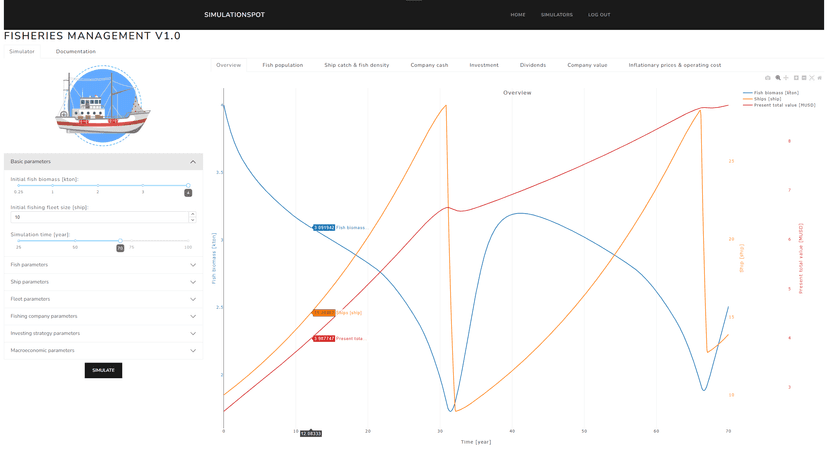
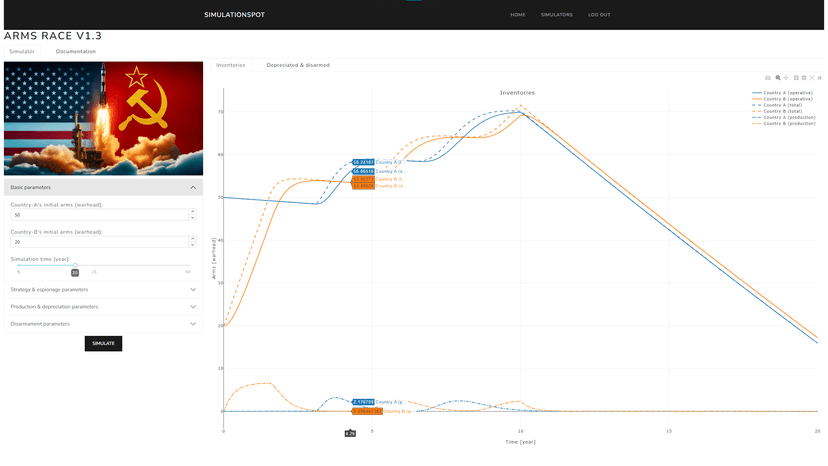
SimulationSpot uses exploratory learning through interactive digital models. Users select a simulation related to social science, applied science, or career and technical education. Once inside the simulator, the interface presents a dynamic model alongside interactive controls. Learners adjust sliders, input values, or toggle switches to alter the environment, prompting the system to generate immediate visual feedback. This immediate response allows users to test hypotheses and observe cause-and-effect relationships in real-time. Alongside the main interactive window, each simulator features a documentation tab. This section houses the instructional text, usage guides, and theoretical explanations behind the model. The platform relies on the user to toggle between reading the explanatory text and manipulating the simulation. There are no linear lessons, video lectures, or locked levels. The environment is entirely open-ended, meaning learners must decide when they have sufficiently explored a concept before moving on to another topic or returning to their primary coursework.
Strengths and tradeoffs of SimulationSpot
SimulationSpot's biggest strength is its ability to make abstract phenomena concrete through active manipulation, while its biggest weakness is the complete absence of built-in assessment. The platform excels at multimedia learning. By combining visual models with interactive controls and accompanying text, it helps learners process complex scientific and technical information across multiple channels. This approach effectively reduces extraneous cognitive load compared to deciphering static textbook diagrams. The immediate visual feedback provided when altering simulation variables strongly supports exploratory learning and hypothesis testing. Conversely, the lack of structured quizzing means the platform ignores retrieval practice, which is critical for long-term memory retention. Users can easily manipulate a simulation without actually comprehending the underlying principles. Furthermore, without mastery-based progression, the tool cannot identify or correct student misconceptions. The platform places the entire burden of learning on the user's self-regulation, requiring them to independently read the documentation and apply it to the simulation. As a result, it serves beautifully as a demonstrative aid but falls short as an independent instructional system.
Who Might Benefit From SimulationSpot?
SimulationSpot is best for highly motivated college students and adult learners who need to visualize abstract scientific or technical concepts. Because the content targets advanced degree levels ranging from associate to post-doctoral studies, it is inappropriate for young children or early K-12 students. It serves as an excellent resource for self-directed learners enrolled in career and technical education programs who require a safe, digital environment to test hypotheses. Instructors teaching applied sciences will also find it highly useful as a demonstrative presentation tool to supplement their standard lectures.
Data Transparency
Does Not Meet Data Transparency Standard
SimulationSpot does not meet our data transparency standard. Its privacy policy does not document basic protections, including limits on sharing children's data, a COPPA or FERPA commitment and parents' right to see their child's data.
11 of 35 checks passed
Evaluated September 2026
Privacy Policy →Level 1 · Basic protections
Does not sell data or target ads at students, limits sharing, and lets parents see and delete their child's data.
Not documented: limits on sharing children's data, a COPPA or FERPA commitment, parents' right to see their child's data, parents' right to delete their child's data
Level 2 · Parent control (meets the standard)
Families can get their data out, know who processes it, and know how long it is kept.
Not documented: a data retention timeline, named service providers, self-service deletion
Level 3 · Direct data access
Families or schools can pull their own data through an API, in a stated format.
Not documented: an API for retrieving their own data, a named export format
View all 35 checks
Parent Access2/8
Does the policy mention parents specifically?
“However, children under 14 years of age must not provide personal data through our services unless authorised by their parents or legal guardians, in accordance with applicable Spanish data protection law.”
Can parents view their child's data?
The policy gives the right of access to users only and says nothing about parents viewing their child's data.
Can parents modify their child's data?
The policy gives the right of rectification to users only and says nothing about parents changing their child's data.
Can parents delete their child's account?
The policy gives the right of erasure to users only and says nothing about parents deleting their child's data or account.
Is there a dedicated Children's Privacy section?
The policy has no section headed for children's privacy; children are mentioned only in short statements inside other sections.
Does it reference COPPA compliance?
The policy does not mention COPPA; it cites GDPR, Spanish LOPDGDD and LSSI-CE.
Does it reference FERPA compliance?
The policy does not mention FERPA.
Is parental consent required for child accounts?
“Children under 14 years of age must not provide personal data through our services unless authorised by their parents or legal guardians.”
Data Portability2/5
Can users access their personal data?
“The right to access their personal data.”
Can users download/export their data?
“The right to data portability, where applicable, so that personal data is provided in a structured, commonly used and machine-readable format.”
Is there a self-service data access tool?
The policy says rights are exercised by emailing contact@simulationspot.com and describes no self-service tool.
Is a specific data format mentioned for export?
The policy says only 'structured, commonly used and machine-readable format' and names no specific format.
Is there an API for data access?
The policy does not mention an API for accessing data.
Data Minimization1/6
Is data collection itemized?
“Identification and contact data, such as username and email address.”
Can the app be used without a real name?
The policy lists username and email as identification data but never says the vendor does not collect a real name.
Can the app be used without an email?
The policy says it collects email addresses to register accounts.
Does it state collection is limited to what is necessary?
The policy limits retention and purposes but never says collection is limited to what is necessary.
Is IP address anonymized or truncated?
The policy says it collects IP addresses and does not mention anonymising or truncating them.
Is location tracking explicitly excluded?
The policy does not address location tracking.
Third-Party Protection4/7
Does it explicitly state no selling of data?
“We do not sell your personal data.”
Are third-party providers named?
The policy describes provider categories such as hosting and email but names no provider.
Are providers contractually restricted?
“These providers may only process personal data according to our instructions and for the purposes necessary to provide their services to us.”
No-targeted-advertising commitment?
“We do not carry out profiling for advertising or similar purposes.”
Is AI/ML data sharing addressed?
The policy does not address sharing data for AI or machine learning.
Child-specific sharing restriction?
The policy has no sharing restriction specific to children.
Cookies/tracking limited or opt-out?
“At this time, our services do not use third-party cookies.”
Deletion & Retention1/5
Can users delete their account?
“The right to request the erasure of personal data where it is no longer necessary for the purposes for which it was collected, where consent has been withdrawn, or where another legal ground for erasure applies.”
Self-service deletion mechanism?
The policy handles deletion only through email requests and describes no self-service tool.
Specific data retention timeline?
The policy says data is kept 'as long as necessary' and gives no specific timeframes.
Auto-deletion of inactive accounts?
The policy does not describe automatic deletion of inactive accounts.
Post-deletion handling described?
The policy does not say what happens to data after deletion.
Advertising1/4
Advertising model explicitly disclosed?
The policy rules out profiling for advertising but never states whether the product shows advertising.
Free from third-party advertisements?
The policy never states that the product has no third-party advertisements.
Children excluded from ad targeting?
“We do not carry out profiling for advertising or similar purposes.”
Ad-free option available?
The policy never states the product is ad-free and mentions no ad-free option.
What This Means
The policy review did not meet our data transparency standard. The checks above show the documented findings and unknowns. A missing statement does not establish how the app handles data in practice.
About this evaluation: Based on automated analysis of Privacy Policy against 35 policy-disclosure questions, including questions adapted from the Common Sense Privacy Program's published evaluation questions. TLS is not affiliated with Common Sense Media, and this is not a Common Sense rating. Quoted text is copied from the policy; unquoted notes are our summary. Results describe what the policy documents, not the company's actual practices. Privacy policies can change: this review reflects the version we analyzed and does not determine legal compliance.
Sources and review method
TLS combines product information and editorial analysis to explain how SimulationSpot works, its tradeoffs, and the questions to ask before choosing it. Product features, an instructional rationale and evidence of learning outcomes are different kinds of information.
Formal Learning Standard assessment: not yet completed. Data Transparency findings are reported separately and do not establish learning effectiveness. Read our methodology.
Frequently Asked Questions About SimulationSpot
Is SimulationSpot free?
Yes, SimulationSpot operates on a freemium model. Certain simulations are available entirely for free without requiring user registration. Other more advanced simulators require users to create a free account to gain full access to the interactive models and documentation.
Is SimulationSpot good for college students?
Yes, the platform is specifically designed for higher education and adult learners. The content targets degree levels ranging from associate programs up to post-doctoral studies, making it highly appropriate for advanced academic and technical training rather than elementary education.
What does SimulationSpot teach?
SimulationSpot covers complex phenomena across social science, natural science, applied science, and career and technical education. Instead of teaching distinct linear lessons, it provides interactive models that allow users to test variables and observe advanced theoretical concepts in action.
How does SimulationSpot compare to PhET Interactive Simulations?
Both platforms offer interactive science models, but PhET is heavily integrated into K-12 curriculums with extensive teacher lesson plans. SimulationSpot focuses strictly on higher education, adult learning, and career-technical education, offering more advanced models for complex applied sciences.
Has The Learning Standard evaluated SimulationSpot?
TLS has not yet completed a Learning Standard evaluation of how well SimulationSpot teaches. Its privacy policy has been reviewed for Data Transparency and does not yet document the basic protections (Level 1).
Is SimulationSpot COPPA compliant?
A COPPA reference was not found in the reviewed privacy policy. This does not determine whether the app complies with COPPA. Policy review note: The policy does not mention COPPA; it cites GDPR, Spanish LOPDGDD and LSSI-CE.
Is SimulationSpot FERPA compliant?
A FERPA reference was not found in the reviewed privacy policy. This does not determine whether the app complies with FERPA. Policy review note: The policy does not mention FERPA.
Does SimulationSpot have a children's privacy policy?
No dedicated children's privacy section was found in the reviewed policy. Policy review note: The policy has no section headed for children's privacy; children are mentioned only in short statements inside other sections.
Does SimulationSpot sell student data?
The reviewed policy states that the app does not sell data. This is a policy statement; actual data practices were not verified. Policy review note: The policy states the vendor does not sell personal data.
Can you delete your data from SimulationSpot?
The reviewed privacy policy describes account deletion. We have not tested the deletion process. Policy review note: Users can ask for erasure of their personal data.
Follow TLS Research
Subscribe to future TLS research updates: app reviews, findings, and what the evidence shows.
Screenshots
Take Action
For SimulationSpot
If you represent SimulationSpot and have a correction or new evidence, send the relevant source so we can review and update this page.
Submit a correctionDetails
- Pricing
- SimulationSpot offers a variety of simulations. Some are available with free access and do not require registration, while others require a free sign-up.
- Platforms
- Web Browser
- Grade Levels
- Associate's degree, Bachelor's degree, Post-baccalaureate certificate, Master's Degree, Post-master's certificate, Doctoral Degree, Post-doctoral certificate, Adult Education, Professional or Technical Credential
- Website
- Visit site