
Shiken
Product by Shiken
Facts checked: Not yet checked
Our take (not a Learning Standard rating). This label applies to learning-science judgments throughout this overview.
Our take (not a Learning Standard rating)
Shiken incorporates established learning science principles like retrieval practice through its quiz-based format. However, its heavy reliance on AI-generated content requires careful monitoring for accuracy. The integration of mindfulness is a unique touch to reduce cognitive overload, but its actual effectiveness remains pending formal evaluation by The Learning Standard.
Pros
- Utilizes retrieval practice through interactive live quizzes to strengthen memory recall.
- Features adaptive difficulty mechanisms that adjust questions based on learner performance to maintain an optimal challenge level.
- Integrates brief mindfulness exercises designed to reduce anxiety and lower cognitive load before assessments.
- Provides time-saving generative AI tools for educators to rapidly build custom question banks.
Cons
- AI-generated quizzes risk presenting inaccurate or poorly phrased questions without strict educator oversight.
- The gamified elements can distract some learners from the core academic content.
- Mindfulness features interrupt the flow of learning for students who prefer continuous study sessions.
What Do We Know About Shiken?
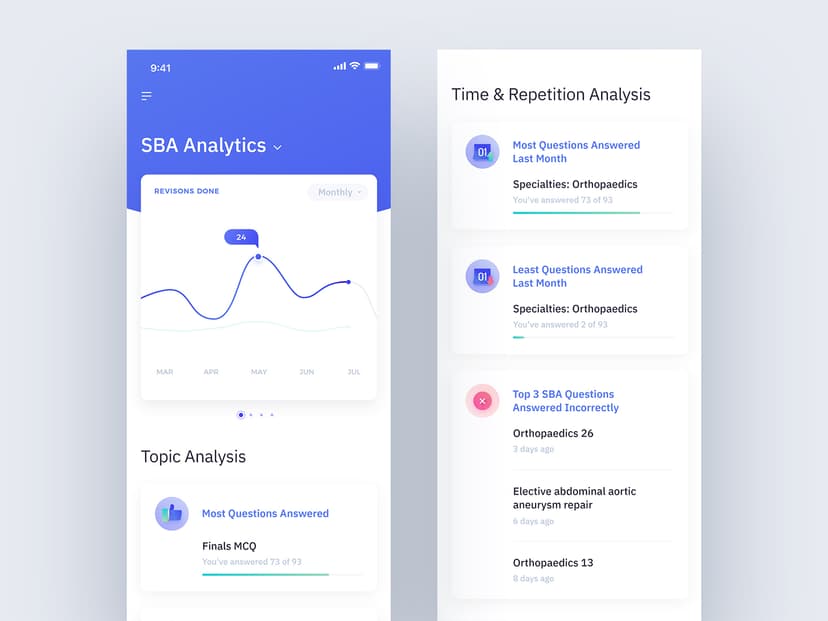
Shiken is a partially effective study tool that successfully uses quizzing to build memory, but its heavy reliance on artificial intelligence means parents and teachers must verify the content. Your child will interact primarily with gamified quizzes designed to test their knowledge across subjects like science and math. The app employs retrieval practice, a proven learning science strategy where forcing the brain to recall information strengthens long-term retention. Unlike traditional flashcard apps, Shiken attempts to blend academic rigor with emotional regulation by inserting mindfulness activities into study sessions. This approach aims to reduce the cognitive anxiety often associated with testing. However, the core of Shiken's content generation relies on AI tools that automatically create assessments. While this allows for an endless supply of practice questions, AI is prone to hallucination. You must monitor the questions your child is answering to ensure they are factually correct and pedagogically sound. The Learning Standard has not yet formally evaluated this app, so its long-term impact on grade-level mastery remains unverified. It serves best as a supplemental review tool rather than primary instruction.
How Does Shiken Work?
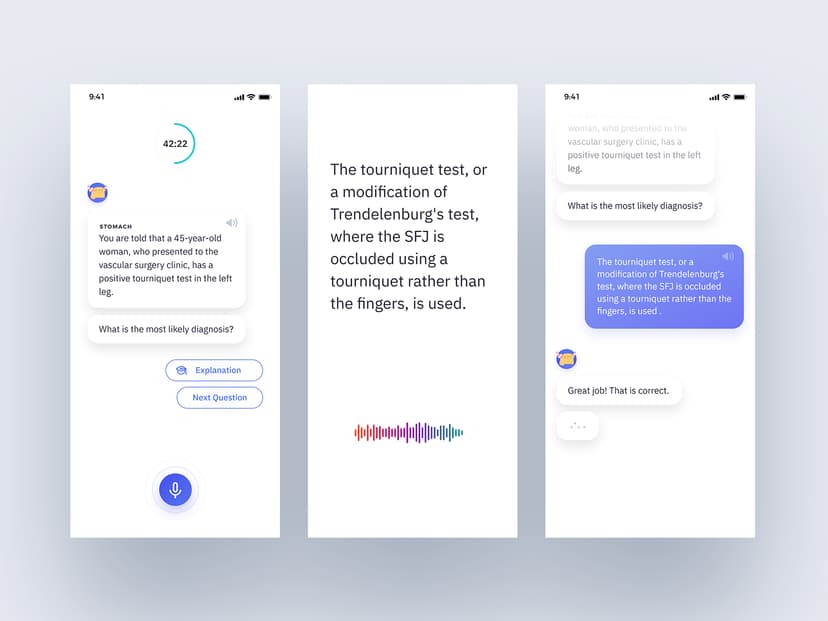
Shiken uses a gamified, adaptive testing approach combined with AI-driven content generation to facilitate active recall. When your child logs in, they select a subject or course and enter a series of live quiz games. These quizzes act as retrieval practice, forcing the learner to actively pull information from memory rather than passively reading a textbook. As the student answers questions, the adaptive algorithm adjusts the difficulty in real-time. If they answer correctly, the system introduces more complex problems; if they struggle, it provides easier foundational questions to build competence. Between these high-intensity testing bursts, the platform prompts users with mindfulness exercises, such as deep breathing or short meditations, intended to reset cognitive load and reduce test anxiety. For educators, the mechanics occur behind the scenes: teachers input topics or source material, and the generative AI instantly produces multiple-choice questions, flashcards, and assessments to push out to the student dashboard.
Strengths and tradeoffs of Shiken
Shiken's biggest strength is its systematic use of retrieval practice, while its biggest weakness is the inherent unreliability of AI-generated study materials. By forcing students to continuously recall information through quizzes, the app effectively leverages active retrieval, which learning science dictates is far superior to passive review for long-term retention. The inclusion of adaptive sequencing ensures that students are not bored by material that is too easy or frustrated by material that is too hard. Furthermore, the platform's focus on cognitive load management through mindfulness is a strong addition. High stress impairs the brain's ability to encode information, so structured breathing exercises can practically improve focus during study sessions. However, the reliance on generative AI introduces significant pedagogical risks. Automated assessments often fail to generate high-quality distractors (the incorrect answers in a multiple-choice question), which are crucial for testing true mastery rather than simple process of elimination. Additionally, AI tools struggle to create robust worked examples for complex math or science problems. If a student gets a question wrong, the automated feedback may lack the nuanced, step-by-step scaffolding required to correct their specific misconception.
Who Might Benefit From Shiken?
Shiken is best for middle and high school students who need interactive, high-volume practice testing to prepare for exams. Because the platform relies heavily on text-based quizzes and abstract concepts across STEM subjects, it is less suited for early elementary learners who need concrete, hands-on instruction. It functions optimally in a blended learning environment where a teacher or parent acts as a content curator, using the AI tools to generate customized quizzes that align directly with classroom curriculum. It is ideal for students who struggle with test anxiety and benefit from built-in mindfulness breaks.
Data Transparency
Does Not Meet Data Transparency Standard
Shiken does not meet our data transparency standard. Its privacy policy does not document basic protections, including a statement that it does not sell data, a commitment against targeted advertising and limits on sharing children's data.
10 of 35 checks passed
Evaluated September 2026
Privacy Policy →Level 1 · Basic protections
Does not sell data or target ads at students, limits sharing, and lets parents see and delete their child's data.
Not documented: a statement that it does not sell data, a commitment against targeted advertising, limits on sharing children's data, a COPPA or FERPA commitment, parents' right to see their child's data, parents' right to delete their child's data
Level 2 · Parent control (meets the standard)
Families can get their data out, know who processes it, and know how long it is kept.
Not documented: self-service deletion
Level 3 · Direct data access
Families or schools can pull their own data through an API, in a stated format.
Not documented: an API for retrieving their own data, a named export format
View all 35 checks
Parent Access0/8
Does the policy mention parents specifically?
The policy does not mention parents anywhere.
Can parents view their child's data?
The policy does not give parents any right to view their child's data.
Can parents modify their child's data?
The policy does not give parents any right to change their child's data.
Can parents delete their child's account?
The policy does not give parents any right to delete their child's data or account.
Is there a dedicated Children's Privacy section?
The policy has no Children's Privacy section; its only mention of children is one sentence under 'Purpose of this privacy policy'.
Does it reference COPPA compliance?
The policy does not mention COPPA.
Does it reference FERPA compliance?
The policy does not mention FERPA.
Is parental consent required for child accounts?
The policy says the website is not intended for children and does not mention parental consent.
Data Portability2/5
Can users access their personal data?
“This enables you to receive a copy of the personal data we hold about you and to check that we are lawfully processing it.”
Can users download/export their data?
“We will provide to you, or a third party you have chosen, your personal data in a structured, commonly used, machine-readable format.”
Is there a self-service data access tool?
The policy says access rights are exercised by contacting the company and does not describe a self-service access tool.
Is a specific data format mentioned for export?
The policy says only 'structured, commonly used, machine-readable format' and names no specific format.
Is there an API for data access?
The policy mentions Google API integrations but no API that lets users retrieve their own data.
Data Minimization1/6
Is data collection itemized?
“**Technical Data** includes internet protocol (IP) address, your login data, browser type and version, time zone setting and location, browser plug-in types and versions, operating system and platform, and other technology on the devices you use to access this website.”
Can the app be used without a real name?
The policy says Identity Data includes first and last name.
Can the app be used without an email?
The policy says Contact Data includes email address.
Does it state collection is limited to what is necessary?
The policy commits to minimising only Gmail data and makes no general statement that collection is limited to what is necessary.
Is IP address anonymized or truncated?
The policy says it collects IP addresses but does not say they are anonymized or truncated.
Is location tracking explicitly excluded?
The policy says Technical Data includes location.
Third-Party Protection4/7
Does it explicitly state no selling of data?
The policy only says it never sells Google user data and makes no general no-sale statement.
Are third-party providers named?
“Service providers acting as processors such as AWS and Hubspot based in multiple countries who provide IT customer relationship management and system administration services.”
Are providers contractually restricted?
“We do not allow our third-party service providers to use your personal data for their own purposes and only permit them to process your personal data for specified purposes and in accordance with our instructions.”
No-targeted-advertising commitment?
The policy commits to no advertising use only for Google user data and says it uses targeting cookies.
Is AI/ML data sharing addressed?
“When you ask the chat assistant a question about your email, only the matching excerpts from _your own_ cache are passed to our AI model providers (OpenAI and Anthropic) under their zero-retention, no-training enterprise terms — never bulk dumps.”
Child-specific sharing restriction?
The policy has no restriction on sharing children's data.
Cookies/tracking limited or opt-out?
“You can set your browser to refuse all or some browser cookies, or to alert you when websites set or access cookies.”
Deletion & Retention3/5
Can users delete their account?
“You may email info@shiken.ai and request for any personal data to be removed.”
Self-service deletion mechanism?
The policy says deletion is requested by email; its only self-service control is the Disconnect button for Google data, and it describes no account-deletion tool.
Specific data retention timeline?
“For training users, we will retain personal data for a period of three months following the termination of the”
Auto-deletion of inactive accounts?
The policy does not describe automatic deletion of inactive accounts.
Post-deletion handling described?
“When you click **Disconnect** in Settings, or delete your Shiken account, we revoke the OAuth grant with Google, instruct Recall.ai to delete any calendar resource, and hard-delete every cached email and connection record in the same request”
Advertising0/4
Advertising model explicitly disclosed?
The policy does not describe any advertising model or state that the product has no ads.
Free from third-party advertisements?
The policy does not state that the product is free of third-party ads.
Children excluded from ad targeting?
The policy does not exclude children from ad targeting.
Ad-free option available?
The policy does not mention an ad-free option or state that the product has no ads.
What This Means
The policy review did not meet our data transparency standard. The checks above show the documented findings and unknowns. A missing statement does not establish how the app handles data in practice.
About this evaluation: Based on automated analysis of Privacy Policy against 35 policy-disclosure questions, including questions adapted from the Common Sense Privacy Program's published evaluation questions. TLS is not affiliated with Common Sense Media, and this is not a Common Sense rating. Quoted text is copied from the policy; unquoted notes are our summary. Results describe what the policy documents, not the company's actual practices. Privacy policies can change: this review reflects the version we analyzed and does not determine legal compliance.
Sources and review method
TLS combines product information and editorial analysis to explain how Shiken works, its tradeoffs, and the questions to ask before choosing it. Product features, an instructional rationale and evidence of learning outcomes are different kinds of information.
Formal Learning Standard assessment: not yet completed. Data Transparency findings are reported separately and do not establish learning effectiveness. Read our methodology.
Frequently Asked Questions About Shiken
Is Shiken free?
Shiken operates on a freemium model. Basic access to the platform and certain quizzes is free, allowing students to test the interface. However, full access to premium courses, advanced AI generation tools for teachers, and detailed analytics requires a paid annual subscription. Parents should test the free version first to see if the gamified format suits their child's learning style.
Is Shiken good for middle schoolers?
Yes, Shiken is highly appropriate for middle school and high school students. The interface and quiz mechanics require strong independent reading skills and the ability to self-regulate during fast-paced games. Younger elementary students will likely find the text-heavy questions and complex STEM topics overwhelming without constant adult guidance.
What does Shiken teach?
Shiken covers a broad range of subjects including Science, Math, Applied Science, and Career & Technical Education. Instead of providing primary instruction like a textbook, it tests knowledge through quizzes. The platform relies on teachers or the internal AI to generate specific topics, meaning it can technically assess almost any academic subject inputted into the system.
Shiken vs. Quizlet: Which is better?
Quizlet is currently more reliable for established, user-vetted study sets, while Shiken offers a more modern, AI-driven experience with built-in emotional regulation. Quizlet uses a traditional flashcard and spaced repetition model that is highly predictable. Shiken attempts to do the work for you using AI to generate the assessments, while actively trying to lower test anxiety through mindfulness exercises.
Has The Learning Standard evaluated Shiken?
TLS has not yet completed a Learning Standard evaluation of how well Shiken teaches. Its privacy policy has been reviewed for Data Transparency and does not yet document the basic protections (Level 1).
Is Shiken COPPA compliant?
A COPPA reference was not found in the reviewed privacy policy. This does not determine whether the app complies with COPPA. Policy review note: The policy does not mention COPPA.
Is Shiken FERPA compliant?
A FERPA reference was not found in the reviewed privacy policy. This does not determine whether the app complies with FERPA. Policy review note: The policy does not mention FERPA.
Does Shiken have a children's privacy policy?
No dedicated children's privacy section was found in the reviewed policy. Policy review note: The policy has no Children's Privacy section; its only mention of children is one sentence under 'Purpose of this privacy policy'.
Does Shiken sell student data?
A statement ruling out data selling was not found in the reviewed policy. This does not establish that the app sells student data. Policy review note: The policy only says it never sells Google user data and makes no general no-sale statement.
Can you delete your data from Shiken?
The reviewed privacy policy describes account deletion. We have not tested the deletion process. Policy review note: Users can ask for all their personal data to be removed.
Follow TLS Research
Subscribe to future TLS research updates: app reviews, findings, and what the evidence shows.
Screenshots
Take Action
For Shiken
If you represent Shiken and have a correction or new evidence, send the relevant source so we can review and update this page.
Submit a correctionDetails
- Pricing
- Freemium and annual paid plans
- Platforms
- Web Browser, iOS (Apple mobile), iPadOS (Apple tablet), macOS (Apple)
- Website
- Visit site