
School Day
Product by School Day
Facts checked: Not yet checked
Our take (not a Learning Standard rating). This label applies to learning-science judgments throughout this overview.
Our take (not a Learning Standard rating)
School Day does not directly teach academic subjects, but it effectively promotes self-reflection and emotional awareness. By prompting daily check-ins, it builds metacognitive habits while providing educators with actionable data to improve classroom climate, a factor learning science strongly links to cognitive readiness and better academic outcomes.
Pros
- Builds metacognitive skills by prompting daily self-reflection on emotional and physical states.
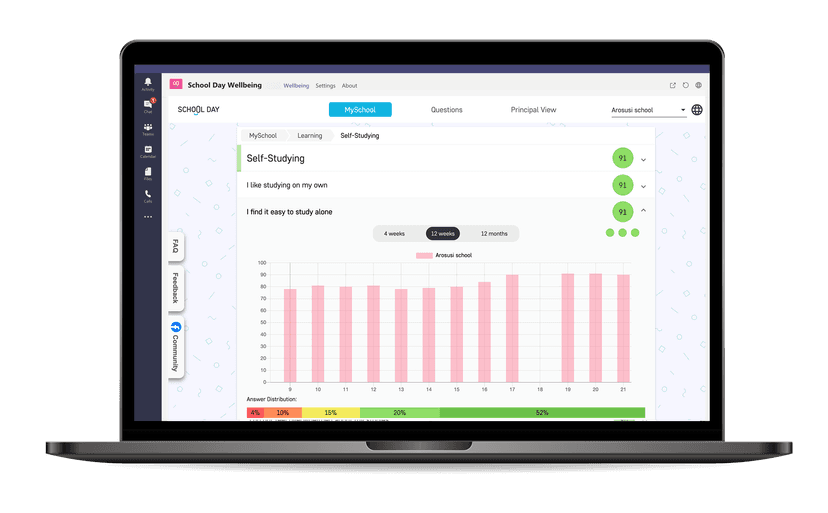
- Provides educators with actionable, real-time data to identify and address classroom climate issues.
- Supports cognitive readiness by helping teachers optimize the learning environment based on student needs.
Cons
- Offers no direct academic instruction or practice in its listed subject areas.
- Relies entirely on self-reported survey data, which is susceptible to student bias and survey fatigue.
- Requires consistent teacher intervention to translate wellbeing insights into actual learning improvements.
What Do We Know About School Day?
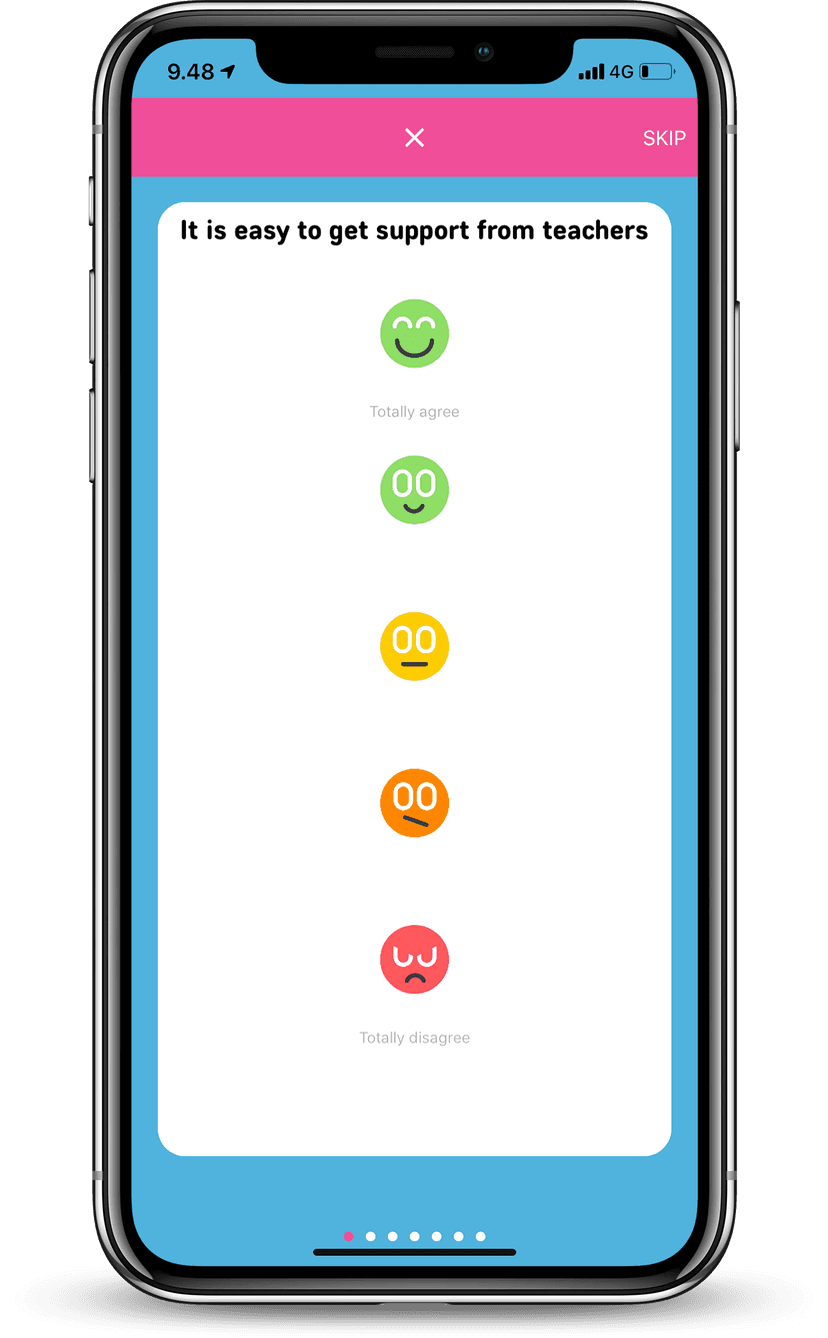
School Day is not an instructional app that teaches academic content, but rather a diagnostic tool for measuring and improving the social-emotional readiness of your child. It relies on the scientifically backed premise that cognitive function and knowledge retention require a stable emotional foundation. Instead of drilling math or science facts, the app prompts your child to answer quick questions about their mood, sleep, and social interactions. This daily self-reflection builds emotional intelligence and metacognitive awareness. For educators, the app aggregates this data to reveal trends in classroom wellbeing. While your child will not learn specific applied science concepts directly from the app, the data empowers teachers to adjust their pedagogical approaches, pacing, and classroom management. Parents should understand that the app's effectiveness depends entirely on the school's willingness to act on the data. If teachers use the insights to foster cooperative learning and adjust instruction, your child's capacity to learn will improve. Note that The Learning Standard has not yet evaluated this app's specific efficacy in the classroom.
How Does School Day Work?
School Day utilizes a self-reporting assessment model to track and analyze student wellbeing indicators across multiple domains. Students log into the platform and complete short, recurring surveys about their emotional state, peer relationships, and physical readiness to learn. These check-ins act as a form of routine self-reflection, forcing students to pause and evaluate their internal state before engaging in academic work. The platform then processes these inputs into anonymized, aggregate dashboards for teachers and administrators. The mechanics do not include spaced repetition or worked examples; instead, the system focuses entirely on data collection and visualization. It highlights areas where a classroom is thriving and flags areas requiring intervention, such as high stress or poor sleep. Educators then receive targeted, research-backed suggestions on how to improve the classroom climate. The app functions as a diagnostic tool rather than a teaching engine, bridging the gap between student emotional states and teacher instructional strategies.
Strengths and tradeoffs of School Day
School Day's biggest strength is its ability to quantify the often invisible metrics of student wellbeing, while its biggest weakness is its complete reliance on student self-reporting, which inevitably leads to survey fatigue. Strengths: The platform excels at building metacognitive awareness. By requiring students to regularly assess their own states of mind, it practices a form of emotional retrieval, helping them identify blockers to their own learning. Furthermore, it grounds its feedback to teachers in actionable pedagogy. When educators understand that cognitive load is being impacted by external stressors, they can adjust their blended or cooperative learning strategies accordingly. Weaknesses: Because the tool functions as a survey mechanism rather than an instructional engine, it lacks mechanisms for direct skill acquisition like worked examples or spaced practice. It also assumes that students will consistently provide accurate, honest reflections. Over time, students frequently click through questions thoughtlessly, rendering the data inaccurate. Additionally, the app itself cannot fix the problems it identifies. If teachers do not actively implement the provided solutions, the act of answering the questions provides zero educational benefit to the student.
Who Might Benefit From School Day?
Best for classroom teachers and school administrators who want data-driven insights to improve school climate and student readiness to learn. While students from 3rd to 12th grade use the app daily, the true beneficiaries are the educators who use the resulting analytics to shape their instructional environments. It is ideal for districts implementing social-emotional learning initiatives or inquiry-based learning models where student agency and emotional intelligence are prioritized. Parents will not use this app at home; it is strictly a school-based tool designed to optimize the collective learning environment rather than individual academic tutoring.
Sources and review method
TLS combines product information and editorial analysis to explain how School Day works, its tradeoffs, and the questions to ask before choosing it. Product features, an instructional rationale and evidence of learning outcomes are different kinds of information.
Formal Learning Standard assessment: not yet completed. Data Transparency findings are reported separately and do not establish learning effectiveness. Read our methodology.
Frequently Asked Questions About School Day
Is School Day free?
Yes, School Day is free for individual teachers. However, broader implementations that include school-wide or district-wide analytics and administrative features require paid subscriptions.
Is School Day good for elementary students?
Yes, School Day is appropriate for students starting in 3rd grade. The questions are simple enough for younger learners to navigate, though 3rd and 4th graders require initial guidance from teachers on how to accurately reflect on and report their emotional states.
What does School Day teach?
School Day does not teach traditional academic subjects. Instead, it promotes social-emotional learning and metacognition by prompting students to reflect on their wellbeing, peer relationships, and physical readiness, while providing teachers with data to improve the learning environment.
Has The Learning Standard evaluated School Day?
TLS has not yet completed a Learning Standard evaluation of how well School Day teaches. TLS has not published a Data Transparency result for its privacy policy.
Follow TLS Research
Subscribe to future TLS research updates: app reviews, findings, and what the evidence shows.
Screenshots

Take Action
For School Day
If you represent School Day and have a correction or new evidence, send the relevant source so we can review and update this page.
Submit a correctionDetails
- Pricing
- Free for teachers. Plans and pricing for schools and districts: https://www.schoolday.com/en/pricing
- Platforms
- Web Browser, iOS (Apple mobile), iPadOS (Apple tablet), Android (Google mobile), Windows (Microsoft), macOS (Apple), Other
- Grade Levels
- 3rd Grade, 4th Grade, 5th Grade, 6th Grade, 7th Grade, 8th Grade, 9th Grade, 10th Grade, 11th Grade, 12th Grade
- Website
- Visit site