
Rubin Aspire
Product by Rubin
Facts checked: Not yet checked
Our take (not a Learning Standard rating). This label applies to learning-science judgments throughout this overview.
Our take (not a Learning Standard rating)
While Rubin Aspire provides a robust video library for career exploration, its direct teaching efficacy remains pending evaluation. It succeeds in offering diverse, real-world expert modeling through observational learning. However, its reliance on passive video consumption requires active facilitation by educators to ensure deep cognitive engagement and actual knowledge retention for students.
Pros
- Utilizes expert modeling through video profiles to facilitate observational learning in various career fields.
- Includes embedded discussion questions and assessments that can prompt active retrieval practice when facilitated by a teacher.
- Integrates directly with established Learning Management Systems to reduce cognitive load during navigation.
- Provides multimodal learning supports like text-to-speech and sign language to accommodate diverse learner needs.
Cons
- Heavy reliance on video content risks passive consumption if educators do not actively enforce inquiry-based activities.
- Does not currently demonstrate adaptive learning mechanics to adjust difficulty based on student interaction.
- High institutional price point per school site makes it completely inaccessible for individual parent or home use.
- Lacks immediate, personalized feedback on student assessments to correct misconceptions in real time.
What Do We Know About Rubin Aspire?
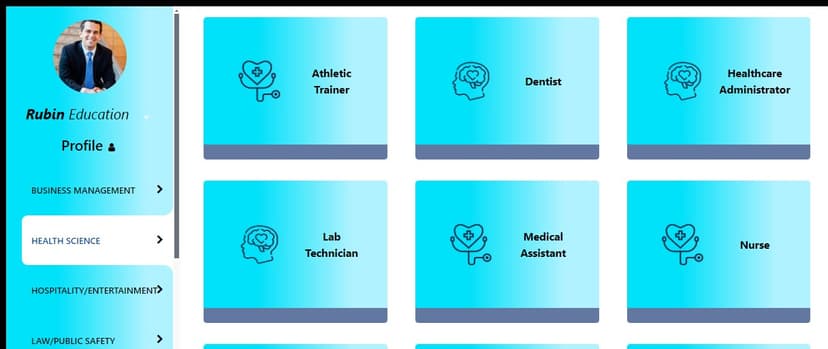
Rubin Aspire is partially effective for learning because it relies heavily on observational learning through video, which requires strong educator facilitation to translate into active skill acquisition. Your child will not learn complex vocational skills simply by watching these videos; rather, they will gain broad career awareness and context. The platform acts as a digital library of over 350 career profiles, exposing students to experts in fields like STEM, healthcare, and marketing. To move beyond passive viewing, the program includes discussion questions, activities, and assessments designed to be integrated into platforms like Nearpod or Canvas. This means the actual learning efficacy depends entirely on how your child's teacher implements these tools. If educators use the discussion prompts to encourage elaboration and retrieval practice, your child will better retain the career information. Additionally, the inclusion of Bureau of Labor Statistics data helps ground abstract career aspirations in concrete reality, promoting basic data literacy. Parents should note that this is an institutional tool, not a consumer app. Your child will only encounter Rubin Aspire if their school purchases a site license.
How Does Rubin Aspire Work?
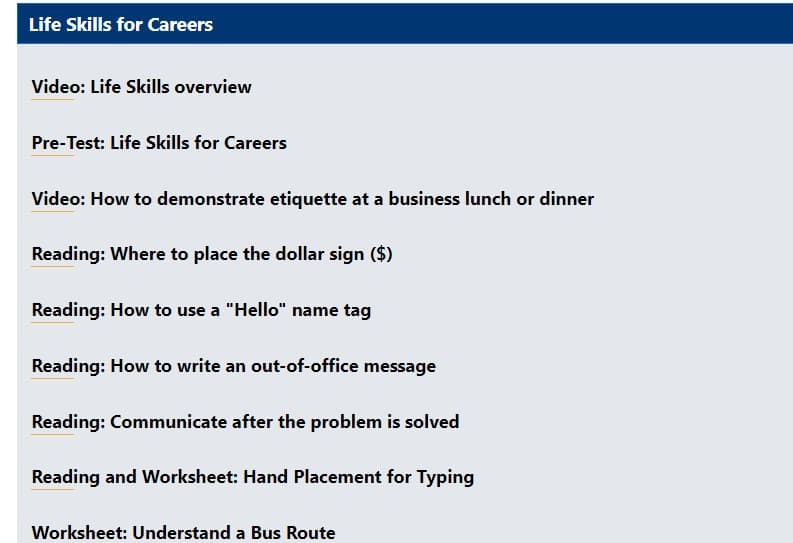
Rubin Aspire uses inquiry-based and blended learning by combining asynchronous video instruction with structured reflection activities. The core of the platform is a library of over 350 short videos featuring professionals explaining their careers. Students watch these expert profiles to build foundational awareness of different industries through observational learning. Following the video observation, students engage with embedded activities, discussion questions, and interest inventories. These elements are designed to prompt self-reflection and connect academic concepts to real-world applications. Teachers can deploy these assessments through standard learning management systems like Google Classroom or Schoology. The platform also integrates real-world data from the Bureau of Labor Statistics, requiring students to analyze job outlooks and salary expectations. By pairing expert modeling with active sense-making, the platform attempts to move students from passive viewing to active career planning. However, the system relies entirely on external teacher feedback rather than built-in, automated corrective responses.
Strengths and tradeoffs of Rubin Aspire
Rubin Aspire's biggest strength is its extensive use of expert modeling across diverse industries, while its biggest weakness is its reliance on passive media consumption without built-in adaptive feedback. Strengths in Observational Learning: The platform excels at providing students with a clear, authentic look into various professions. By showcasing real experts, it leverages observational learning, allowing students to mentally map the skills and attitudes required for specific careers. The inclusion of multimodal supports reduces cognitive barriers for students with processing difficulties. Furthermore, providing discussion questions helps educators facilitate elaboration, a learning science principle where students explain concepts in their own words to deepen understanding. Weaknesses in Active Engagement: The primary vulnerability of a video-heavy platform is the illusion of competence; students may feel they understand a career path simply by watching a video, without engaging in the retrieval practice necessary to encode that information. While Rubin Aspire provides assessments, it lacks the interactive, adaptive scaffolding found in more advanced educational technology. If a student struggles to comprehend the labor data, the platform does not automatically adjust the learning path.
Who Might Benefit From Rubin Aspire?
Rubin Aspire is best for middle and high school educators who need a comprehensive video library to anchor their career and technical education instruction. Targeting students in grades 5 through 12, the platform is ideal for blended learning environments where teachers can actively facilitate the accompanying discussions and assessments. It is highly effective for schools looking to integrate career exploration into existing learning management systems like Canvas or Schoology. However, it is not suitable for individual home use, as its pricing and structure require institutional implementation to maximize the value of its collaborative and inquiry-based activities.
Data Transparency
Does Not Meet Data Transparency Standard
Rubin Aspire reaches Level 1 of 3 (Basic protections), below our data transparency standard. Reaching Level 2 needs the policy to document a data retention timeline and self-service deletion.
16 of 35 checks passed
Evaluated September 2026
Privacy Policy →Level 1 · Basic protections
Does not sell data or target ads at students, limits sharing, and lets parents see and delete their child's data.
Level 2 · Parent control (meets the standard)
Families can get their data out, know who processes it, and know how long it is kept.
Not documented: a data retention timeline, self-service deletion
Level 3 · Direct data access
Families or schools can pull their own data through an API, in a stated format.
Not documented: an API for retrieving their own data, a named export format
View all 35 checks
Parent Access5/8
Does the policy mention parents specifically?
“Parents/guardians can request copies of their child’s data”
Can parents view their child's data?
“Parents/guardians can request copies of their child’s data”
Can parents modify their child's data?
The policy lets schools request updates to student records, but it gives parents only the right to request copies.
Can parents delete their child's account?
The policy lets schools request deletion of student records but gives parents no deletion right.
Is there a dedicated Children's Privacy section?
“**Children’s Privacy** We are committed to protecting children’s privacy and comply with:”
Does it reference COPPA compliance?
“**COPPA (Children’s Online Privacy Protection Act)**: For users under 13”
Does it reference FERPA compliance?
“**FERPA (Family Educational Rights and Privacy Act)**: For educational records”
Is parental consent required for child accounts?
The policy says only that it 'strives' to get consent from schools, districts, parents or guardians where the law requires it, and it relies on school authorization, so parental consent is not required.
Data Portability2/5
Can users access their personal data?
“Eligible students (18+ or as defined by local law) can request access to their own records”
Can users download/export their data?
“Upon reasonable request, we can provide data in standard formats for transfer to other educational platforms.”
Is there a self-service data access tool?
The policy describes only access by request, not a self-service tool.
Is a specific data format mentioned for export?
The policy mentions only 'standard formats' and names no specific format.
Is there an API for data access?
The policy does not describe an API for users or schools to retrieve their data.
Data Minimization1/6
Is data collection itemized?
“1. First name and last name 2. Email address (for account creation and login) 3. Usage data: login times, page views, time spent on activities, assignment submissions, and grades received”
Can the app be used without a real name?
The policy says it collects students' first and last names.
Can the app be used without an email?
The policy says it collects students' email addresses.
Does it state collection is limited to what is necessary?
The policy limits how data is used and how long it is kept, but it does not say collection is limited to what is necessary.
Is IP address anonymized or truncated?
The policy says it collects IP addresses and does not say they are anonymized or truncated.
Is location tracking explicitly excluded?
The policy says it automatically collects location data.
Third-Party Protection6/7
Does it explicitly state no selling of data?
“We do not sell, rent, trade, or otherwise monetize student or educator personal information.”
Are third-party providers named?
“Single Sign-On providers (Google, Microsoft)”
Are providers contractually restricted?
“With vetted third-party service providers who assist in delivering our Services, bound by strict confidentiality agreements”
No-targeted-advertising commitment?
“We do NOT use student data for: 1. Commercial advertising or marketing”
Is AI/ML data sharing addressed?
The policy describes how it uses AI tools but does not say whether data is shared with AI providers or used to train models.
Child-specific sharing restriction?
“We do not knowingly sell or share personal information of children for cross-context behavioral advertising or other prohibited commercial purposes.”
Cookies/tracking limited or opt-out?
“**Cookie Management:** You can control cookies through your browser settings, though disabling cookies may limit platform functionality.”
Deletion & Retention1/5
Can users delete their account?
“Schools can request access to, update, or delete student records at any time”
Self-service deletion mechanism?
The policy describes deletion only by request, with no self-service option.
Specific data retention timeline?
The policy says data is kept as long as reasonably necessary and gives no specific timeline.
Auto-deletion of inactive accounts?
The policy does not address automatic deletion of inactive accounts.
Post-deletion handling described?
The policy does not describe what happens to data after deletion.
Advertising1/4
Advertising model explicitly disclosed?
The policy says student data is not used for advertising but does not state whether the product shows ads.
Free from third-party advertisements?
The policy does not state that the product is free of third-party ads.
Children excluded from ad targeting?
“We do not knowingly sell or share personal information of children for cross-context behavioral advertising or other prohibited commercial purposes.”
Ad-free option available?
The policy does not state that the product has no ads or offer an ad-free option.
What This Means
The policy review did not meet our data transparency standard. The checks above show the documented findings and unknowns. A missing statement does not establish how the app handles data in practice.
About this evaluation: Based on automated analysis of Privacy Policy against 35 policy-disclosure questions, including questions adapted from the Common Sense Privacy Program's published evaluation questions. TLS is not affiliated with Common Sense Media, and this is not a Common Sense rating. Quoted text is copied from the policy; unquoted notes are our summary. Results describe what the policy documents, not the company's actual practices. Privacy policies can change: this review reflects the version we analyzed and does not determine legal compliance.
Sources and review method
TLS combines product information and editorial analysis to explain how Rubin Aspire works, its tradeoffs, and the questions to ask before choosing it. Product features, an instructional rationale and evidence of learning outcomes are different kinds of information.
Formal Learning Standard assessment: not yet completed. Data Transparency findings are reported separately and do not establish learning effectiveness. Read our methodology.
Frequently Asked Questions About Rubin Aspire
Is Rubin Aspire free?
No, Rubin Aspire is not free. It costs $750.00 per school site. The developer also offers site and district-wide licenses to accommodate larger institutional budgets, making it an enterprise purchase rather than a direct-to-consumer application.
Is Rubin Aspire good for middle schoolers?
Yes, Rubin Aspire is appropriate for middle schoolers. The content is designed for students in grades 5 through 12. For middle school students, it serves as an introductory tool for career exploration, using short video profiles to build early awareness of various professional pathways.
What does Rubin Aspire teach?
Rubin Aspire teaches career exploration and readiness. It covers subjects across Humanities, Applied Sciences, and Career & Technical Education. Students learn about specific industries, such as STEM and healthcare, while developing data literacy by analyzing Bureau of Labor Statistics employment data.
How does Rubin Aspire compare to YouTube for career exploration?
Rubin Aspire is significantly more structured than YouTube for career exploration. While both offer videos, Rubin Aspire provides a curated, distraction-free library devoid of algorithms and advertisements. It also pairs videos with aligned assessments, discussion questions, and labor statistics designed specifically for inquiry-based learning.
Has The Learning Standard evaluated Rubin Aspire?
TLS has not yet completed a Learning Standard evaluation of how well Rubin Aspire teaches. Its privacy policy has been reviewed for Data Transparency and reaches Level 1, Basic protections.
Is Rubin Aspire COPPA compliant?
The reviewed privacy policy references COPPA. A policy reference alone does not establish COPPA compliance. Policy review note: The policy says it complies with COPPA.
Is Rubin Aspire FERPA compliant?
The reviewed privacy policy references FERPA. A policy reference alone does not establish FERPA compliance. Policy review note: The policy says it complies with FERPA.
Does Rubin Aspire have a children's privacy policy?
The reviewed policy includes a dedicated children's privacy section. Policy review note: The policy has a section headed Children's Privacy.
Does Rubin Aspire sell student data?
The reviewed policy states that the app does not sell data. This is a policy statement; actual data practices were not verified. Policy review note: The policy states the company does not sell personal information.
Can you delete your data from Rubin Aspire?
The reviewed privacy policy describes account deletion. We have not tested the deletion process. Policy review note: Deletion is available by request through the school.
Follow TLS Research
Subscribe to future TLS research updates: app reviews, findings, and what the evidence shows.
Screenshots

Take Action
For Rubin Aspire
If you represent Rubin and have a correction or new evidence, send the relevant source so we can review and update this page.
Submit a correctionDetails
- Pricing
- Aspire is $750.00 per school site. We also offer site and district-wide licenses and work hard to accommodate school budgets.
- Platforms
- Web Browser, iOS (Apple mobile), iPadOS (Apple tablet), Android (Google mobile), Tizen (Samsung mobile), Windows (Microsoft), macOS (Apple), Chrome OS (Google)
- Grade Levels
- 5th Grade, 6th Grade, 7th Grade, 8th Grade, 9th Grade, 10th Grade, 11th Grade, 12th Grade
- Website
- Visit site