Qubits
Product by Qubits Learning LLC
Facts checked: Not yet checked
Our take (not a Learning Standard rating). This label applies to learning-science judgments throughout this overview.
Our take (not a Learning Standard rating)
While Qubits offers a promising project-based approach to K-12 computer science, The Learning Standard has not yet evaluated its effectiveness. Its reliance on mastery-based progression and team-based problem solving aligns with established learning science principles, but real-world execution and long-term knowledge retention require further independent analysis.
Pros
- Utilizes project-based learning to connect abstract computer science concepts to real-world applications.
- Supports mastery-based progression to ensure students understand foundational coding skills before advancing.
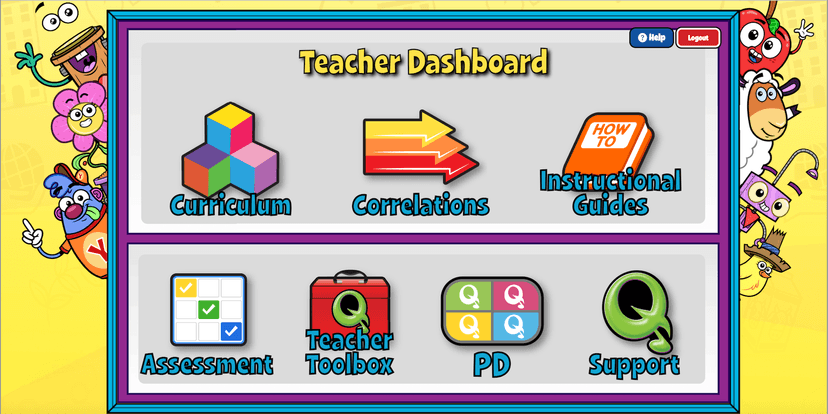
- Provides an integrated learning management system for educators to track specific student competencies.
- Offers modular curriculum design allowing teachers to tailor lessons to individual student pacing.
Cons
- Lacks independent evaluation data verifying the efficacy of its AI-driven curriculum.
- Heavy reliance on project-based learning may overwhelm novice learners without sufficient direct instruction.
- Pricing transparency is limited since schools must contact the vendor directly for quotes.
- Team-based learning modules make it difficult to assess individual student mastery accurately.
What Do We Know About Qubits?
Qubits has not yet been evaluated by The Learning Standard, so its exact effectiveness for teaching your child computer science remains unverified. The platform treats computer science as a core K-12 subject, stepping away from isolated coding games in favor of a comprehensive, project-based curriculum. For parents, this means your child will engage with coding through real-world scenarios rather than rote memorization. The program emphasizes mastery-based learning, a pedagogical strategy where students must demonstrate proficiency in one skill before moving to the next. This prevents learning gaps, especially in cumulative subjects like computer science. However, because the curriculum relies heavily on team-based problem solving and project execution, it requires significant oversight from educators to ensure individual accountability. While the inclusion of both digital and print materials provides multiple modalities for learning, the lack of independent efficacy data means parents and educators should monitor progress closely. Until a formal evaluation is complete, consider Qubits a structured educational tool that requires active facilitation rather than a standalone, self-paced solution for your child.
How Does Qubits Work?
Qubits uses a mastery-based, project-driven progression model combined with personalized learning pathways. The curriculum introduces computer science concepts through structured, step-by-step guidance before releasing students to apply these skills in larger, real-world projects. This gradual release of responsibility helps mitigate cognitive overload for novice coders. Students interact with an integrated coding platform and visualizers that provide immediate feedback on their code, a crucial element for correcting misconceptions in real-time. Educators manage the experience through a central learning management system that tracks individual competency and progress. Because the curriculum is modular, teachers can assign specific units based on where a student struggles or excels. The platform also blends team-based tasks with independent problem-solving challenges, requiring students to practice retrieving foundational knowledge to solve complex programming issues.
Strengths and tradeoffs of Qubits
The biggest strength of Qubits is its modular, project-based application of coding skills, while its biggest weakness is the lack of verified data on individual knowledge retention during team-based tasks. Project-based learning is highly effective for building executive function and contextualizing abstract computer science concepts. By requiring students to build tangible projects, Qubits forces learners to apply knowledge rather than simply recognize correct code syntax. Furthermore, the platform's mastery-based progression ensures that students do not advance to complex algorithms before understanding basic loops and variables. This approach heavily relies on scaffolded instruction, offering step-by-step guidance that slowly decreases as the student gains competence. Conversely, the emphasis on team-based problem solving can obscure individual learning gaps, a common pitfall where one student does the cognitive heavy lifting while others become passive participants. Additionally, without independent evaluation, it is unclear if Qubits incorporates sufficient spaced retrieval practice, the deliberate revisiting of older material, which is essential for long-term retention of programming languages.
Who Might Benefit From Qubits?
Best for K-12 classrooms and tech educators who want a highly structured, project-based computer science curriculum rather than a standalone coding game. Because it requires a learning management system and utilizes team-based learning, Qubits is primarily designed for institutional use rather than independent at-home learning. It serves students of all ages by scaling the complexity of its modular projects. The platform is ideal for schools treating computer science as a core subject and for educators who need comprehensive tracking tools to measure student mastery over the course of a full academic year.
Data Transparency
Does Not Meet Data Transparency Standard
Qubits reaches Level 1 of 3 (Basic protections), below our data transparency standard. Reaching Level 2 needs the policy to document data export and self-service deletion.
21 of 35 checks passed
Evaluated September 2026
Qubits →Level 1 · Basic protections
Does not sell data or target ads at students, limits sharing, and lets parents see and delete their child's data.
Level 2 · Parent control (meets the standard)
Families can get their data out, know who processes it, and know how long it is kept.
Not documented: data export, self-service deletion
Level 3 · Direct data access
Families or schools can pull their own data through an API, in a stated format.
Not documented: an API for retrieving their own data, a named export format
View all 35 checks
Parent Access8/8
Does the policy mention parents specifically?
“A way to review, modify, or delete their child’s information upon request.”
Can parents view their child's data?
“A way to review, modify, or delete their child’s information upon request.”
Can parents modify their child's data?
“A way to review, modify, or delete their child’s information upon request.”
Can parents delete their child's account?
“A way to review, modify, or delete their child’s information upon request.”
Is there a dedicated Children's Privacy section?
“Below is important information regarding the Children’s Online Privacy Protection Act (“COPPA”) and how it applies to our services.”
Does it reference COPPA compliance?
“COPPA requires online service providers to obtain verifiable parental consent before knowingly collecting personally identifiable information (PII) from children under the age of 13.”
Does it reference FERPA compliance?
“At Qubits Learning LLC, we rely on our school partners to help ensure that we fulfill our obligations under FERPA.”
Is parental consent required for child accounts?
“However, no child under 13 is permitted to submit Personal Information directly unless they are signed up through their school, district, or teacher, and the required parental consent has been obtained.”
Data Portability2/5
Can users access their personal data?
“Access and Correction: You can access and update your personal information through your account settings.”
Can users download/export their data?
The policy does not say users can download or export their data.
Is there a self-service data access tool?
“Access and Correction: You can access and update your personal information through your account settings.”
Is a specific data format mentioned for export?
The policy does not name any export format.
Is there an API for data access?
The policy only describes Google Classroom integration APIs, not an API for users to retrieve their own data.
Data Minimization1/6
Is data collection itemized?
“Account Information: When you create an account, we collect personal information such as your name, email address, and username. For students, a class code provided by your teacher is also collected.”
Can the app be used without a real name?
The policy says it collects users' names at account creation.
Can the app be used without an email?
The policy says it collects email addresses, including through Google rostering.
Does it state collection is limited to what is necessary?
The policy does not commit the vendor to collecting only necessary data; it only tells children not to share more than requested and says excess child data will be deleted.
Is IP address anonymized or truncated?
The policy says IP addresses are collected and does not say they are anonymized or truncated.
Is location tracking explicitly excluded?
The policy does not explicitly rule out location tracking.
Third-Party Protection6/7
Does it explicitly state no selling of data?
“We do not use your data for marketing purposes or sell your data to third parties.”
Are third-party providers named?
“Amazon Web Services (AWS): Cloud Infrastructure & Data Storage (USA).”
Are providers contractually restricted?
“These service providers are obligated to follow the same commitments regarding the collection, use, and protection of student PII as outlined in this Privacy Policy.”
No-targeted-advertising commitment?
“We do not use your data for marketing purposes or sell your data to third parties. All data usage is strictly for educational and platform improvement purposes.”
Is AI/ML data sharing addressed?
“We do not use any sensitive personal information (including the use of children's information) to train any AI Models (Inhouse / External).”
Child-specific sharing restriction?
“They are prohibited from using student PII for any purposes other than those authorized by Qubits Learning and must adhere to our strict data protection standards.”
Cookies/tracking limited or opt-out?
The policy says cookies are used but offers no way to limit or opt out of them; its opt-out covers only promotional communications.
Deletion & Retention3/5
Can users delete their account?
“Users may request deletion of their Personal Information at any time.”
Self-service deletion mechanism?
The policy only offers deletion by request, not a self-service tool.
Specific data retention timeline?
“Generally, Qubits Learning will delete a user's Personal Information 1 year after the user's last login to the Services.”
Auto-deletion of inactive accounts?
“Generally, Qubits Learning will delete a user's Personal Information 1 year after the user's last login to the Services.”
Post-deletion handling described?
The policy gives deletion timeframes and legal exceptions but does not describe what happens to data after deletion, such as in backups.
Advertising1/4
Advertising model explicitly disclosed?
The policy does not explicitly say whether the product has advertising.
Free from third-party advertisements?
The policy does not explicitly say the product is free of third-party ads.
Children excluded from ad targeting?
“We do not use your data for marketing purposes or sell your data to third parties. All data usage is strictly for educational and platform improvement purposes.”
Ad-free option available?
The policy does not explicitly say the product has no ads or offer an ad-free option.
What This Means
The policy review did not meet our data transparency standard. The checks above show the documented findings and unknowns. A missing statement does not establish how the app handles data in practice.
About this evaluation: Based on automated analysis of Qubits against 35 policy-disclosure questions, including questions adapted from the Common Sense Privacy Program's published evaluation questions. TLS is not affiliated with Common Sense Media, and this is not a Common Sense rating. Quoted text is copied from the policy; unquoted notes are our summary. Results describe what the policy documents, not the company's actual practices. Privacy policies can change: this review reflects the version we analyzed and does not determine legal compliance.
Sources and review method
TLS combines product information and editorial analysis to explain how Qubits works, its tradeoffs, and the questions to ask before choosing it. Product features, an instructional rationale and evidence of learning outcomes are different kinds of information.
Formal Learning Standard assessment: not yet completed. Data Transparency findings are reported separately and do not establish learning effectiveness. Read our methodology.
Frequently Asked Questions About Qubits
Is Qubits free?
No, Qubits is a paid platform that requires schools or districts to contact the vendor directly for pricing.
Is Qubits good for elementary students?
Partially, as the curriculum covers all K-12 ages, but younger students will likely require heavy teacher facilitation to navigate the project-based structure.
What does Qubits teach?
Qubits teaches K-12 computer science, applied science, and career and technical education skills through coding platforms and real-world projects.
How does Qubits compare to self-paced coding apps?
Qubits is designed as a comprehensive school curriculum requiring teacher oversight and peer collaboration, whereas most self-paced coding apps focus on independent, gamified progression.
Has The Learning Standard evaluated Qubits?
TLS has not yet completed a Learning Standard evaluation of how well Qubits teaches. Its privacy policy has been reviewed for Data Transparency and reaches Level 1, Basic protections.
Is Qubits COPPA compliant?
The reviewed privacy policy references COPPA. A policy reference alone does not establish COPPA compliance. Policy review note: The policy explains how COPPA applies to the service.
Is Qubits FERPA compliant?
The reviewed privacy policy references FERPA. A policy reference alone does not establish FERPA compliance. Policy review note: The policy addresses the vendor's FERPA obligations.
Does Qubits have a children's privacy policy?
The reviewed policy includes a dedicated children's privacy section. Policy review note: The policy has a section headed "COPPA".
Does Qubits sell student data?
The reviewed policy states that the app does not sell data. This is a policy statement; actual data practices were not verified. Policy review note: The policy states the vendor does not sell user data.
Can you delete your data from Qubits?
The reviewed privacy policy describes account deletion. We have not tested the deletion process. Policy review note: Users can ask to have their personal information deleted.
Follow TLS Research
Subscribe to future TLS research updates: app reviews, findings, and what the evidence shows.
Screenshots

Take Action
For Qubits
If you represent Qubits Learning LLC and have a correction or new evidence, send the relevant source so we can review and update this page.
Submit a correctionDetails
- Pricing
- Contact vendor for pricing.
- Platforms
- Web Browser, iOS (Apple mobile), iPadOS (Apple tablet), Android (Google mobile), Windows (Microsoft), macOS (Apple), Chrome OS (Google)
- Website
- Visit site