
PocketLab Voyager
Product by PocketLab
Facts checked: Not yet checked
Our take (not a Learning Standard rating). This label applies to learning-science judgments throughout this overview.
Our take (not a Learning Standard rating)
PocketLab Voyager functions as a data collection tool rather than a standalone curriculum, meaning it facilitates inquiry-based learning but requires educator guidance to be fully effective. By enabling students to gather real-time kinesthetic and environmental data, it strongly supports experiential learning and authentic scientific investigation when paired with structured lesson plans.
Pros
- Enables experiential learning by allowing students to collect real-time data on motion, magnetism, and climate.
- Supports the cognitive science principle of embodied cognition by linking physical movement directly to digital graphs.
- Reduces cognitive load during lab setups with a single multi-sensor interface rather than managing separate single-function tools.
- Facilitates authentic scientific inquiry by letting students design and execute their own data-gathering experiments.
Cons
- Lacks built-in instructional scaffolding, requiring parents or teachers to design the experimental parameters.
- Provides no automated feedback on data interpretation, leaving students to evaluate graph accuracy independently.
- Presents a steep learning curve for younger elementary students who have not yet mastered foundational data literacy.
What Do We Know About PocketLab Voyager?
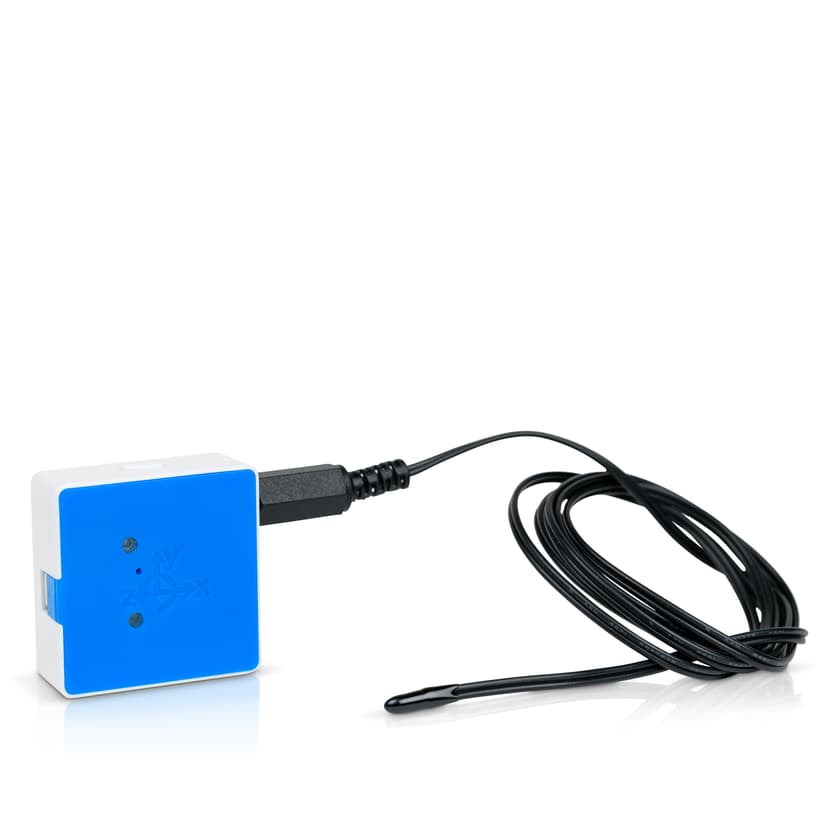
PocketLab Voyager is highly effective for hands-on scientific learning, provided you or an educator supply the necessary instructional structure. This device is a versatile piece of hardware, not a digital tutoring app. It requires a one-time purchase of $198. Your child will use it to measure acceleration, angular velocity, magnetic fields, and weather variables in real-time. Learning science heavily supports this type of authentic data collection. When students drop the sensor, attach it to a moving toy car, or place it in a refrigerator, they engage in experiential learning. This physical interaction helps cement abstract physics concepts into concrete understanding through embodied cognition. However, The Learning Standard has not yet fully evaluated this product. Parents should know that the app itself does not explicitly teach the scientific method or explain what the resulting data means. You must guide your child in forming hypotheses and interpreting the graphs. Without an adult to provide scaffolding, the device risks becoming a high-tech toy rather than an educational instrument.
How Does PocketLab Voyager Work?
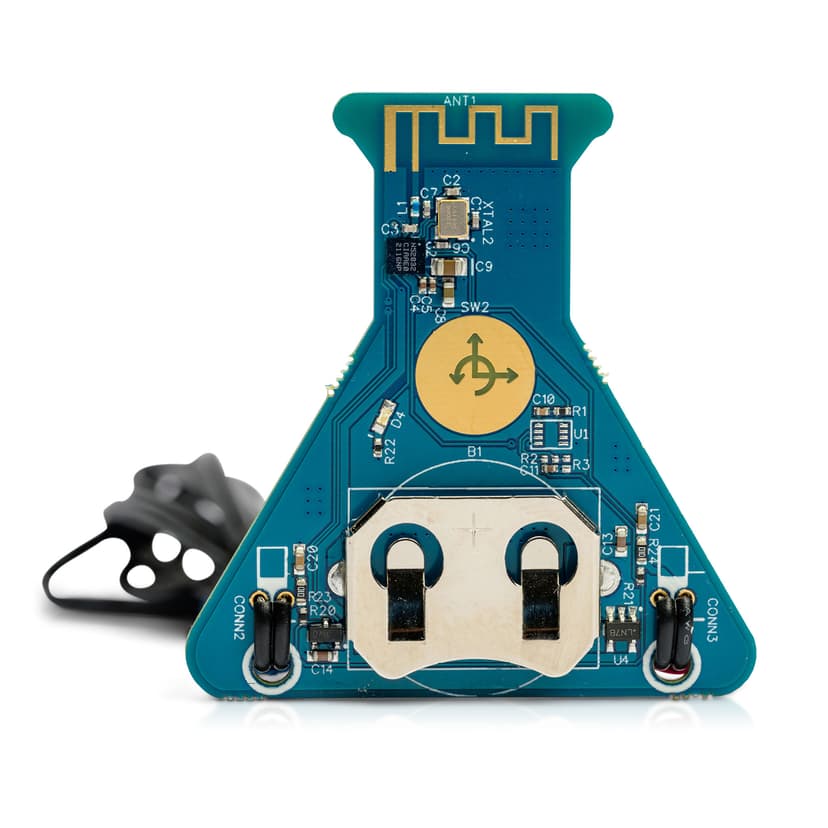
PocketLab Voyager relies on an inquiry-based learning approach where students act as active researchers rather than passive recipients of information. The physical sensor connects via Bluetooth to a companion app on a tablet, smartphone, or computer. Your child attaches the durable device to physical objects, like a pendulum, a model rocket, or a bicycle tire. As the object moves or its environment changes, the app generates real-time graphs displaying the telemetry. This immediate visual feedback mechanism tightly links the physical action to the data representation. Students observe changes in velocity, temperature, or barometric pressure precisely as the event occurs. By removing the tedious manual plotting of data points, the system frees up cognitive capacity for higher-order thinking tasks, such as analyzing trends, identifying anomalies, and drawing scientific conclusions based on the evidence they just gathered.
Strengths and tradeoffs of PocketLab Voyager
The biggest strength of PocketLab Voyager is its ability to make invisible physics concepts visible in real-time, while its biggest weakness is the complete lack of built-in instructional scaffolding. Connecting theory to reality is where this tool excels. By using real-time data visualization, it capitalizes on the multimedia principle of learning, presenting dynamic graphical information exactly as the physical event happens. This dual coding helps students build stronger mental models of difficult concepts like kinematics and thermodynamics. The hardware is rugged, allowing for authentic, messy scientific exploration. Conversely, the absence of guided instruction is a significant barrier. The app displays raw data but offers no worked examples to help a novice understand how to read a complex acceleration graph. It does not employ spaced repetition or structured retrieval practice to ensure students remember the physics principles they just tested. Without a teacher or parent providing clear learning objectives and feedback, struggling students may simply generate meaningless lines on a screen without actually learning the underlying science.
Who Might Benefit From PocketLab Voyager?
PocketLab Voyager is best for middle school through college students engaging in structured physics, engineering, or environmental science experiments. Because it requires foundational data literacy to interpret complex line graphs, it is less suited for early elementary students despite its third-grade rating. It works exceptionally well in a classroom environment, a homeschool setting, or a robotics club where an adult can provide the necessary experimental design. It is the ideal tool for older students who need to collect reliable, multi-variable data for science fair projects, CTE engineering tasks, or university-level lab reports.
Data Transparency
Does Not Meet Data Transparency Standard
PocketLab Voyager does not meet our data transparency standard. Its privacy policy does not document basic protections, including a commitment against targeted advertising, limits on sharing children's data and contractual limits on service providers.
12 of 35 checks passed
Evaluated September 2026
PocketLab Privacy Policy →Level 1 · Basic protections
Does not sell data or target ads at students, limits sharing, and lets parents see and delete their child's data.
Not documented: a commitment against targeted advertising, limits on sharing children's data, contractual limits on service providers, parents' right to see their child's data
Level 2 · Parent control (meets the standard)
Families can get their data out, know who processes it, and know how long it is kept.
Not documented: users' right to access their data, data export, a data retention timeline, self-service deletion
Level 3 · Direct data access
Families or schools can pull their own data through an API, in a stated format.
Not documented: an API for retrieving their own data, a named export format
View all 35 checks
Parent Access4/8
Does the policy mention parents specifically?
“Users who are under the age of 13 need consent from their parents/guardians to have a student account.”
Can parents view their child's data?
The policy does not give parents a right to view their child's data; it only covers parents asking for deletion.
Can parents modify their child's data?
The policy does not give parents a right to modify their child's data.
Can parents delete their child's account?
“If you are the parent or guardian of a child under the age of 13 and believe we may have collected personal data, please contact us so we can delete the information.”
Is there a dedicated Children's Privacy section?
The policy covers children's data under a general "Personal Data" heading, not in a dedicated children's privacy section.
Does it reference COPPA compliance?
“We do not knowingly collect personal information from children under the age of 13 without prior verifiable parental consent.”
Does it reference FERPA compliance?
The policy does not mention FERPA.
Is parental consent required for child accounts?
“Users who are under the age of 13 need consent from their parents/guardians to have a student account.”
Data Portability0/5
Can users access their personal data?
The policy only offers to confirm on request whether it holds a user's personal information, not to give access to the data itself.
Can users download/export their data?
The policy does not address downloading or exporting data.
Is there a self-service data access tool?
The policy does not describe a self-service data access tool; requests are made by contacting the company.
Is a specific data format mentioned for export?
The policy does not mention any export format.
Is there an API for data access?
The policy mentions only roster integrations (Google Classroom, ClassLink), not an API for retrieving data.
Data Minimization3/6
Is data collection itemized?
“we may collect information including your email address, IP address, name, address, phone number, and other information that you provide.”
Can the app be used without a real name?
The policy says student usernames can come from Google Classroom display names, so real names may be collected.
Can the app be used without an email?
The policy says PocketLab stores the email addresses of ClassLink student users.
Does it state collection is limited to what is necessary?
“We aim to collect as little personal data from our users as possible in our software.”
Is IP address anonymized or truncated?
“We use Google Analytics only with IP anonymization enabled. This means that Google will truncate the IP address of users within Member States of the European Union or in other states that are party to the Agreement on the European Economic Area.”
Is location tracking explicitly excluded?
The policy says the software can collect location data if the user grants permission.
Third-Party Protection3/7
Does it explicitly state no selling of data?
“We will not give or sell this information to any third party.”
Are third-party providers named?
“We use the Google Analytics service from Google USA 1600 Amphitheatre Parkway Mountain View, CA 94043 ) to analyze our website visitors.”
Are providers contractually restricted?
The policy says business partners were audited for GDPR compliance but does not describe contractual limits on how providers use data.
No-targeted-advertising commitment?
The policy describes targeted and remarketing ads on its website and makes no commitment against targeted advertising for student data.
Is AI/ML data sharing addressed?
The policy does not address sharing data with AI or machine-learning systems.
Child-specific sharing restriction?
The policy has no sharing restriction specific to children; its statement against sharing usage statistics applies to all users.
Cookies/tracking limited or opt-out?
“If you prefer, you can refuse to use cookies and our website will work normally.”
Deletion & Retention1/5
Can users delete their account?
“If your personal information changes, or if you no longer desire our service, you may correct, update, delete or deactivate it by contacting us.”
Self-service deletion mechanism?
The policy lets users delete only saved location data themselves; account deletion requires contacting the company.
Specific data retention timeline?
The policy gives no specific data retention period; its 30-day figure is the time to respond to requests.
Auto-deletion of inactive accounts?
The policy does not address automatic deletion of inactive accounts.
Post-deletion handling described?
The policy does not describe how data is handled after deletion.
Advertising1/4
Advertising model explicitly disclosed?
“We may include third-party advertisements based on the Google Marketing Service called DoubleClick.”
Free from third-party advertisements?
The policy says it may include third-party advertisements through DoubleClick.
Children excluded from ad targeting?
The policy does not exclude children from ad targeting.
Ad-free option available?
The policy does not mention an ad-free option or say the product has no advertising.
What This Means
The policy review did not meet our data transparency standard. The checks above show the documented findings and unknowns. A missing statement does not establish how the app handles data in practice.
About this evaluation: Based on automated analysis of PocketLab Privacy Policy against 35 policy-disclosure questions, including questions adapted from the Common Sense Privacy Program's published evaluation questions. TLS is not affiliated with Common Sense Media, and this is not a Common Sense rating. Quoted text is copied from the policy; unquoted notes are our summary. Results describe what the policy documents, not the company's actual practices. Privacy policies can change: this review reflects the version we analyzed and does not determine legal compliance.
Sources and review method
TLS combines product information and editorial analysis to explain how PocketLab Voyager works, its tradeoffs, and the questions to ask before choosing it. Product features, an instructional rationale and evidence of learning outcomes are different kinds of information.
Formal Learning Standard assessment: not yet completed. Data Transparency findings are reported separately and do not establish learning effectiveness. Read our methodology.
Frequently Asked Questions About PocketLab Voyager
Is PocketLab Voyager free?
No, the physical multi-sensor device costs $198. While the companion app used to view the data is generally free to download, you cannot use it without purchasing the proprietary hardware.
Is PocketLab Voyager good for elementary students?
It requires heavy adult supervision for young children. While rated for third grade and up, interpreting real-time telemetry graphs demands a level of data literacy that most elementary students have not yet developed.
What does PocketLab Voyager teach?
It facilitates the learning of physics, earth science, and engineering principles. Students use it to measure acceleration, magnetism, light, temperature, and barometric pressure, learning how to analyze physical phenomena through raw data.
How does PocketLab Voyager compare vs Vernier sensors?
PocketLab Voyager consolidates multiple sensors into one compact, rugged device, making it highly portable and easier for quick, informal experiments. Vernier offers highly specialized, separate probes that are often preferred for strict, traditional laboratory environments.
Has The Learning Standard evaluated PocketLab Voyager?
TLS has not yet completed a Learning Standard evaluation of how well PocketLab Voyager teaches. Its privacy policy has been reviewed for Data Transparency and does not yet document the basic protections (Level 1).
Is PocketLab Voyager COPPA compliant?
The reviewed privacy policy references COPPA. A policy reference alone does not establish COPPA compliance. Policy review note: The policy states COPPA-style parental consent practices and links to information about COPPA.
Is PocketLab Voyager FERPA compliant?
A FERPA reference was not found in the reviewed privacy policy. This does not determine whether the app complies with FERPA. Policy review note: The policy does not mention FERPA.
Does PocketLab Voyager have a children's privacy policy?
No dedicated children's privacy section was found in the reviewed policy. Policy review note: The policy covers children's data under a general "Personal Data" heading, not in a dedicated children's privacy section.
Does PocketLab Voyager sell student data?
The reviewed policy states that the app does not sell data. This is a policy statement; actual data practices were not verified. Policy review note: The policy says the company will not sell customer information.
Can you delete your data from PocketLab Voyager?
The reviewed privacy policy describes account deletion. We have not tested the deletion process. Policy review note: Users can ask to have their data deleted or their account deactivated.
Follow TLS Research
Subscribe to future TLS research updates: app reviews, findings, and what the evidence shows.
Screenshots

Take Action
For PocketLab Voyager
If you represent PocketLab and have a correction or new evidence, send the relevant source so we can review and update this page.
Submit a correctionDetails
- Pricing
- $198
- Platforms
- Web Browser, iOS (Apple mobile), iPadOS (Apple tablet), Android (Google mobile), Windows (Microsoft), macOS (Apple), Chrome OS (Google)
- Grade Levels
- 3rd Grade, 4th Grade, 5th Grade, 6th Grade, 7th Grade, 8th Grade, 9th Grade, 10th Grade, 11th Grade, 12th Grade, Associate's degree, Bachelor's degree, Post-baccalaureate certificate, Master's Degree, Post-master's certificate, Doctoral Degree, Post-doctoral certificate
- Website
- Visit site