Kolibri
Product by Learning Equality
Facts checked: Not yet checked
Our take (not a Learning Standard rating). This label applies to learning-science judgments throughout this overview.
Our take (not a Learning Standard rating)
Kolibri effectively delivers structured educational content in offline environments, but its teaching efficacy depends entirely on the specific curriculum loaded by the educator. The platform itself provides excellent data tracking and personalized learning pathways, making it a powerful delivery mechanism rather than a standalone curriculum.
Pros
- Functions completely offline, eliminating internet access barriers for continuous digital learning.
- Enables educators to curate and sequence specific learning materials to build targeted mastery pathways.
- Tracks user progress locally and syncs data when connected, allowing for accurate formative assessment.
- Supports diverse pedagogical approaches like blended learning and project-based learning through varied media types.
Cons
- Requires technical setup and hardware to establish the initial offline server network.
- Does not include a fixed proprietary curriculum, requiring educators to source and organize their own content.
- Relies heavily on the facilitator to provide corrective feedback if the imported content lacks built-in assessments.
What Do We Know About Kolibri?
Kolibri is highly effective for learning only if your child's educator has loaded it with high-quality, scientifically sound curriculum. Unlike standalone apps that come pre-packaged with a fixed set of lessons, Kolibri operates as a digital library and classroom management tool built specifically for offline use. Your child will use it to access videos, documents, and interactive exercises without needing an internet connection.
The platform supports personalized learning by allowing educators to assign specific modules based on your child's current mastery level. Because it operates on closed local networks, it removes the distraction of the open internet, focusing your child entirely on the provided educational materials. If the loaded content utilizes strong pedagogical techniques, such as retrieval practice through quizzes or worked examples in math, Kolibri will deliver them flawlessly. However, parents should understand that Kolibri itself does not teach; it delivers the teaching. You will need to rely on the school or local facilitator to ensure the content assigned to your child is rigorous and appropriate for their grade level.
How Does Kolibri Work?
Kolibri uses a blended learning and personalized pathway approach by acting as an offline server that distributes curated educational content to local devices. A teacher or administrator installs the Kolibri software on a central device, which then creates a local Wi-Fi network. Students connect to this network using tablets or laptops to access assignments, lessons, and quizzes.
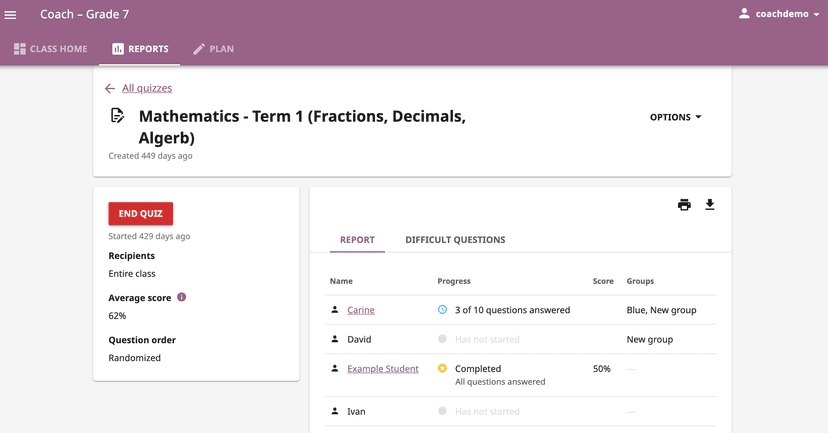
The learning mechanics depend on the curated content, but the platform fundamentally supports mastery-based progression. Educators can align content to specific standards and assign it dynamically based on a student's performance data. As a student completes an exercise or watches a video, Kolibri tracks their time on task and quiz scores locally. This allows the facilitator to monitor progress and intervene when a student struggles, supporting a tight feedback loop even in completely disconnected environments. The system natively supports various media formats, enabling a mix of direct instruction through video and active retrieval practice through interactive exercises.
Strengths and tradeoffs of Kolibri
Kolibri's greatest strength is its ability to deliver data-driven, personalized learning completely offline, while its biggest weakness is its absolute reliance on the quality of third-party content.
Because Kolibri serves as an empty vessel until populated, its instructional value varies. When loaded with high-quality content, it excels at facilitating mastery learning. The platform allows educators to sequence materials logically, ensuring students master foundational concepts before advancing. This scaffolding is critical for cognitive load management. Furthermore, its local data tracking allows educators to monitor formative assessments, giving them the actionable data needed to provide timely, targeted interventions.
Conversely, without strong pedagogical content, Kolibri cannot teach effectively. If educators only upload passive reading materials, students miss out on active retrieval practice and immediate feedback: two pillars of effective learning science. The platform lacks built-in, automated corrective feedback mechanisms outside of what the imported quizzes specifically provide. Therefore, the learning experience is only as strong as the curriculum curation and the active, ongoing involvement of the local facilitator.
Who Might Benefit From Kolibri?
Kolibri is best for schools, NGOs, and educators operating in low-bandwidth or offline environments who need to deliver structured digital learning. It serves learners of all ages, from primary students mastering foundational literacy to adults in career and technical education programs. The platform is ideal for communities that lack reliable internet but have access to basic local hardware. It is not designed for individual parents looking for a ready-to-play educational app, but rather for community facilitators scaling blended learning models.
Sources and review method
TLS combines product information and editorial analysis to explain how Kolibri works, its tradeoffs, and the questions to ask before choosing it. Product features, an instructional rationale and evidence of learning outcomes are different kinds of information.
Formal Learning Standard assessment: not yet completed. Data Transparency findings are reported separately and do not establish learning effectiveness. Read our methodology.
Frequently Asked Questions About Kolibri
Is Kolibri free?
Yes. Kolibri is completely free and open-source. Learning Equality provides the software without subscription fees, though schools or organizations will need to provide their own hardware to host and access the local network.
Is Kolibri good for elementary students?
Yes, provided the educator loads age-appropriate elementary content. The interface is clean and navigable for young learners, but the actual appropriateness and effectiveness depend entirely on the curriculum the facilitator chooses to import into the system.
What does Kolibri teach?
Kolibri teaches any subject an educator loads into it. Common use cases span Humanities, Science, Math, and Career & Technical Education. It acts as a library and delivery system rather than a standalone subject-specific curriculum.
Does Kolibri adapt to my child's learning level?
Partially. The platform allows educators to create personalized learning pathways and assigns content based on user data. However, it relies heavily on the teacher to analyze the data and assign the appropriate modules to ensure the student is working at the correct difficulty level.
Has The Learning Standard evaluated Kolibri?
TLS has not yet completed a Learning Standard evaluation of how well Kolibri teaches. TLS has not published a Data Transparency result for its privacy policy.
Follow TLS Research
Subscribe to future TLS research updates: app reviews, findings, and what the evidence shows.
Screenshots
Take Action
For Kolibri
If you represent Learning Equality and have a correction or new evidence, send the relevant source so we can review and update this page.
Submit a correctionDetails
- Pricing
- Free and open source
- Platforms
- Web Browser, Android (Google mobile), Windows (Microsoft), Other
- Website
- Visit site