Kognity
Product by Kognity
Facts checked: Not yet checked
Our take (not a Learning Standard rating). This label applies to learning-science judgments throughout this overview.
Our take (not a Learning Standard rating)
Kognity offers a robust, inquiry-based approach to high school science that aligns well with Next Generation Science Standards. While The Learning Standard has not yet formally evaluated its efficacy, the platform's reliance on anchoring phenomena and blended learning suggests strong potential for building critical thinking, though it requires significant teacher facilitation to succeed.
Pros
- Uses anchoring phenomena to connect abstract scientific concepts to real-world observations.
- Integrates both online modules and hands-on activities to support blended learning environments.
- Aligns directly with Next Generation Science Standards to promote three-dimensional learning.
- Requires students to engage in problem-based learning rather than passive rote memorization.
Cons
- Relies heavily on active teacher facilitation rather than functioning as an independent learning tool.
- Lacks automated, immediate corrective feedback for complex open-ended student responses.
- Requires consistent high-speed internet access to utilize the digital-first platform effectively.
- Not currently evaluated by The Learning Standard for proven learning outcomes.
What Do We Know About Kognity?
Kognity functions as an effective, teacher-guided digital textbook alternative for high school science, though it relies heavily on classroom integration rather than independent home study. Your child will not use this app to drill vocabulary or memorize the periodic table. Instead, they will investigate real-world scientific phenomena through inquiry-based modules that require critical thinking. The platform is designed around Next Generation Science Standards, meaning it emphasizes how scientists actually work and think over simple fact recall. Because the curriculum blends digital reading with hands-on classroom experiments, your child will likely use it to read background material, watch embedded videos, and answer reflection questions before conducting physical labs at school. Parents should understand that Kognity is not a standalone tutoring app. If your child is struggling with chemistry or physics concepts, this platform does not provide the kind of adaptive, step-by-step worked examples found in targeted intervention software. Its value lies in collaborative, problem-based learning. While The Learning Standard has not yet formally evaluated Kognity, its pedagogical framework strongly supports deep conceptual understanding when guided by a trained educator.
How Does Kognity Work?
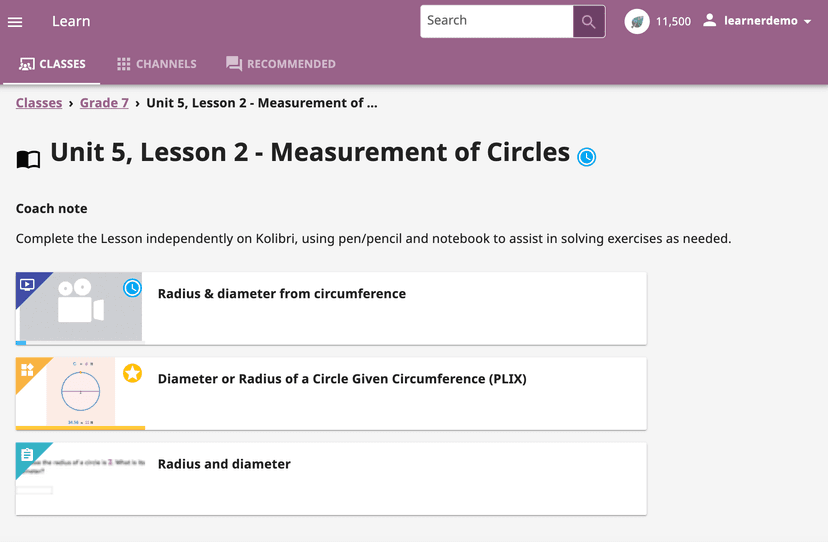
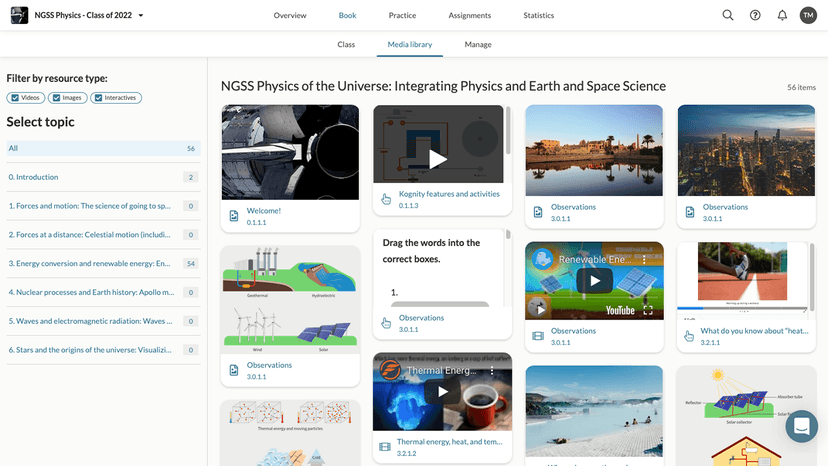
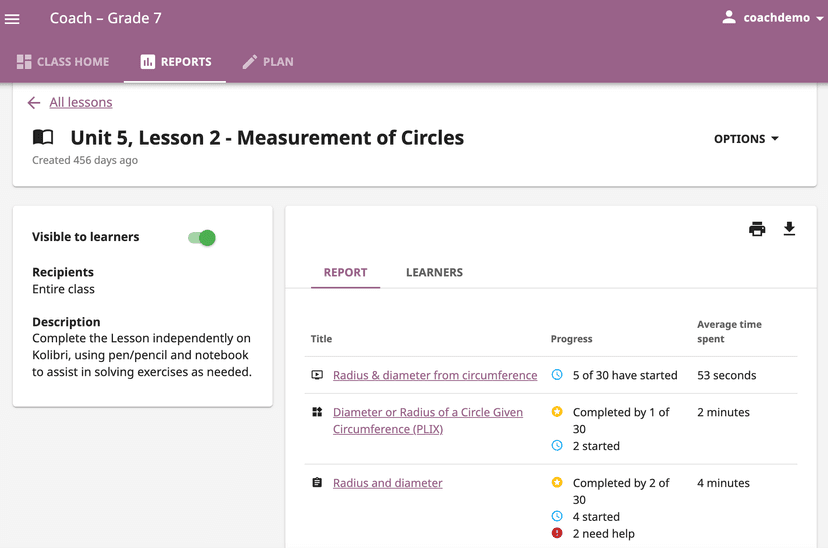
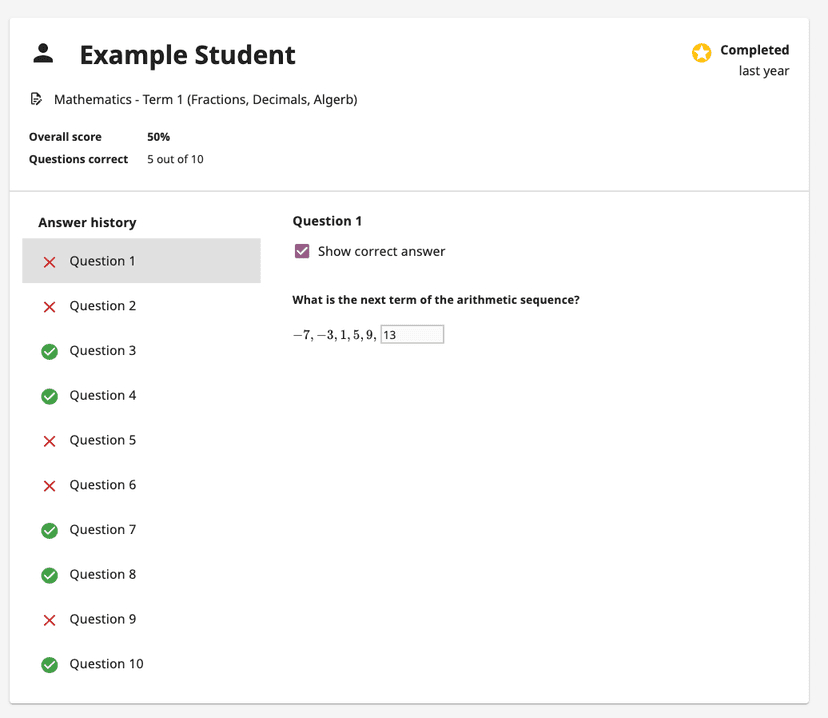
Kognity uses an inquiry-based, blended learning model that centers instruction around anchoring scientific phenomena. Instead of presenting facts upfront, the platform introduces a complex real-world scenario, such as an ecosystem collapse or a chemical reaction, and asks students to investigate the underlying mechanics. Students navigate through digital modules containing interactive text, diagrams, and video content that build the background knowledge necessary to explain the phenomena. Throughout the modules, students encounter formative assessment questions designed to prompt retrieval practice and check for understanding. The digital platform is heavily paired with instructions for hands-on, offline laboratory experiments. Teachers use the platform to assign specific reading sections, monitor completion, and review student answers to open-ended inquiry prompts. Because it integrates three-dimensional learning, the platform constantly forces students to connect disciplinary core ideas with broader crosscutting concepts and science practices.
Strengths and tradeoffs of Kognity
The biggest strength of Kognity is its deep integration of inquiry-based learning, while its biggest weakness is its inability to function as an independent, adaptive tutoring tool for struggling students. Real-world application is a major asset here. By framing lessons around anchoring phenomena, the platform leverages cognitive hooks that make abstract science concepts highly relevant and memorable. This method builds intrinsic motivation and supports deep semantic processing. Alignment with NGSS ensures that students are practicing the actual skills scientists use, such as data analysis and model building, rather than just engaging in shallow retrieval of vocabulary. However, lack of independent remediation limits its utility outside the classroom. The platform does not currently offer the dynamic, adaptive pathways seen in mastery-based software. If a student fails to understand a core physics concept, Kognity does not automatically generate simplified worked examples or branch into remedial spaced repetition exercises. Furthermore, teacher dependence means the quality of the learning experience relies entirely on how well the educator facilitates the blended learning model. While its structure is grounded in sound pedagogy, it remains an instructional tool rather than a comprehensive teaching replacement.
Who Might Benefit From Kognity?
Best for high school science teachers seeking a digital, NGSS-aligned curriculum to facilitate blended classroom instruction. It is highly effective for classrooms that prioritize collaborative, inquiry-based learning over traditional lecture formats. Students in grades 9 through 12 benefit most from its focus on complex problem-solving and real-world phenomena. Because it is priced at $20 per student annually and designed for institutional adoption, it is not recommended for homeschooling parents or individual students seeking a standalone tutoring app for test prep.
Data Transparency
Does Not Meet Data Transparency Standard
Kognity does not meet our data transparency standard. Its privacy policy does not document basic protections, including parents' right to delete their child's data and account deletion.
18 of 35 checks passed
Evaluated September 2026
Welcome to the Kognity US Customer Privacy Policy →Level 1 · Basic protections
Does not sell data or target ads at students, limits sharing, and lets parents see and delete their child's data.
Not documented: parents' right to delete their child's data, account deletion
Level 2 · Parent control (meets the standard)
Families can get their data out, know who processes it, and know how long it is kept.
Not documented: data export, a data retention timeline, self-service deletion
Level 3 · Direct data access
Families or schools can pull their own data through an API, in a stated format.
Not documented: an API for retrieving their own data, a named export format
View all 35 checks
Parent Access7/8
Does the policy mention parents specifically?
“If you’re a parent or guardian and would like to review, correct or update your child’s data stored in our Products, contact the appropriate School Customer.”
Can parents view their child's data?
“If you’re a parent or guardian and would like to review, correct or update your child’s data stored in our Products, contact the appropriate School Customer.”
Can parents modify their child's data?
“If you’re a parent or guardian and would like to review, correct or update your child’s data stored in our Products, contact the appropriate School Customer.”
Can parents delete their child's account?
The policy says Kognity deletes Student Data only when a School Customer directs it and does not give parents a right to request deletion.
Is there a dedicated Children's Privacy section?
“_COPPA_: Kognity does not knowingly collect personal information from a child under 13 unless and until a School Customer has authorized us to collect such information through the provision of Products on the School Customer’s behalf.”
Does it reference COPPA compliance?
“We comply with all applicable provisions of COPPA.”
Does it reference FERPA compliance?
“With respect to FERPA, Kognity receives Student Data as a “school official” under Section 99.31 of FERPA for the purpose of providing its Products, and such Student Data remains under the direct control of the School Customer.”
Is parental consent required for child accounts?
“To the extent COPPA applies to the information we collect, we process such information for educational purposes only, at the direction of the partnering School Customer, and on the basis of the School Customer’s informed consent on behalf of parents and guardians as further detailed in the Customer Agreement.”
Data Portability1/5
Can users access their personal data?
“Kognity will work with your School Customer to enable your access to and, if applicable, correction of your child’s education records.”
Can users download/export their data?
The policy does not address downloading or exporting data.
Is there a self-service data access tool?
The policy directs access requests to the school and describes no self-service tool.
Is a specific data format mentioned for export?
The policy does not mention any export format.
Is there an API for data access?
The policy does not describe an API for users or schools to retrieve their data.
Data Minimization1/6
Is data collection itemized?
“This roster information, including name, email address, grade level, year of graduation, teacher, subject and school, is provided to Kognity by School Customers”
Can the app be used without a real name?
The policy says student names are collected through school rosters.
Can the app be used without an email?
The policy says student email addresses are collected through school rosters.
Does it state collection is limited to what is necessary?
The policy limits the purposes for which data is used but does not say collection is limited to what is necessary.
Is IP address anonymized or truncated?
The policy says it collects IP addresses and does not say they are anonymized or truncated.
Is location tracking explicitly excluded?
The policy says it may collect geolocation information or estimate device location.
Third-Party Protection6/7
Does it explicitly state no selling of data?
“Kognity does not and will not: - sell Student Data to third parties;”
Are third-party providers named?
“Authorized Users may be able to log in to our Products using third-party sign-in services such as Google and Clever.”
Are providers contractually restricted?
“We provide these parties with the least information needed to do their work for Kognity, and contractually bind them to protect Student Data in a manner consistent with those practices set forth in this Policy, including complying with Applicable Laws;”
No-targeted-advertising commitment?
“use or disclose Student Data to inform, influence or enable targeted advertising to a student based on Student Data or information or data inferred over time from the student’s usage of the Products;”
Is AI/ML data sharing addressed?
The policy does not address AI or machine learning.
Child-specific sharing restriction?
“Kognity shares or discloses Student Data only as needed to provide the Products under a Customer Agreement and in accordance with Applicable Laws, including:”
Cookies/tracking limited or opt-out?
“With respect to cookies, an Authorized User may be able to reject cookies through the user’s browser or device controls, but doing so may negatively impact the user experience as some features may not work properly.”
Deletion & Retention1/5
Can users delete their account?
The policy says Kognity deletes Student Data when notified by the School Customer but does not give users a way to request deletion.
Self-service deletion mechanism?
The policy does not describe a self-service deletion mechanism.
Specific data retention timeline?
The policy says data is kept for as long as needed but gives no specific retention period.
Auto-deletion of inactive accounts?
The policy does not address automatic deletion of inactive accounts.
Post-deletion handling described?
“We may not be able to fully delete all data in all circumstances, such as information retained in technical support records, customer service records, back-ups and similar business records.”
Advertising2/4
Advertising model explicitly disclosed?
“Kognity may, from time to time, provide customized content, advertising, recommendations for educational products and services, and commercial messages to School Customers, teachers, school administrators or other non-student users, provided that such content will never be based on Student Data.”
Free from third-party advertisements?
The policy bars third-party ad networks from collecting student data for targeted ads but does not say the product has no third-party ads.
Children excluded from ad targeting?
“Kognity does not permit third party advertising networks to collect information from or about students using our Products for the purpose of serving targeted advertising across websites and over time.”
Ad-free option available?
The policy does not say the product has no ads or offer an ad-free option, and it says advertising may be shown to non-student users.
What This Means
The policy review did not meet our data transparency standard. The checks above show the documented findings and unknowns. A missing statement does not establish how the app handles data in practice.
About this evaluation: Based on automated analysis of Welcome to the Kognity US Customer Privacy Policy against 35 policy-disclosure questions, including questions adapted from the Common Sense Privacy Program's published evaluation questions. TLS is not affiliated with Common Sense Media, and this is not a Common Sense rating. Quoted text is copied from the policy; unquoted notes are our summary. Results describe what the policy documents, not the company's actual practices. Privacy policies can change: this review reflects the version we analyzed and does not determine legal compliance.
Sources and review method
TLS combines product information and editorial analysis to explain how Kognity works, its tradeoffs, and the questions to ask before choosing it. Product features, an instructional rationale and evidence of learning outcomes are different kinds of information.
Formal Learning Standard assessment: not yet completed. Data Transparency findings are reported separately and do not establish learning effectiveness. Read our methodology.
Frequently Asked Questions About Kognity
Is Kognity free?
No, Kognity is not free. It is sold directly to schools and districts at a cost of approximately $20 per student per year. Individual parents cannot typically purchase single licenses for home use. Because the platform relies heavily on teacher facilitation, classroom group work, and integrated offline laboratory experiments to function as intended, a standalone consumer subscription is not currently available for individual families.
Is Kognity good for high school students?
Yes, Kognity is specifically designed for high school students in grades 9 through 12. The content is rigorous and focuses on building critical thinking and analytical skills appropriate for older teenagers preparing for college or career paths. The platform assumes a baseline reading comprehension level suitable for high school, as students must independently navigate complex digital texts, scientific diagrams, and scenario-based problem sets before engaging in classroom discussions.
What does Kognity teach?
Kognity teaches high school science and Career & Technical Education. The science curriculum aligns tightly with Next Generation Science Standards, covering core subjects like biology, chemistry, and physics. Instead of simply listing facts to memorize, the platform teaches these subjects through real-world, problem-based scenarios. Students learn to apply scientific methods, analyze complex data sets, and build working models to explain anchoring phenomena observed in their daily environments.
How does Kognity compare to Khan Academy?
While Khan Academy uses mastery-based progression and instructional videos for independent practice, Kognity functions as an interactive digital textbook designed strictly for teacher-led classroom instruction. Kognity focuses on collaborative, inquiry-based labs and long-term project-based learning. In contrast, Khan Academy excels at individual skill drill, automated corrective feedback, and independent remediation. Students use Kognity to explore complex scientific phenomena alongside their peers, whereas they use Khan Academy to independently patch specific knowledge gaps.
Has The Learning Standard evaluated Kognity?
TLS has not yet completed a Learning Standard evaluation of how well Kognity teaches. Its privacy policy has been reviewed for Data Transparency and does not yet document the basic protections (Level 1).
Is Kognity COPPA compliant?
The reviewed privacy policy references COPPA. A policy reference alone does not establish COPPA compliance. Policy review note: The policy states it complies with COPPA.
Is Kognity FERPA compliant?
The reviewed privacy policy references FERPA. A policy reference alone does not establish FERPA compliance. Policy review note: The policy says it operates as a school official under FERPA.
Does Kognity have a children's privacy policy?
The reviewed policy includes a dedicated children's privacy section. Policy review note: There is a separately labeled COPPA paragraph about children under 13.
Does Kognity sell student data?
The reviewed policy states that the app does not sell data. This is a policy statement; actual data practices were not verified. Policy review note: The policy states Kognity does not sell Student Data.
Can you delete your data from Kognity?
Account deletion was not documented in the reviewed privacy policy. This does not establish whether deletion is available. Policy review note: The policy says Kognity deletes Student Data when notified by the School Customer but does not give users a way to request deletion.
Follow TLS Research
Subscribe to future TLS research updates: app reviews, findings, and what the evidence shows.
Screenshots
Take Action
For Kognity
If you represent Kognity and have a correction or new evidence, send the relevant source so we can review and update this page.
Submit a correctionDetails
- Pricing
- $20 per student per year
- Platforms
- Web Browser
- Grade Levels
- 9th Grade, 10th Grade, 11th Grade, 12th Grade
- Website
- Visit site