
IgniteTable
Product by Hatch Early Learning
Facts checked: Not yet checked
Our take (not a Learning Standard rating). This label applies to learning-science judgments throughout this overview.
Our take (not a Learning Standard rating)
While The Learning Standard has not yet formally evaluated IgniteTable, its reliance on cooperative, game-based play aligns with established research on developing prosocial and early cognitive skills. However, effectiveness heavily depends on the physical hardware setup and educator facilitation to ensure meaningful collaboration rather than parallel play.
Pros
- Promotes explicit cooperative learning by requiring simultaneous multi-user input to solve in-game challenges.
- Provides educators with actionable data dashboards to track the development of communication and teamwork skills.
- Leverages game-based learning principles to sustain attention and motivation in early childhood learners.
Cons
- Requires significant upfront investment in specialized interactive table hardware that is not included.
- Lacks formal evaluation data from The Learning Standard to confirm independent academic efficacy.
- Relies heavily on teacher facilitation to prevent one dominant student from controlling the gameplay.
What Do We Know About IgniteTable ?
IgniteTable's effectiveness as a learning tool depends on your classroom's hardware setup and how well educators facilitate the collaborative games, though it shows promise for teaching prosocial skills. Because this program is designed for use on an interactive touch table, it is an educator-facing tool rather than an app your child will use at home on a personal tablet. The software focuses heavily on early childhood development, specifically targeting prekindergarten and kindergarten students. Instead of isolated screen time, IgniteTable forces children to work together. The games require joint attention and coordinated actions to complete tasks, which builds foundational communication and teamwork skills. From a learning science perspective, this type of structured cooperative play is highly effective for cognitive and social-emotional development. The system tracks these interactions and feeds the data back to teachers through the Insights platform. This allows educators to see exactly which students are mastering collaborative problem-solving and which might need guided intervention. Note that The Learning Standard has not yet formally evaluated this program, so long-term academic impacts remain unverified by our methodology.
How Does IgniteTable Work?
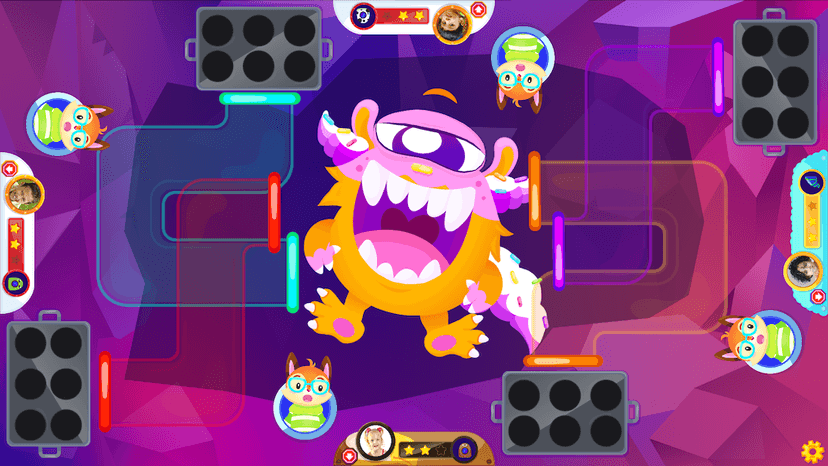
IgniteTable uses a cooperative, play-based learning approach where small groups of students interact simultaneously with a shared digital surface. The software presents early learners with action-oriented games that cannot be won by a single player. Instead, tasks require coordinated physical touches, turn-taking, and verbal communication among peers. As students engage with the interactive table, the software quietly measures their actions in the background. It records instances of successful teamwork, task completion rates, and cooperative milestones. This data is pushed to the Insights dashboard, a complementary platform for administrators and teachers. Educators use this dashboard to monitor the development of 21st-century skills across their classrooms. Because the mechanics demand multi-user input, it structurally prevents passive consumption. The learning happens through the social friction and negotiation required to navigate the digital tasks together.
Strengths and tradeoffs of IgniteTable
IgniteTable's biggest strength is its forced collaborative mechanic that builds social-emotional skills, while its biggest weakness is the high barrier to entry requiring expensive specialized hardware. Strengths: The program excels at transforming digital screen time into a highly social activity. By requiring multiple students to touch and interact with the table simultaneously to achieve a goal, it leverages cooperative learning. Research shows that peer-to-peer negotiation during shared tasks significantly enhances cognitive flexibility and early communication skills. Furthermore, the embedded assessment via the Insights dashboard provides teachers with continuous, frictionless data on social milestones without interrupting playtime with formal testing. Weaknesses: The most glaring limitation is hardware dependence. The software costs 33 dollars per child annually, but it is useless without an interactive multi-touch table, which represents a massive capital expense for schools. Additionally, without strong teacher facilitation, collaborative tech can easily devolve into parallel play or a scenario where one dominant child dictates the actions. Finally, because IgniteTable is pending evaluation by The Learning Standard, there is no independent confirmation that the digital play transfers to off-screen social-emotional competence.
Who Might Benefit From IgniteTable ?
IgniteTable is best for well-funded early childhood education centers looking to build social-emotional and collaborative skills in preschool through kindergarten classrooms. It is entirely designed for school environments, not individual home use. The program is ideal for educators who want to integrate structured, play-based technology into small-group center rotations to foster peer-to-peer interactions. Administrators focused on tracking the development of 21st-century skills like teamwork and communication will find the paired Insights data dashboard particularly useful for monitoring measurable student progress across an entire early learning program.
Data Transparency
Does Not Meet Data Transparency Standard
IgniteTable reaches Level 1 of 3 (Basic protections), below our data transparency standard. Reaching Level 2 needs the policy to document data export, a data retention timeline and self-service deletion.
17 of 35 checks passed
Evaluated September 2026
Hatch Early Learning →Level 1 · Basic protections
Does not sell data or target ads at students, limits sharing, and lets parents see and delete their child's data.
Level 2 · Parent control (meets the standard)
Families can get their data out, know who processes it, and know how long it is kept.
Not documented: data export, a data retention timeline, self-service deletion
Level 3 · Direct data access
Families or schools can pull their own data through an API, in a stated format.
Not documented: an API for retrieving their own data, a named export format
View all 35 checks
Parent Access6/8
Does the policy mention parents specifically?
“Special notices and rights for Parents and Guardians under the Children’s Online Privacy Protection Act (“COPPA”).”
Can parents view their child's data?
“You have the right to review any PII we collect related to you or your Child, email your”
Can parents modify their child's data?
The policy gives parents the right to review and delete their child's data but does not say they can change it; the editing rights it mentions are general and depend on the user's role.
Can parents delete their child's account?
“You have the right at any time to request the deletion of PII and/or refuse the further collection of PII from you or your child. Email your request to us, and we will honor your request.”
Is there a dedicated Children's Privacy section?
“Special notices and rights for Parents and Guardians under the Children’s Online Privacy Protection Act (“COPPA”).”
Does it reference COPPA compliance?
“COPPA is a federal law (15 U.S.C. §6501 et seq.) that gives parents and guardians special rights, including the right to notice about how we collect and use PII.”
Does it reference FERPA compliance?
The policy does not mention FERPA.
Is parental consent required for child accounts?
“We cannot collect or use PII related to you or your child without your consent.”
Data Portability2/5
Can users access their personal data?
“Through your account settings, you may access, and, in some cases, edit or delete the information you’ve provided to us, such as First Name, Last Name, password, and contact information.”
Can users download/export their data?
The policy offers to deliver a report on personal information in a 'reviewable format' but does not describe a way to download or export the data.
Is there a self-service data access tool?
“Through your account settings, you may access, and, in some cases, edit or delete the information you’ve provided to us, such as First Name, Last Name, password, and contact information.”
Is a specific data format mentioned for export?
The policy only says 'reviewable format' and names no specific export format.
Is there an API for data access?
The policy does not mention an API for accessing data.
Data Minimization1/6
Is data collection itemized?
“Child and/or Student Information. first name, last name, date of birth, gender, race, ethnicity, grade level, language profile, picture, student identification number, audio/video work samples, and corresponding Teacher and Parent information associated with each child.”
Can the app be used without a real name?
The policy says it collects each student's first and last name.
Can the app be used without an email?
The policy does not say the product can be used without an email address; it collects emails from customers, parents, staff and administrators and does not state that student emails are excluded.
Does it state collection is limited to what is necessary?
The policy does not say collection is limited to what is necessary.
Is IP address anonymized or truncated?
The policy says it collects IP addresses and does not say they are anonymized or truncated.
Is location tracking explicitly excluded?
The policy says it collects IP-based geographic location and site location, and does not rule out location tracking.
Third-Party Protection5/7
Does it explicitly state no selling of data?
“We do not rent or sell your PII in personally identifiable form to anyone, provided that certain PII may be transferred to third parties in connection with business transfers, as described below:”
Are third-party providers named?
“Currently, Hatch uses Amazon Web Services, Inc. (“AWS”) as a third-party service provider for data hosting.”
Are providers contractually restricted?
“This does not include trusted third parties who assist us in operating our website, conducting our business or servicing you, so long as those parties agree to keep this information confidential.”
No-targeted-advertising commitment?
The policy makes no promise against targeted advertising; it describes behavioral advertising on its website and using usage patterns to customize content.
Is AI/ML data sharing addressed?
The policy describes using anonymized data for an adaptive feature and research but does not address sharing data with AI or machine-learning systems.
Child-specific sharing restriction?
“In certain situations, and with customer's written consent we do share some child information (first name, last name, organization name) to our partner Teaching Strategy in order to aid our customers with children assessment process.”
Cookies/tracking limited or opt-out?
“Users may opt out of the use of the DART cookie by visiting the Google ad and content network privacy policy.”
Deletion & Retention2/5
Can users delete their account?
“You may contact us to request deletion of your account using the contact information below.”
Self-service deletion mechanism?
Account deletion requires contacting Hatch; account settings only allow some fields to be deleted 'in some cases'.
Specific data retention timeline?
The policy only says some data may be kept 'for a short time' and gives no specific retention period.
Auto-deletion of inactive accounts?
The policy does not describe automatic deletion of inactive accounts.
Post-deletion handling described?
“We may use any aggregated data derived from or incorporating your PII after you update or delete it, but not in a manner that would identify you personally.”
Advertising1/4
Advertising model explicitly disclosed?
“We allow third-party companies to collect certain information when you visit our website and to use that information to serve ads for Hatch products, services, or for the products or services of other companies when you visit this website or other websites.”
Free from third-party advertisements?
The policy says third parties such as Google serve ads through its website and does not say the product is ad-free.
Children excluded from ad targeting?
The policy does not say children are excluded from ad targeting.
Ad-free option available?
The policy does not describe an ad-free option or say the product has no advertising.
What This Means
The policy review did not meet our data transparency standard. The checks above show the documented findings and unknowns. A missing statement does not establish how the app handles data in practice.
About this evaluation: Based on automated analysis of Hatch Early Learning against 35 policy-disclosure questions, including questions adapted from the Common Sense Privacy Program's published evaluation questions. TLS is not affiliated with Common Sense Media, and this is not a Common Sense rating. Quoted text is copied from the policy; unquoted notes are our summary. Results describe what the policy documents, not the company's actual practices. Privacy policies can change: this review reflects the version we analyzed and does not determine legal compliance.
Sources and review method
TLS combines product information and editorial analysis to explain how IgniteTable works, its tradeoffs, and the questions to ask before choosing it. Product features, an instructional rationale and evidence of learning outcomes are different kinds of information.
Formal Learning Standard assessment: not yet completed. Data Transparency findings are reported separately and do not establish learning effectiveness. Read our methodology.
Frequently Asked Questions About IgniteTable
Is IgniteTable free?
No, IgniteTable is not free. It is a subscription-based service for schools that costs 33 dollars per child per year. This price only covers the software and the Insights data dashboard; schools must purchase the physical interactive table hardware separately.
Is IgniteTable good for preschool and kindergarten students?
Yes, IgniteTable is specifically designed for early childhood education, including preschool, prekindergarten, and kindergarten. The play-based interface and cooperative mechanics are tailored to the developmental needs and fine motor skills of 3- to 6-year-olds.
What does IgniteTable teach?
IgniteTable teaches foundational 21st-century skills, primarily focusing on collaboration, communication, and prosocial behavior. The games are structured to require teamwork, helping young learners practice taking turns, sharing digital space, and working together to solve simple problems.
Can parents buy IgniteTable for home use?
No, IgniteTable is designed exclusively for institutional use in schools and early learning centers. It requires large, specialized interactive table hardware and an administrative subscription model that is not practical or available for individual families.
Has The Learning Standard evaluated IgniteTable?
TLS has not yet completed a Learning Standard evaluation of how well IgniteTable teaches. Its privacy policy has been reviewed for Data Transparency and reaches Level 1, Basic protections.
Is IgniteTable COPPA compliant?
The reviewed privacy policy references COPPA. A policy reference alone does not establish COPPA compliance. Policy review note: The policy names COPPA and sets out the parental rights it provides.
Is IgniteTable FERPA compliant?
A FERPA reference was not found in the reviewed privacy policy. This does not determine whether the app complies with FERPA. Policy review note: The policy does not mention FERPA.
Does IgniteTable have a children's privacy policy?
The reviewed policy includes a dedicated children's privacy section. Policy review note: The policy has a section with its own COPPA heading.
Does IgniteTable sell student data?
The reviewed policy states that the app does not sell data. This is a policy statement; actual data practices were not verified. Policy review note: The policy states that Hatch does not sell personal information.
Can you delete your data from IgniteTable ?
The reviewed privacy policy describes account deletion. We have not tested the deletion process. Policy review note: Users can ask for their account to be deleted.
Follow TLS Research
Subscribe to future TLS research updates: app reviews, findings, and what the evidence shows.
Screenshots

Take Action
For IgniteTable
If you represent Hatch Early Learning and have a correction or new evidence, send the relevant source so we can review and update this page.
Submit a correctionDetails
- Pricing
- IgniteTable and Insights (the complementary data collection website for IgniteTable) is a subscription-based service with a cost of 33 dollars per child, per year (hardware not included).
- Platforms
- Windows (Microsoft)
- Grade Levels
- Preschool, Prekindergarten, Transitional Kindergarten, Kindergarten
- Website
- Visit site