EduGPT
Product by eduGPT.com
Facts checked: Not yet checked
Our take (not a Learning Standard rating). This label applies to learning-science judgments throughout this overview.
Our take (not a Learning Standard rating)
EduGPT provides schools with customizable artificial intelligence bots, but its teaching effectiveness depends entirely on how educators program those bots. While it removes the typical black-box nature of large language models, the lack of standardized curriculum means learning outcomes rely on a teacher's ability to design sound retrieval practice exercises.
Pros
- Allows educators to set strict parameters on AI responses to prevent hallucinated facts and off-topic conversations.
- Enables teachers to create custom tutoring bots aligned exactly with daily classroom instruction and specific textbook materials.
- Fosters blended learning by offering interactive chat interfaces that provide immediate corrective feedback to students.
Cons
- Requires significant teacher time and technical comfort to prompt and train the bots effectively for classroom use.
- Lacks built-in pedagogical frameworks like spaced repetition unless manually engineered by the educator.
- Offers no independent curriculum, meaning the quality of instruction varies wildly between different classrooms and districts.
What Do We Know About EduGPT?
EduGPT is a platform that allows your child's school to build custom AI tutors, meaning its effectiveness depends entirely on your specific teacher's setup. This is not a standalone learning app you purchase for your home, but rather a digital infrastructure tool used by school districts. If your child uses EduGPT, they interact with chatbots programmed to assist with specific subjects like math, humanities, or science. The platform emphasizes transparency, meaning teachers can monitor exactly what the artificial intelligence tells your child and adjust the bot's behavior to match classroom lessons. This prevents the bot from simply giving away answers, forcing your child to engage in productive struggle. Because the platform relies on generative AI, your child receives immediate, personalized feedback on their responses. However, because EduGPT requires educators to build the learning experience from scratch, your child will not benefit from evidence-based techniques like spaced repetition or structured mastery progression unless their teacher explicitly designs the bot to use those methods. The Learning Standard has not yet formally evaluated EduGPT, but its reliance on teacher configuration means educational quality will inevitably vary from class to class.
How Does EduGPT Work?
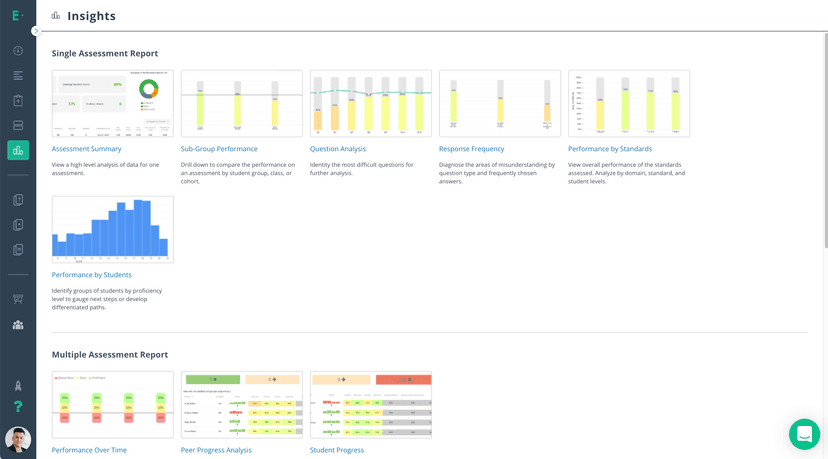
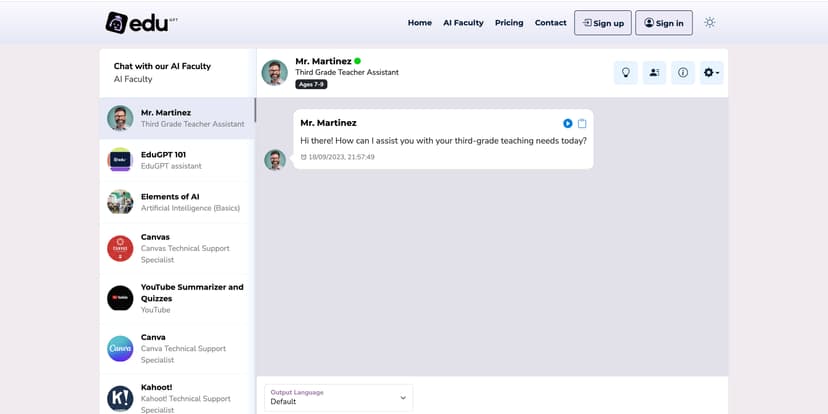
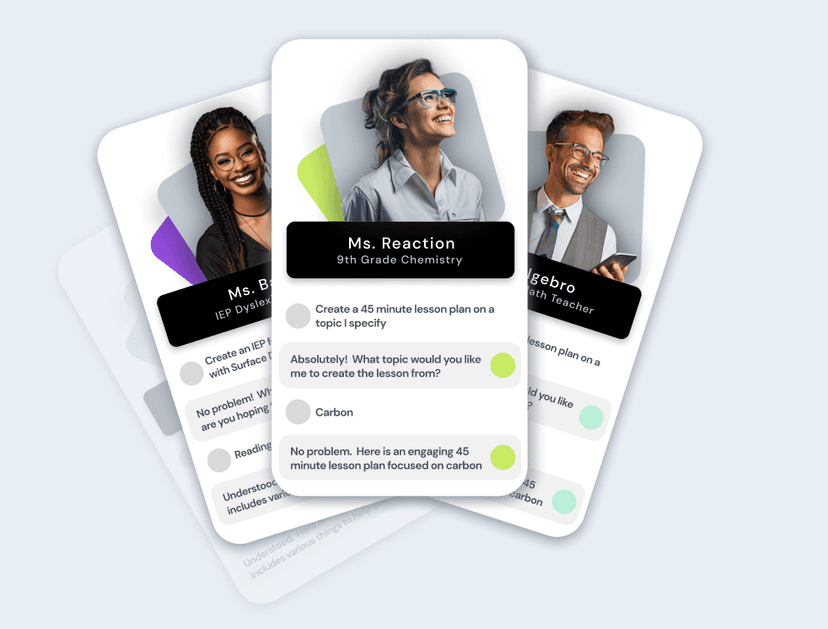
EduGPT uses a blended learning approach by providing schools with configurable large language models that teachers can tailor into subject-specific chatbots. Educators log into a central dashboard to define the parameters, knowledge base, and conversational rules for each bot. For example, a teacher can upload a specific science textbook and instruct the bot to only answer questions using that text, effectively creating a closed-loop retrieval practice tool. Students then log into the platform and interact with these custom bots through a standard chat interface. The system uses gamification elements to encourage students to ask questions and complete conversational tasks. Teachers retain full visibility into the chat transcripts, allowing them to assess student understanding and identify misconceptions. Unlike consumer AI tools that act as a black box, this system gives the school control over the pedagogical guardrails, ensuring the AI guides students toward answers through Socratic questioning rather than simply doing the work for them.
Strengths and tradeoffs of EduGPT
EduGPT's biggest strength is its transparency and control for educators, while its biggest weakness is the heavy burden it places on teachers to act as instructional designers. Complete Customization: Schools can restrict the artificial intelligence to specific curriculum materials, which prevents the bot from hallucinating incorrect information or referencing inappropriate outside sources. This creates a safer environment for your child to practice inquiry-based learning. Immediate Feedback: Because it uses large language models, the platform can instantly correct misconceptions and provide worked examples tailored to your child's specific reading level. Teacher Burden: The platform does not come with pre-built, scientifically validated lesson progressions. Teachers must manually prompt the bots to use effective teaching strategies. Lack of Spaced Repetition: Unless specifically engineered by the school's teaching staff, the platform does not inherently track your child's memory decay over time or resurface older topics to strengthen retention. Inconsistent Quality: The open-ended nature of the tool means a student in one classroom might get a highly effective Socratic tutor, while a student in another classroom might get a bot that acts merely as a glorified search engine.
Who Might Benefit From EduGPT?
EduGPT is best for tech-forward school districts that want to integrate artificial intelligence into the classroom while maintaining strict control over data and pedagogical standards. It serves students of all ages across all subject areas, from early childhood education to career and technical education. Your child will benefit most from this platform if their teachers are highly skilled at prompt engineering and instructional design. It is not designed for individual parents seeking a ready-made, comprehensive homeschooling curriculum or a targeted after-school tutoring app.
Data Transparency
Does Not Meet Data Transparency Standard
EduGPT does not meet our data transparency standard. Its privacy policy does not document basic protections, including contractual limits on service providers and a COPPA or FERPA commitment.
16 of 35 checks passed
Evaluated September 2026
Privacy Notice →Level 1 · Basic protections
Does not sell data or target ads at students, limits sharing, and lets parents see and delete their child's data.
Not documented: contractual limits on service providers, a COPPA or FERPA commitment
Level 2 · Parent control (meets the standard)
Families can get their data out, know who processes it, and know how long it is kept.
Not documented: a data retention timeline, named service providers, self-service deletion
Level 3 · Direct data access
Families or schools can pull their own data through an API, in a stated format.
Not documented: an API for retrieving their own data, a named export format
View all 35 checks
Parent Access6/8
Does the policy mention parents specifically?
“Parents, guardians, and authorized schools may contact us to request access to a learner's personal information, ask for correction, request deletion, or ask us to stop further collection from that learner.”
Can parents view their child's data?
“Parents, guardians, and authorized schools may contact us to request access to a learner's personal information, ask for correction, request deletion, or ask us to stop further collection from that learner.”
Can parents modify their child's data?
“Parents, guardians, and authorized schools may contact us to request access to a learner's personal information, ask for correction, request deletion, or ask us to stop further collection from that learner.”
Can parents delete their child's account?
“Parents, guardians, and authorized schools may contact us to request access to a learner's personal information, ask for correction, request deletion, or ask us to stop further collection from that learner.”
Is there a dedicated Children's Privacy section?
“## 5\. Children and students”
Does it reference COPPA compliance?
The policy does not mention COPPA.
Does it reference FERPA compliance?
The policy does not mention FERPA.
Is parental consent required for child accounts?
“Learners under 13 should use EduGPT only when access is created or authorized by a parent, legal guardian, or school representative with appropriate authority.”
Data Portability2/5
Can users access their personal data?
“You may also contact us to request access, correction, deletion, export, or other privacy assistance.”
Can users download/export their data?
“You may also contact us to request access, correction, deletion, export, or other privacy assistance.”
Is there a self-service data access tool?
The policy says users can update information in the app where available, but access and export happen only by request.
Is a specific data format mentioned for export?
The policy does not name an export format.
Is there an API for data access?
The policy does not mention an API for data access.
Data Minimization1/6
Is data collection itemized?
“Account information such as name, email, role, organization, family or school name, login details, and settings.”
Can the app be used without a real name?
The policy says it collects learner names.
Can the app be used without an email?
The policy says it collects email addresses as account information.
Does it state collection is limited to what is necessary?
The policy says it collects information needed to provide and also to improve EduGPT, which is not a commitment to collect only what is necessary.
Is IP address anonymized or truncated?
The policy says it collects IP addresses but does not say they are anonymized or truncated.
Is location tracking explicitly excluded?
The policy does not rule out location tracking.
Third-Party Protection5/7
Does it explicitly state no selling of data?
“We do not sell learner personal information or share it for third-party targeted advertising.”
Are third-party providers named?
The policy lists only categories of providers and names none of them.
Are providers contractually restricted?
The policy says only that it asks providers to limit their processing, not that they are contractually bound.
No-targeted-advertising commitment?
“We do not sell learner personal information or share it for third-party targeted advertising.”
Is AI/ML data sharing addressed?
“EduGPT may send relevant prompts, learner context, course content, transcripts, images, or other materials to service providers that help run the platform. These may include AI model providers”
Child-specific sharing restriction?
“We do not sell learner personal information or share it for third-party targeted advertising.”
Cookies/tracking limited or opt-out?
“EduGPT uses essential cookies and browser storage for login, security, session continuity, learning progress, notes, and preferences. We do not currently use advertising cookies.”
Deletion & Retention1/5
Can users delete their account?
“You may also contact us to request access, correction, deletion, export, or other privacy assistance.”
Self-service deletion mechanism?
The policy offers deletion only by contacting the company.
Specific data retention timeline?
The policy keeps data as long as reasonably needed and gives no specific timeline.
Auto-deletion of inactive accounts?
The policy does not address automatic deletion of inactive accounts.
Post-deletion handling described?
The policy does not describe how data is handled after a deletion request, beyond saying some data may be retained.
Advertising1/4
Advertising model explicitly disclosed?
The policy says it does not currently use advertising cookies but does not state whether the product has advertising.
Free from third-party advertisements?
The policy does not state that the product has no third-party ads.
Children excluded from ad targeting?
“We do not sell learner personal information or share it for third-party targeted advertising.”
Ad-free option available?
The policy does not state that the product has no ads or offer an ad-free option.
What This Means
The policy review did not meet our data transparency standard. The checks above show the documented findings and unknowns. A missing statement does not establish how the app handles data in practice.
About this evaluation: Based on automated analysis of Privacy Notice against 35 policy-disclosure questions, including questions adapted from the Common Sense Privacy Program's published evaluation questions. TLS is not affiliated with Common Sense Media, and this is not a Common Sense rating. Quoted text is copied from the policy; unquoted notes are our summary. Results describe what the policy documents, not the company's actual practices. Privacy policies can change: this review reflects the version we analyzed and does not determine legal compliance.
Sources and review method
TLS combines product information and editorial analysis to explain how EduGPT works, its tradeoffs, and the questions to ask before choosing it. Product features, an instructional rationale and evidence of learning outcomes are different kinds of information.
Formal Learning Standard assessment: not yet completed. Data Transparency findings are reported separately and do not establish learning effectiveness. Read our methodology.
Frequently Asked Questions About EduGPT
Is EduGPT free?
No, EduGPT charges an annual platform fee along with a recurring cost based on the number of students and teachers using the system. It is a business-to-business tool purchased by schools and districts, so individual parents do not pay out of pocket for access.
Is EduGPT good for early childhood education?
It can be, but it relies heavily on thoughtful teacher implementation. While the platform supports early education, young children require heavy scaffolding. Educators must design highly specialized bots with age-appropriate vocabulary and gamification features to hold their attention effectively.
What does EduGPT teach?
EduGPT does not teach a specific curriculum on its own. Instead, it provides the artificial intelligence tools for schools to teach humanities, social science, math, science, and career and technical education using their own customized lesson plans and approved textbooks.
Has EduGPT been evaluated by The Learning Standard?
EduGPT is currently pending evaluation by The Learning Standard. As a platform rather than a fixed curriculum, rating its effectiveness requires analyzing specific, real-world implementations by schools. Please refer to our methodology for more details on how we evaluate educational technology.
EduGPT vs ChatGPT: Which is better for students?
EduGPT is better for school environments because it offers configurable guardrails and strict data privacy. ChatGPT is an open commercial tool that can easily give away answers, whereas EduGPT allows teachers to restrict the AI to Socratic questioning and specific textbook materials.
Has The Learning Standard evaluated EduGPT?
TLS has not yet completed a Learning Standard evaluation of how well EduGPT teaches. Its privacy policy has been reviewed for Data Transparency and does not yet document the basic protections (Level 1).
Is EduGPT COPPA compliant?
A COPPA reference was not found in the reviewed privacy policy. This does not determine whether the app complies with COPPA. Policy review note: The policy does not mention COPPA.
Is EduGPT FERPA compliant?
A FERPA reference was not found in the reviewed privacy policy. This does not determine whether the app complies with FERPA. Policy review note: The policy does not mention FERPA.
Does EduGPT have a children's privacy policy?
The reviewed policy includes a dedicated children's privacy section. Policy review note: The policy has a section with its own heading on children and students.
Does EduGPT sell student data?
The reviewed policy states that the app does not sell data. This is a policy statement; actual data practices were not verified. Policy review note: The policy says the vendor does not sell learner personal information.
Can you delete your data from EduGPT?
The reviewed privacy policy describes account deletion. We have not tested the deletion process. Policy review note: Users can request deletion.
Follow TLS Research
Subscribe to future TLS research updates: app reviews, findings, and what the evidence shows.
Screenshots
Take Action
For EduGPT
If you represent eduGPT.com and have a correction or new evidence, send the relevant source so we can review and update this page.
Submit a correctionDetails
- Pricing
- 1x Annual Platform fee and a pre-determined annual fee based on students and teacher quantity.
- Platforms
- Web Browser
- Website
- Visit site