
EasyCode Pillars
Product by Learning.com
Facts checked: Not yet checked
Our take (not a Learning Standard rating). This label applies to learning-science judgments throughout this overview.
Our take (not a Learning Standard rating)
While EasyCode Pillars utilizes scaffolded, project-based learning to teach computational thinking, The Learning Standard has not yet formally evaluated its efficacy. Its blend of gamified practice and real-world application aligns well with established constructivist learning theories, but specific retention and skill transfer metrics remain unverified.
Pros
- Uses scaffolded progression to introduce complex computational concepts gradually, minimizing cognitive overload.
- Incorporates project-based learning to promote skill transfer and real-world application of coding languages like Python.
- Provides comprehensive educator dashboards for tracking mastery-based progression against national computer science standards.
Cons
- Limits access exclusively to district or school-level purchasing, preventing independent use by parents.
- Relies heavily on gamified elements which can sometimes distract from core cognitive tasks without proper instructional oversight.
- Lacks independent empirical data regarding the long-term retention of specific programming syntax.
What Do We Know About EasyCode Pillars ?
EasyCode Pillars offers a structurally sound approach to computer science education based on constructivist learning theory, but its actual effectiveness remains pending formal evaluation by The Learning Standard. Your child will likely encounter this curriculum through their school, as it is designed strictly for district and classroom implementation rather than independent home use. The program attempts to build computational thinking prowess by starting with basic logic in kindergarten and scaling up to actual coding languages like Python and cybersecurity principles in high school. This vertical alignment is excellent for reducing cognitive load, as students are not forced to learn new interface mechanics every year alongside new concepts. Because it relies heavily on gamified content in the early years and transitions to project-based learning later, the curriculum effectively models authentic skill transfer. However, parents should be aware that gamification in coding apps can sometimes encourage trial-and-error guessing rather than deep structural understanding. Since your child's teacher manages the pacing and feedback loops, the ultimate effectiveness of EasyCode Pillars will depend heavily on how well it is integrated into classroom instruction rather than serving as a standalone teaching tool.
How Does EasyCode Pillars Work?
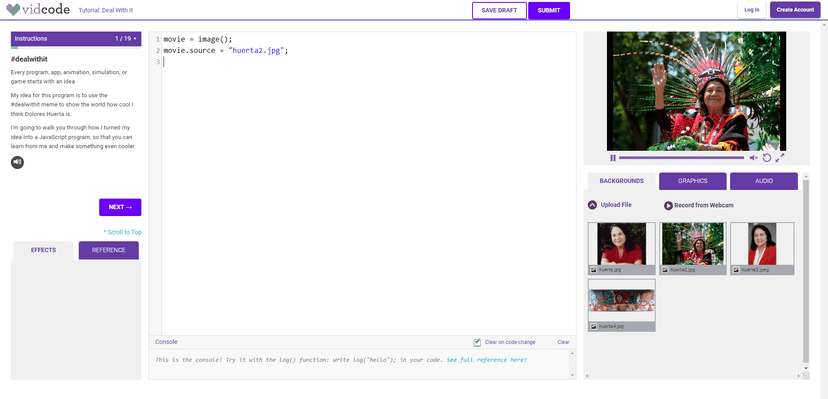
EasyCode Pillars uses a blended, project-based learning approach combining gamified instruction with direct hands-on coding practice. Students log into a web-based portal, typically accessed through their school's learning management system, and progress through a scaffolded series of modules. Younger students begin with block-based coding and visual puzzles that build fundamental logic and sequential processing skills. As students progress into middle and high school, the platform removes the visual training wheels and transitions them into text-based programming environments for languages like Python. The curriculum relies heavily on active learning, requiring students to write, test, and debug code to advance rather than passively watching tutorials. Teachers monitor this progression via a centralized dashboard that tracks completion rates and aligns student performance with state and global computer science standards. This allows educators to intervene with targeted support when the data indicates a student is failing to achieve mastery on a specific computational concept.
Strengths and tradeoffs of EasyCode Pillars
The biggest strength of EasyCode Pillars is its comprehensive K-12 scaffolded progression, while its primary weakness is its enterprise-only pricing model that excludes individual families. The platform excels at cognitive scaffolding, carefully managing the transition from elementary block-based logic puzzles to advanced high school syntax like Python and cybersecurity protocols. This prevents the cognitive overload that often frustrates novice programmers. Furthermore, its reliance on project-based learning ensures that students are not just memorizing syntax through rote repetition, but are actively engaging in skill transfer by applying concepts to solve real-world problems. Conversely, a significant weakness is the reliance on gamified learning in the early modules. While this increases initial engagement, learning science indicates that excessive gamification can sometimes distract from the core learning objectives, encouraging rapid guessing rather than deep algorithmic thinking. Finally, because the platform requires institutional adoption, parents cannot independently utilize its tools to supplement their child's education at home.
Who Might Benefit From EasyCode Pillars ?
Best for school districts and educators seeking a vertically aligned, standards-based computer science curriculum for grades K-12. Because it requires institutional purchasing and relies on teacher mediation, it is ideal for classrooms implementing blended learning models for career and technical education. It serves students who benefit from moving gradually from visual logic puzzles into rigorous, text-based programming languages like Python within a single, consistent ecosystem. It is not designed for individual parents seeking an after-school coding app for independent home use.
Data Transparency
Meets Data Transparency Standard
EasyCode Pillars meets our data transparency standard at Level 2 of 3 (Parent control). Level 3 needs the policy to document an API for retrieving their own data and a named export format.
21 of 35 checks passed
Level 1 · Basic protections
Does not sell data or target ads at students, limits sharing, and lets parents see and delete their child's data.
Level 2 · Parent control (meets the standard)
Families can get their data out, know who processes it, and know how long it is kept.
Level 3 · Direct data access
Families or schools can pull their own data through an API, in a stated format.
Not documented: an API for retrieving their own data, a named export format
View all 35 checks
Parent Access7/8
Does the policy mention parents specifically?
“If you are a parent and wish to review your child’s personal information, direct us to delete such information, or refuse to allow further collection or use of such information, please contact your school administrator to submit a request.”
Can parents view their child's data?
“If you are a parent and wish to review your child’s personal information, direct us to delete such information, or refuse to allow further collection or use of such information, please contact your school administrator to submit a request.”
Can parents modify their child's data?
The policy lets parents review, delete, or stop collection of their child's data, but does not give parents a right to correct or change it.
Can parents delete their child's account?
“Upon request by the school administrator, Learning.com will then provide you access to your child’s personal information, deletion of such information, or will stop collection or use of such information.”
Is there a dedicated Children's Privacy section?
“See our [Children’s Privacy Policy](https://learning.com/privacy-policy-childrens-policy) to understand how Learning.com collects, uses, discloses and protects personal information from children under that age of 13”
Does it reference COPPA compliance?
“We conduct audits to ensure that persistent identifiers are not used or disclosed to contact an individual, to create a profile, or for any other purpose, except as permitted under COPPA to provide support for the internal operations of the Platform.”
Does it reference FERPA compliance?
“Learning.com processes all student education records in accordance with the Family Educational Rights and Privacy Act (FERPA).”
Is parental consent required for child accounts?
“Learning.com only collects and processes personal information from children where that children’s school, district and/or teacher has contracted with Learning.com and has obtained parental consent to the collection of the children’s personal information.”
Data Portability2/5
Can users access their personal data?
“**Access:** The right to confirm whether we are processing your personal information and to access such personal information, including receiving a copy of the personal information we have collected about you.”
Can users download/export their data?
“**Data Portability:** The right to obtain a copy of your personal information in a portable, and, to the extent technically feasible, readily usable format that allows you to transmit the data to another entity without hindrance.”
Is there a self-service data access tool?
The policy says requests go through the school administrator and does not describe a tool users operate themselves.
Is a specific data format mentioned for export?
The policy only says data comes in a portable, readily usable format and names no specific format.
Is there an API for data access?
The policy does not describe an API for users, parents or schools to retrieve their data.
Data Minimization2/6
Is data collection itemized?
“The child’s name, email address, and account credentials.”
Can the app be used without a real name?
The policy says it collects the child's name.
Can the app be used without an email?
The policy says it collects the child's email address.
Does it state collection is limited to what is necessary?
“We only collect as much personal information from children as is reasonably necessary for the child to access and use the Platform, and we do not condition participation on the disclosure of more personal information than is reasonably necessary.”
Is IP address anonymized or truncated?
The policy does not address anonymizing or truncating IP addresses.
Is location tracking explicitly excluded?
The policy does not explicitly rule out location tracking.
Third-Party Protection6/7
Does it explicitly state no selling of data?
“We do not sell or share your or your child’s personal information.”
Are third-party providers named?
“Our platform integrates SSO’s (e.g., Clever, ClassLink, Google, and Microsoft).”
Are providers contractually restricted?
“we contractually prohibit the service providers and third parties from retaining, using, or disclosing any personal information belonging to children, other than as is required to provide such services.”
No-targeted-advertising commitment?
“We do not sell or use your or your child’s personal information for targeted advertising purposes.”
Is AI/ML data sharing addressed?
The policy does not address sharing data for AI or machine learning.
Child-specific sharing restriction?
“You have the right to consent to the collection and use of your child’s personal information for the Platform, while prohibiting further disclosure to third parties or service providers, unless such services are part of the Platform.”
Cookies/tracking limited or opt-out?
“These tools support functions such as load balancing, error detection, and performance monitoring—not for marketing or cross-site tracking. We do not use analytics or advertising cookies in the Portal.”
Deletion & Retention3/5
Can users delete their account?
“You may submit a request to exercise your rights to access, correction, deletion, and data portability by contacting your school administrator.”
Self-service deletion mechanism?
The policy only describes deletion by request through the school administrator, not a self-service tool.
Specific data retention timeline?
“Accounts belonging to children that are inactive for 90 days are securely deleted.”
Auto-deletion of inactive accounts?
“Accounts belonging to children that are inactive for 90 days are securely deleted.”
Post-deletion handling described?
The policy says data is securely deleted but does not describe what happens after deletion, such as backups or de-identified data.
Advertising1/4
Advertising model explicitly disclosed?
The policy says the Portal uses no advertising cookies but does not explicitly say whether the product shows ads.
Free from third-party advertisements?
The policy does not explicitly say the product is free of third-party advertisements.
Children excluded from ad targeting?
“We do not sell or use your or your child’s personal information for targeted advertising purposes.”
Ad-free option available?
The policy does not explicitly say the product has no ads or offer an ad-free option.
Meets Data Transparency Standard
The reviewed policy met our data transparency standard. This result describes the policy disclosures we assessed. Actual practices and legal compliance were not verified.
About this evaluation: Based on automated analysis of Privacy Policy and Privacy Policy against 35 policy-disclosure questions, including questions adapted from the Common Sense Privacy Program's published evaluation questions. TLS is not affiliated with Common Sense Media, and this is not a Common Sense rating. Quoted text is copied from the policy; unquoted notes are our summary. Results describe what the policy documents, not the company's actual practices. Privacy policies can change: this review reflects the version we analyzed and does not determine legal compliance.
Sources and review method
TLS combines product information and editorial analysis to explain how EasyCode Pillars works, its tradeoffs, and the questions to ask before choosing it. Product features, an instructional rationale and evidence of learning outcomes are different kinds of information.
Formal Learning Standard assessment: not yet completed. Data Transparency findings are reported separately and do not establish learning effectiveness. Read our methodology.
Frequently Asked Questions About EasyCode Pillars
Is EasyCode Pillars free?
No. EasyCode Pillars operates on an enterprise pricing model. It requires a paid annual or multi-year subscription purchased at the school or district level based on the number of student licenses needed.
Is EasyCode Pillars good for elementary students?
Yes. The curriculum is specifically scaffolded for kindergarten through 5th grade by utilizing gamified, visual block-based coding. This minimizes cognitive overload while introducing young students to foundational computational thinking and logic before they encounter text-based syntax.
What does EasyCode Pillars teach?
EasyCode Pillars teaches K-12 computer science, computational thinking, and coding. It progresses from basic sequencing and logic in early grades to advanced topics like Python programming, cybersecurity, and professional certification pathways in high school.
Has The Learning Standard evaluated EasyCode Pillars?
TLS has not yet completed a Learning Standard evaluation of how well EasyCode Pillars teaches. Its privacy policy has been reviewed for Data Transparency and reaches Level 2, Parent control.
Is EasyCode Pillars COPPA compliant?
The reviewed privacy policy references COPPA. A policy reference alone does not establish COPPA compliance. Policy review note: The policy says it complies with COPPA.
Is EasyCode Pillars FERPA compliant?
The reviewed privacy policy references FERPA. A policy reference alone does not establish FERPA compliance. Policy review note: The policy says it complies with FERPA.
Does EasyCode Pillars have a children's privacy policy?
The reviewed policy includes a dedicated children's privacy section. Policy review note: There is a separate Children's Privacy section and a full Children's Privacy Policy.
Does EasyCode Pillars sell student data?
The reviewed policy states that the app does not sell data. This is a policy statement; actual data practices were not verified. Policy review note: The vendor says it does not sell personal information.
Can you delete your data from EasyCode Pillars ?
The reviewed privacy policy describes account deletion. We have not tested the deletion process. Policy review note: Users can ask through their school to have their data deleted.
Follow TLS Research
Subscribe to future TLS research updates: app reviews, findings, and what the evidence shows.
Screenshots

Take Action
For EasyCode Pillars
If you represent Learning.com and have a correction or new evidence, send the relevant source so we can review and update this page.
Submit a correctionDetails
- Pricing
- Our curriculum solutions are offered on a per-student or per-school, annual or multi-year subscription basis. Typically, curriculum is purchased at the district or school level and can range in price based on the number of licenses purchased.
- Platforms
- Web Browser
- Grade Levels
- Kindergarten, 1st Grade, 2nd Grade, 3rd Grade, 4th Grade, 5th Grade, 6th Grade, 7th Grade, 8th Grade, 9th Grade, 10th Grade, 11th Grade, 12th Grade
- Website
- Visit site