Digital Kids - Digital Teens
Product by Binary Logic SA
Facts checked: Not yet checked
Our take (not a Learning Standard rating). This label applies to learning-science judgments throughout this overview.
Our take (not a Learning Standard rating)
Digital Kids - Digital Teens provides a structured, project-based computing curriculum, but The Learning Standard has not yet evaluated its specific efficacy. It correctly utilizes a spiral curriculum to revisit concepts, which learning science supports for long-term retention, though independent effectiveness data is still pending.
Pros
- Employs a spiral curriculum design to revisit and deepen computer science concepts over time, supporting long-term retention.
- Uses project-based learning to contextualize abstract computing skills into real-world scenarios.
- Integrates computational thinking across multiple grade levels rather than isolating it as a single unit.
- Offers blended learning options with both digital and print materials to reduce screen fatigue.
Cons
- Broad curriculum scope across twelve grades may lack the specialized depth found in dedicated, single-subject coding apps.
- Requires significant educator or parent facilitation for younger students to navigate the project-based tasks.
- Lacks independent efficacy data confirming its impact on student outcomes in international exams.
What Do We Know About Digital Kids - Digital Teens?
Digital Kids - Digital Teens offers a comprehensive approach to teaching computer science, though it requires adult facilitation to maximize its value. Your child will not simply play coding games; instead, they will engage with a structured curriculum that spans from first through twelfth grade. The program covers digital literacy, information technology, and computer science through real-world projects. By grounding abstract technical concepts in practical scenarios, the curriculum leverages contextual learning, which helps students transfer skills to new situations. Because it spans so many grade levels, it uses a spiral progression. This means your child will encounter core concepts repeatedly over the years, with each pass demanding a higher level of mastery. Learning science demonstrates that this spaced repetition builds stronger neural pathways than cramming topics into a single semester. However, parents should understand that this is a formal curriculum, not a lightweight app. It demands time and active involvement. Your child will likely need guidance to connect the hands-on robotics and coding exercises with the broader computational thinking goals. Since The Learning Standard has not yet formally evaluated this program, parents should monitor their child's engagement to ensure the project-based format fits their specific learning style.
How Does Digital Kids - Digital Teens Work?
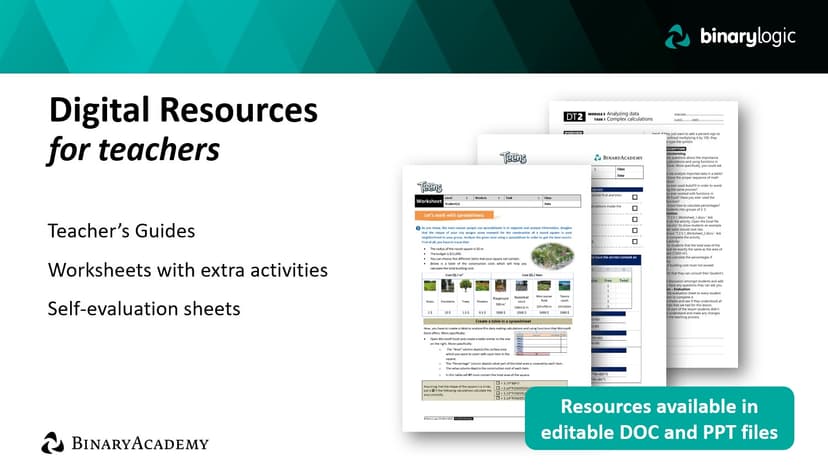
Digital Kids - Digital Teens uses project-based and inquiry-based learning to teach computer science and digital literacy. The platform organizes its content into a spiral curriculum, moving students through progressively complex modules as they advance from early elementary through high school. Instead of isolating skills, the program embeds coding, robotics, and general digital literacy into broader projects. For example, a student might learn specific programming logic to solve a real-world scenario rather than completing isolated coding drills. This blended learning model allows students to interact with both digital software and printed materials. The curriculum integrates supplementary materials for various educational robots and coding environments. As students work through the modules, they must actively apply computational thinking to troubleshoot and build solutions. This reliance on active retrieval and application ensures that students do not just passively consume technical information, but actively construct their understanding of computing systems.
Strengths and tradeoffs of Digital Kids - Digital Teens
The biggest strength of Digital Kids - Digital Teens is its spiral curriculum design, while its biggest weakness is the heavy reliance on adult facilitation for younger learners. Spiral progression is a major asset because it aligns with the learning science principle of spaced repetition. By introducing a concept like algorithmic logic in early grades and revisiting it with increasing complexity in later years, the program prevents the forgetting curve and solidifies long-term retention. Contextualizing skills through project-based learning is another key strength; students learn to apply abstract coding concepts to concrete, real-world problems. This promotes the transfer of knowledge better than isolated skill drills. On the downside, the inquiry-based structure can be a weakness for novices. Without strong foundational knowledge, pure inquiry can overwhelm students and overload their working memory. Educator involvement is strictly necessary to guide students through these complex, open-ended tasks, making it less ideal for independent, self-paced learning. Furthermore, because the curriculum covers such a vast age range and scope, some modules may lack the deep, targeted worked examples found in standalone programming tools.
Who Might Benefit From Digital Kids - Digital Teens?
Best for schools and dedicated homeschooling parents seeking a complete, multi-year computing curriculum rather than a casual coding game. Digital Kids - Digital Teens serves students from first through twelfth grade who benefit from hands-on, project-based learning. Because the curriculum integrates coding, robotics, and general IT skills, it is ideal for learners who need a holistic view of technology rather than just programming syntax. It requires active teacher or parent facilitation, making it poorly suited for students looking for independent, self-directed screen time.
Data Transparency
Does Not Meet Data Transparency Standard
Digital Kids - Digital Teens does not meet our data transparency standard. Its privacy policy does not document basic protections, including parents' right to see their child's data and parents' right to delete their child's data.
17 of 35 checks passed
Evaluated September 2026
Privacy Policy →Level 1 · Basic protections
Does not sell data or target ads at students, limits sharing, and lets parents see and delete their child's data.
Not documented: parents' right to see their child's data, parents' right to delete their child's data
Level 2 · Parent control (meets the standard)
Families can get their data out, know who processes it, and know how long it is kept.
Not documented: a data retention timeline, self-service deletion
Level 3 · Direct data access
Families or schools can pull their own data through an API, in a stated format.
Not documented: an API for retrieving their own data, a named export format
View all 35 checks
Parent Access4/8
Does the policy mention parents specifically?
“Children under 16 should not submit personal data without parental consent.”
Can parents view their child's data?
The policy gives access rights to users generally and does not give parents a right to view their child's data.
Can parents modify their child's data?
The policy gives correction rights to users generally and does not give parents a right to change their child's data.
Can parents delete their child's account?
The policy gives erasure rights to users generally and does not give parents a right to delete their child's data or account.
Is there a dedicated Children's Privacy section?
“### Children’s Privacy We follow the **Children’s Online Privacy Protection Act (COPPA)**.”
Does it reference COPPA compliance?
“We follow the **Children’s Online Privacy Protection Act (COPPA)**.”
Does it reference FERPA compliance?
The policy does not mention FERPA.
Is parental consent required for child accounts?
“Children under 16 should not submit personal data without parental consent.”
Data Portability2/5
Can users access their personal data?
“Access — request a copy of your data.”
Can users download/export their data?
“Data portability — request transfer of your data.”
Is there a self-service data access tool?
The policy says rights are exercised by email or phone and describes no self-service tool.
Is a specific data format mentioned for export?
The policy does not name a format for exported data.
Is there an API for data access?
The policy does not mention an API for data access.
Data Minimization2/6
Is data collection itemized?
“Teachers/supervisors: name, email, school name & address. Students: name, class (for teacher identification) and grades.”
Can the app be used without a real name?
The policy says it collects students' names.
Can the app be used without an email?
“Students: name, class (for teacher identification) and grades.”
Does it state collection is limited to what is necessary?
The policy does not state that collection is limited to what is necessary.
Is IP address anonymized or truncated?
The policy does not address IP address anonymization.
Is location tracking explicitly excluded?
The policy does not address location tracking.
Third-Party Protection6/7
Does it explicitly state no selling of data?
“We never sell or trade personal data to third parties.”
Are third-party providers named?
“Our newsletter system uses **Brevo** (GDPR-compliant, EU-based) under strict data protection agreements.”
Are providers contractually restricted?
“Our newsletter system uses **Brevo** (GDPR-compliant, EU-based) under strict data protection agreements.”
No-targeted-advertising commitment?
“We do **not** use advertising cookies or share browsing data for ads.”
Is AI/ML data sharing addressed?
The policy does not address sharing data for AI or machine learning.
Child-specific sharing restriction?
“We use children’s data only for educational purposes and never send direct marketing to under-16 users.”
Cookies/tracking limited or opt-out?
“You can disable cookies in your browser, but some features may stop working.”
Deletion & Retention2/5
Can users delete their account?
“Erasure — request deletion of your data (under certain conditions).”
Self-service deletion mechanism?
The policy says deletion is requested by email or phone and describes no self-service mechanism.
Specific data retention timeline?
The policy says data is kept for the period each school requires but gives no specific timeline.
Auto-deletion of inactive accounts?
The policy does not address automatic deletion of inactive accounts.
Post-deletion handling described?
“We keep teacher and student data only for the period required by each school, then delete it or anonymize it for development and testing.”
Advertising1/4
Advertising model explicitly disclosed?
The policy does not say whether the product has advertising; it only says no advertising cookies are used.
Free from third-party advertisements?
The policy does not explicitly say the product is free of third-party advertisements.
Children excluded from ad targeting?
“We do **not** use advertising cookies or share browsing data for ads.”
Ad-free option available?
The policy does not say the product has no advertising or offers an ad-free option.
What This Means
The policy review did not meet our data transparency standard. The checks above show the documented findings and unknowns. A missing statement does not establish how the app handles data in practice.
About this evaluation: Based on automated analysis of Privacy Policy against 35 policy-disclosure questions, including questions adapted from the Common Sense Privacy Program's published evaluation questions. TLS is not affiliated with Common Sense Media, and this is not a Common Sense rating. Quoted text is copied from the policy; unquoted notes are our summary. Results describe what the policy documents, not the company's actual practices. Privacy policies can change: this review reflects the version we analyzed and does not determine legal compliance.
Sources and review method
TLS combines product information and editorial analysis to explain how Digital Kids - Digital Teens works, its tradeoffs, and the questions to ask before choosing it. Product features, an instructional rationale and evidence of learning outcomes are different kinds of information.
Formal Learning Standard assessment: not yet completed. Data Transparency findings are reported separately and do not establish learning effectiveness. Read our methodology.
Frequently Asked Questions About Digital Kids - Digital Teens
Is Digital Kids - Digital Teens free?
No, Digital Kids - Digital Teens is not free. Pricing depends on the specific media format chosen by the school or parent. Users can purchase a combination of printed and digital materials, or opt for fully digital access. Schools typically purchase licenses based on student enrollment and the specific grade level modules required for their computing curriculum.
Is Digital Kids - Digital Teens good for elementary students?
Yes, it offers appropriate entry-level content for elementary students starting in the first grade. The platform uses a spiral curriculum, meaning it introduces basic digital literacy and foundational computational thinking in the early grades. However, younger children will require significant guidance from a parent or teacher to navigate the inquiry-based projects and connect hands-on activities to learning objectives.
What does Digital Kids - Digital Teens teach?
Digital Kids - Digital Teens teaches a comprehensive range of technology skills, including digital literacy, computer science, and Information and Communication Technology. The curriculum covers computational thinking, programming logic, robotics, and general computer applications. It frames these technical subjects around real-world scenarios to help students apply their knowledge practically.
Has The Learning Standard evaluated Digital Kids - Digital Teens?
TLS has not yet completed a Learning Standard evaluation of how well Digital Kids - Digital Teens teaches. Its privacy policy has been reviewed for Data Transparency and does not yet document the basic protections (Level 1).
Is Digital Kids - Digital Teens COPPA compliant?
The reviewed privacy policy references COPPA. A policy reference alone does not establish COPPA compliance. Policy review note: The policy says it follows COPPA.
Is Digital Kids - Digital Teens FERPA compliant?
A FERPA reference was not found in the reviewed privacy policy. This does not determine whether the app complies with FERPA. Policy review note: The policy does not mention FERPA.
Does Digital Kids - Digital Teens have a children's privacy policy?
The reviewed policy includes a dedicated children's privacy section. Policy review note: The policy has its own Children's Privacy section.
Does Digital Kids - Digital Teens sell student data?
The reviewed policy states that the app does not sell data. This is a policy statement; actual data practices were not verified. Policy review note: The policy says the company never sells personal data.
Can you delete your data from Digital Kids - Digital Teens?
The reviewed privacy policy describes account deletion. We have not tested the deletion process. Policy review note: Users can request deletion of their data.
Follow TLS Research
Subscribe to future TLS research updates: app reviews, findings, and what the evidence shows.
Screenshots
Take Action
For Digital Kids - Digital Teens
If you represent Binary Logic SA and have a correction or new evidence, send the relevant source so we can review and update this page.
Submit a correctionDetails
- Pricing
- Pricing is based on the type of media: printed+digital or fully digital.
- Platforms
- Web Browser
- Grade Levels
- 1st Grade, 2nd Grade, 3rd Grade, 4th Grade, 5th Grade, 6th Grade, 7th Grade, 8th Grade, 9th Grade, 10th Grade, 11th Grade, 12th Grade
- Website
- Visit site