
CoderZ
Product by CoderZ
Facts checked: Not yet checked
Our take (not a Learning Standard rating). This label applies to learning-science judgments throughout this overview.
Our take (not a Learning Standard rating)
While The Learning Standard has not yet formally evaluated CoderZ, its project-based approach to teaching computer science through virtual robotics shows promise. It utilizes problem-based learning to encourage computational thinking, though the heavy reliance on gamification can sometimes distract from core concept mastery and deep knowledge retention.
Pros
- Integrates project-based learning to contextualize abstract coding concepts through virtual robotics.
- Uses progressive scaffolding to transition students from block-based programming to text-based languages.
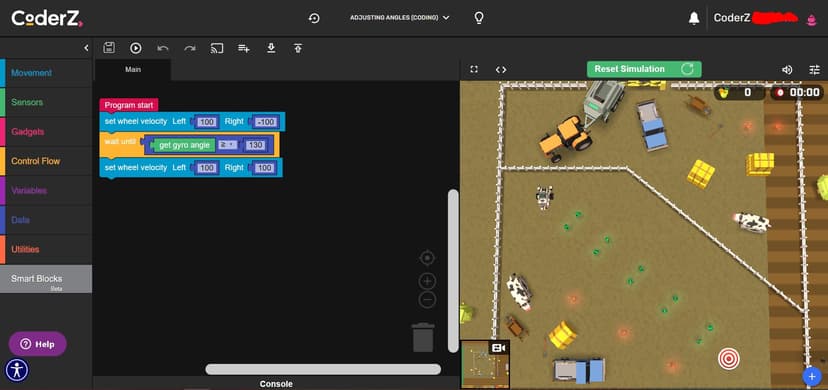
- Provides immediate visual feedback by simulating code execution in a 3D virtual environment.
- Encourages iterative problem-solving by allowing students to continuously test and refine their algorithms.
Cons
- Relies heavily on gamification rewards which can undermine intrinsic motivation for learning complex coding skills.
- Lacks targeted spaced retrieval practice to ensure long-term retention of specific programming syntax.
- Provides limited worked examples before asking students to solve complex multi-step coding challenges.
What Do We Know About CoderZ?
CoderZ is an effective tool for teaching applied computer science and robotics, though its long-term impact is pending formal evaluation by The Learning Standard. The platform uses a virtual robotics environment to teach coding, moving your child from basic block-based programming to advanced text-based languages like Python. By anchoring abstract coding concepts in observable robotic movements, the app utilizes dual-coding theory, pairing visual spatial tasks with logical programming structures. Your child will navigate a series of missions that require them to write code to move a robot through a 3D environment. This provides immediate, tangible feedback on whether their code works. If the robot crashes or goes the wrong way, your child instantly sees the error in their logic and must debug it. This iterative process builds strong problem-solving skills and resilience. However, the heavy reliance on gamified elements like earning points and unlocking levels can sometimes distract from the actual learning mechanics. Your child might focus more on completing the mission quickly rather than understanding the underlying computational thinking principles. Additionally, parents should know that CoderZ is primarily designed for school deployments, meaning individual home access requires a district subscription.
How Does CoderZ Work?
CoderZ uses problem-based learning and progressive scaffolding within a virtual robotics simulation to teach computer science. The platform places students in a 3D interface where they must program a virtual robot to complete specific tasks, such as navigating a maze or retrieving an object. Beginners start with a visual, block-based programming language modeled after Blockly. This reduces the cognitive load associated with learning complex syntax, allowing students to focus purely on computational logic, sequencing, and algorithmic thinking. As learners demonstrate mastery, the platform scaffolds them into text-based programming languages like Python and Java. The core learning mechanic relies on immediate visual feedback. When a student executes their code, they watch the 3D robot perform the commands in real-time. If the code contains an error, the robot's failure provides clear, observable data that the student must analyze and correct. This trial-and-error debugging process encourages active learning and continuous iterative problem-solving.
Strengths and tradeoffs of CoderZ
CoderZ's biggest strength is its use of immediate visual feedback to teach abstract programming logic, while its biggest weakness is a lack of structured retrieval practice to secure long-term syntax retention. Visual grounding is excellent; by mapping lines of code to the physical movements of a virtual robot, the platform reduces the abstraction of computer science. This leverages dual-coding theory, helping students build stronger mental models of how algorithms function in real-world scenarios. Iterative problem-solving is naturally built into the platform's trial-and-error debugging process, forcing learners to actively engage with their mistakes. However, the platform struggles with cognitive overload during complex challenges. It offers too few worked examples before asking students to build multi-step algorithms, which can leave novices frustrated. Furthermore, the instructional design heavily favors gamification over foundational memory building. Without spaced repetition or targeted quizzes to practice specific coding terminology and syntax, students may rely on trial-and-error guessing rather than actually mastering the programming languages they are using.
Who Might Benefit From CoderZ?
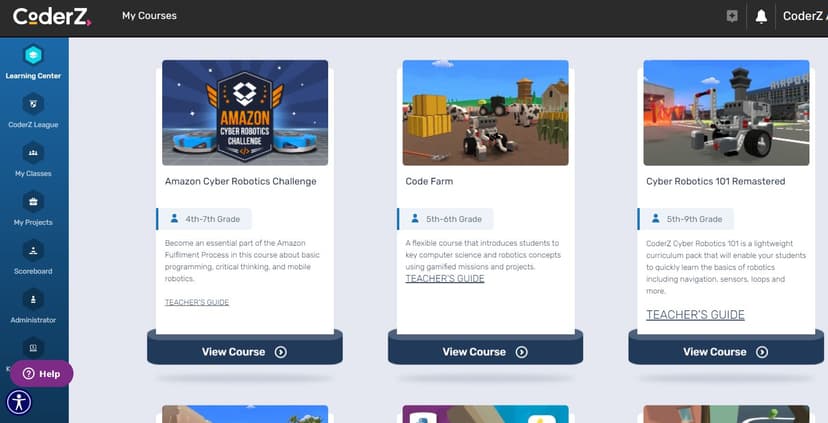
CoderZ is best for middle and high school students who need a highly visual, interactive entry point into computer science and robotics. Designed for grades 4 through 12, it is ideal for learners who struggle with traditional, text-heavy coding tutorials and benefit from seeing immediate, tangible results from their code. It is highly effective for classroom environments where teachers want to introduce STEM, robotics, and computational thinking without the prohibitive cost and logistical hurdles of purchasing physical hardware.
Data Transparency
Does Not Meet Data Transparency Standard
CoderZ reaches Level 1 of 3 (Basic protections), below our data transparency standard. Reaching Level 2 needs the policy to document data export and a data retention timeline.
23 of 35 checks passed
Level 1 · Basic protections
Does not sell data or target ads at students, limits sharing, and lets parents see and delete their child's data.
Level 2 · Parent control (meets the standard)
Families can get their data out, know who processes it, and know how long it is kept.
Not documented: data export, a data retention timeline
Level 3 · Direct data access
Families or schools can pull their own data through an API, in a stated format.
Not documented: an API for retrieving their own data, a named export format
View all 35 checks
Parent Access8/8
Does the policy mention parents specifically?
“Parents can contact Customer Services to request access to, change, or delete their child’s personal information by sending an email to us”
Can parents view their child's data?
“Parents can contact Customer Services to request access to, change, or delete their child’s personal information by sending an email to us”
Can parents modify their child's data?
“Parents can contact Customer Services to request access to, change, or delete their child’s personal information by sending an email to us”
Can parents delete their child's account?
“At any time, parents can refuse to permit us to collect further personal information from their children in association with a particular account, and can request that we delete from our records the personal information we have collected in connection with that account.”
Is there a dedicated Children's Privacy section?
“This Children’s Online Privacy Policy explains our information collection, disclosure, and parental consent practices with respect to information provided by children under the age of 13”
Does it reference COPPA compliance?
“Consistent with the requirements of COPPA, on any child-targeted site or application, or in any instance where we ask for age and determine the user is age 13 or under, we ask for a parent or legal guardian email address before we collect any personal information from the child.”
Does it reference FERPA compliance?
“If any parent believes that Intelitek possesses PII relating to his or her child, the parent should notify Intelitek and Intelitek shall, as relevant, comply with FERPA and all applicable laws and regulations in providing the parent with access to such records through the FERPA-regulated client from which such records were received.”
Is parental consent required for child accounts?
“we will never knowingly collect personally identifiable Information from anyone under the age of thirteen (13) without requiring parental consent.”
Data Portability2/5
Can users access their personal data?
“Intelitek may allow You to access certain information about You through the member dashboard and/or customer accounts, for the purpose of viewing, and in certain situations, updating that information.”
Can users download/export their data?
The policy does not address downloading or exporting data.
Is there a self-service data access tool?
“Parents can request access to and delete their child’s personal information by logging on to the child’s account and accessing the profile settings.”
Is a specific data format mentioned for export?
The policy does not mention any export format.
Is there an API for data access?
The policy does not mention an API for data access.
Data Minimization1/6
Is data collection itemized?
“The types of Information collected include, without limitation:”
Can the app be used without a real name?
The policy says it collects users' full names, and schools may provide student names.
Can the app be used without an email?
The policy says it collects email addresses, and schools may provide student contact information.
Does it state collection is limited to what is necessary?
The policy limits collection to what is necessary only for contests and makes no general data-minimization commitment.
Is IP address anonymized or truncated?
The policy says it collects IP addresses and does not mention anonymizing or truncating them.
Is location tracking explicitly excluded?
The policy does not explicitly rule out location tracking.
Third-Party Protection6/7
Does it explicitly state no selling of data?
“PII will not be used for marketing new products or services to the student, targeting individual students with directed advertisements, selling the information to a third party, or any other purpose prohibited by state or federal law.”
Are third-party providers named?
“including (but not limited to) Amazon Web Services (for website hosting and data storage), Pardot (for sending email), Jaco (for session recording), ZenDesk (for customer support), Segment (for app integration), and Google Analytics”
Are providers contractually restricted?
“Personal data will be used and stored by these third parties solely in context as an implementation services provider to CoderZ and its affiliates, but these third parties will not receive any ownership or have any other rights to access or use this personal data.”
No-targeted-advertising commitment?
“Under no circumstances will PII be used for targeted advertising directed to students or their parents or for any other purpose prohibited by law or by our user agreement.”
Is AI/ML data sharing addressed?
The policy does not address AI or machine learning.
Child-specific sharing restriction?
“In addition to those rare instances where a child’s personal information is posted publicly (after receiving high-level parental consent), we also may share or disclose personal information collected from children in a limited number of instances, including the following:”
Cookies/tracking limited or opt-out?
“Most browsers have an option for turning off the cookie feature, which will prevent your browser from accepting new cookies”
Deletion & Retention2/5
Can users delete their account?
“At any time, parents can refuse to permit us to collect further personal information from their children in association with a particular account, and can request that we delete from our records the personal information we have collected in connection with that account.”
Self-service deletion mechanism?
“Parents can request access to and delete their child’s personal information by logging on to the child’s account and accessing the profile settings.”
Specific data retention timeline?
The policy says data is kept only as long as reasonably necessary but gives no specific retention period.
Auto-deletion of inactive accounts?
The policy does not address deleting inactive accounts automatically.
Post-deletion handling described?
The policy says only that deletion may end the account and does not describe what happens to data after deletion.
Advertising4/4
Advertising model explicitly disclosed?
“Because CoderZ does not display advertising or track browsing on third party sites, we do not do anything different in response to “do not track” signals transmitted by web browsers.”
Free from third-party advertisements?
“We do not allow advertising on our Website, and we do not have the ability to collect your web search history across third-party Internet websites or search engines.”
Children excluded from ad targeting?
“PII will not be used for marketing new products or services to the student, targeting individual students with directed advertisements, selling the information to a third party, or any other purpose prohibited by state or federal law.”
Ad-free option available?
“We do not allow advertising on our Website, and we do not have the ability to collect your web search history across third-party Internet websites or search engines.”
What This Means
The policy review did not meet our data transparency standard. The checks above show the documented findings and unknowns. A missing statement does not establish how the app handles data in practice.
About this evaluation: Based on automated analysis of Important legal information on privacy protection, Children’s Online Privacy Protection Act Policy and FERPA against 35 policy-disclosure questions, including questions adapted from the Common Sense Privacy Program's published evaluation questions. TLS is not affiliated with Common Sense Media, and this is not a Common Sense rating. Quoted text is copied from the policy; unquoted notes are our summary. Results describe what the policy documents, not the company's actual practices. Privacy policies can change: this review reflects the version we analyzed and does not determine legal compliance.
Sources and review method
TLS combines product information and editorial analysis to explain how CoderZ works, its tradeoffs, and the questions to ask before choosing it. Product features, an instructional rationale and evidence of learning outcomes are different kinds of information.
Formal Learning Standard assessment: not yet completed. Data Transparency findings are reported separately and do not establish learning effectiveness. Read our methodology.
Frequently Asked Questions About CoderZ
Is CoderZ free?
No, CoderZ is not free. It is primarily a B2B educational platform designed specifically for schools, districts, and educational organizations. Educational institutions must request a customized quote and participate in a guided demo to secure licensing for their classrooms. There are currently no direct-to-consumer subscriptions available for individual families to purchase for home use. Parents interested in the platform should advocate for its adoption at the district level.
Is CoderZ good for middle school students?
Yes, CoderZ is highly effective for middle school students. The platform specifically targets grades 4 through 12, offering a structured curriculum progression from simple block-based coding to more complex text-based languages like Python. This scaffolding perfectly matches the cognitive development of middle schoolers who are actively transitioning from concrete mechanical learning to abstract logical thinking and complex problem-solving.
What does CoderZ teach?
CoderZ teaches computer science, computational thinking, and applied robotics. Students learn core programming concepts such as algorithmic sequencing, loops, variables, and conditional logic. By programming virtual robots to navigate 3D environments, students also engage heavily with applied physics and math concepts. They must constantly calculate distance, optimize speed, and utilize geometric angles to successfully complete their assigned mechanical missions.
How does CoderZ vs Scratch compare?
Both platforms teach foundational coding, but they utilize entirely different pedagogical frameworks. Scratch operates as an open-ended sandbox environment focused primarily on creative expression, animation, and game design. CoderZ provides a highly structured, problem-based learning environment focused specifically on robotics and applied engineering tasks. This makes CoderZ more rigid than Scratch, but significantly better suited for rigorous, standards-aligned STEM curricula.
Has The Learning Standard evaluated CoderZ?
TLS has not yet completed a Learning Standard evaluation of how well CoderZ teaches. Its privacy policy has been reviewed for Data Transparency and reaches Level 1, Basic protections.
Is CoderZ COPPA compliant?
The reviewed privacy policy references COPPA. A policy reference alone does not establish COPPA compliance. Policy review note: The policy states that its practices follow COPPA.
Is CoderZ FERPA compliant?
The reviewed privacy policy references FERPA. A policy reference alone does not establish FERPA compliance. Policy review note: A separate FERPA policy commits to complying with FERPA.
Does CoderZ have a children's privacy policy?
The reviewed policy includes a dedicated children's privacy section. Policy review note: A separate Children's Online Privacy Protection Act Policy covers children's data.
Does CoderZ sell student data?
The reviewed policy states that the app does not sell data. This is a policy statement; actual data practices were not verified. Policy review note: The company commits not to sell student PII to third parties.
Can you delete your data from CoderZ?
The reviewed privacy policy describes account deletion. We have not tested the deletion process. Policy review note: Account data can be deleted on request.
Follow TLS Research
Subscribe to future TLS research updates: app reviews, findings, and what the evidence shows.
Screenshots
Take Action
For CoderZ
If you represent CoderZ and have a correction or new evidence, send the relevant source so we can review and update this page.
Submit a correctionDetails
- Pricing
- Schools and districts will receive a detailed quote and an invitation to a personal demo meeting.
- Platforms
- Web Browser, Chrome OS (Google)
- Grade Levels
- 4th Grade, 5th Grade, 6th Grade, 7th Grade, 8th Grade, 9th Grade, 10th Grade, 11th Grade, 12th Grade
- Website
- Visit site