Ava
Product by Social Cipher
Facts checked: Not yet checked
Our take (not a Learning Standard rating). This label applies to learning-science judgments throughout this overview.
Our take (not a Learning Standard rating)
While The Learning Standard has not yet formally evaluated Ava, its game-based environment offers a safe space for neurodiverse students to practice social-emotional skills. It leverages play-based scenarios to model interactions, though its reliance on simulation means real-world transfer requires active facilitation from educators or parents.
Pros
- Uses role-play mechanics to allow safe failure and repetition of complex social interactions.
- Models social-emotional scenarios through interactive gameplay rather than passive video consumption.
- Designed specifically around neurodivergent learning profiles to reduce the cognitive overload associated with traditional social-emotional instruction.
Cons
- Requires significant adult facilitation to ensure skills transfer from the game to real-world interactions.
- Lacks built-in spaced retrieval practice to reinforce social concepts over long-term intervals.
- Pricing structure is geared heavily toward institutional purchasing rather than individual families.
What Do We Know About Ava?
Ava provides an effective, low-stakes environment for neurodivergent middle-grade students to practice social-emotional skills, though it requires active adult involvement for real-world application. Your child will navigate narrative-driven scenarios that require them to make social decisions, see the consequences, and try again without the stress of real-world repercussions. This approach leverages experiential learning, which is critical for students who may struggle with abstract social concepts. Because the game acts as a simulator, your child can test boundaries and explore empathy in a structured way. However, parents and educators should understand that digital social-emotional learning rarely transfers automatically to physical environments. You must bridge the gap between the game's scenarios and your child's daily life by discussing the choices they make in the app. The program is currently awaiting formal evaluation by The Learning Standard, but its foundational use of cooperative and play-based learning aligns with established frameworks for neurodiverse education. It is best utilized as a supplementary tool alongside structured, real-world social coaching rather than a standalone curriculum.
How Does Ava Work?
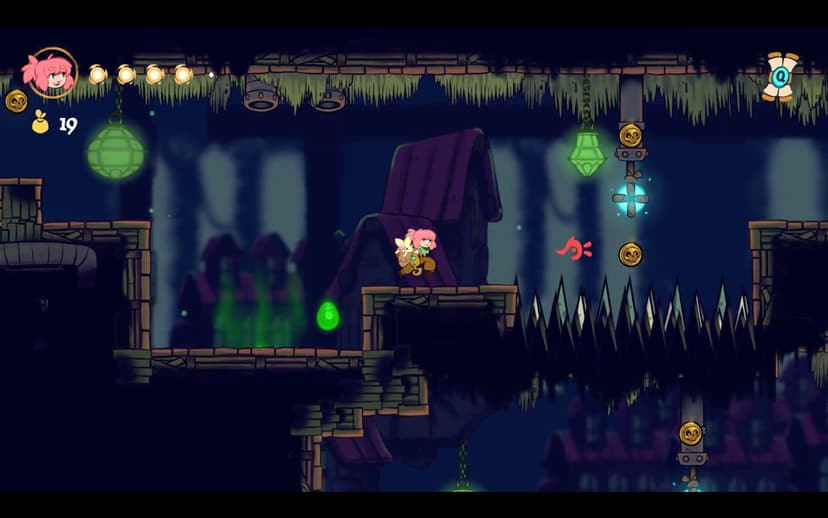
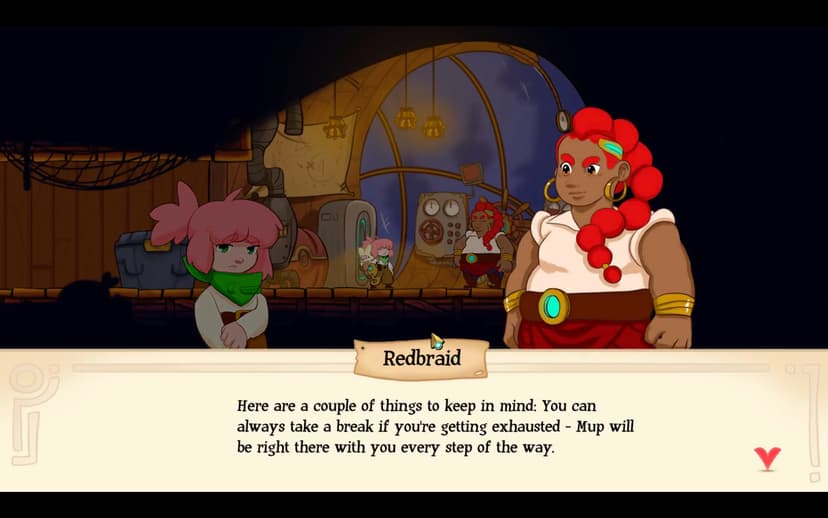
Ava relies on game-based, narrative role-play to model social-emotional learning concepts for neurodivergent students. Your child assumes the role of a character navigating a science-fiction world, where they must solve problems by making social and emotional choices. The mechanics focus on experiential learning. Students encounter a scenario, choose a response, and immediately observe the narrative consequence of that choice. If a choice leads to a negative outcome, the game allows the student to rewind and attempt a different strategy. This promotes psychological safety and encourages learners to explore various social strategies without real-world anxiety. The platform also incorporates cooperative learning elements, providing discussion prompts that educators or parents can use to guide post-game reflections. By anchoring abstract social rules in concrete gameplay mechanics, the app attempts to reduce the cognitive load often required to process complex interpersonal dynamics.
Strengths and tradeoffs of Ava
Ava's biggest strength is its use of safe, simulated environments for social-emotional trial and error, while its biggest weakness is the inherent difficulty of transferring screen-based social skills to real-world interactions. Strengths: The app excels at providing a low-stakes platform for social modeling. By allowing students to make dialogue and action choices within a game, it uses experiential learning to demonstrate cause and effect in relationships. This is particularly effective for neurodivergent learners who benefit from explicit, visual representations of social dynamics. The ability to fail safely and retry scenarios builds competence without triggering anxiety. Weaknesses: Social-emotional learning relies heavily on context, body language, and unpredictable human variables that a digital game cannot fully replicate. Ava does not utilize formal spaced repetition or retrieval practice to ensure students remember the social rules they learn in the game. Furthermore, the skills acquired in the digital environment will likely remain siloed there unless an adult actively bridges the gap. Parents and teachers must facilitate discussions to connect the game's lessons to the student's actual life, making the app highly dependent on external instruction.
Who Might Benefit From Ava?
Ava is best for neurodivergent students in grades 4 through 9 who benefit from practicing social-emotional skills in a low-anxiety, digital environment. The narrative and gameplay mechanics are specifically tailored to middle-grade cognitive levels, making it ideal for late elementary and middle school classrooms or therapy settings. Because the pricing and structure are designed primarily for cohorts, it is an excellent fit for special education teachers, school counselors, or dedicated parents who are willing to use the game's cooperative learning prompts to facilitate deeper real-world discussions.
Data Transparency
Meets Data Transparency Standard
Ava meets our data transparency standard at Level 2 of 3 (Parent control). Level 3 needs the policy to document an API for retrieving their own data and a named export format.
26 of 35 checks passed
Evaluated September 2026
Social Cipher: Privacy Policy →Level 1 · Basic protections
Does not sell data or target ads at students, limits sharing, and lets parents see and delete their child's data.
Level 2 · Parent control (meets the standard)
Families can get their data out, know who processes it, and know how long it is kept.
Level 3 · Direct data access
Families or schools can pull their own data through an API, in a stated format.
Not documented: an API for retrieving their own data, a named export format
View all 35 checks
Parent Access8/8
Does the policy mention parents specifically?
“Our products can be signed up for by teachers, private practice counselors, counselors in schools, and school districts (“School Accounts”), as well as parents for their children, including children under the age of 13 (“Parent Accounts").”
Can parents view their child's data?
“Parents may contact us at [privacy@socialcipher.com](mailto:privacy@socialciphergame.com) to review, update or delete any of their children’s personal information that we may have collected and to elect for us not to collect any additional personal information from their children.”
Can parents modify their child's data?
“Parents may contact us at [privacy@socialcipher.com](mailto:privacy@socialciphergame.com) to review, update or delete any of their children’s personal information that we may have collected and to elect for us not to collect any additional personal information from their children.”
Can parents delete their child's account?
“Parents may contact us at [privacy@socialcipher.com](mailto:privacy@socialciphergame.com) to review, update or delete any of their children’s personal information that we may have collected and to elect for us not to collect any additional personal information from their children.”
Is there a dedicated Children's Privacy section?
“Parents & the Children's Online Privacy Protection Act (COPPA)”
Does it reference COPPA compliance?
“When it becomes necessary to collect personal information from children under 13, we will only do so after obtaining verifiable parental consent, as defined under COPPA, or as otherwise permitted under COPPA.”
Does it reference FERPA compliance?
“Teachers, schools, or districts using our products maintain ownership of their Student Records (as defined in the Family Educational Rights and Privacy Act (FERPA)).”
Is parental consent required for child accounts?
“We will obtain parental consent before collecting any Personal Information on our Services, unless the request for information falls within an exception that would be permitted under COPPA.”
Data Portability3/5
Can users access their personal data?
“You may also access and correct some of your Personal Data by logging into your online account, if you have one.”
Can users download/export their data?
“**Portability:** You have the right to our transmission of your Personal Data directly to another data controller, where possible and applicable.”
Is there a self-service data access tool?
“You may also access and correct some of your Personal Data by logging into your online account, if you have one.”
Is a specific data format mentioned for export?
The policy does not name any format for exported data.
Is there an API for data access?
The policy does not mention an API for data access.
Data Minimization2/6
Is data collection itemized?
“When teachers, counselors, and other individuals in a school register, they provide information that may include a name, school name, district name, school email address, position, and password.”
Can the app be used without a real name?
The policy says educators enter students' first names and last initials and parents may submit children's names.
Can the app be used without an email?
The policy says Student Data could include indirect identifiers such as an email.
Does it state collection is limited to what is necessary?
“We do not condition a child’s participation in our Services on the disclosure of more Personal Information than is reasonably necessary to participate in an activity.”
Is IP address anonymized or truncated?
The policy says IP addresses are collected and does not say they are anonymized or truncated.
Is location tracking explicitly excluded?
The policy says IP addresses are used for location-based services and does not rule out location tracking.
Third-Party Protection6/7
Does it explicitly state no selling of data?
“We will not sell your Personal Data to third parties, including third party advertisers.”
Are third-party providers named?
“| Amazon Web Services (AWS) | Hosting and infrastructure | General personal information | USA | https://aws.amazon.com/privacy/?nc1=f\_pr |”
Are providers contractually restricted?
“Third parties with whom we share your Personal Data have agreed to be bound to maintain and use it securely and only in accordance with this Privacy Policy.”
No-targeted-advertising commitment?
“Student Data is not shared with third parties for marketing or to serve ads to students.”
Is AI/ML data sharing addressed?
The policy does not address AI or machine learning.
Child-specific sharing restriction?
“This information is only retained where the minor’s parent or legal guardian has provided and/or approved that information during the registration process.Such information is not shared with third parties and is only used internally.”
Cookies/tracking limited or opt-out?
“You can manage cookies through your web browser's option settings. You may be able to be notified when you are receiving new cookies and disable or delete cookies.”
Deletion & Retention5/5
Can users delete their account?
“If you would like to delete your account (or that of your students or children) and all related account information, please send an email to [privacy@socialcipher.com](mailto:privacy@socialciphergame.com).”
Self-service deletion mechanism?
“Each educator has access to a dashboard that allows them to create, update, review, modify, and delete accounts.”
Specific data retention timeline?
“However, unless you also request deletion of your Personal Data, we may retain it for 5 years from the date we last received confirmation of your Personal Data. Even if we delete your Personal Data, it may persist on backup or archival media for 5 years.”
Auto-deletion of inactive accounts?
“We will delete an account and all content associated with the account if the account has not been accessed for more than 7 years.”
Post-deletion handling described?
“We may still retain information for up to 30 days to provide customer support and prevent accidental deletion. Please keep in mind that after deletion, recovery of account progress will be impossible.”
Advertising2/4
Advertising model explicitly disclosed?
“In addition, we may use third-party services and advertising networks, such as Google Display Network or Google Analytics, that collect, monitor, and analyze Log Data to deliver online behavioral advertising that serves ads to you on our behalf on other sites throughout the Internet.”
Free from third-party advertisements?
The policy does not say the product has no third-party ads, and it describes using advertising networks.
Children excluded from ad targeting?
“Student Data is not shared with third parties for marketing or to serve ads to students.”
Ad-free option available?
The policy does not mention an ad-free option or say the product has no advertising.
Meets Data Transparency Standard
The reviewed policy met our data transparency standard. This result describes the policy disclosures we assessed. Actual practices and legal compliance were not verified.
About this evaluation: Based on automated analysis of Social Cipher: Privacy Policy against 35 policy-disclosure questions, including questions adapted from the Common Sense Privacy Program's published evaluation questions. TLS is not affiliated with Common Sense Media, and this is not a Common Sense rating. Quoted text is copied from the policy; unquoted notes are our summary. Results describe what the policy documents, not the company's actual practices. Privacy policies can change: this review reflects the version we analyzed and does not determine legal compliance.
Sources and review method
TLS combines product information and editorial analysis to explain how Ava works, its tradeoffs, and the questions to ask before choosing it. Product features, an instructional rationale and evidence of learning outcomes are different kinds of information.
Formal Learning Standard assessment: not yet completed. Data Transparency findings are reported separately and do not establish learning effectiveness. Read our methodology.
Frequently Asked Questions About Ava
Is Ava evaluated by The Learning Standard?
Not yet. Ava is currently pending evaluation by The Learning Standard. Our team has not yet formally rated its learning efficacy against our rubrics. You can read more about how we rate educational tools in our [methodology](/methodology).
Is Ava free?
No, Ava is a paid platform. It costs between $5.00 and $6.00 per student per month, depending on the number of students enrolled. Annual billing options are also available at a slightly discounted rate.
Is Ava good for elementary students?
Ava is designed primarily for upper elementary and middle school students. The reading level, thematic elements, and social scenarios are optimized for children in grades 4 through 9. It may be too complex for early elementary students.
What does Ava teach?
Ava teaches social-emotional learning skills. The game focuses on concepts like empathy, emotional regulation, self-advocacy, and social problem-solving by placing students in narrative scenarios where they must navigate interpersonal challenges.
Can a child use Ava entirely on their own?
While a child can physically play the game independently, the learning will not be fully effective without adult involvement. The app requires a parent or educator to facilitate discussions to ensure the social skills transfer to the real world.
Has The Learning Standard evaluated Ava?
TLS has not yet completed a Learning Standard evaluation of how well Ava teaches. Its privacy policy has been reviewed for Data Transparency and reaches Level 2, Parent control.
Is Ava COPPA compliant?
The reviewed privacy policy references COPPA. A policy reference alone does not establish COPPA compliance. Policy review note: The policy commits to obtaining parental consent as COPPA requires.
Is Ava FERPA compliant?
The reviewed privacy policy references FERPA. A policy reference alone does not establish FERPA compliance. Policy review note: The policy has a FERPA section covering ownership of student records.
Does Ava have a children's privacy policy?
The reviewed policy includes a dedicated children's privacy section. Policy review note: The policy has headed sections on Children's Privacy and COPPA.
Does Ava sell student data?
The reviewed policy states that the app does not sell data. This is a policy statement; actual data practices were not verified. Policy review note: The policy states the company does not sell personal data.
Can you delete your data from Ava?
The reviewed privacy policy describes account deletion. We have not tested the deletion process. Policy review note: Users can request deletion of their account.
Follow TLS Research
Subscribe to future TLS research updates: app reviews, findings, and what the evidence shows.
Screenshots

Take Action
For Ava
If you represent Social Cipher and have a correction or new evidence, send the relevant source so we can review and update this page.
Submit a correctionDetails
- Pricing
- 1-10 Students: USD $6/mo/student or $43/yr/student. 11-20 Students: USD $5.60/mo/student or $40/yr/student. 21+ Students: USD $5/mo/student or $36/yr/student.
- Platforms
- Web Browser, Android (Google mobile), Chrome OS (Google)
- Grade Levels
- 4th Grade, 5th Grade, 6th Grade, 7th Grade, 8th Grade, 9th Grade
- Website
- Visit site