
TomoClub Game-based SEL Curriculum
Product by TomoClub
Facts checked: Not yet checked
Our take (not a Learning Standard rating). This label applies to learning-science judgments throughout this overview.
Our take (not a Learning Standard rating)
While TomoClub utilizes cooperative game-based environments to foster social-emotional learning, its effectiveness requires further independent validation. The platform excels at creating collaborative scenarios demanding active problem-solving and peer negotiation. However, translating these in-game behaviors to real-world emotional intelligence requires heavy educator facilitation that the software alone cannot provide.
Pros
- Requires students to engage in active collaborative problem-solving, which builds real-time peer negotiation skills.
- Uses multiplayer game environments to simulate social conflicts that require active mediation and communication.
- Aligns with state privacy standards like COPPA and GDPR to protect student data during digital interactions.
- Provides educators with measurable behavioral data tracking rather than relying solely on subjective self-reported student surveys.
Cons
- Relies entirely on external educator facilitation to transfer in-game social skills to real-world behavioral contexts.
- Features interface designs and game mechanics that may feel overly simplistic for high school students.
- Costs 50 dollars per student annually, making it an expensive supplement for underfunded school districts.
- Lacks independent, peer-reviewed efficacy studies to validate its long-term impact on emotional intelligence.
What Do We Know About TomoClub Game-based SEL Curriculum?
TomoClub offers a promising but unverified approach to teaching your child social-emotional skills through cooperative gameplay. Instead of using traditional lectures, the platform drops your child into multiplayer scenarios where they must communicate and compromise to succeed. This method leverages active learning, requiring students to practice conflict resolution in real-time rather than simply reading about it. When your child faces a challenge in the game, they must negotiate with peers, which theoretically builds empathy and leadership. However, learning science shows that skills practiced in digital games do not automatically transfer to real-world behavior without guided reflection. You will likely need to discuss these digital experiences with your child to help them apply their new skills at home or in the classroom. The platform is compliant with major privacy laws, ensuring your child's data remains secure during these sessions. At 50 dollars per student annually, it is primarily geared toward school adoption rather than individual household purchases. Because The Learning Standard has not yet formally evaluated TomoClub, we cannot definitively confirm its long-term impact on your child's behavior, but its foundation in collaborative problem-solving is structurally sound.
How Does TomoClub Game-based SEL Curriculum Work?
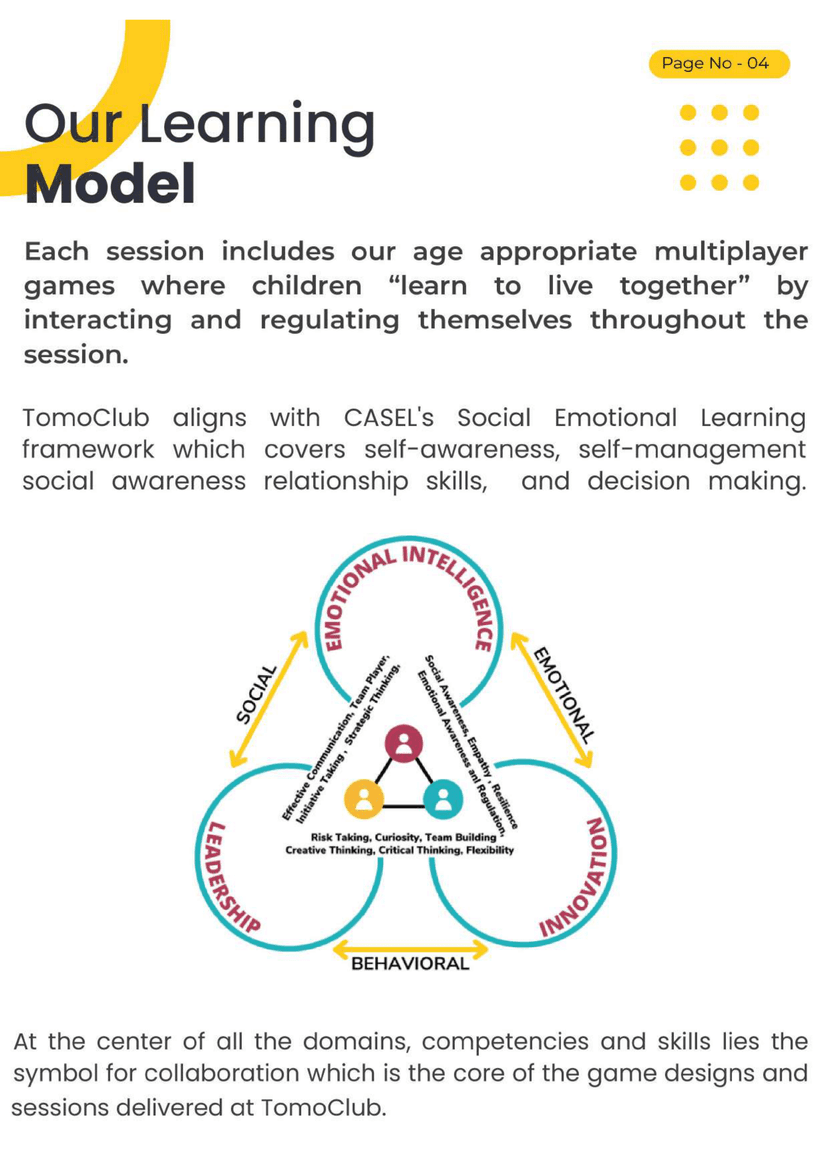
TomoClub uses cooperative game-based learning mixed with direct instruction to teach social-emotional competencies. The platform groups students into digital environments where they must work together to complete specific objectives or solve puzzles. This design forces active peer-to-peer communication, requiring students to articulate their ideas, listen to teammates, and manage frustrations when obstacles arise. The curriculum relies heavily on experiential learning. Rather than explicitly memorizing emotional vocabulary, students experience scenarios that elicit emotional responses and demand immediate self-regulation. Educators monitor these sessions and use the resulting data to facilitate targeted discussions. This debriefing process is critical, as it provides the necessary scaffolding to connect in-game actions to broader social-emotional concepts. The system tracks participation and behavioral choices during gameplay, offering teachers tangible metrics on how well students collaborate under pressure. While the games handle the simulation of conflict and teamwork, the true pedagogical value heavily depends on the teacher's ability to contextualize those experiences after the screens are turned off.
Strengths and tradeoffs of TomoClub Game-based SEL Curriculum
TomoClub's biggest strength is its use of immersive, collaborative environments to force active peer communication, while its biggest weakness is the assumption that in-game behavioral improvements naturally transfer to real-world emotional intelligence. Active Collaborative Learning: By requiring students to solve problems together, the platform ensures that social skills are practiced rather than just observed, aligning with research showing that active engagement produces better retention than passive instruction. Real-Time Peer Feedback: Students receive immediate natural consequences for poor communication; if they cannot cooperate, they fail the game objective, providing intrinsic motivation to regulate emotions. Transfer of Learning: The primary flaw in many game-based SEL tools is the transfer problem. Cognitive science indicates that skills learned in highly specific digital contexts often stay there. Without robust debriefing sessions led by an educator, a student might learn to cooperate to win a digital puzzle but still struggle with playground conflicts. Evidence Base: The platform currently lacks rigorous, independent validation, relying largely on internal retention and behavioral improvement metrics rather than peer-reviewed efficacy studies.
Who Might Benefit From TomoClub Game-based SEL Curriculum?
TomoClub is best for middle school educators looking for an interactive way to practice social-emotional learning skills alongside traditional classroom instruction. The platform serves as a strong supplementary tool for schools aiming to improve student collaboration, behavior, and attendance through engaging, peer-driven activities. It is ideal for classrooms that have the time and resources to facilitate meaningful post-game discussions, ensuring students reflect on their digital interactions. While technically available for high schoolers, the gamified mechanics will likely resonate most strongly with students in grades 4 through 8 who benefit from structured, cooperative play.
Sources and review method
TLS combines product information and editorial analysis to explain how TomoClub Game-based SEL Curriculum works, its tradeoffs, and the questions to ask before choosing it. Product features, an instructional rationale and evidence of learning outcomes are different kinds of information.
Formal Learning Standard assessment: not yet completed. Data Transparency findings are reported separately and do not establish learning effectiveness. Read our methodology.
Frequently Asked Questions About TomoClub Game-based SEL Curriculum
Is TomoClub free?
No, TomoClub is not free. The curriculum costs 50 dollars per student per year. This pricing model indicates the platform is primarily designed for district or school-wide purchasing rather than individual parent subscriptions. Schools must weigh this significant cost against their specific social-emotional learning budgets and intervention goals.
Is TomoClub good for elementary and high school students?
TomoClub is functional for grades 3 through 12, but it is likely most effective for middle school students. While the developer markets to a wide age range, game-based learning interfaces often struggle to maintain engagement across such varied developmental stages. High schoolers may find the mechanics simplistic, whereas upper elementary and middle school students typically respond well to structured cooperative gameplay.
What does TomoClub teach?
TomoClub teaches social-emotional learning with a specific focus on leadership, collaborative problem-solving, and emotional intelligence. The platform places students into digital scenarios where they must communicate, negotiate, and work together to achieve goals. It targets behavioral improvements by forcing students to practice conflict resolution and empathy in real-time multiplayer environments.
How does TomoClub compare to Nearpod for SEL?
TomoClub focuses entirely on cooperative, game-based simulations, whereas Nearpod delivers SEL through interactive slideshows, videos, and static activities. If your goal is to force active, real-time peer collaboration, TomoClub provides a more experiential environment. However, Nearpod offers a vastly broader range of easily deployable, direct instruction lessons that require less intensive behavioral facilitation from the teacher.
Has The Learning Standard evaluated TomoClub Game-based SEL Curriculum?
TLS has not yet completed a Learning Standard evaluation of how well TomoClub Game-based SEL Curriculum teaches. TLS has not published a Data Transparency result for its privacy policy.
Follow TLS Research
Subscribe to future TLS research updates: app reviews, findings, and what the evidence shows.
Screenshots
Take Action
For TomoClub Game-based SEL Curriculum
If you represent TomoClub and have a correction or new evidence, send the relevant source so we can review and update this page.
Submit a correctionDetails
- Pricing
- $50 per student per annum
- Platforms
- Web Browser, iPadOS (Apple tablet), Windows (Microsoft), macOS (Apple), Chrome OS (Google)
- Grade Levels
- 3rd Grade, 4th Grade, 5th Grade, 6th Grade, 7th Grade, 8th Grade, 9th Grade, 10th Grade, 11th Grade, 12th Grade
- Website
- Visit site