
SkillZIlla
Product by SkillZilla
Facts checked: Not yet checked
Our take (not a Learning Standard rating). This label applies to learning-science judgments throughout this overview.
Our take (not a Learning Standard rating)
While SkillZilla offers a broad library covering everything from high school math to technical education, its reliance on gamification lacks proven effectiveness for deep comprehension. Gamified elements can increase initial engagement, but without structured retrieval practice, long-term retention remains uncertain. The Learning Standard has not yet formally evaluated this tool.
Pros
- Connects learners with subject matter experts across diverse disciplines like applied science and career education.
- Allows high school and college-aged students to progress through complex material at their own pace.
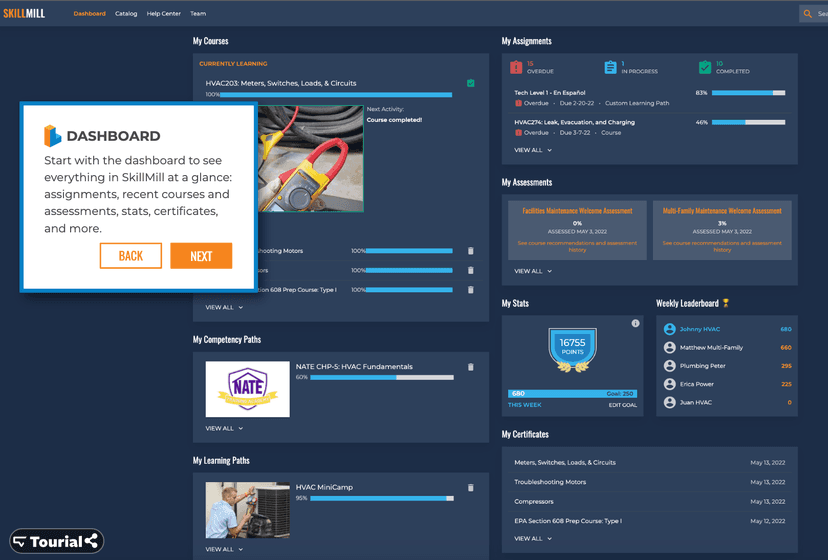
- Incorporates detailed progress tracking tools to help students visually monitor their learning milestones.
Cons
- Relies heavily on gamification, which often drives extrinsic motivation rather than deep intrinsic learning.
- Lacks transparency on whether it utilizes evidence-based learning science principles like spaced repetition.
- Course quality varies significantly because lessons are created by a wide array of independent experts.
What Do We Know About SkillZIlla?
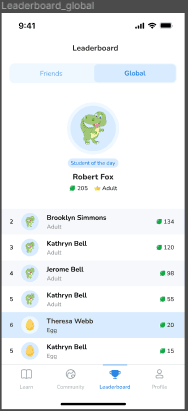
SkillZilla is partially effective for learning, but relies more heavily on gamification than proven cognitive science to teach high school and college-level subjects. Your child will find a massive library of courses ranging from social science to technical career education, all taught by various subject matter experts. The platform focuses heavily on interactive elements, badges, and progress tracking to keep older students engaged in the material. While gamification can initially hook a reluctant learner, research shows that point systems and leaderboards do not replace structured instructional design. Without explicit use of worked examples or spaced repetition, your teen may memorize facts to pass a level rather than master the underlying concepts. Because SkillZilla targets a broad age range from ninth grade through professional certification, the rigor of individual courses varies significantly based on the expert teaching it. At standard retail prices of nearly $150 annually, parents should monitor whether their child is actually retaining complex math and science concepts or merely clicking through to earn the next digital reward. The Learning Standard has not yet conducted a full empirical evaluation of this app.
How Does SkillZIlla Work?
SkillZilla uses gamification combined with self-paced video instruction to deliver content across academic and technical disciplines. When your child logs in, they select courses ranging from high school math to professional technical education. The platform organizes material into distinct modules taught by independent experts. As students complete video lessons and interactive tasks, they earn points and badges designed to motivate continued use. The interface tracks progress visually, showing learners exactly how much of a course they have completed. Because the platform relies on independent educators to build the courses, the specific instructional mechanics vary by subject. However, the overarching structure remains consistent: watch a lesson, complete a short interactive activity, and receive a digital reward. This approach emphasizes completion and volume over mastery-based progression.
Strengths and tradeoffs of SkillZIlla
SkillZilla's biggest strength is its diverse library of technical and academic subjects, while its biggest weakness is an over-reliance on superficial gamification instead of evidence-based instructional design. Broad Content Coverage: The platform excels at providing older students access to niche subjects, particularly in career and technical education. Self-Paced Learning: Students can move through complex applied science or math topics at their own speed, which helps prevent cognitive overload. Extrinsic Motivation: The platform uses badges and progress tracking. While this drives short-term engagement, learning science indicates that gamification rarely leads to deep, long-term retention. Lack of Retrieval Practice: The app does not consistently force students to recall information from memory after a delay, which is critical for moving knowledge into long-term memory. Inconsistent Pedagogy: Because courses are created by various experts, the quality of instruction varies. Some courses may utilize strong worked examples, while others rely entirely on passive video consumption followed by simple multiple-choice checks.
Who Might Benefit From SkillZIlla?
SkillZilla is best for highly motivated high school students and young adults seeking self-paced career and technical education. The platform targets learners from ninth grade through professional credentialing, making it ideal for older teens who want to explore applied sciences or specific technical skills outside a traditional classroom. Because the app uses gamification rather than structured mastery-based progression, it works best as a supplemental exploration tool rather than a core academic curriculum. It is particularly useful for school districts looking for broad, varied content to offer students who need flexible elective options.
Data Transparency
Does Not Meet Data Transparency Standard
SkillZIlla does not meet our data transparency standard. Its privacy policy does not document basic protections, including a commitment against targeted advertising, limits on sharing children's data and contractual limits on service providers.
13 of 35 checks passed
Evaluated September 2026
Privacy Policy →Level 1 · Basic protections
Does not sell data or target ads at students, limits sharing, and lets parents see and delete their child's data.
Not documented: a commitment against targeted advertising, limits on sharing children's data, contractual limits on service providers, a COPPA or FERPA commitment, parents' right to see their child's data, parents' right to delete their child's data
Level 2 · Parent control (meets the standard)
Families can get their data out, know who processes it, and know how long it is kept.
Level 3 · Direct data access
Families or schools can pull their own data through an API, in a stated format.
Not documented: an API for retrieving their own data, a named export format
View all 35 checks
Parent Access0/8
Does the policy mention parents specifically?
The policy does not mention parents anywhere.
Can parents view their child's data?
The policy does not give parents any right to view their child's data.
Can parents modify their child's data?
The policy does not give parents any right to change their child's data.
Can parents delete their child's account?
The policy does not give parents any right to delete their child's data or account.
Is there a dedicated Children's Privacy section?
The policy has no section with its own heading about children's privacy or COPPA.
Does it reference COPPA compliance?
The policy does not mention COPPA.
Does it reference FERPA compliance?
The policy does not mention FERPA.
Is parental consent required for child accounts?
The policy does not say parental consent is required for child accounts.
Data Portability3/5
Can users access their personal data?
“You have the right to request access to the personal information we collect from you, details about how we have processed it, correct inaccuracies, or delete your personal information.”
Can users download/export their data?
“**Right to obtain a copy** of the personal data you previously shared with us”
Is there a self-service data access tool?
“If you would at any time like to review or change the information in your account or terminate your account, you can: - Log in to your account settings and update your user account.”
Is a specific data format mentioned for export?
The policy does not name any format for exported data.
Is there an API for data access?
The policy mentions Google APIs only as an integration and offers no API for users to retrieve their own data.
Data Minimization1/6
Is data collection itemized?
“The personal information we collect may include the following: - names - phone numbers - email addresses - usernames - passwords”
Can the app be used without a real name?
The policy says it collects names, including real names.
Can the app be used without an email?
The policy says it collects email addresses.
Does it state collection is limited to what is necessary?
The policy does not say that collection in general is limited to what is necessary; it limits only payment data and how long data is kept.
Is IP address anonymized or truncated?
The policy says it collects IP addresses and does not say they are anonymized or truncated.
Is location tracking explicitly excluded?
The policy says it collects precise or imprecise location data, including by GPS.
Third-Party Protection4/7
Does it explicitly state no selling of data?
“We have not disclosed, sold, or shared any personal information to third parties for a business or commercial purpose in the preceding twelve (12) months. Wewill not sell or share personal information in the future belonging to website visitors, users, and other consumers.”
Are third-party providers named?
“We provide the AI Products through third-party service providers ("AI Service Providers"), including OpenAI.”
Are providers contractually restricted?
The policy says data goes to service providers under a written contract but does not say the contract limits how they may use it.
No-targeted-advertising commitment?
The policy lets third parties use tracking to tailor ads to users' interests.
Is AI/ML data sharing addressed?
“As outlined in this Privacy Notice, your input, output, and personal information will be shared with and processed by these AI Service Providers to enable your use of our AI Products”
Child-specific sharing restriction?
The policy has no sharing limits specific to children.
Cookies/tracking limited or opt-out?
“We recognize and honor Global Privacy Control (GPC) signals. If you use a browser or extension that supports GPC, we will treat this as a valid request to opt out of the sale or sharing of your personal information for targeted advertising purposes”
Deletion & Retention4/5
Can users delete their account?
“Upon your request to terminate your account, we will deactivate or delete your account and information from our active databases.”
Self-service deletion mechanism?
“If you would at any time like to review or change the information in your account or terminate your account, you can: - Log in to your account settings and update your user account.”
Specific data retention timeline?
“No purpose in this notice will require us keeping your personal information for longer than six (6) months past the termination of the user's account.”
Auto-deletion of inactive accounts?
The policy does not say inactive accounts are deleted automatically.
Post-deletion handling described?
“When we have no ongoing legitimate business need to process your personal information, we will either delete or anonymize such information, or, if this is not possible (for example, because your personal information has been stored in backup archives), then we will securely store your personal information and isolate it from any further processing until deletion is possible.”
Advertising1/4
Advertising model explicitly disclosed?
“Our application(s) may display a third-party hosted "offer wall." Such an offer wall allows third-party advertisers to offer virtual currency, gifts, or other items to users in return for the acceptance and completion of an advertisement offer.”
Free from third-party advertisements?
The policy says the Services may show third-party ads and an advertiser offer wall.
Children excluded from ad targeting?
The policy does not exclude children from ad targeting.
Ad-free option available?
The policy does not describe an ad-free option and says the Services may show ads.
What This Means
The policy review did not meet our data transparency standard. The checks above show the documented findings and unknowns. A missing statement does not establish how the app handles data in practice.
About this evaluation: Based on automated analysis of Privacy Policy against 35 policy-disclosure questions, including questions adapted from the Common Sense Privacy Program's published evaluation questions. TLS is not affiliated with Common Sense Media, and this is not a Common Sense rating. Quoted text is copied from the policy; unquoted notes are our summary. Results describe what the policy documents, not the company's actual practices. Privacy policies can change: this review reflects the version we analyzed and does not determine legal compliance.
Sources and review method
TLS combines product information and editorial analysis to explain how SkillZIlla works, its tradeoffs, and the questions to ask before choosing it. Product features, an instructional rationale and evidence of learning outcomes are different kinds of information.
Formal Learning Standard assessment: not yet completed. Data Transparency findings are reported separately and do not establish learning effectiveness. Read our methodology.
Frequently Asked Questions About SkillZIlla
Is SkillZilla free?
No, SkillZilla is not free. The standard individual subscription costs approximately $150 annually for retail users. However, the company primarily targets educational institutions and school districts with tiered pricing ranging from $80 to $100 per student annually, depending on the size of the district. If your child's school district purchases a bundled license and uses the platform as part of its curriculum, student access will likely be provided at no direct cost to your family.
Is SkillZilla good for high school students?
SkillZilla is appropriate for high school students, specifically those in grades nine through twelve. It is particularly beneficial for teens interested in exploring career and technical education fields before committing to a specific college major or credential program. However, because the platform relies heavily on gamification rather than structured mastery learning, parents and educators should ensure students are truly comprehending the material. Gamified systems often encourage students to click through quickly for points rather than engaging deeply with complex topics.
What does SkillZilla teach?
SkillZilla teaches a wide variety of subjects, focusing heavily on social science, mathematics, applied science, and career and technical education. The platform hosts courses ranging from basic coding principles to culinary arts, connecting learners with various industry experts. Because it spans so many disciplines and relies on independent creators, the depth of instruction varies widely from course to course. Students might find highly rigorous technical training in one module, while another module acts as a brief, high-level overview.
Has The Learning Standard evaluated SkillZIlla?
TLS has not yet completed a Learning Standard evaluation of how well SkillZIlla teaches. Its privacy policy has been reviewed for Data Transparency and does not yet document the basic protections (Level 1).
Is SkillZIlla COPPA compliant?
A COPPA reference was not found in the reviewed privacy policy. This does not determine whether the app complies with COPPA. Policy review note: The policy does not mention COPPA.
Is SkillZIlla FERPA compliant?
A FERPA reference was not found in the reviewed privacy policy. This does not determine whether the app complies with FERPA. Policy review note: The policy does not mention FERPA.
Does SkillZIlla have a children's privacy policy?
No dedicated children's privacy section was found in the reviewed policy. Policy review note: The policy has no section with its own heading about children's privacy or COPPA.
Does SkillZIlla sell student data?
The reviewed policy states that the app does not sell data. This is a policy statement; actual data practices were not verified. Policy review note: The policy states the company will not sell personal information.
Can you delete your data from SkillZIlla?
The reviewed privacy policy describes account deletion. We have not tested the deletion process. Policy review note: Users can ask to have their account deleted.
Follow TLS Research
Subscribe to future TLS research updates: app reviews, findings, and what the evidence shows.
Screenshots

Take Action
For SkillZIlla
If you represent SkillZilla and have a correction or new evidence, send the relevant source so we can review and update this page.
Submit a correctionDetails
- Pricing
- 1. Small Districts Plan (Up to 500 students):Since small districts usually have budget constraints and are often overlooked by edtech companies, we can offer them a higher discount to make the platform more accessible. Let's offer the Small Districts Plan at $80 per student annually, which is a significant discount from our standard $149.99 annual rate.2. Medium Districts Plan (501 - 1500 students):Medium-sized districts represent a larger potential user base and have somewhat more financial flexibility. We can offer this tier at a lower discount compared to small districts but still attractive enough to entice adoption. Let's price this at $100 per student annually.3. Large Districts Plan (1501 - 5000 students):Large districts provide us with a substantial user base, and they often have more resources at their disposal. However, we still want to incentivize them with volume discounts. Therefore, we could offer this tier at $90 per student annually.4. Extra Large Districts Plan (5001+ students):For extra-large districts, we can offer the lowest per-student price due to the high volume of potential users. We could set this price at $80 per student annually.5. Bundled Licenses: We will offer bundled licenses as well for $100 per user per year.
- Platforms
- iOS (Apple mobile), iPadOS (Apple tablet), Android (Google mobile)
- Grade Levels
- 9th Grade, 10th Grade, 11th Grade, 12th Grade, Associate's degree, Bachelor's degree, Professional or Technical Credential
- Website
- Visit site