
Readorium Rising Reader
Product by Mtelegence DBA Readorium
Facts checked: Not yet checked
Our take (not a Learning Standard rating). This label applies to learning-science judgments throughout this overview.
Our take (not a Learning Standard rating)
Readorium Rising Reader provides structured practice in nonfiction reading comprehension by integrating science content with explicit strategy instruction. While its use of leveled text and online mentors aligns with scaffolding principles, the effectiveness of its gamification elements and long-term vocabulary retention remain pending formal evaluation.
Pros
- Scaffolds reading comprehension by offering the exact same science content across 10 to 12 distinct readability levels.
- Uses online mentors to provide worked examples of reading strategies, modeling how to extract meaning from complex nonfiction.
- Integrates domain-specific vocabulary practice within the context of NGSS-aligned science topics to support cross-curricular learning.
Cons
- Relies on gamification mechanics that can distract students from deep cognitive processing of the reading material.
- Sold primarily through school or district licenses, limiting direct access for individual parents and homeschoolers.
- Lacks transparent data on how effectively it uses spaced retrieval to ensure long-term retention of academic vocabulary.
What Do We Know About Readorium Rising Reader?
Readorium Rising Reader is a capable tool for teaching reading comprehension, but its full effectiveness for your child is pending our formal evaluation. The program tackles a specific and common problem: understanding complex nonfiction text. Instead of simplifying the scientific concepts, the software adjusts the reading level of the text itself. This means your child will engage with rigorous Next Generation Science Standards topics regardless of their current reading proficiency. The app employs virtual mentors that guide students through the text. These mentors model reading strategies, which is a sound application of worked examples in learning science. However, because the platform leans on gamification to drive engagement, parents and educators must monitor whether children are actually absorbing the reading strategies or simply clicking through to earn rewards. The program focuses heavily on third through fifth-grade students, providing them with essential cross-curricular practice that bridges literacy and science. It is primarily designed for school implementation rather than single-family use, so your child will likely encounter it as a supplemental assignment rather than a standalone home application.
How Does Readorium Rising Reader Work?
Readorium Rising Reader uses personalized scaffolding and explicit strategy instruction to improve reading comprehension in science. The platform assesses a student's reading ability and automatically adjusts the complexity of the text without changing the underlying scientific concepts, paragraph structure, or target vocabulary. As students read through chapter books, they encounter interactive virtual mentors. These digital guides stop the reader at strategic points to model cognitive processes, such as how to summarize a paragraph or deduce the meaning of an unfamiliar word from context clues. This mirrors the gradual release of responsibility model, shifting from teacher-led demonstration to independent student practice. Throughout the reading process, the system collects performance data to adjust the text level dynamically. Gamification elements are woven into the progression, rewarding students for completing chapters and demonstrating comprehension.
Strengths and tradeoffs of Readorium Rising Reader
The biggest strength of Readorium Rising Reader is its rigorous application of differentiated scaffolding, while its biggest weakness is a reliance on extrinsic gamification that may undermine intrinsic motivation. By offering the exact same informational text at 10 to 12 different readability levels, the program ensures that all students access grade-level science content. This prevents the Matthew Effect in reading, where struggling readers fall further behind because they are only exposed to simplified concepts. The use of virtual mentors provides excellent worked examples, reducing cognitive load by explicitly showing students how to apply comprehension strategies before asking them to perform the task independently. Conversely, the gamified reward system can shift student focus away from mastering the text. Learning science indicates that heavy use of points and badges can lead to shallow cognitive processing, where students skim material just to unlock the next achievement. Additionally, while the app introduces academic vocabulary, it is unclear if it employs spaced retrieval practice to ensure students retain these words over the long term.
Who Might Benefit From Readorium Rising Reader?
Readorium Rising Reader is best for upper elementary students in grades three through five who struggle with nonfiction comprehension but need to access grade-level science curriculum. It is particularly useful in blended learning classroom environments where teachers need to differentiate instruction for diverse reading abilities. Because the software aligns with the Next Generation Science Standards, it serves as a strong cross-curricular tool for educators aiming to merge literacy blocks with science instruction. It is less suited for individual home use due to its school-focused licensing model.
Sources and review method
TLS combines product information and editorial analysis to explain how Readorium Rising Reader works, its tradeoffs, and the questions to ask before choosing it. Product features, an instructional rationale and evidence of learning outcomes are different kinds of information.
Formal Learning Standard assessment: not yet completed. Data Transparency findings are reported separately and do not establish learning effectiveness. Read our methodology.
Frequently Asked Questions About Readorium Rising Reader
Is Readorium Rising Reader free?
No, Readorium Rising Reader is not free for individual use. The program is sold as a per-student license per academic year on a sliding scale, meaning the cost decreases as more students are enrolled. It is primarily marketed toward schools and school districts rather than direct-to-consumer subscriptions. Parents interested in using the software at home will need to check if their child's school currently holds an active license for the platform.
Is Readorium Rising Reader good for 3rd graders?
Yes, Readorium Rising Reader is specifically designed for third, fourth, and fifth-grade students. This age group often experiences the transition from learning to read to reading to learn. The app supports this developmental milestone by offering complex nonfiction science texts tailored to an appropriate cognitive level. Older students in middle school would use the developer's companion program, Readorium Scholar, which applies similar pedagogical techniques to higher-level science material.
What does Readorium Rising Reader teach?
Readorium Rising Reader teaches nonfiction reading comprehension strategies using life, earth, and physical science content. Rather than teaching basic phonics, the program focuses on higher-order literacy skills like summarizing, using context clues to define academic vocabulary, and understanding text structures. Because the reading material is entirely based on the Next Generation Science Standards, students actively learn core scientific concepts alongside essential literacy strategies, making it a truly cross-curricular educational tool.
How does Readorium Rising Reader compare to standard reading apps?
Unlike standard reading apps that offer a wide library of disparate fiction and nonfiction texts, Readorium Rising Reader focuses exclusively on scientific literacy. It uniquely combines rigorous Next Generation Science Standards content with 10 to 12 readability levels for every single chapter book. This targeted approach ensures that students are explicitly learning how to dissect academic nonfiction rather than simply practicing general reading fluency with narrative stories.
Has The Learning Standard evaluated Readorium Rising Reader?
TLS has not yet completed a Learning Standard evaluation of how well Readorium Rising Reader teaches. TLS has not published a Data Transparency result for its privacy policy.
Follow TLS Research
Subscribe to future TLS research updates: app reviews, findings, and what the evidence shows.
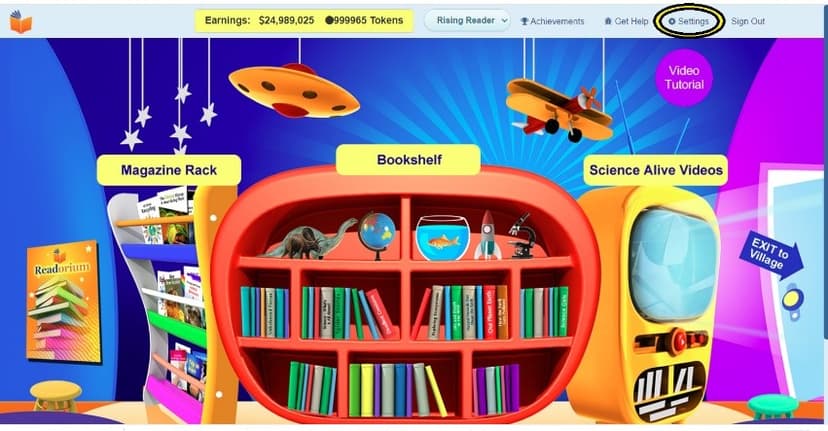
Screenshots
Take Action
For Readorium Rising Reader
If you represent Mtelegence DBA Readorium and have a correction or new evidence, send the relevant source so we can review and update this page.
Submit a correctionDetails
- Pricing
- Readorium is sold as a per student license per academic year. It is sold on a slide scale, the more students using the program, the cheaper the cost.
- Platforms
- iPadOS (Apple tablet), Android (Google mobile), Tizen (Samsung mobile), Windows (Microsoft), macOS (Apple), Chrome OS (Google)
- Grade Levels
- 3rd Grade, 4th Grade, 5th Grade
- Website
- Visit site